Current Brazilian Jiu Jitsu Blue Belt training under Thiago Ximenez in Scottsdale, Arizona. Over 5 Years of BJJ Experience and experience wrestling, boxing, and more!
Facebook
Twitter
Pinterest
Reddit
Should you do jiu-jitsu?
Picture this: You, decked out in a fancy bathrobe, pondering the age-old question as you sip on your morning coffee.
But instead of a fancy bathrobe, it’s a Gi and instead of you pondering it you choking out an innocent bystander. Morning coffee doesn’t really exist, just probably drool from the person you just choked out.
Here Are Some Reasons You Should Do Jiu-Jitsu
Brazilian Jiu-Jitsu is the fastest-growing martial art in the world due to the rise of the UFC. I cannot tell you how cool it is to go and watch the fights when i am out with my buddies and know what exactly each of these athletes are doing. It makes me grow a greater appreciation to the craft in all honesty. Not only do i get to be the cool guy telling everyone all the moves they are doing at the highest level I am in the best shape of my life, mentally calm, and way more secure in my surroundings because I train Brazilian jiu-jitsu.
Playing sports for the majority of my life has played a huge impact on why I love Brazilian jiu-jitsu so much. But one thing that really made me fall in love with it more is the friends I made along the way. It reminds me a lot of high school sports.
When I was young and all my friends and had a tough workout we went through it was like a bonding moment, you get that almost everytime with your training partners inside of a BJJ gym. You will find yourself pushing your own limits and realizing that you are capable of so much more. Do not get me wrong, most the time in the moment it sucks being that exhausted but after you look back it, you are just in a room grinding it out with people you grow to trust and become a better version of yourself.
We earn a commission if you make a purchase, at no additional cost to you.
If we had to sum up the reasons why you should do Brazilian jiu-jitsu here is what we would say:
You get into great physical shape, lose weight, and lose fat
Get more toned and muscular
Gain a skill that is applicable to many areas in life
Learn a lot about yourself
Make friends
Push your limits
It’s easy to make friends while training in Brazilian Jiu-Jitsu
One thing that BJJ has done a great job at is cultivating a good culture within gyms. Typically, bad apples are weeded out. Everyone is there for the same reasons, we all love training and want to get better at what it is we like doing. It is very simple.
When everyone is on the same page in that regard a sense of camaraderie and community is born that is not like any other physical activity I have done.
Training BJJ promotes a sense of camaraderie
The definition of camaraderie is as follows:
A mutual trust and friendship among people who spend a lot of time together.
If you plan on staying in the game of Brazilian jiu-jitsu and want to start climbing up the ranks, you will be spending a ton of time at the gym trying to master the craft. Your training partners become people you trust because, at the end of the day, you have to know the person across from you is not going to go out of their way to hurt you.
As trust develops, so does friendship. People will remember your name, ask you how you are doing, and help you work through things because you have developed a real relationship with them. In a world where we are more isolated than ever, I believe that BJJ offers an amazing solution to those that are longing for friendships and finding common ground with others.
Reach Fitness Goals
If you want to lose weight, BJJ will get you there. The sheer amount of calories you can burn while train jiu-jitsu is insane. We have seen people lose 50+ lbs from training BJJ and from my own personal experience I lost more than 20lbs.
I am in the best shape of my life. My cardio is unreal and I am stronger than ever. Now, its fair to say I am a 26-year-old male who has always splayed sports so I have a more athletic build but what if you are not someone who has that? Can regular people just join and reach their goals?
The answer is YES! But you have to just trust the process and stick with it for some time before you start seeing results.
We live in a culture that needs everything immediately. I was once stuck in this state of mind and find myself there from time to time pretty often but training BJJ can humble you back to reality in a number of ways.
With Brazilian jiu-jitsu you will reach your fitness goals, you just have to put in the time and work.
Self-Defense Training
This is an uncomfortable truth that we have to live with, the world is growing increasingly more dangerous.
Everyone has a weapon and it seems like more and more threats are popping up daily.
We cannot tell you how much my mental has changed since we started training BJJ. We feel so much more comfortable in my surroundings knowing that I can at least grapple my way out of a situation. Now, in all cases we won’t be able to protect ourselves (especially if a weapon is involved) but if you are in safe areas, is that really something to be super stressed about?
We personally believe that women as a whole could greatly benefit from training sessions especially because they hyper aware of their surroundings. It can be intimidating to join a male-dominated space like a BJJ gym but they are welcoming and always are there to help.
Build Discipline in Your Life & Master a Skill
As a whole, having a discipline like BJJ be the main driver for our fitness has been net positive in all ways. Brazilian jiu-jitsu really focuses on getting students to mastery. You cannot fake you way to getting a black belt in this sport. Lots of hard work goes into attaining that and everyone who trains understands that.
Nothing worthwhile in life comes without sacrifice and hard work. Getting good at Brazilian jiu-jitsu is no different.
So, Should I Do Jiu-Jitsu?
So, after making it all the way down here you still don’t know if you should train? Well, then it’s probably something that is for you. I get fired up thinking about the growth of the martial arts I love because it just means I can make more friends, have more impact, and be surrounded by people who love to grind and get better. If you hate having fun, hanging out with cool people, and getting a little rough, maybe BJJ isn’t for you.
We are here to say that is okay. It is not something that is made for everyone just us crazy folk!
We earn a commission if you make a purchase, at no additional cost to you.
Frequently Asked Questions From Beginners
Is it worth it to learn BJJ?
Brazilian Jiu-Jitsu is worth it to learn. If you plan on being an MMA athlete, BJJ is essential. If you want to just take your fitness to the next level, BJJ can help. If you want to meet high-performing people that care about getting better each day, BJJ is worth it.
Will BJJ change your life?
Yes, in many ways BJJ can help change your life but you have to want to change first. Without the desire to do what is necessary, nothing in your life will change.
Can Jiu-Jitsu help you in a real fight?
The majority of fights end up on the ground. If you go to the ground in a real fight against someone who has no idea what they are doing, you will absolutely destroy them. Even a white belt with about 6 months of training would whoop someone who has zero training if the fight went to the ground. We will stand behind this 1,000%.
Depending on if you are going to a nogi class or a gi class the attire will be a little different. Most of the time if it is your first time gyms will have a gi that you can borrow and have a free trial period.
What Should I Expect in my First Class?
Your first class will be very uncomfortable, at the end of the day you decided to step into something completely brand new and put yourself outside of your comfort zone. First off, that is amazing and you should be proud, most people never even get there. Make sure to come in with a student mentality, ask questions, and talk to people!!! let people know it is your first class and that you are excited to learn, most people are happy to lend a hand.
I'm nervous about going to the BJJ gym, what do I do?
Good, go anyways.
When we first started we experienced this. It is hard to do new things and get out of your comfort zone but the more you do it the more comfortable you will get. Keep going until that feeling is gone and the habit is created.
Cameron
Current Brazilian Jiu Jitsu Blue Belt training under Thiago Ximenez in Scottsdale, Arizona. Over 5 Years of BJJ Experience and experience wrestling, boxing, and more!
Facebook
Twitter
Reddit
Pinterest
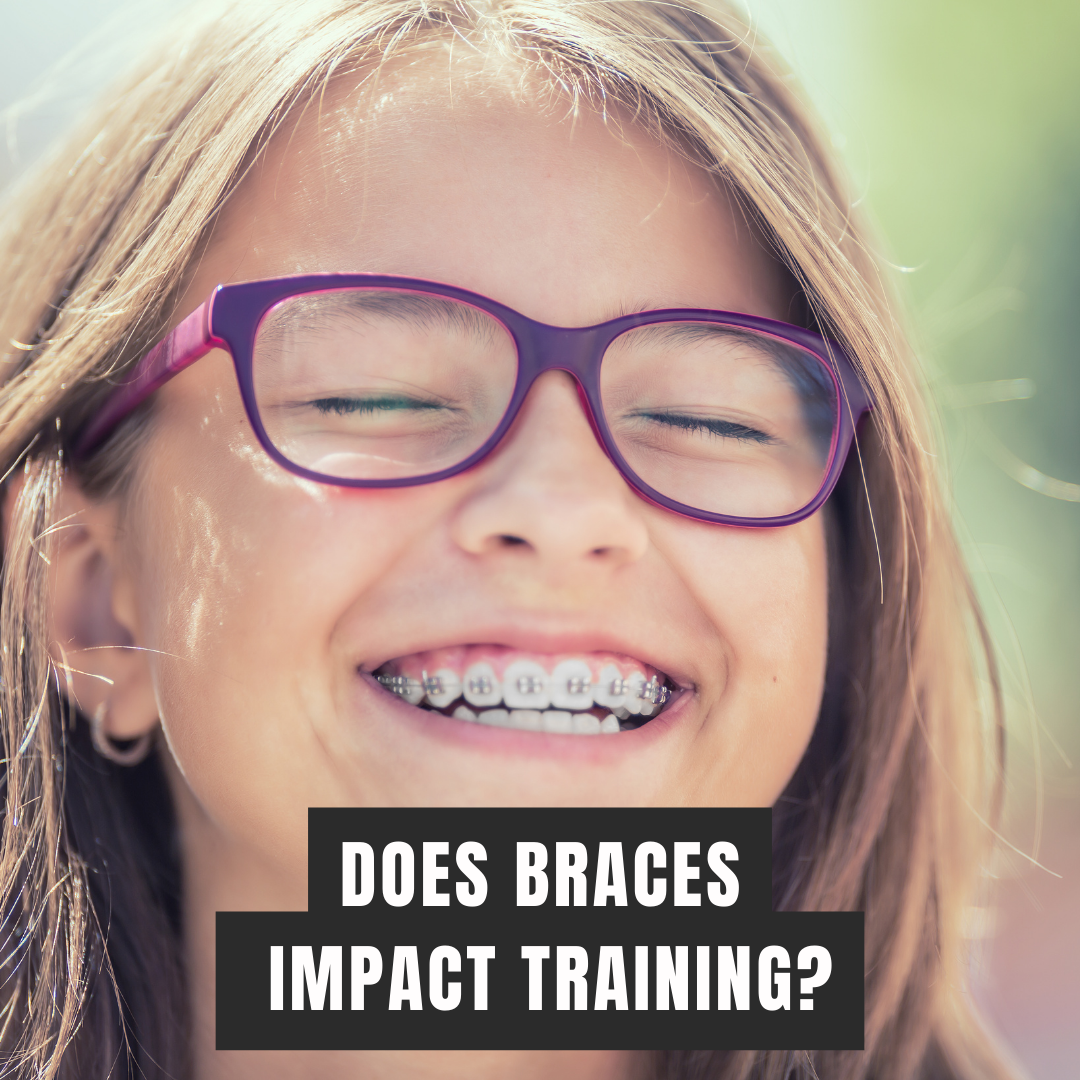
Can you train BJJ and have Braces? The simple answer to this is yes.
I am currently training Brazilian jiu-jitsu with metal braces in my mouth and have firsthand experience to what you are going through. At first, I was very nervous about how this would impact my rolling but after a couple of months with them on I am back to rolling like normal, with a caveat.
The likelihood of experiencing a bleeding mouth while training BJJ will go up for you. Mentally, you should prepare for getting a couple of cuts, bruises, or swollen lips if you are training BJJ with braces on.
How Does Having Braces Affect Training Brazilian Jiu-jitsu?
Okay, so this one is currently hitting home for me. I recently got braces and have been training on them for about 3-4 months now. At first it was a major concern of mine to get hit in the mouth, especially when my teeth were sore.
it is not a fun thing to get bloody lips, cuts on our tongue, or end up getting an elbow to the brace, but I have said I am willing to risk it.
Having braces while training jiu-jitsu affects you mentally and physically. At first, you may be hesitant to do a move because you risk an elbow to the mouth. Or you may get put in a position where you are trying to block a rear naked choke and your opponent cross-faces you right across the mouth… painful!
Most people will never have to experience the pain of having braces while rolling around so expect little to no sympathy from people, well, other than me, because I know the pain very well. There are a couple of ways to take away the risk of biting your tongue or protecting your lips while training BJJ with braces, mainly through buying a mouthguard.
if you decide to go with a guard, do not get something cheap and plastic from the store or Amazon. The only guards we would recommend for people with braces (if you even decide to wear one in the first place) would be the guards from Impact Mouthguard.
They were kind enough to give us a sample, custom mouth guard and we love it! I don’t want to come off too salsey here but the material fits really well in my mouth and is not bulky like there options I have tried in the past.
It should be obvious at this point that you do run into a handle of risks when you decide to train BJJ with braces. Most of the risks that are associated with it are oral cuts that may sting or swell for a couple of days.
1. Oral Cuts
Oral cuts are most common. We are currently writing this post with one. Rolling and biting down on your tongue is easier to cause a bit of damage to the mouth when you have metal in your mouth. Be sure to wear a mouthguard when you can which can keep you away from oral cuts.
2. Tooth Fractures
We have yet to see this happen for ourselves in my 1.5 years of training Brazilian jiu-jitsu. While there are many horror stories that you can find on Reddit, we have yet to experience anyone we are close to having fractured a tooth, in or out of braces.
Again, if this is something you are unwilling to risk, wear a mouthguard that is suitable for combat sports.
Can Wearing Braces Cause Injuries In BJJ?
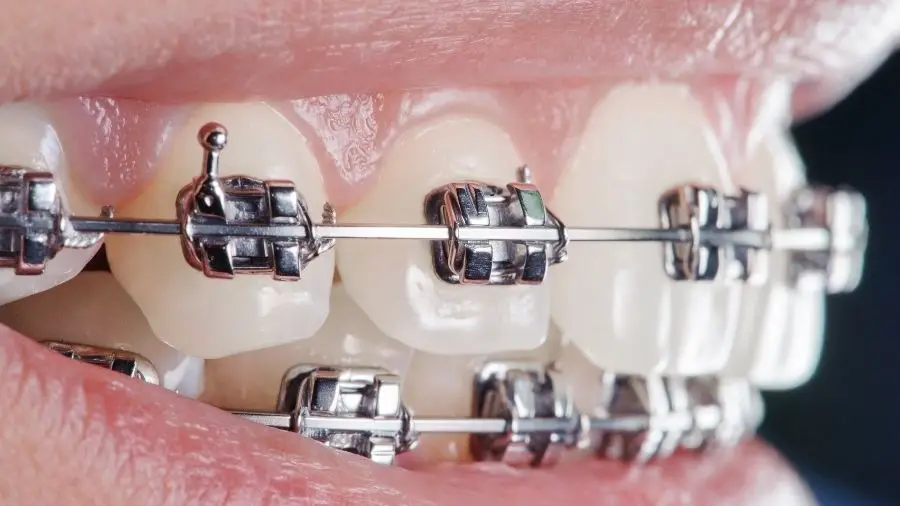
Yes, wearing braces can cause oral injuries while you are training Brazilian jiu-jitsu. At the end of the day you have metal in your mouth. When you get impacted in the area, the chances of you getting a cut or a swollen lip in the process is higher.
How To Prevent Oral Injuries In BJJ With Braces
The best way to prevent any kind of oral injury from occurring while training jiu-jitsu is it to wear a mouth guard that is fit well in your mouth.
Again, we love our guard from Impact Mouthguards, they have high-quality material that makes it very breathable when training. Now, if you do not want to spend $20 – $40 on a mouthguard that covers your $8,000 investment into your teeth (price of braces) be our guest and go check out Walmart for a great selection of plastic guards!
I’m sure they work great, but I would not know.
WEARING A MOUTHGUARD PROTECTS YOUR TEETH
In Brazilian Jiu-jitsu the likelihood that you can experience some damage to your mouth is pretty high. Going with a custom mouthguard to protect your teeth is a much safer option than going with the regular plastic you can find at your local Walmart!
This guard has been a game-changer for us to feel protected on the mats!
Picking the Right Type of Mouthguard for BJJ Training With Braces
Most people do their shopping online and will go with the first option that pops into their mind, but those who are serious about jiu-jitsu know that they will need more time to cut it. Like we have stated in this article, Impact Mouthguard is our go-to option.
They have the highest quality product on the market and if you are in braces it would not hurt to invest in a quality guard.
Impact Mouthguard – QuickFit
QuickFit mouthguards are the traditional mouthguards you are used to but at Impact, they do things a bit differently!
Custom mouthguards do not give that much space for teeth to shift while wearing braces or having Invisalign so they took the best quality materials and made it more friendly for those that need that perfect fit over their braces.
Heat & Bite
The process of molding your Impact QuickFit mouthguard is super simple. Just warm up some water on the stove (make sure it’s not too hot) drop the guard in the water and let it get soft!
Once soft, just bite down! You know are ready to take on all matches without any worries!
How to Train BJJ Safely with Braces
What I have learned most is that I have to be a little more careful with who I train and just do my best to keep my face out of the line of fire from anyone’s knees, elbows, or the back of someone’s hands.
Unfortunately, no amount of precautions you take will result in not getting a cut or time while in your time in braces but you can always try to minimize as much as possible. Lucky for us, the mouth is an area in our bodies that heals very quickly, so even when a cut occurs, it will go away in a couple of days!
Now that we think about it, there many more cons associated with training BJJ while having braces. The cuts in my mouth suck to deal with but I guess when you love doing something like Brazilian Jiu-Jitsu, the pain is kind of worth it. At the end of the day it is such a privilege to have them in the first place and being in a place to be able to fix my teeth is a true blessing.
Pros
You will have straight teeth
Cons
You will get cuts in your mouth
The risk of getting elbowed and bleeding are high
Table of Contents
Cameron
Current Brazilian Jiu Jitsu Blue Belt training under Thiago Ximenez in Scottsdale, Arizona. Over 5 Years of BJJ Experience and experience wrestling, boxing, and more!
Facebook
Twitter
Pinterest
Reddit
Chance are, if you are asking the question, “what is a Gi in BJJ?” you are very new to the world of Brazilian jiu-jitsu. On behalf of the community, we would like to send you a warm welcome from Grapplers Graveyard! My name is Cameron, founder of this website and I am on a mission to create a one-stop resource for all things related to grappling, fitness, health, and recovery. In this article, we will be talking about an essential article of clothing that you will get very familiar with, the gi.
A Brazilian jiu-jitsu gi, or better known as a kimono, is the gear that you will be wearing when you are training jiu-jitsu. In other martial arts like karate and judo, you will also wear a gi jacket but there are a few differences between the three of them.
Brazilian jiu-jitsu gi’s are typically made with cotton and are more heavy when compared to karate kimonos or judo kimonos. Due to the physical nature of jiu-jitsu, the gi has to be sturdy and reinforced well enough so that it does not easily tear.
Gi jiu-jitsu is said to emulate a real fight if someone was wearing a heavy jacket and pants. While many may argue that Gi jiu-jitsu is “less realistic” than no-gi jiu-jitsu, you ae still getting great combat experience when you decide to train in either method.
The BJJ Gi and Its Significance
Everyone who trains Brazilian jiu-jitsu will have one, two, or possibly even three gis at their disposal. It is common to have a lot of Gis because over time they get worn out, they may tear, or you may just need a rotation so you always have something clean to roll in.
Jiu-jitsu was created using the Gi and has slowly evolved over time to become more and more accepting of its no-gi counterpart. The future of the sport is in no-gi, you can see it just by the attendance number at tournaments across the country like ADCC. People just love seeing the athletic nature of no-gi jiu-jitsu.
The significance that gi jiu-jitsu has played in the martial art should not go unnoticed. Before no-gi jiu-jitsu could run it had gi jiu-jitsu practitioners leading the way to set the foundation.
When you decide to train a martial art you are going to need gear. We only like to bring up high quality products for people to be aware of because, well, bad quality is not worth it. here is a list of articles we have where you can find good gear:
Really, there are two places in which BJJ Gis are made in, either China or Pakistan. The majority of what we have seen in the industry it is very common to see the gear that yo are wearing coming out of Pakistan.
What Exactly is Brazilian Jiu-Jitsu?
Brazilian jiu-jitsu is a grappling martial art that has grown significantly over the past decade due to the rise in popularity of the UFC and the increasing amount of BJJ gyms that continue to pop up as more people get their black belts. In Brazilian jiu-jitsu, the objective is to have control over your opponent’s movement regardless of how much bigger or stronger the opponent is than you.
BJJ was made for a smaller person to be able to control and manhandle a bigger and stronger untrained person. Due to this, it has been deemed as one of the best self-defense martial arts on the planet.
It also helps that most MMA fighters have a background in BJJ and that the UFC is on its way to becoming the world’s largest sports organization.
We have a completely updated list of Best BJJ Gi always live on our site. This list is trusted and showcases some of the top brands in the space. If you are a brand and want to see how you stack up on the list feel free to reach out for an advertising opportunity.
Best BJJ Gi List
The updated list of Best BJJ Gis will showcase new pairs as we get around to updates.
Here is the running list we have put together with the corresponding score:
Find the top-rated BJJ Gi's here. Helpful information on what to look for, how to find the best gi, and which brands suit you best based on your budget!
We have a complete breakdown of what should be considered when choosing a jiu-jitsu gi in our article “Best Jiu Jitsu Gi Brands” but to summarize here you go:
What to Look For in a BJJ Gi:
Fit’s well: the majority of companies will have a size chart directly on their site, be sure to buy a gi that matches your height and weight and you will be okay finding something that fits well.
Material: Not all material is made equally, some are cheaper than others and some will end up being more lightweight than others. This is why most practitioners have more than one gi, they all have their own purposes. Our personal favorite has been the gi from Future Kimonos. We have never trained in a gi that felt so good and was this light.
Design: Dion Sanders said “Look good, feel good, feel good play good” for a reason. We believe that design plays a huge role in whether we are going to buy a gi or not.
Price: Some people are more sensitive to price than others. Gi’s can add up if you are not careful so just be aware when checking out new products.
What is the Difference Between Gi and No-Gi Jiu-Jitsu?
The main difference in Gi and no-gi jiu-jitsu is the attire that you will be wearing and the style of play. I like to think that in gi, you have more options that can present themselves because there is more to grab onto and use to your advantage. No-gi is a slippery mess, it is much harder to get grips on opponents and have that friction that could be created in the Gi.
one thing that no-gi does make you feel is more athletic. You feel freer in no-gi because there is not a jacket there to hold you down. Many people who train will echo the same thing.
Is No-Gi Harder Than Gi?
Depends on how you look at it in our opinion. I find no-gi to be harder than gi because of the lack of gripping that can be done on a sweaty person. Gi jiu-jitsu gives you way more options to play around with in terms of grips and chokes because you just have more to grab onto, so if you look at it from that perspective I would say that gi is easier than no-gi.
What do you think though? Leave a comment if you think otherwise!
Just What You Need. We designed the Sanabul Essential Jiu-Jitsu Gi to set a high bar for what you can expect from a BJJ gi whether this is your first Jiu Jitsu gi or an addition to your current line up. Quality construction, clean design, and incredible value make this Brazilian Jiu Jitsu gi the #1 Best Seller in the industry
We earn a commission if you make a purchase, at no additional cost to you.
Table of Contents
Cameron
Current Brazilian Jiu Jitsu Blue Belt training under Thiago Ximenez in Scottsdale, Arizona. Over 5 Years of BJJ Experience and experience wrestling, boxing, and more!
Facebook
Twitter
Pinterest
Reddit
Martial arts are a truly tremendous way to get in shape, learn real-life self-defense skills, get some powerful dopamine hits and develop long-lasting friendships. With so many martial arts disciplines coming from all over the world, it can be difficult to decide which martial art to start.
Two of the most popular arts in the world are Brazilian Jiu-Jitsu and Krav Maga. BJJ is known for its use in mixed martial arts and the UFC. Krav Maga on the other hand is known for being deadly on the battlefield, or in urban combat situations.
In this article we’re going to break down what you need to know about the two martial arts and examine which art might be the best one for you to decide what the best option is between Krav Maga vs Jiu Jitsu and which one you should take a class in.
Everything there is to know about these two diverse martial arts
If we are looking at Krav Maga vs Jiu Jitsu and trying to decide which is the best one to train, it is good to know what the two martial arts are focused on, where they came from and and what type of techniques we might expect to encounter.
Krav Maga
The name Krav Maga comes from Hebrew and translates as “contact combat”. It was created by Hungarian boxer, wrestler and gymnast Imi Lichtenfeld as a means of defending the Bratislavan Jewish community from anti-semitic attacks. Krav Maga is a modern, highly self defence system which has been developed since the late 1930s by Lichtenfeld and Israel Defense Force troops.
Most Krav Maga techniques are designed for use in a realistic self defense situation neutralizing threats quickly and effectively us a core principle of the combat system.
Many trained military personnel hold Krav Maga to be the ultimate self defense system. Most techniques are kept simple and intuitive, whilst being designed to work with the body’s natural reactions under stress, allowing them o tbe easily remembered and applied when a situation calls upon it.
Krav Maga training is versatile because it includes both armed and unarmed attacks. Many of the techniques can be used against various types of attacks whether they are punches, kicks, chokes, grabs or weapon attacks.
Krav Maga Practictioners are also taught to defend themselves against multiple attackers, with the emphasis placed on preventing attackers from surrounding or overpowering the defender. In these instances, the Krav Maga Fighter may look for quick escapes by creating space or disabling attackers and using that moment to flee.
By targeting vulnerable areas such as the eyes, throat or joints, a Krav Maga fighter can cause enough pain to disable an attacker, allowing them to gain control of the situation.
Krav Maga incorporates striking techniques from various other arts, including boxing, Muay Thai and karate. These trikes can stun or disorient opponents. Although going to the ground is a last resort, many Krav Maga gyms will also teach techniques similar to those found in BJJ.
What makes Krav Maga different to many other martial arts is that it teaches both weapons training, disarming and an adaption to the environment. In this art you will find ways to defend against knives, sticks and firearms, whilst developing a situational awareness which will prepare you to find your own improvised weapons in your surrounding environment.
Ultimately, unlike various traditional martial arts which might use “forms” or “kata”, Krav Maga practitioners prioritize survival and self-protection.
Brazilian jiu-jitsu
In the early 20th century, Japanese Judoka, Jiggoro Kano sent students such as Mitsuyo Maeda and Geo Omori all over the world. Along the way these Japanese men would pick up catch wrestling techniques, and add them to their existing repertoire of Judo and Japanese Jiu Jitsu, take on challenges where they would showcase their ground fighting techniques and show the strength of their martial art.
Maeda would eventually meet members of the Gracie family and took them on as students. The Gracie family would go on to start their own BJJ schools and the art would later come to the forefront of combat sports, due to being showcased in Mixed Martial Arts (MMA) events such as the UFC.
Due to its dominance in the early days of UFC, BJJ was for a period of time the most effective martial art on the planet. Since then other martial arts have shown periods of greater dominance in MMA, such as Thai boxing and wrestling. Despite this, Brazilian Jiu Jitsu has a plethora of defensive maneuvers such as the guard position which you may be less likely to find in another grappling martial art.
These grappling techniques combined with joint locks and choke holds can be incredibly effective in real world settings, particularly as such a high percentage of unarmed conflicts can end up on the ground.
Fighting a BJJ practitioner can be a confusing and confounding exercise. For those not familiar with the fighting system, sparring or “rolling” with a BJJ fighter can be compared to “drowning on the floor”. Students of ten need to take some time to “get comfortable being uncomfortable”.
BJJ classes are a great way to get in shape, make friends and learn effective techniques for self defence. Both Krav Maga and BJJ have been used in training military personnel.
Key Differences Between Krav Maga And Brazilian Jiu Jitsu
One of the most distinctive differences between Krav Maga and Brazilian Jiu Jitsu is in terms of the level of brutality permitted. Krav Maga training teaches techniques often designed for warzones. Brazilian Jiu Jitsu on the other hand is a combat sport, often referred to as “the gentle art”, as a BJJ fighter is encouraged to be humble and intelligent with both their approach to life and the choice of their movements.
Jiu-jitsu vs Krav Maga: Sport vs combat system
As noted, the dichotomy between the two arts mean that Krav Maga holds survival as a key tenent of its practice, whilst jiu jitsu, is centred on controlled combat and progressing through more dominant positions.
BJJ Rules
Brazilian Jiu Jitsu competitions have their own sets of rules and regulations for competitions. The most important thing to remember with BJJ rules is that they barr the use of strikes and encourage the use of techniques specific to the art. Aside from this, rules can differ from competition to competition and are typically governed by organizations such as the IBJJF or NAGA. Regardless, of which organization is holding a competition, these rules are generally designed to ensure fairness, safety, and the proper execution of techniques. The common elements of Brazilian Jiu Jitsu rules are as follows:
Submissions and Point Scoring: The main objective in Brazilian Jiu Jitsu competitions is to win by accumulating points or by submitting your opponent. Submission occurs when you force your opponent to “tap out” due to a joint lock or choke, signifying their acknowledgment of defeat to prevent injury. On the other hand, points can be accumulated by obtaining a more dominant position. Scoring a takedown, passing the guard, sweeping or reversing passes, achieving back control, knee-on-belly or mount are all likely to score points. Poitns can be lost for stalling, avoiding engagement, or intentionally going out of bounds to avoid a position.
Time Limits: BJJ matches are usually timed, with various time limits depending on belt rank and competition level. Matches can range from around 5 minutes for beginners to 10 minutes or more for advanced competitors. The higher the belt rank, the longer the round. If a match isn’t decided by points, or submission, referees may make decisions based on overall performance and control during the match.
Attire: Competitors must wear a BJJ gi (uniform) that meets specific guidelines regarding color and design. No-gi competitions, where participants wear shorts and rash guards, have slightly different rules.
Hygiene and Safety: Competitors must maintain proper hygiene and adhere to safety protocols. Nails must be trimmed, and certain techniques that may cause injury, like heel hooks at certain belt levels, might be prohibited.
Sportsmanship: BJJ competitions emphasize good sportsmanship and respectful behavior. Unsportsmanlike conduct can result in penalties or disqualification.
Again it is worth noting that while these rules provide a general overview of BJJ competitions, specific events or organizations might have variations or additional rules. Competitors should familiarize themselves with the rules of the specific tournament they are participating in to ensure a fair and enjoyable experience.
Krav Maga Rules
Krav Maga is a martial art more concerned with self defence than sport competition, so it doesn’t have a strict set of competition rules like Brazilian Jiu Jitsu, boxing or other arts designed for sportive combat. Instead, Krav Maga focuses on practical techniques for self-defense in real-world scenarios and consequently, it doesn’t so much as have rules, but a series of guidelines for survival.
The ultimate goal of Krav Maga is to keep you, or those you are protecting safe. The system assumes that in a violent situation, there are no rules. You must to everything in your power to stay alive and not get hurt. Wherever possible, preventative measures should come before anything – awareness and avoidance are your first ports of call. Don’t get into a danger zone if you can. If you see a problem around you, stay away.
If the conflict has been thrust upon you and you have no choice, then kick the groin, spit, bite, eye gouge and pull hair if you need to. Never escalate the situation and hold fighting as the absolute last resort. If you have to fight then aim for weak points – eyes, nose, groin and throats. These aren’t organs which can develop muscle, so even the strongest opponents are weak to these.
Krav Maga isn’t a sport, and a violent situation is not like sparring with gym buddies, so practictioners fight in a way which suits their physical condition and abilities. A heavy person can emphasize fist fighting; a small person can take advantage of his frame for quickness.
Another principle is that when users have the upper hand, and their opponent is no longer a threat, they should stop fighting. It’s important to respond according to the needs and not beyond them. Crossing this line between self-defense to unnecessary aggressive behavior results in losing control, which could be regarded very negatively by police or authorities. Not to mention, the emotional impact from the guilt of doing excess damage to someone.
Krav Maga instructors tend to encourage their students to stay on their feet. Fighting on the ground can render someone vulnerable to multiple attackers.
The system has an ever-changing set of techniques in order to keep up with the way therats can change over time. In the same way Akido and Bujinkan were developed for the days of feudal Japan where swords were carried, the Israeli art is designed to provide answers for knives and guns. The system discourages ego or staying loyal to any tradition if that tradition no longer holds any value in modern society.s levels.
Remember that Krav Maga is about personal safety and effective self-defense, and the principles you learn are meant to be applied in real-life scenarios. If you are a Krav Maga practitioner, train responsibly and ethically, with the goal of avoiding harm whenever possible and protecting yourself and others when necessary.
Ranking Systems
Both Jiu Jitsu and Krav Maga have their own systems to denote how experienced or accomplished a student is. Both the Krav Maga and Brazilian Jiu Jitsu ranking systems reflect the respective philosophies and goals of the two different arts. Krav Maga’s system tends to be simpler and focused on practical skills, while Jiu Jitsu’s belt system emphasizes mastery and a deep understanding of techniques and strategies.
Krav Maga Ranking
Krav Maga’s ranking is considerably less formal and standardized than other martial arts, but many Krav Maga schools, along with prominent organizations such as Krav Maga Global (KMG) have ranking systems which consist of practitioner levels, graduate levels and expert levels. KMG’s ranking system emphasizes the development of the self defence skills but also recognizes technical proficiency and the capacity to teach other students.
A Krav Maga practitioner may obtain a patch to denote their level and by the KMG’s levels, here are the
Practitioner Levels:
Practitioner Level 1 (P1): This is the entry-level rank where students learn the fundamental techniques and principles of the martial art. This might include working with the stance for balance and mobility, basic strikes and counterattacks.
Practitioner Level 2 (P2): Building on P1, practitioners develop more advanced skills and understanding of Krav Maga techniques and concepts. P2’s classes might give more information on handling multiple assailants and some ground fighting technique.
Practitioner Level 3 (P3): At this stage, practitioners deepen their knowledge of Krav Maga and further refine their techniques. This might go deeper into the psychological aspects and give the martial artist some basic skills for defending third parties.
Graduate Levels:
After completing the practitioner levels, practitioners move on to the graduate levels, which indicate a higher level of proficiency and expertise.
Graduate Level 1 (G1): At graduate level, Krav Maga students begin to learn more advanced techniques, combat fitness and weapons defense refinement along with weapons improvisation.
Graduate Level 2 (G2): Practitioners should have be at a high level of physical fitness, having underwent strength and endurance building conditioning programmes. They will also be able to instruct other students at high levels. They should also see the path for continued progression.
Graduate Level 3 (G3): G3 practitioners are advanced with their striking and ability to handle multiple assailants.
Expert Levels:
Expert levels are for those who have reached a high level of proficiency in Krav Maga and have often been teaching and training for many years.
Expert Level 1 (E1): At this level, practitioners are considered experts and have a deep understanding of Krav Maga theory, application, and teaching methods.
Expert Level 2 (E2): E2 practictioners should have be at a high level of physical fitness, having underwent strength and endurance building conditioning programmes. They will also be able to instruct other students at high levels. They should also see the path for continued progression.
Expert Level 3 (E3): This is the highest level of expertise in KMG’s system. E3 practitioners are acknowledged as elite Krav Maga practitioners and instructors.
KMG’s ranking system emphasizes the progressive development of practical self-defense skills and the ability to apply Krav Maga techniques effectively in real-life situations. It recognizes both technical proficiency and the capacity to teach others. Keep in mind that the specifics of KMG’s ranking system might vary slightly based on the region or specific Krav Maga school you are training with.
BJJ
Brazilian Jiu-Jitsu is a martial art with a well-defined belt ranking system to indicate a student’s skill level, knowledge and ability. The system includes the following ranks:
White Belt: All beginners start at white belt. White belts tend to focus on fundamental techniques such as escaping and defending submission attempts and dominant positions. White belts will typically only have basic submission moves. Most BJJ practitioners have a white belt for around 6-18 months before they graduate to Blue Belt level.
Blue Belt: Blue belts have a good grasp of basic techniques and concepts and according to Helio Gracie’s description are “someone who can defend themselves against a larger, stronger opponent by using Jiu Jitsu techniques. At blue belt level, students may develop and experiment with their skill sets. Legendary coach John Danaher states that blue belts should be able to be as effective on both top and bottom, finish opponents and have a working knowledge of hook sweep, elbow escape, back chokes and knee slice guard pass. Unfortunately it is not uncommon for a BJJ practitioner to drop out of the martial art before progressing any higher, but those that continue for five or more years are likely to obtain a purple belt.
Purple Belt: Purple belts have a solid understanding of BJJ and have developed their own style and game. They are skilled in both offensive and defensive techniques. As black belt Firas Zahabi states – a purple belt can control and submit blue belts on a regular basis, challenge brown belts, show understanding of details including combinations and complicated positions. At purple belt, you may begin to specialise in particular areas of your game which will define your fighting style.
Brown Belt: Brown belts are considered advanced practitioners and the belt is the final step before black belt. They have refined techniques, deep understanding, and are often instructors themselves, able to dominate and control all students with lower grades.
Black Belt: The black belt represents a high level of dedication, mastery and expertise. The majority of black belts will have trained for over a decade, but some practitioners are able to develop a high level of understanding in a shorter period of time, depending on focus, hours spent on the mat and natural ability. Despite the high level of competency, the black belt is not the end of the journey but the beginning of further learning and growth.
As Danaher states ““It is a symbol that you can now enter into a more serious phase of learning where you know enough to formulate your own developing approach to the game and begin to teach others. You still have a lifetime of learning and development ahead of you.””
Beyond the black belt, there are higher degrees of black belts, known as degrees or dan ranks. These degrees are earned through years of dedication, teaching, and continued improvement. The highest degree is typically the 7th-degree black belt. After this point, there are belts such as red and white, red and black and red belts however these are all linked to the number of years spent at black belt level.
Brief History of Krav Maga
Created by Imi Lichtenfeld, Krav Maga draws influences from boxing, wrestling, judo, and street-fighting techniques. Its primary focus is on teaching effective self-defense in real-world scenarios, making it a go-to choice for law enforcement, military personnel, and civilians alike.
Due to the rising threat of Nazi Germany, Imi fled the Slovakian capital which had become his home to Israel, then Palestine in the late 1930s and early 1940s. From 1944, Imi trained members of the Haganah, a Jewish paramilitary organization.
Elite units such as the Palmach, Pal-Yam and groups of police officers would take Imi’s training and develop their fitness through swimming, wrestling and training knife fighting techniques. In 1948, when the State of Israel was official founded, Lichetenfeld became the Chief Instructor for physical fitness and Krav Maga at the new Israeli Defence Forces School of Combat.
Imi would serve in the IDF for around 20 years during which time he would develop and refine his hand-to-hand combat methods.
Martial disciplines and combat sports have existed as far back as human history goes, but Krav Maga was new as it was based upon the scientific and dymanic principles of the human body.
In 1965 judo training was added as part of the training, and until 1968 there were no grades in Krav Maga. Then a student’s grades were determined largely by his knowledge in judo.
In 1968 Eli Avikzar, Imi’s principal student and first black belt, began learning aikido and in 1971 left for France where he received a brown belt in aikido. Eli returned and worked as an instructor alongside Imi where they worked together to improve Krav Maga by incorporating aikido and counter-defenses into Krav Maga. Imi retired in 1974 and handed the reigns of the Netanya training center to Eli.
After his retirement from the IDF, Lichtenfeld opened a school to train civilians. The first civilian course took place in 1971 at the Wingate Institute. Seven years later, Lichtenfeld started the non-profit Israeli Krav Maga Association (IKMA) with several of his senior instructors. When he retired from IKMA, Lichtenfeld nominated Haim Gidon to succeed him as Grand Master and president.
Krav would first be introduced to the wider world in 1981, when six instructors travelled to the US to demonstrate their system, primarily to local Jewish Community Centres.
The New York field office of the FBI would witness some of these training sessions and sent 22 of its officers to Israel in 1981 to attend a basic instructor course. These graduates returned from the US and established training facilities in their local areas.
Over the decade that followed, more and more students travelled from the US to Israel to develop their knowledge. Simultaneously, instructors travelled from Israel to America. In 1985, law enforcement training began and has been continued, with many police departments opting to use the system as their primary hand-to-hand programme.
Nowadays you can find schools opening up in many parts of Europe, Australia and South America. Organizations such as the KMG, IKMF, FEKM, (European Federation of Krav Maga) have proliferated the art across Europe and various other parts of the world. In recent years, films and TV shows such as 24, Taken, NCIS and Archer have been known to feature it in the show. Whilst Krav Maga being utilized by a number of professional organizations such as the IDF, Mossad, Shin Bet, FBI, and DEA has led to increased popularity with civilians also.
Krav Maga or Jiu-Jitsu for Self-Defense? Which is Better & Why
Krav Maga vs Jiu Jitsu – is there one art more effective than the other? This isn’t an easy thing to decide, as both arts are effective, but Krav Maga’s focus on developing situational awareness and instinctive movements, makes it a potent tool for neutralizing threats and escaping from dangerous environments. Brazilian Jiu-Jitsu is effective at dealing with single unarmed attackers and controlling them without risk of inflicting long-term damage.
Does Training Krav Help My Jiu-Jitsu?
BJJ cross-training with other martial arts is not uncommon. However, most BJJ practitioners tend to train in specific martial arts for different reasons. A BJJ practitioner may find they can hold the dominant position on the ground in order to apply joint locks or strangulation techniques, but getting their opponent to the ground may be the tricky part. If you’re looking to increase your takedown success rate , you might be more likely to incorporate wrestling or judo techniques.
Studying Krav Maga is unlikely to truly improve your Jiu-Jitsu because it looks at self defense from a very broad perspective and not a lot of time is spent on grappling techniques. Unlike Krav Maga, BJJ has no striking techniques, so using groin strikes either in a competition or in friendly sparring sessions is heavily frowned upon!
Some BJJ practitioners may also wish to pursue combat sports competitions beyond BJJ competitions. This is where they may seek classes in different fighting styles, particularly striking martial arts such as boxing, Muay Thai, or kickboxing. If you are intent on training MMA, and are cross-training Krav Maga remember that the Israeli martial art puts no limitation on brutality. You may run the risk of developing muscle memory for strikes banned by most MMA organizations.
Cross-training in Krav Maga and BJJ
If your main focus in your martial arts training is to protect yourself from assailants or in bar or street fights, there are various benefits to training both Krav Maga and Brazilian Jiu Jitsu. Good Krav Maga instruction equips you with the skills to defend against real-world attackers, whilst a good jiu-jitsu school will give you a great understanding of ground fighting and submissions.
By practicing both arts, you should have a broader toolkit to handle a variety of situations, whether they are life or death, or if you only need to restrain an opponent.
One thing that BJJ excels in over Krav Maga is allowing you to handle an assailant without doing serious damage. Should you find yourself in a physical conflict, it can be beneficial to understand how law enforcement or court officials may react to how you employed throat and groin strikes to brutally incapacitate or even kill an assailant. They may be more favorable if they hear you have used joint locks in order to restrain a would-be attacker.
As Denzel Washington said in one of my favorite movies, Training Day “Do you want to go to jail, or do you want to go home?”
Other benefits include the blend of improved conditioning BJJ provides to cardiovascular stamina and core strength and the explosive speed and power utilized in Krav Maga. This increased physical fitness often comes with increased confidence and mental agility.
These two martial arts should allow you to adapt to a variety of different situations all whilst giving you better stress management skills.
The main downside of practicing both BJJ and Krav Maga is that there is such a high time requirement to get good at both and to master either one of them you will need to be focused.
Does Krav Maga use BJJ?
Going to the ground in a fight puts you at risk of being attacked by multiple assailants and the impact of hard concrete can incur further damage. Consequently, many Krav Maga users would prefer not to go to the ground in a real-life situation.
Despite all this, going to the ground is often inevitable and it’s better to be equipped for such an outcome. As BJJ has some of the most advanced ground fighting techniques in any martial art, it would make sense that Krav Maga incorporates some of these. You may find some of the grappling techniques associated with the grappling martial art in Krav Maga.
One downside is that Krav Maga assumes opponents don’t have any fighting experience, when in reality the popularity of MMA and other events means you might run the risk of encountering someone with fighting skills. It would be beneficial to find an instructor who teaches grappling techniques.
How easy is it to find BJJ and Krav Maga schools around the world?
One thing that might help you decide which art to choose in the Krav Maga vs Jiu-Jitsu debate is availability.
As mentioned previously, over the last two decades, BJJ and Krav Maga have become two of the most popular self defense disciplines in the world. This popularity ensures that you can find gyms all over the world. This availability may fluctuate depending on a few things.
BJJ Schools:
BJJ has experienced a global surge in popularity due to its proven effectiveness in MMA, along with the growth of grappling tournaments.
Major cities and countries with active MMA scenes often have multiple jiu jitsu schools, ranging from traditional Brazilian academies to modern gyms that offer BJJ as part of their curriculum.
In certain parts of the world, you might even find high schools with BJJ classes – this includes the United Arab Emirates for instance.
Successful BJJ gyms will often have medal-winning competitors or high-performing MMA athletes.
Krav Maga Schools:
Krav Maga’s reputation as a practical self-defense system has led to its spread across many countries, including both urban and rural areas.
One thing which may affect the availability of Krav Maga schools is the association with the art and the Israeli Defence Forces. Due to the complicated political situation and many countries in the Middle East having poor relations with Israel, it might be more difficult to find Krav Maga academies.
Due to the commercialization of Krav Maga and certification considered less formal, finding a good Krav Maga gym can be difficult. Unfortunately, the self defense system is sometimes associated with “McDojos” i.e. gyms which are set up purely to make profit at the loss of quality instruction. Do your research as best as you can.
Finding Schools:
Online Search: Probably the most obvious way to find a martial art school in today’s age. Using search engines or social media platforms can help you find nearby jiu-jitsu and Krav Maga academies. Many schools have websites or social media pages where they list their classes, schedules, and contact information.
Martial Arts Directories: If you want to learn Krav Maga or jiu-jitsu, there are online directories and platforms dedicated to listing martial arts schools, which can aid in finding schools near your location.
Check with Gyms: Many gyms offer various fitness classes, including self-defense, boxing, grappling or one-to-one coaching.
BJJ clothing and equipment
Brazilian Jiu-Jitsu (BJJ) requires specific clothing and equipment to ensure both safety and proper practice. Here’s a list of essential clothing and gear for a BJJ practitioner:
Gi (Kimono): The traditional uniform worn in BJJ. It consists of a jacket and pants. The gi is made from a durable material that can withstand the rigors of training and features reinforced stitching to resist tearing.
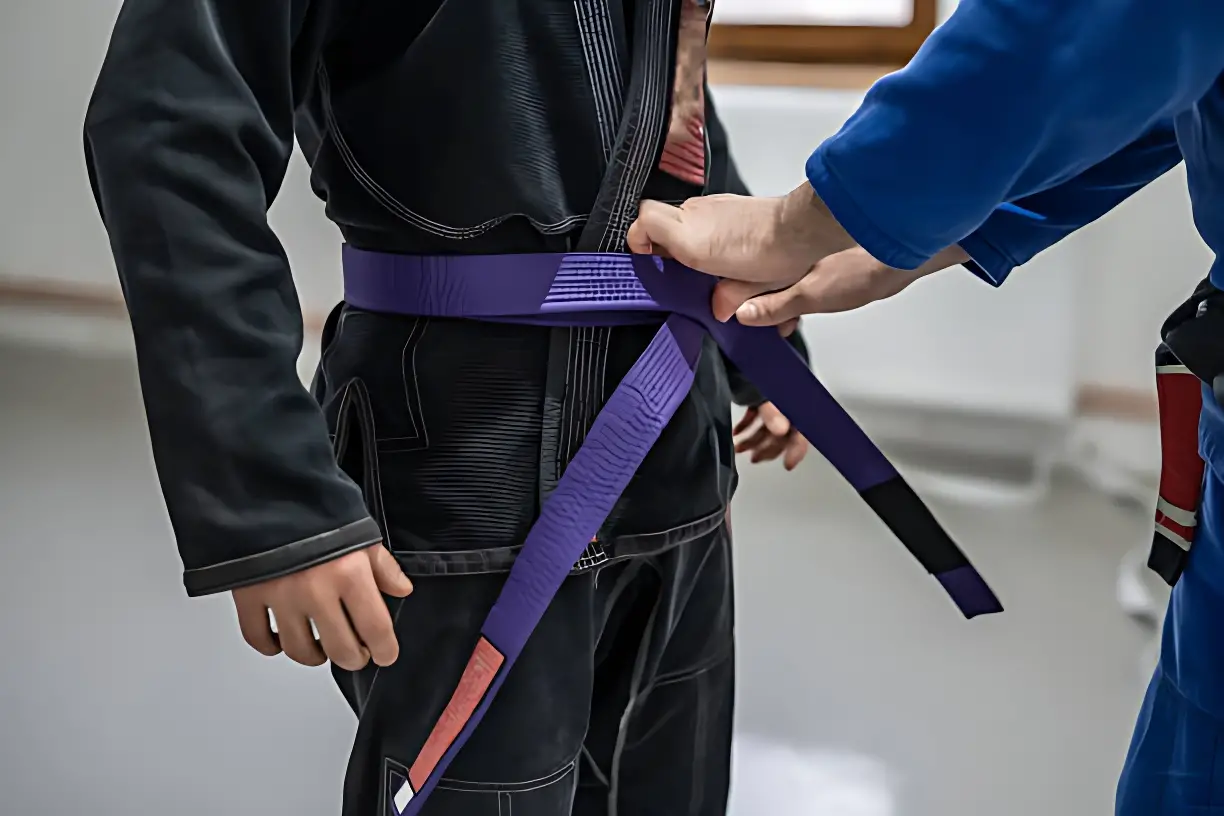
Belt: The belt indicates a practitioner’s rank and progression in BJJ. Beginners start with a white belt, and as they advance, they receive colored belts representing different levels of expertise.
Rashguard: A tight-fitting, moisture-wicking shirt often worn underneath the gi. Rashguards help prevent friction burns and offer protection against skin infections.
Grappling Shorts (No-Gi Shorts): For no-gi training, these shorts offer better mobility and grip compared to regular athletic shorts.
Mouthguard: Protects teeth and reduces the risk of dental injuries during training and sparring.
Spats: Spats protect you from having direct skin-on-skin contact with people. Because of this thin layer the likelihood of you getting something like ringworm is minimized.
More optional items include ear guards to protect you from cauliflower ear guards, athletic tape to secure fingers or joints in training, flip-flops or sandals worn to maintain hygiene in the gym, a good gear bag to carry your uniform, a water bottle to stay hydrated and the usual personal hygiene items such as towel, soap etc.
Your instructor might be the best person to ask about what to bring.
Best choice for fitness
Krav Maga vs Jiu Jitsu which one will keep you fitter? Well, any martial art can be great for developing fitness but if you’re trying to decide which art is best for your own personal fitness, then it will come down to your own personal goals and preferences.
Krav Maga for Fitness:
Krav Maga workouts are often intense and include a combination of striking, defensive maneuvers, and cardio exercises.
The fast-paced nature of Krav Maga training can improve cardiovascular fitness and overall stamina.
Krav Maga emphasizes explosive movements, agility, and core strength, contributing to improved functional fitness.
BJJ for Fitness:
BJJ training involves controlled sparring (rolling) sessions that provide a full-body workout.
Rolling sessions can be physically demanding, improving cardiovascular endurance and promoting weight loss.
BJJ’s technical aspect engages both body and mind, making it a challenging and rewarding fitness option.
You may find that you want to incorporate running, swimming, weights and other activities into your own training and you might be able to get some great advice from your coaches.
Frequently Asked Questions
Can BJJ beat Krav Maga?
So Krav Maga vs Brazilian Jiu Jiu Jitsu – who wins? Well, you might as well ask how long is a piece of string. When deciding whether BJJ can beat Krav Maga, you have to look at the context – outside of a ring or cage, martial artists are rarely going to be fighting each other. Training martial arts requires discipline and thoughtfulness. Most coaches discourage using the techniques learned unless they absolutely have to, so the notion of one art “beating” the other doesn’t necessarily apply. Both jiu-jitsu and Krav Maga are effective in their own domains and practitioners of either art should be able to defend themselves in a variety of different scenarios.
Is it possible for a BJJ fighter to defeat a Krav Maga user in a street fight? Yes. Is it possible for a Krav Maga user to defeat a jitz guy? Of course. There are too many variables that could affect the situation, such as size, weight, physical conditioning, the environment, and weapons available.
Should I take BJJ or Krav Maga?
What do you want from a martial art? If you want an art specifically designed for real-world self-defense that develops instinctual responses, situational awareness, weapons training, and aggression, Krav Maga is the answer. If you want an art designed for fighting on the ground which can be a great hobby and fantastic in the world of combat sports, Brazilian Jiu-Jitsu is the answer. Why not try a Krav Maga class and see if it appeals, and if not, try the grappling art!
Is Krav Maga useful in a street fight?
Have you been paying attention? Krav Maga’s adaptability, simplicity, efficiency realistic training, improved situational awareness, mindset, and weapons defense make good Krav Maga instruction phenomenal for a street fight. A good Krav syllabus will provide you with a complete combat system, great for self-defense.
Table of Contents
Cameron
Current Brazilian Jiu Jitsu Blue Belt training under Thiago Ximenez in Scottsdale, Arizona. Over 5 Years of BJJ Experience and experience wrestling, boxing, and more!
Facebook
Twitter
Pinterest
Reddit
There are many kettlebell manufacturers all around the world producing excellent quality kettlebell weights. Buying a higher quality kettlebell weight to start is a long-term investment, as a good pair of kettlebells with last you a lifetime, without the knurling wearing off.
The right kettlebell weight to start will make a big difference in how you can train. Too light and you will just go through the movements which is useless, and, too much weight and you are at risk of injury. We like Kettlebell Kings the most out of all the options on this best kettlebells list, let’s examine further!
When you buy a pair of kettlebells to get your kettlebell training started, making an informed decision will not only save you money and time but will also save you the frustration of not buying a good product.
If it comes to choosing the best all-around kettlebells, from having the highest quality materials, best grip, best sizes, and best service. Pro kettlebells is your answer, truly the Ferrari of all kettlebells. Grabbing a pair of kettlebells from Pro Kettlebell is the best decision you will ever make.
Pro Kettlebells
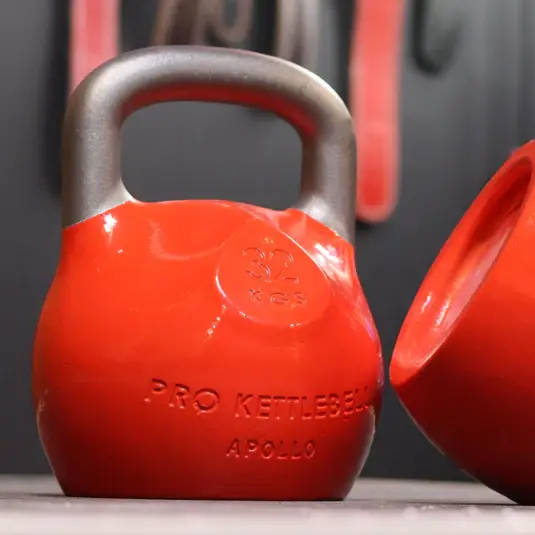
Pro Kettlebell is one of the leading producers of kettlebells. It is regarded as one of the best in the best and is often called ‘The Ferrari of Kettlebells’ because of its superior quality that will last you multiple lifetimes of rough training.
Pro Kettlebell has two traditional kettlebells which are the Atlas and Apollo. The Atlas kettlebell lineup is mainly for beginners and ranges from 4-24 kg kettlebells. The Apollo on the other hand is more premium and comes in 8-32 kg kettlebells.
Specs
Weight range:
Atlas Lineup: 4-24 kg
Apollo Lineup: 8-32 kg
Best Part:
Excellent center of gravity with a well-knurled handle
Material:
Pro Kettlebell uses the highest quality cast iron to make sure they last a lifetime.
Price:
Atlas Line Pro Kettlebells start from 114.99 USD and Apollo Line Pro Kettlebells start from 139.99 USD
Pros
1. Pro Kettlebell offers a wide range of weights to choose from, catering to different fitness levels.
2. The kettlebells are made with high-quality materials, ensuring durability and longevity.
3. They have ergonomic handles that provide a secure and comfortable grip during workouts.
4. Pro Kettlebell offers a variety of training programs and resources to help users maximize their workouts.
Cons
1. The color options for Pro Kettlebell may be limited compared to some other brands.
2. Availability of Pro Kettlebell may vary depending on location and stock, meaning you could face long re-stocking periods.
3. The larger kettlebells from Pro Kettlebell can be more expensive compared to smaller ones.
We earn a commission if you make a purchase, at no additional cost to you.
Best Budget Kettlebell
It’s already hard for most people to make do with what they have and earn, pushing a hefty cost for fitness equipment is surely not everyone’s piece of cake. However, you do not need to spend thousands on weights and machines to have a decent home gym workout.
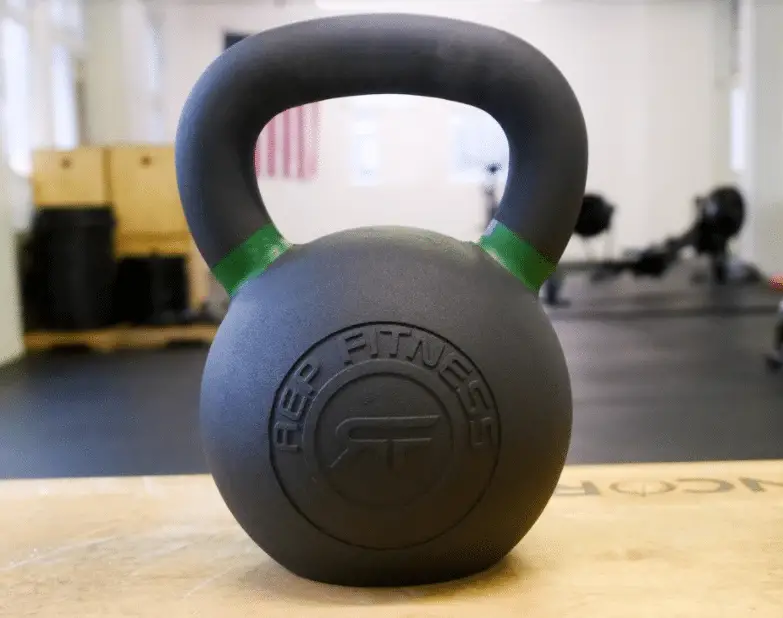
The reason for this is that a popular brand called Rep Fitness Kettlebell, has you covered! Rep Fitness is one of the best kettlebell producers, manufacturing excellent quality equipment at the lowest cost, making sure you don’t need to break the bank fulfilling your fitness goals!
Rep Fitness Kettlebells
Rep Fitness Kettlebells are a fantastic kettlebell manufacturer. They offer a wide weight range, from 4 kg to 48 kg, catering to beginners and advanced users alike. The best part about their kettlebells is their solid construction and powder-coated finish, which provides a comfortable grip and prevents rusting, allowing these weights to last a lifetime of use!
The kettlebells are made from high-quality cast iron, ensuring durability and longevity. As for the price range, it varies depending on the weight, starting from around $30 and going up to $150.
Specs
Weight range:
4kg to 48kg
Best Part:
Solid build quality and powder-coated finish
Material:
These are high-quality cast iron kettlebells made to withstand rough use
Price:
Starts from $30
Pros
1. Wide weight range available, catering to different fitness levels.
2. Solid construction and powder-coated finish for a comfortable grip and rust prevention.
3. Made from high-quality cast iron, ensuring durability and longevity.
4. Offers a variety of handle sizes for different hand sizes and preferences.
5. Reasonably priced compared to other high-quality kettlebell brands.
Cons
1. Limited color options compared to some other brands.
2. Some users may find the handle texture to be a bit rough.
3. Availability may vary depending on location and stock.
4. The weight increments may not suit everyone’s specific needs.
We earn a commission if you make a purchase, at no additional cost to you.
02/24/2026 07:02 am GMT
Best Kettlebell For Home Gyms
The beauty of kettlebell training is that you can build a great body in the comfort of your own home gym. Of course with so many options and manufacturers, the question arises of what the best kettlebell is for home gyms.
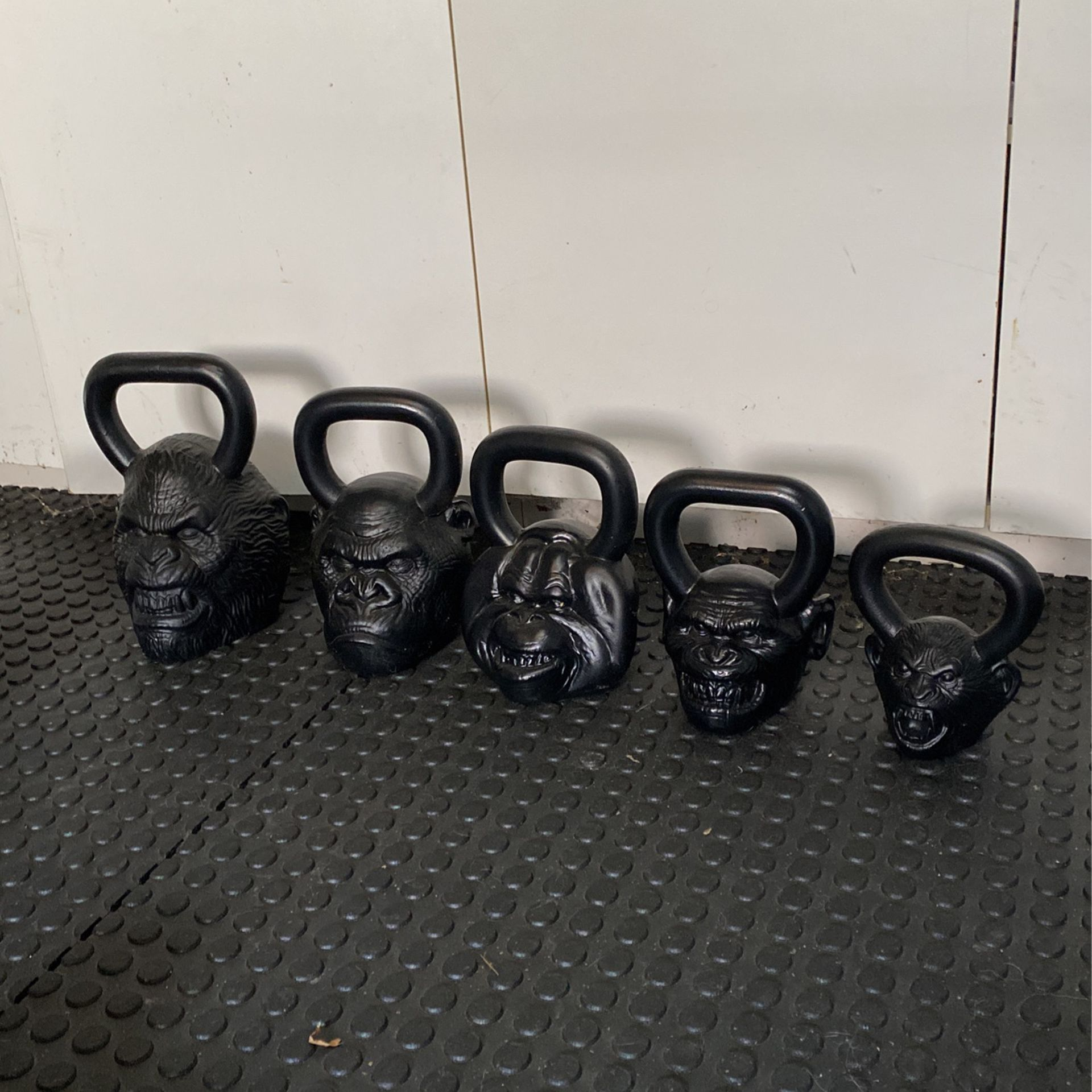
Onnit kettlebells are definitely the answer to all your home gym inquiries, they are designed with durability and versatility in mind, and therefore made with materials that will withstand a lifetime of regular rough usage! They have an amazing weight range for you to choose from according to your fitness levels and goals.
Whether you are a beginner, intermediate, or advanced lifter, Onnit kettlebells will definitely be an excellent addition to any level of home gym!
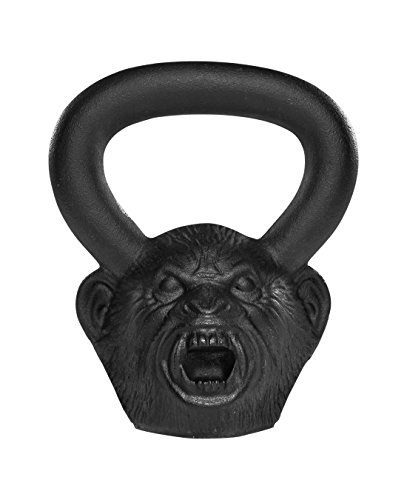
Onnit Kettlebells
Onnit Kettlebells are an excellent choice for your fitness routine. They offer a wide weight range, starting from 6 kg and going all the way up to 32 kg, making them suitable for beginners and advanced users alike. The best part about Onnit Kettlebells is their unique design and construction.
They are made from high-quality cast iron and feature a chip-resistant coating, ensuring durability and longevity. The kettlebells also have a flat bottom, allowing for stability during exercises like renegade rows and kettlebell push-ups.
As for the price range, it varies depending on the weight, starting from around $35. Overall, Onnit Kettlebells are a great investment for anyone looking to incorporate kettlebell training into their fitness routine.
Specs
Weight range:
6-32 Kg
Best Part:
Unique design
Material:
Cast iron kettlebells with a chip-resisting coating
Price:
Starting at $35
Pros
1. Onnit Kettlebells feature a sleek and stylish design, making them stand out from other brands.
2. The kettlebells have a wide, comfortable handle that allows for a secure grip during workouts.
3. Onnit offers unique kettlebell designs, such as the Primal Bell series inspired by animals, adding a fun and motivating element to your workouts.
4. The chip-resistant coating on the kettlebells ensures they maintain their appearance and durability over time.
5. Onnit provides excellent customer service and support, ensuring a positive experience for their customers.
Cons
1. The price range for Onnit Kettlebells can be higher compared to some other brands in the market.
2. Availability of certain designs or weights may be limited, depending on stock and demand.
3. Some users may find the handle texture or shape of Onnit Kettlebells less comfortable compared to other brands.
We earn a commission if you make a purchase, at no additional cost to you.
Best Adjustable Kettlebell
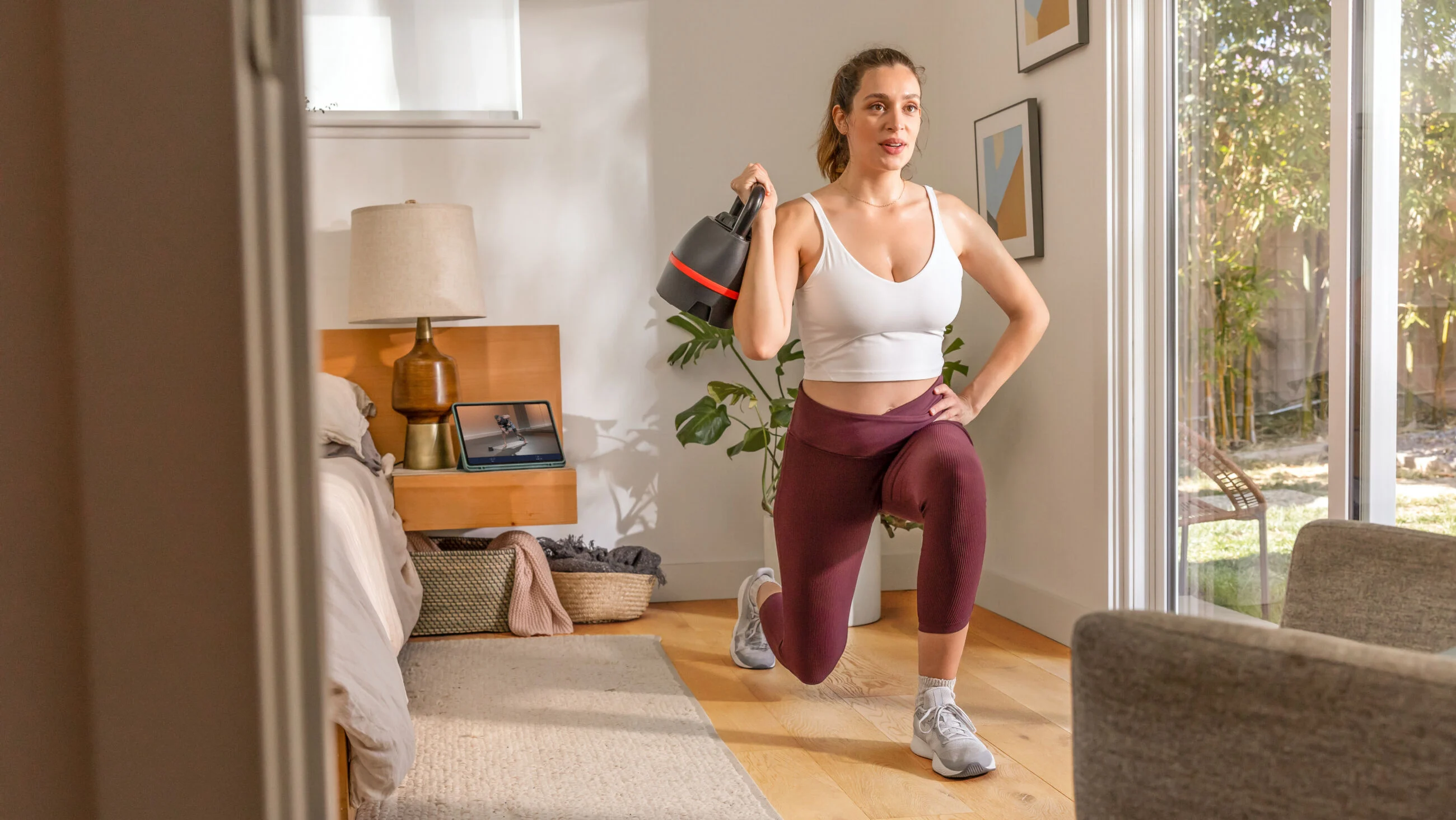
Bowflex adjustable kettlebells are the best adjustable kettlebells for home gyms because they offer a convenient and space-saving solution. Adjustable kettlebell training is great for beginners looking to get into training but wants to save themselves from the hassle of buying multiple kettlebells.
With just a turn of a dial, you can easily adjust the weight from as low as 8 pounds to as high as 40 pounds, allowing for a wide range of exercises and progressions. The compact design of the Bowflex adjustable kettlebells makes them ideal for small spaces, making them easy to store and use in a home gym setup.
Bowflex Adjustable Kettlebell
Bowflex Adjustable Kettlebells are one of the best choices for your fitness routine. They offer a wide weight range, starting from as low as 8 pounds and going all the way up to 40 pounds, allowing for gradual progression as you get stronger.
The best part about Bowflex Adjustable Kettlebells is their space-saving design. With just one kettlebell, you can easily adjust the weight in small increments, eliminating the need for multiple kettlebells cluttering your workout space. They are made from high-quality materials, featuring a durable and sturdy construction.
The price range for Bowflex Adjustable Kettlebells varies depending on the model, starting from around $150 and going up to $300. Overall, Bowflex Adjustable Kettlebells are a convenient and versatile option for anyone looking to incorporate kettlebell training into their fitness routine.
Specs
Weight range:
8-40 Pounds
Best Part:
Space-saving design
Material:
High-quality metal plates that you can add or remove
Price:
$150-$300
Pros
1. Bowflex Adjustable Kettlebells offer a wide weight range, allowing for gradual progression and accommodating various fitness levels.
2. The space-saving design of these kettlebells eliminates the need for multiple kettlebells, saving you space and money.
3. The adjustable weight feature allows you to easily switch between different exercises and target different muscle groups.
4. Bowflex Adjustable Kettlebells have durable construction, ensuring they can withstand rigorous workouts.
5. The kettlebells come with an easy-to-use dial system that allows for quick and seamless weight adjustments.
Cons
1. The price range for Bowflex Adjustable Kettlebells can be higher compared to traditional kettlebells.
2. Some users may find the shape and grip of adjustable kettlebells less comfortable or different compared to regular kettlebells.
3. The weight increments on adjustable kettlebells are not as small of increments as you would find in standard kettlebells, making progressive overload harder.
4. Adjustable kettlebells have a lot of moving parts, that could break over time, making them less reliable than standard cast iron kettlebells.
We earn a commission if you make a purchase, at no additional cost to you.
02/24/2026 05:01 pm GMT
Best High-End Kettlebell
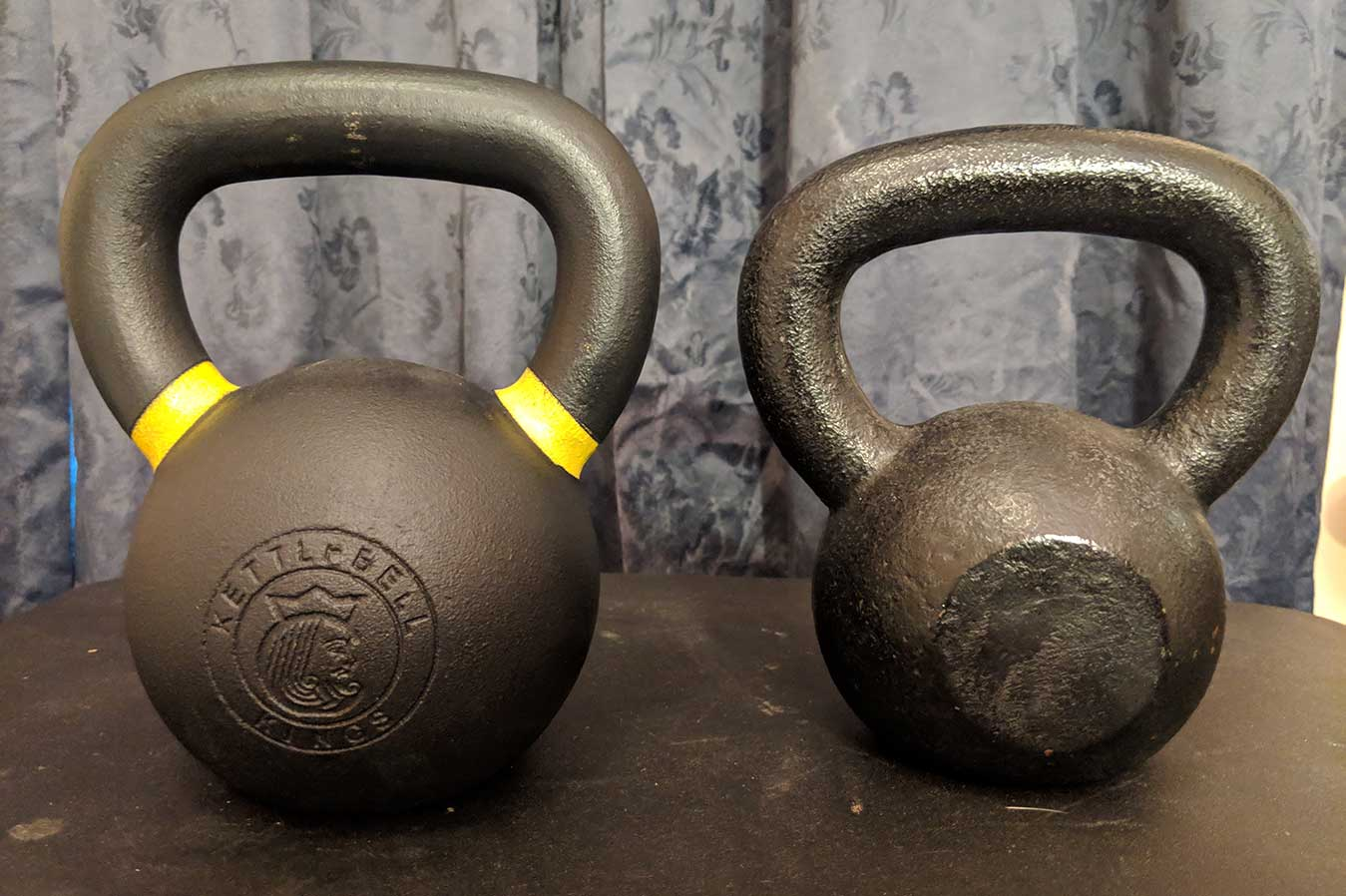
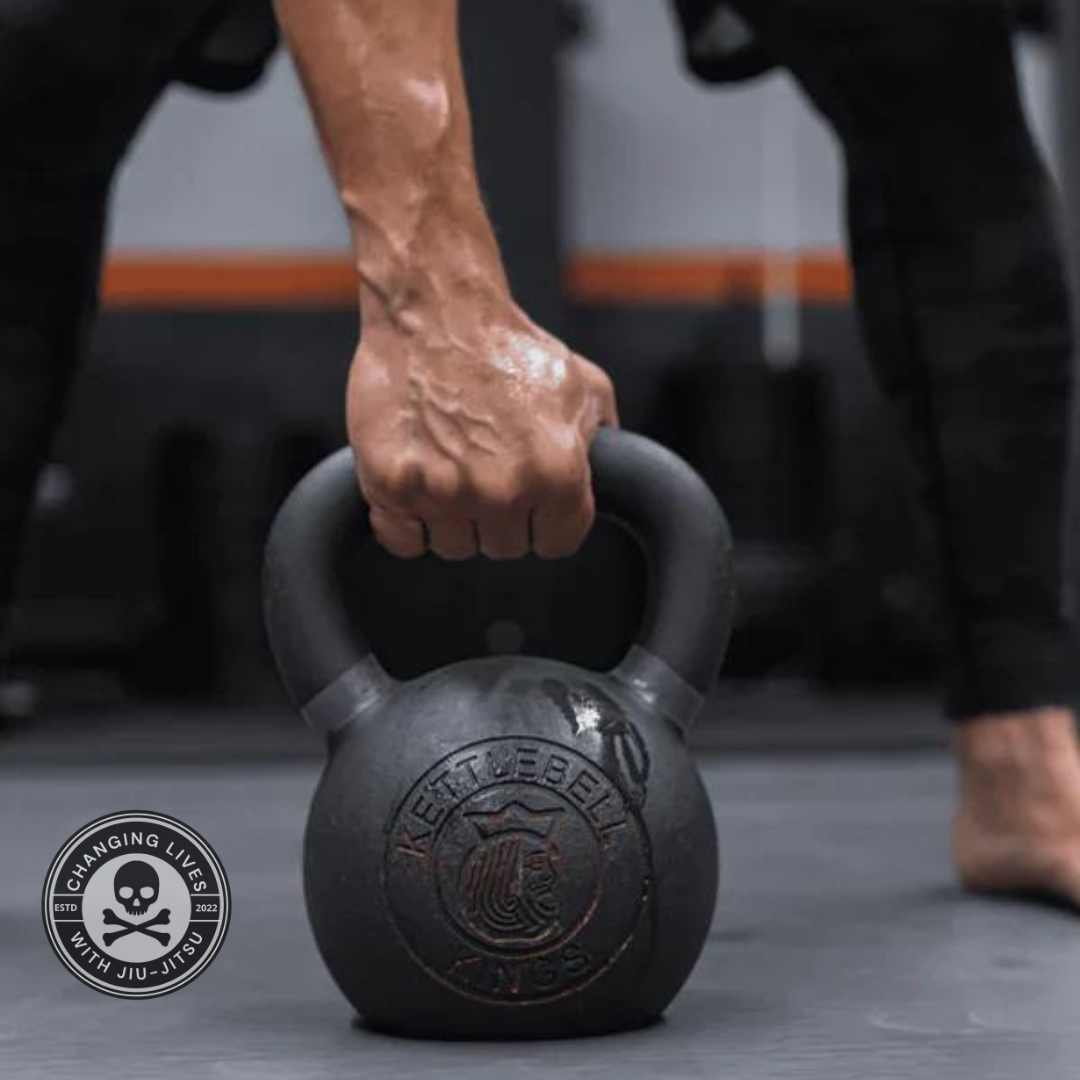
If you are looking to go absolutely all out on kettlebells and have a few stacks of cash handy, a few pairs of Kettlebell Kings powder coat kettlebells are definitely the best kettlebells you could get!
Powder-coated kettlebells by Kettlebell Kings are the best high-end kettlebells because they offer exceptional quality and performance.
The powder coating provides a smooth and durable finish that not only enhances the kettlebell’s aesthetic but also protects it from rust and wear allowing them to last multiple lifetimes! The textured handle ensures a secure grip, even during intense workouts.
Kettlebell Kings offers a wide range of weight options, allowing you to progress and challenge yourself as you improve your strength and endurance.
These high-end kettlebells are beautifully crafted with attention to detail, making them a reliable and long-lasting investment for your home gym or even commercial/private gym.
Powder Coated Kettlebells Kettlebell Kings
If you are looking for something high-end, Powder coated kettlebells by Kettlebell Kings are a fantastic choice for your fitness routine. They offer a wide weight range, starting from as low as 12 kilograms and going all the way up to 32 kilograms, catering to various strength levels and fitness goals.
The best part about Kettlebell Kings’ kettlebells is their high-quality powder coating. This coating provides a smooth and durable finish, ensuring a comfortable grip and preventing any chipping or rusting over time. The kettlebells are made from solid cast iron, which adds to their durability and stability during workouts.
As for the price range, it varies depending on the weight and design, starting from around $70. Overall, Kettlebell Kings’ powder-coated kettlebells offer a reliable and long-lasting option for anyone looking to incorporate kettlebell training into their fitness routine.
Specs
Weight range:
12-32 Kg
Best Part:
Premium Powder coating
Material:
High-quality solid cast iron
Price:
Starting from 70 United States Dollars
Pros
1. Kettlebell Kings’ powder-coated kettlebells have a smooth and durable finish, providing a comfortable grip during workouts.
2. The wide weight range available, from 12 kilograms to 32 kilograms, allows for progressive training and accommodates various fitness levels.
3. These kettlebells are made from solid cast iron, ensuring durability and stability during intense workouts.
4. The powder coating helps prevent chipping and rusting, extending the lifespan of the kettlebells.
5. Kettlebell Kings offers a wide selection of designs and colors, allowing you to personalize your workout equipment.
Cons
1. The price range for Kettlebell Kings’ powder-coated kettlebells is much higher compared to other options on the market.
2. Some users may find the powder coating to be slightly slippery when their hands get sweaty during intense workouts.
We earn a commission if you make a purchase, at no additional cost to you.
02/24/2026 03:00 pm GMT
Best Kettlebell Set
If you are looking to invest a decent amount into your home gym and want to include multiple kettlebells into your arsenal to make sure you are able to perform every exercise in a challenging manner with proper form, Pro kettlebell is your one-stop solution!
Pro Kettlebell has the best kettlebell set because they offer a wide range of weights and high-quality materials. Their kettlebells are designed for durability and comfort, with handles that provide a secure grip, their design is also great for creating an aesthetic. Plus, they have a variety of training programs and resources to help you get the most out of your workouts.
Pro Kettlebells
Pro Kettlebell is one of the leading and best producers of kettlebells. It is regarded as one of the best in the best and is often called ‘The Ferrari of Kettlebells’ because of its superior quality that will last you multiple lifetimes of rough training.
Pro Kettlebell has two traditional kettlebells which are the Atlas and Apollo. The Atlas kettlebell lineup is mainly for beginners and ranges from 4-24 kg kettlebells.
The Apollo on the other hand is more premium and comes in 8-32 kg kettlebells. These kettlebells are reasonably priced and are the best kettlebells for beginners because of their simplicity and also after-sales services.
Specs
Weight range:
Atlas Lineup: 4-24 kg
Apollo Lineup: 8-32 kg
Best Part:
Excellent center of gravity with a well-knurled handle
Material:
Pro Kettlebell uses the highest quality cast iron to make sure they last a lifetime.
Price:
Atlas Line Pro Kettlebells start from 114.99 USD and Apollo Line Pro Kettlebells start from 139.99 USD
Pros
1. Pro Kettlebell offers a wide range of weights to choose from, catering to different fitness levels.
2. The kettlebells are made with high-quality materials, ensuring durability and longevity.
3. They have ergonomic handles that provide a secure and comfortable grip during workouts.
4. Pro Kettlebell offers a variety of training programs and resources to help users maximize their workouts.
Cons
1. The color options for Pro Kettlebell may be limited compared to some other brands.
2. Availability of Pro Kettlebell may vary depending on location and stock, meaning you could face long re-stocking periods.
3. The larger kettlebells from Pro Kettlebell can be more expensive compared to smaller ones.
Shop Kettlebell Sets
Cut the hassle out of having to try out different brands! Buy a set of kettlebells and save time!
Kettlebell training has a strong link to grip strength. People with smaller-sized hands could face some troubles with kettlebells, as they often have a thick handle, this makes every kettlebell exercise a grip strength training exercise.
Powder-coated kettlebells by Kettlebell Kings are the best kettlebells for small hands because they offer a comfortable and secure grip. The powder coating provides a smooth, slightly textured surface that enhances grip without causing discomfort or irritation, these kettlebells also have beautifully carved knurling to make sure your grip doesn’t give out during exercises.
The handle design has excellent and deep knurling and is carefully crafted to fit smaller hands, allowing for better control and maneuverability during exercises. Kettlebell Kings offers a range of weight options, so you can choose the perfect kettlebell that suits your strength and fitness level.
With their strong commitment to quality, making their higher prices justified as Kettlebell Kings ensures that individuals with small hands can enjoy a comfortable and effective workout experience.
Powder Coated Kettlebells Kettlebell Kings
Many often think that kettlebell training is not for those with smaller hands, the reason being that to train with a kettlebell you need decent grip strength to perform all sorts of high-velocity exercises. However, Kettlebell Kings powder coat kettlebells have you covered1
These bells have smaller, less thick handles allowing you to properly grip them even if you have small hands. They come in a weight range of 12-32 Kg and are made from the highest quality materials that will withstand years and years of use without complaints.
Although being much more expensive than other options starting at $70, it is definitely worth it for the quality and aesthetic of these kettlebells.
Specs
Weight range:
12-32 Kg
Best Part:
Premium Powder coating
Material:
High-quality solid cast iron
Price:
Starting from 70 United States Dollars
Pros
1. Kettlebell Kings’ powder-coated kettlebells have a smooth and durable finish, providing a comfortable grip during workouts.
2. The wide weight range available, from 12 kilograms to 32 kilograms, allows for progressive training and accommodates various fitness levels.
3. These kettlebells are made from solid cast iron, ensuring durability and stability during intense workouts.
4. The powder coating helps prevent chipping and rusting, extending the lifespan of the kettlebells.
5. Kettlebell Kings offers a wide selection of designs and colors, allowing you to personalize your workout equipment.
6. The Smaller handles on these kettlebells, make them great for users with smaller hands and grip issues.
Cons
1. The price range for Kettlebell Kings’ powder-coated kettlebells is much higher compared to other options on the market.
2. Some users may find the powder coating to be slightly slippery when their hands get sweaty during intense workouts.
Keeping this in mind, kettlebell exercises are some of the most efficient and beneficial forms of exercise, they can cater to pretty much every goal you may have in mind. Whether you want to lose weight, gain muscle, or increase mobility, kettlebell training has got you covered.
Greatly improves muscular weaknesses and imbalances
Kettlebell workouts are an excellent option for fixing and reducing muscle imbalances. This is because many kettlebell exercises can be done unilaterally, in other words with one hand.
This helps stimulate and stabilize muscles. Using kettlebells will work these small muscles in rhythmic coordination, setting out stability and balance for the entire movement. As a result, reducing the risk of injury and improving athletic performance, or even helping with everyday house chores.
Posterior Chain Muscle Activation
The posterior chain or the muscles at the back of your body, like your lower back, hamstrings, and glutes are arguably the most important muscle group in your body. The reason is that these muscles are responsible for all hinging and explosive movements.
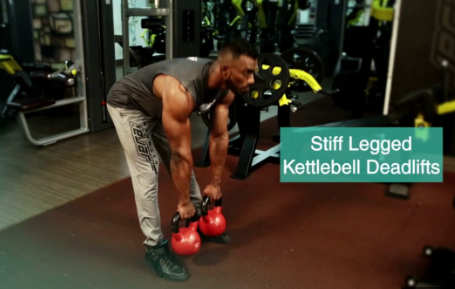
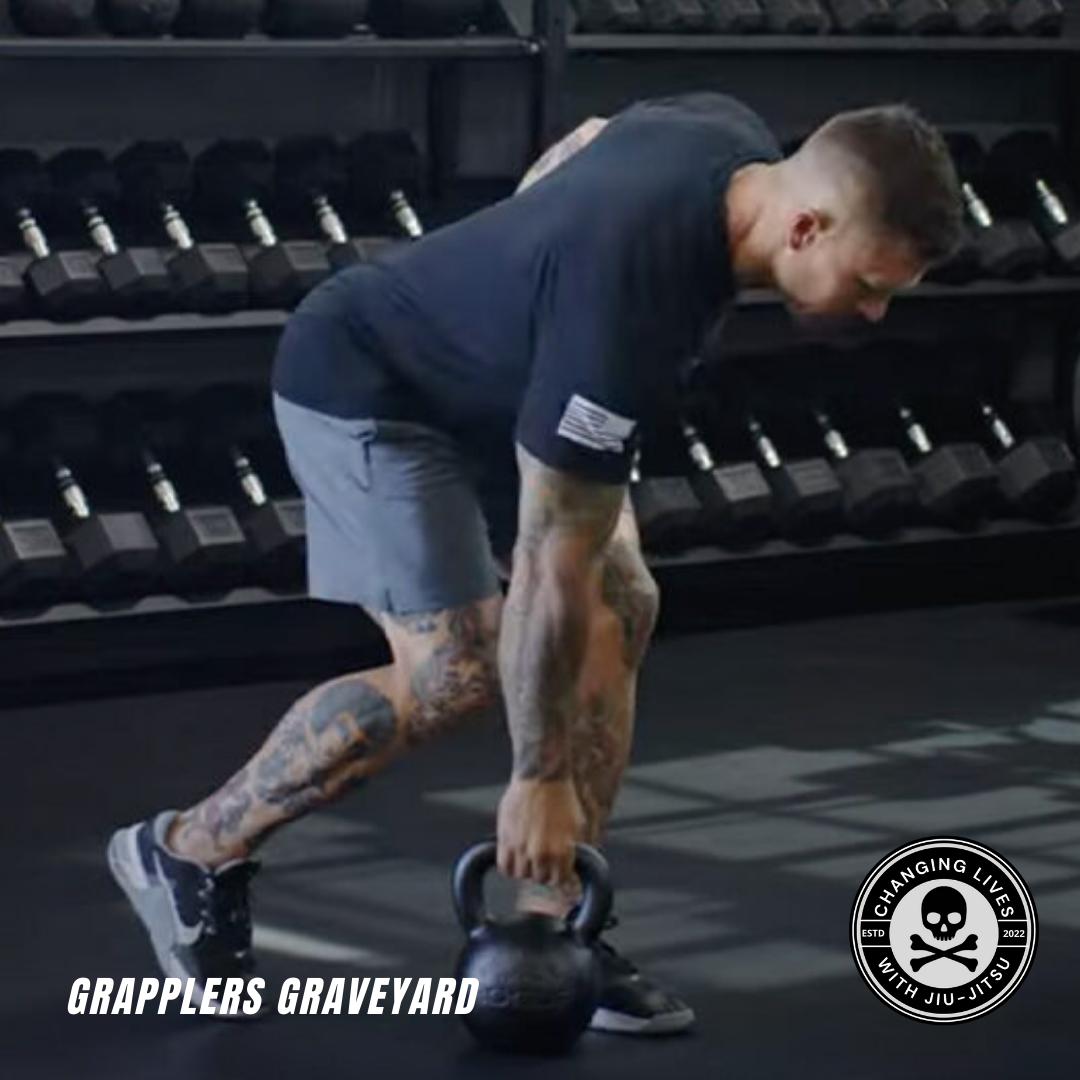
Training your posterior chain is quite simple. You can train your glutes, hamstrings, and lower back with just kettlebell swings and kettlebell deadlifts. Practice these regularly to a high intensity and you will become stronger than ever in no time!
Builds Cardiovascular Endurance
Kettlebell training comprises fast-paced exercises that need a lot of movement. These intense workouts have you gassed out within minutes and help you push your cardiovascular endurance.
Cardio training is essential for making sure you do not get tired during sports or just during day-to-day vigorous tasks.
Whether you build your cardiovascular endurance with kettlebells or some other equipment, you should make it a priority. Strengthening your cardiovascular endurance reduces the risk of heart disease, increases blood flow throughout your body and it also cleanses and strengthens your lungs.
Serious Fat-Burning Workouts
The average person burns around 700 to 1000 calories an hour from kettlebell training, depending on the intensity of the workout. This makes kettlebell training a great tool for losing fat in a healthy and quick manner.
Burning 2500 calories is the equivalent of burning a pound of fat. Three kettlebell workouts of a decent intensity are enough to lose a pound of fat every week. Although this may not seem like much, over a period of a few months, this will accumulate into a serious body transformation.
Kettlebells make fat loss much easier than mainstream influencers and trainers make it seem. Keep it simple, train hard, eat clean, and be patient to achieve your goals and enjoy the journey as there is no overnight solution to fat loss.
Improves core strength and stability
One of the most functional reasons to use kettlebells is to develop core strength and stability in the trunk region. The core has an important role in keeping the body grounded especially during intense movements.
Kettlebell movements are high-velocity movements with large ranges of motion that challenge the core muscles to stop the body from falling over. Almost every exercise with kettlebells is a core exercise if done with proper form.
Whether you aspire to be an athlete or just want to have a beautiful set of abs for a beach day, training your core strength and stability will go a long way toward your core goals.
How to Incorporate Kettlebell Movements Into Your Training
In essence, you can form a full-body workout with kettlebells in a short period of time. A full-body kettlebell workout just three times a week will provide excellent results and benefits. With kettlebells, less is more as you do not need to train every single day for long hours.
You can easily incorporate kettlebells into your daily fitness routine, without needing to take out long hours to achieve your fitness goals. A short 20-minute workout with one pair of kettlebells will surely have you gassed out by the end of it and allow you to gain all the benefits of kettlebell training.
Kettlebells are truly a feat of engineering because of how versatile and easy to use they are. You can achieve your fitness goals without breaking the bank or having to pour in hours of your day to go to the gym.
How Much Should You Pay for a Kettlebell?
Kettlebells can cost you an average of $1.95 per pound but prices between $1.50 to $2.50 per pound are the most common in today’s market ($3.30 to $5.50 per kilogram). The reason for this range is that there are many different kettlebell manufacturers producing kettlebells of all different qualities.
Some brands produce high-end competition kettlebells for commercial gyms. Others on the other hand produce cast iron kettlebells for beginners and those looking to get weights for their home gym. The amount you pay for cast iron kettlebells depends on you and your budget.
You can easily find both used and brand-new kettlebells of all different weights and qualities depending on your goals and the resources you have available. Whatever kind you choose will definitely get the job done!
What To Consider Before Buying Kettlebells
There are a few things to consider before buying kettlebells so you make sure you buy the right kettlebell for you. First off is the weight range, kettlebells come in a wide weight range from less than 4kg to over 32 kg, the weight for you depends on your fitness experience, age, and body weight.
If you are young and quite active, it is definitely recommended to challenge yourself a bit and get heavier kettlebells, on the other hand, if you are a beginner with little to no experience, lighter kettlebells will suit your cause better.
Another aspect you should consider is your budget and the amount of space you have available. Kettlebells come in a wide price range, they can cost you an average of $1.95 per pound but prices between $1.50 to $2.50 per pound are the most common in today’s market ($3.30 to $5.50 per kilogram).
Kettlebells can cost you a decent amount, especially if you want to get weights on the heavier side if you are unwilling to spend a good amount on equipment, it is highly recommended you join a good gym, every gym has a good range of kettlebells and plenty of space for all your kettlebell training needs.
Kettlebell training can be done with multiple kettlebell types, whether you use adjustable kettlebells or standard kettlebells is up to you. Both variants have their benefits and their drawbacks and depending on you, one kettlebell might be more appealing than the other.
Whatever type of kettlebell you choose, train hard, eat a high-protein diet, and get proper rest in between resistance training sessions, and over time you will gain strength, and muscle and achieve whatever fitness goal you may have!
Adjustable kettlebells
Adjustable kettlebells are great for homeowners who have limited funds and space to provide for their fitness goals. These kettlebells allow you to add and remove weight from the stem of the equipment. Most adjustable kettlebells go up to 18-24 kg and are quite versatile.
The main downsides to adjustable kettlebells are that these can often be a bit costly if bought brand new, they are not widely available, and might be hard to find outside America and Europe. Another downside is that because adjustable kettlebells have lots of moving parts, they can break from wear and tear over time if not of good quality material.
Standard Kettlebells
Standard kettlebells are pretty much a round weight with a handle on it, the kettlebell handle itself has barbell-like knurling for grip. These regular kettlebells are commonly available around the market, brand new as well as used.
Essentially there are only 2 types of standard kettlebells, cast iron kettlebells and competition kettlebells. Cast iron kettlebells are basically slightly slower quality kettlebells that are much cheaper compared to their alternatives.
The main difference is that with higher weights, the kettlebell weight and its handle both get bigger. Cast iron kettlebells are great for home gyms where you want to achieve your goals without breaking the bank. They are rugged, will last you a lifetime, and are easily available in the market, used and brand new!
Competition kettlebells on the other hand are for serious athletes, these are much more expensive than cast iron kettlebells because of their superior quality. Competition kettlebells are highly compressed meaning even with higher and heavier weights, the size of the kettlebell remains the same.
This is great as most people do not want to swing around a huge kettlebell, but rather one that is just as heavy and much smaller is far more suitable. Competition kettlebells are usually used by serious athletes and are often found in most cross fit gyms. The handles have better knurling, making them easier to grip and because of the smaller size, they are more comfortable on your joint health and wrists.
Frequently Asked Questions
Listed below are some of the most commonly asked questions related to kettlebell training, kettlebell types, kettlebell weights, and kettlebell workout routines.
What is the best kettlebell to use?
Both the adjustable kettlebell and the standard kettlebell have their purpose. What makes one better than the other truly depends on your circumstances. If you have the money and space available, look no further than to buy a range of standard competition kettlebells.
If you prefer to not spend too much on equipment, used cast iron kettlebells will also get the job done. Lastly, if you have limited space available for working out, adjustable kettlebells are definitely the best option for you.
Do I need one or two Kettlebells?
The beauty of kettlebell training is its versatility and how easy it is to get a good workout in with kettlebells. If the question arises of how many kettlebells one needs to efficiently be able to target every muscle group properly, then the answer is 2 kettlebells.
2 kettlebells are all you need to achieve all your goals regardless of your fitness level and experience. You will need a kettlebell of heavier weight for compound movements like the clean and jerk, goblet squat, and deadlift.
The reason why these movements require heavier weights is that they employ multiple muscle groups and therefore need more weighted resistance to be trained.
The second kettlebell should be a bit lighter which would be used to train isolation-based exercises. Isolation exercises require a lighter kettlebell because only one muscle group is being targeted in the movement, like the seated shoulder press and bicep curl.
However, it should be noted that if your budget is a bit tight, one kettlebell will do the trick! One heavy kettlebell is more than enough to perform all compound and isolation exercises unilaterally.
What Weight Do I Buy?
More often than not people assume that 5 or 10-lb kettlebells are good enough for a beginner kettlebell workout.
However, this is not at all the case if you go too light you are simply wasting your time going through the movements. If you go too heavy, you risk getting injured as you sacrifice form.
It is very important to challenge yourself safely; to do so you must pick a decent weight to work out with. The sweet spot for most kettlebell workouts for most women is 10-25-lb kettlebells; for men, it’s 25-45 lbs. Anything under this, and you probably won’t break a sweat using them and you’ll just be doing the movements with no real benefits.
The right size for you may also depend on your age, weight, and fitness experience. However, it should be noted that if you choose the right size for you, you will gain all the benefits most quickly and efficiently, that too with the lowest risk of injury.
How many times per week should I lift kettlebells?
Kettlebell training is a full-body workout routine. The beauty of kettlebell exercises is that they train multiple groups at a time. Exercises like the kettlebell swing not only focus on your lower body but also train your upper body to a decent extent, this movement trains your hamstrings, glutes, and quads and also your core, lower back, and shoulders.
Since kettlebell training trains your entire body, it means that all the muscle groups in your body achieve hypertrophy and therefore need at least 48 hours of recovery time.
Without optimal rest periods in between workout sessions, your muscles will never gain any size strength and will instead get weaker and become prone to injury.
Therefore, kettlebell workouts three times a week are the sweet spot for kettlebell training. This is great because it is recommended to train all your muscle groups 2-3 times a week for maximum muscle growth.
Moreover, this makes kettlebell training versatile and suitable for those who cannot hit the gym every day for hours, instead, they can workout in the comfort of their home.
Will I lose weight doing 100 kettlebell swings a day?
Kettlebell workouts are an effective exercise and very simple to perform and can be executed domestically and that too under 15-20 minutes in an efficient manner, and that too for really cheap. Performing 100 kettlebell swings per day is indeed a productive manner of close to 100 calories every day.
This one-motion kettlebell workout is the answer to all your health-related benefits: losing fat, getting in form, bulking up muscles, and increasing your overall work capacity. Losing fat is a very common advantage seen by doing kettlebell swings over a period of time.
All in all, kettlebell squats and swings both are a form of HIIT workout which means that it burns way more calories than regular steady-state cardio exercise such as running, cycling, and rowing.
For a prolonged period of kettlebell exercise, such as that for an hour, an induvial is capable of losing as much as 1200 calories! Thus, proving kettlebell workouts are a great way of losing fat and building muscle groups simultaneously over a period of time.
Is 20 minutes of kettlebells enough?
Many times in our life, we plan to follow a specific workout regime but usually end up in vain. The reasons can be endless: some people find it hard to extract crucial work hours from their day to dedicate to the gym instead.
While others argue that workout machines can be costly and space-consuming. It is almost a wonder how kettlebells have got you covered in every obstacle that halts your fitness routine.
Kettlebell exercise not only provides us with enthralling health factors but also acts to be time friendly. Results can be observed in very little time, as less as 20-30 minutes.
Four to five kettlebell exercises thrice a week with decent intensity are enough to build strong cardiovascular tissues, give solid mobility and strengthen the back and leg muscles. A total of 400 calories can be burned in a span of 20-30 minutes.
Given the real health benefits, in minimum workout time and with limited sessions every week, kettlebells are what provide us with an all in all functional regime in the world of workouts. This exercise is sure to condition you with the best form of health and also not get in the way of life.
Can you really build muscle with kettlebells?
Kettlebells are a magic wand to any fitness enthusiast because, on a sway, they can shed fat, bulk up muscles, and develop a fit and stoic structure in a limited period of time with limited resources. Kettlebells are usually known for being an instant remedy for building up muscles and reducing body fat.
Similar to other strength training routines, this exercise is also dependent on intensity, overall training volume, rest periods, and recovery. The beauty of kettlebells is that it works as a compound exercise, interacting with multiple joint muscles altogether.
This leads to the release of high-quality testosterone. With kettlebell squats, movements are carried in more depth. The muscles are contracted in their full range meaning maximum capacity. This too, provides fortification of muscles, making sure you pack some serious mass.
Therefore, kettlebells are a powerful tool for gaining some size on your frame. If taken with the right approach and use for it, it can be just as useful as a barbell to gain muscle. The correct approach can be that of choosing effective exercises and performing the correct sets of reps with an adequate mass.
Getting good nutrition is also among the key factors which usually go neglected. Lastly, getting good amounts of rest and letting your muscles respire will restore your power to hit back.
Taking all these measures into account, it is guaranteed that one can build a significant amount of muscles in a regulated, aerobic, and steel manner.
What exercises are done in kettlebell?
Kettlebells are on the rise, by their fame bandwagon, and for good reasons. We have discussed the astounding benefits and reasons why kettlebells are the most favored and efficient exercise skill. They also include many variations in their training. The best are The Turkish Get Up, the Swings, and the Goblet Squats.
The benefits of the Turkish Get Up exercise are wonderful and unending. It gets the entire body in flow, resulting in thorough muscle groups stimulating and contracting. One ends up with a better posture, enhanced coordination, and reduced chances of muscle pain.
As for the Swings, it’s a powerful calorie burner that results in a stronger posterior chain and improved cardiorespiratory fitness. Lastly, for the Goblet Squats or for any squat, the quality which stands out the most is the endurance and strength it brings. Plus it tones the lower body and strengthens your core.
The most looked-up aspect of kettlebells is how one can devote to a type of exercise depending on their body exertion, strength, and the result they aim for. Fitness enthusiast has the option of exploring as much as they want in this extensive web of skills.
Table of Contents
Cameron
Current Brazilian Jiu Jitsu Blue Belt training under Thiago Ximenez in Scottsdale, Arizona. Over 5 Years of BJJ Experience and experience wrestling, boxing, and more!
Facebook
Twitter
Pinterest
Reddit
The sumo deadlift, specifically the kettlebell sumo deadlift, is one of the best lower-body exercises. Perform this exercise correctly and you will build the lower body of your dreams! This movement has countless benefits and different variations to target different muscles better.
The Difference Between a Kettlebell Squat and a Kettlebell Deadlift?
The main difference between a kettlebell squat and a kettlebell deadlift is the movement pattern. In a kettlebell squat, you start with the kettlebell in front of your chest, and then you lower your hips down into a squat position, keeping your back straight and chest up.
On the other hand, in a kettlebell deadlift, you start with the kettlebell on the ground in front of you, and then you hinge at the hips, keeping your back straight, and lift the kettlebell up to a standing position.
Squats focus more on the lower body, while deadlifts engage the posterior chain. Both of these movements are excellent exercises that should be incorporated into your training routine for a multitude of benefits!
Difference Between a Kettlebell Deadlift and a Regular Deadlift
When it comes to comparing a kettlebell deadlift and a regular conventional barbell deadlift, there are a few key differences. First, the main equipment used is different. In a regular kettlebell deadlift performed, you typically use a barbell with plates, while in a kettlebell deadlift, you use a kettlebell.
Secondly, the grip is different. In a classic barbell deadlift, you typically use an overhand, mixed, or hook grip, while in a standard kettlebell deadlift, you can use either an overhand or a suitcase grip.
Lastly, the movement pattern is slightly different. In barbell deadlifts, you start with the barbell on the ground, and you lift it up by extending your hips and knees.
In a kettlebell deadlift, you start with the kettlebell on the ground between your legs, and you lift it up by extending your hips and knees as well. Both exercises target similar muscle groups, but the equipment and grip variations make them slightly different.
Kettlebell Dead Lift vs Kettlebell Sumo Deadlift
Conventional kettlebell deadlifts and sumo kettlebell deadlifts are the most common variations of kettlebell deadlifts. Both are amazing tools to build muscle mass and strength however they are quite different.
Kettlebell Deadlifts
kettlebell deadlift offers a few advantages. Firstly, it allows for a greater range of motion, as the kettlebell can touch the ground between your legs. This helps engage the glutes, hamstrings, and lower back muscles effectively.
Additionally, the kettlebell deadlift is a great exercise for building grip strength, as you need to hold onto the kettlebell throughout the movement.
Kettlebell Sumo Deadlifts
On the other hand, the kettlebell sumo deadlift has its own set of benefits. The wider stance in the sumo kettlebell deadlift works and allows for greater activation of the inner thighs and glutes.
It also puts less strain on the lower back compared to the conventional deadlift, making it a suitable option for individuals with lower back issues.
Grab the top of the kettlebell and while keeping your chest up you will bend down like you are doing a normal deadlift exercise
Push through your heels and breathe out on your way up
Repeat the process for the desired amount of reps you want to go for
Dos:
Do breathe in on your way down and out on your way up
Do keep your core engaged and tight
Don’ts:
Don’t let your knees bow in try to hold them as wide as you can
What Muscles Does the Kettlebell Deadlift Work?
Kettlebell deadlifts primarily target the muscles in the posterior chain, which include the glutes, hamstrings, and lower back. Additionally, they also engage the quadriceps, core muscles, and grip strength. It’s a great compound exercise that works for multiple muscle groups simultaneously.
Overall the kettlebell deadlift is a full-body exercise, perform this exercise correctly and you will notice some serious gains in your entire body!
What are the Benefits of Performing the Kettlebell Deadlift?
1. Builds strength in the glutes, hamstrings, and lower back.
2. Improves overall posterior chain development and stability.
3. Enhances grip strength and forearm muscles.
4. Engages the core muscles for stability and balance.
5. Provides a functional movement pattern that translates to everyday activities and sports.
Proper Form for Kettlebell Deadlifts
Start by standing with your feet hip-width apart, toes pointing slightly outward. Place the kettlebell on the ground between your feet. Hinge at the hips, keeping your back straight and chest lifted.
Reach down and grab the kettlebell handle with both hands, using an overhand or suitcase grip. Engage your core and brace your abs. Drive through your heels, extend your hips forward, and stand up tall, lifting the kettlebell with you.
Keep your back straight throughout the movement, avoiding rounding or arching. At the top of the movement, squeeze your glutes and pause for a moment. Slowly lower the kettlebell back down to the starting position, maintaining control.
There are many kettlebell deadlift variations that all cater to different needs, goals, and muscles. You should incorporate a few of these variations into your regular kettlebell training routine so you train your body from different angles. Perform these exercises regularly with a challenging weight for 8-12 reps for a few sets and you will start seeing results in no time!
Kettlebell suitcase deadlift
1. Stand next to the kettlebell with your feet shoulder-width apart.
2. Bend at the hips and knees, keeping neutral spine and your back straight.
3. Grab the kettlebell handle with one hand.
4. Engage your core and lift the kettlebell by standing up straight.
5. Keep your back straight throughout the movement.
6. Lower the kettlebell back down to the starting position.
7. Switch hands and repeat the exercise on the other side.
Key Focus:
The key focus of a suitcase kettlebell deadlift is building strength in your core muscles, mainly your obliques. The balancing aspect of holding a kettlebell on one side challenges your core strength much more than it would in a conventional kettlebell deadlift.
Perform this exercise regularly with a challenging weight for 8-12 reps for a few sets and you will start seeing results in a short period of time!
RDL (Romanian Deadlift)
1. Stand with your feet hip-width apart, holding a kettlebell in each hand.
2. Keeping your back straight, hinge at the hips, and slightly bend your knees.
3. Lower the kettlebells by pushing your hips back, feeling a stretch in your hamstrings.
4. Keep the kettlebells close to your body as you lower them towards your shins.
5. Once you feel a stretch in your hamstrings, engage your glutes and hamstrings to lift back up to a standing position.
6. Squeeze your glutes at the top of the movement and repeat for the desired number of reps.
Key Focus:
The key focus of the Romanian deadlift exercise is to build strength and muscle in your entire posterior chain, this is one of the best exercises for your hamstrings.
It is recommended to perform this movement as slowly as possible for a bigger and longer stretch. Perform this exercise regularly with a challenging or light weight, for 8-12 reps for a few sets and you will start seeing results in a short period of time!
Single-Leg Kettlebell Romanian Deadlift
1. Stand on one leg while holding a kettlebell in the opposite hand.
2. Keep a slight bend in your knee and maintain a straight back.
3. Hinge at the hips, extending your free leg behind you for balance.
4. Lower the kettlebell towards the ground while keeping your back straight and core engaged.
5. Once you feel a stretch in your hamstring, engage your glutes and hamstrings to return to the starting position.
6. Repeat the movement for the desired number of reps on one leg before switching to the other leg.
Key Focus:
The single-leg deadlift exercise is an advanced variation that most beginners should not perform. The key focus of this movement is to build stability, increase mobility and increase core stabilisers and strength.
It is highly recommended to first understand the deadlift movement by performing it without weight to avoid injuries from falling over.
Perform this exercise regularly with a challenging weight for 8-12 reps for a few sets and you will start seeing results in a short period of time!
Single-leg deadlift using two kettlebells
1. Stand on one leg while holding a kettlebell in each hand.
2. Keep a slight bend in your knee and maintain a straight back.
3. Hinge at the hips, extending your free leg behind you for balance.
4. Lower the kettlebells towards the ground while keeping your back straight and core engaged.
5. Once you feel a stretch in your hamstring, engage your glutes and hamstrings to return to the starting position.
6. Repeat the movement for the desired number of reps on one leg before switching to the other leg.
Key Focus:
The single-leg deadlift is an excellent exercise for building single-leg strength and also improving balance, stability, and mobility in the posterior chain.
Perform this exercise with minimal weight first to understand the steps of the movement, this will avoid the risk of you falling over with kettlebells in your hands.
This movement is better than the single kettlebell single-leg deadlift exercise because of its increased stability from having two kettlebells in hand. This not only reduces the risk of falling over but allows you to practice progressive overload over time, building muscular strength throughout the body.
Perform this exercise regularly with a challenging weight for 8-12 reps for a few sets and you will start seeing results in a short period of time!
Double Kettlebell Deadlift
1. Stand with your feet shoulder-width apart and place two kettlebells on the ground in front of you.
2. Bend at the hips and knees, keeping your back straight and core engaged.
3. Reach down and grab the handles of the kettlebells with an overhand grip.
4. With a strong grip, drive through your heels and stand up, lifting the kettlebells off the ground.
5. Keep your back straight and shoulders pulled back throughout the movement.
6. Lower the kettlebells back down to the ground, maintaining control and proper form.
Key Focus:
The double kettlebell deadlift is the most basic hip hinge movement that will bring you a plethora of muscle gains and strength in a short period of time. The key focus of this amazing movement is building full body strength.
The beauty of this movement is that you can use heavy weights while maintaining proper form because of its simple technique. This exercise is better than the single kettlebell deadlift because of its added stability and better starting position.
Perform this exercise regularly with a challenging weight for 8-12 reps for a few sets and you will start seeing results in a short period of time!
The sumo kettlebell deadlift variation is by far the best full lower-body exercise, this movement focuses entirely on your lower body, unlike the traditional deadlift that involves more of your posterior chain and upper body.
The variation of kettlebell deadlift is amazing for not just building strength but also muscle, using heavy weight for this exercise in the lower reps range will allow you to build huge legs and solid gluteus Maximus, creating a truly majestic lower body.
All in all the sumo kettlebell deadlift has a wide plethora of benefits if performed with the correct form by keeping your core tight, understanding the mechanics involved, and learning how to hinge forward and wedge yourself in this foundational movement.
What should be the goal of a kettlebell deadlift?
The goal of a kettlebell deadlift is to strengthen the posterior chain muscles, including the glutes, hamstrings, and lower back. It also helps to improve hip mobility, core stability, and overall body strength.
By performing the exercise with proper form and gradually increasing the weight, the goal is to enhance functional strength and power, which can translate into improved athletic performance and daily activities.
Additionally, the kettlebell deadlift can aid in developing better posture, reducing the risk of lower back pain, and promoting overall body stability. It’s important to focus on technique, gradually progress in weight, and listen to your body to achieve the desired goals effectively and safely.
Should I use 1 or 2 kettlebells for the deadlift exercises?
It depends on your preference and the specific deadlift exercise you want to perform. If you want to focus on unilateral strength and stability, you can use one kettlebell for exercises like the single-leg or suitcase deadlift.
If you want to increase overall strength and challenge your body symmetrically, you can use two kettlebells for exercises like the double kettlebell deadlift.
Both variations have their benefits, so you can choose based on your goals and comfort level. Remember to always maintain proper form and gradually increase the weight as you progress.
Benefits of single kettlebell deadlift variations
1. Improved balance and stability: Single kettlebell deadlift variations require greater core and stabilizer muscle activation, enhancing balance and stability.
2. Unilateral strength development: By focusing on one side at a time, single kettlebell deadlift variations help address muscle imbalances and develop unilateral strength.
3. Enhanced functional strength: These variations mimic real-life movements, improving overall functional strength for daily activities.
Cons of Single kettlebell deadlifts
1. Limited weight options: With only one kettlebell, the weight you can use for single kettlebell deadlift variations may be limited compared to using two kettlebells.
2. Increased demand for grip strength: Single kettlebell deadlift variations require a strong grip to hold the kettlebell, which can be challenging for those with weaker grip strength.
3. Potential muscle imbalances: If you consistently perform single kettlebell deadlifts without including bilateral exercises in your routine, you can risk creating muscle imbalances over time.
Benefits of double kettlebell deadlift variations
1. Increased overall strength: Double kettlebell deadlift variations allow you to lift heavier weights, leading to greater strength gains in the posterior chain muscles.
2. Symmetrical development: By using two kettlebells, you can promote balanced muscle development on both sides of the body, reducing the risk of muscle imbalances.
3. Greater core engagement: Double kettlebell deadlift variations demand increased core stability to counterbalance the heavier weight, leading to improved core strength.
Cons of Double kettlebell deadlifts
1. Higher technical demand: Double kettlebell deadlift variations require more coordination and technique compared to single kettlebell variations, which may take some time to master.
2. Limited grip strength: Holding two kettlebells simultaneously can be challenging for grip strength, especially with heavier weights.
3. Higher cost: If you don’t already have two kettlebells of the same weight, purchasing another kettlebell will add to the cost of your equipment.
Table of Contents
Cameron
Current Brazilian Jiu Jitsu Blue Belt training under Thiago Ximenez in Scottsdale, Arizona. Over 5 Years of BJJ Experience and experience wrestling, boxing, and more!
Facebook
Twitter
Reddit
Pinterest
If you’re looking to take your kettlebell lunges to the next level, here are 9 variations that will target your legs, glutes, and core muscles. These unique movement patterns are sure to have you not being able to walk for days!
Incorporate these dynamic movements and build the legs of your dreams!
What Muscles Do Lunges Work
Lunges are one of the best kettlebell exercises that target multiple muscle groups. Here’s a detailed list of the muscles worked during lunges:
1. Quadriceps: The muscles on the front of your thighs.
2. Hamstrings: The muscles on the back of your thighs.
3. Glutes: The muscles in your buttocks.
4. Calves: The muscles in the back of your lower legs.
5. Hip flexors: The muscles that help with hip mobility when you lift your leg.
6. Core muscles: These muscles stabilize your entire body during the lunge.
By incorporating lunges into your workout routine, you can strengthen and tone these muscle groups for overall lower body strength and stability. Keep up the great work!
Different Grips for Kettlebell Lunges
Four Grips:
1) Hold to side with arms extended:
To hold a kettlebell during lunges with your arms extended, start by gripping the kettlebell handle with both hands and keeping it to your side. Keep your arms fully extended throughout the lunge movement, maintaining a strong and stable position.
This will challenge your shoulder stability and engage your core muscles. Remember to maintain proper form and control your weight throughout the exercise.
2) Goblet:
To hold a kettlebell for lunges using the goblet grip, hold the kettlebell by the horns (the sides of the handle) with both hands at chest level. Keep your elbows pointing down and close to your body throughout the lunge movement.
This grip helps to engage your core and upper body while targeting your lower body muscles. It’s a great variation to add to your kettlebell lunge routine.
3) Racked:
To hold a kettlebell for lunges using the racked grip, hold the kettlebell by the handle with one hand and bring it to your shoulder, allowing your forearm to rest against your chest.
Keep your elbow close to your body and your wrist straight. This grip helps to engage your core and upper body while targeting your lower body muscles. It’s another effective variation for kettlebell lunges.
4) Overhead:
To hold a kettlebell for lunges using the overhead grip, grip the kettlebell handle with both hands and lift it overhead. Keep your arms extended throughout the lunge movement, maintaining a strong and stable overhead position.
This grip engages your shoulders, core, and upper body while targeting your lower body muscles. It’s a challenging variation for kettlebell lunges.
Kettlebell lunges offer a variety of benefits for your body. They help strengthen and tone your quadriceps, hamstrings, glutes, and calf muscles. Additionally, kettlebell lunges improve your balance, stability, and coordination.
The added weight of the kettlebell increases the intensity of the exercise, making it more challenging and effective. This exercise also engages your core muscles, promoting overall strength and stability.
Incorporating kettlebell lunges into your workout routine can help you build lower body strength, improve functional movement, and enhance your overall fitness level. Keep up the great work and enjoy the benefits of kettlebell lunges!
9 Kettlebell Lunge Variations
Get ready to take your kettlebell lunges to the next level with these 9 variations! These moves will target your legs, butt, and core muscles like never before.
From front rack lunges to curtsy lunges, each variation adds a unique challenge and helps you achieve ultimate strength and tone. So grab your kettlebell and get ready to feel the burn! Let’s dive into these amazing kettlebell lunge variations for a killer workout!
Static Lunge
A static lunge is a lunge variation where you hold a fixed position with one leg forward and the other leg extended behind you. This exercise helps to strengthen and tone your quadriceps, hamstrings, glutes, and calf muscles.
The benefits of static lunges include improved lower body strength, stability, and balance. It also helps to enhance your overall lower body flexibility and can be a great addition to your leg day routine. Give it a try and feel the burn!
Static Lunge Execution (Steps)
To perform a kettlebell static lunge, follow these easy steps:
1. Grab a kettlebell and hold it with both hands in front of your chest.
2. Stand with your feet hip-width apart.
3. Take a step forward with one foot and keep your back foot planted firmly behind you.
4. Lower your body down by bending both knees until your front thigh is parallel to the ground.
5. Make sure your front knee is directly above your ankle and your back knee is hovering just above the floor.
6. Hold this position for a few seconds, then push through your front heel to return to the starting position.
7. Repeat on the other side.
Adding a kettlebell to the static lunge adds extra resistance, challenging your muscles even more. Give it a try and feel the burn!
Goblet Kettlebell Lunge
A goblet kettlebell lunge is a lunge variation where you hold a kettlebell in front of your chest, close to your body, while performing the lunge. This exercise helps to strengthen and tone your lower body muscles, including your quadriceps, hamstrings, glutes, and calf muscles.
The advantages of goblet kettlebell lunges include increased core engagement, improved balance, and enhanced upper body strength. It’s a great exercise to incorporate into your leg day routine for an amazing full-body workout!
Goblet Kettlebell Lunge Execution (Steps)
In order to perform a goblet kettlebell lunge, follow these easy steps:
1. Hold a kettlebell at your chest height with both hands.
2. Stand with your feet hip-width apart.
3. Take a step forward with one foot and keep your back foot planted firmly behind you.
4. Lower your body down by bending both knees until your front thigh is parallel to the ground.
5. Make sure your front knee is directly above your ankle and your back knee is hovering just above the floor.
6. Hold this position for a few seconds, then push through your front heel to return to the starting position.
7. Repeat on the other side.
Adding a kettlebell to the lunge adds extra resistance and challenges your muscles. To make this move even harder, you can use two kettlebells.
Kettlebell Side Lunge
A Kettlebell side lunge is a kettlebell variation of the side lunge exercise. It involves holding a kettlebell in one hand while performing a side lunge, where you step to the side and lower your body down by bending one knee while keeping the other leg straight.
This exercise primarily targets the muscles of the inner and outer thighs, glutes, and hamstrings. By incorporating KB side lunges into your workout routine, you can improve lower body strength, stability, and flexibility. It’s a great exercise for toning and sculpting your legs and glutes.
Kettlebell Side Lunge Execution (Steps)
Easy steps involving the following can help you execute the Kettlebell Side Lunge:
1. Hold a kettlebell in one hand, keeping it close to your body.
2. Stand with your feet shoulder-width apart.
3. Take a wide step to the side with one foot, keeping your toes pointed forward.
4. Bend the knee of the stepping leg, lowering your body while keeping the other leg straight.
5. Push through the heel of the stepping leg to return to the starting position.
6. Repeat on the other side.
Kettlebell side lunges are a great way to target your inner and outer thighs, glutes, and hamstrings.
Walking kettlebell lunges are a variation of kettlebell lunges where you perform the lunges while walking forward. Instead of returning to the starting position after each lunge, you continue to step forward with each repetition.
This adds an extra challenge to your leg muscles and increases the cardiovascular aspect of the exercise. It’s a great way to target your legs, glutes, and core while also improving your balance and coordination. Give it a try and take your lunges on the move!
Walking Kettlebell Lunge Execution (Steps)
To execute walking kettlebell lunges, follow these steps:
1. Hold a kettlebell in one hand, close to your body.
2. Take a step forward with one foot and lower your body down into a lunge position.
3. As you push back up, bring your back foot forward and step into the next lunge.
4. Continue walking forward, alternating legs and lunging with each step.
5. Keep your core engaged and maintain proper form throughout the movement.
Walking kettlebell lunges are a great way to challenge your legs, glutes, and core while also adding a cardiovascular element to your kettlebell workout too. This is a must-try Kettlebell Lunge variation!
Lateral Lunge
A lateral lunge is an exercise where you step to the side and lower your body down into a lunge position, targeting the muscles of your inner and outer thighs, glutes, and hamstrings.
By incorporating lateral lunges into your workout routine, you can improve lower body strength, stability, and flexibility. It’s a great exercise for toning and sculpting your legs and glutes while also improving your balance and coordination. Give it a try and see the improvements in your body!
Lateral Lunge Execution (Steps)
To execute a lateral lunge, follow these steps:
1. Stand with your feet shoulder-width apart and hands on your hips.
2. Take a wide step to the side with one foot, keeping your toes pointed forward.
3. Bend the knee of the stepping leg, lowering your body while keeping the other leg straight.
4. Push through the heel of the stepping leg to return to the starting position.
5. Repeat on the other side.
Lateral lunges are a great exercise for targeting your inner and outer thighs, glutes, and hamstring. Incorporating this exercise will bring about wonders, so do give it a try!
Kettlebell Overhead Kneeling Lunge
A kettlebell overhead kneeling lunge is a lunge exercise where you hold a kettlebell overhead while performing the lunge movement. This variation adds an extra challenge to your core stability and shoulder strength.
This is because you have to maintain the kettlebell overhead throughout the movement.
It primarily targets your legs, glutes, and core muscles. By incorporating kettlebell overhead kneeling lunges into your workout routine, you can improve lower body strength, stability, and overall functional fitness.
It also helps to enhance your balance and coordination. Give it a try and take your lunges and kettlebell workouts to the next level!
1. Overhead press a kettlebell with one hand until your arm is straight.
2. Kneel down on one knee, with your other leg forward in a lunge position.
3. Lower your body down into a lunge, keeping the two kettlebells stable overhead.
4. Push through your front heel to return to the starting position.
5. Repeat on the other side.
Remember to engage your core and maintain proper form throughout the exercise. It’s a challenging variation that targets your legs, glutes, and core muscles. Something that offers immense health advantages, deserves to be in your workout routine!
Kettlebell Front Lunge
A kettlebell front lunge is a lunge exercise where you hold a kettlebell in front of your chest while performing the lunge movement. It targets your legs, glutes, and core muscles.
The benefits of kettlebell training and front lunges include improved lower body strength, stability, and overall functional fitness. It also helps to enhance your balance, coordination, and core strength.
Kettlebell Front Lunge Execution (Steps)
To perform a kettlebell front lunge:
1. Hold a kettlebell in front of your chest with both hands, gripping it firmly.
2. Take a step forward with one leg, lowering your body down into a lunge position.
3. Keep your front knee directly above your ankle and your back knee hovering just above the ground.
4. Push through your front heel to return to the starting position.
5. Repeat on the other side.
Remember to engage your core and maintain proper form throughout the exercise. Kettlebell front lunges are a great way to target your legs, glutes, and core muscles.
A kettlebell racked position lunge is a lunge exercise where you hold a kettlebell in a racked position, close to your chest while performing the lunge movement.
This variation adds an extra challenge to your core stability and upper body strength, as you have to maintain the kettlebell close to your body throughout the movement.
It primarily targets your legs, glutes, and core muscles. The benefits of a kettlebell racked position lunge include improved lower body strength, stability, and overall functional fitness.
It also helps to enhance your balance, coordination, and core strength. Give it a try and take your lunges to the next level.
Kettlebell Racked Position Lunge Execution (Steps)
To perform a kettlebell racked position lunge:
1. Hold a kettlebell close to your chest with both hands, keeping your elbows tucked in.
2. Take a step forward with one leg, lowering your body down into a lunge position.
3. Keep your front knee directly above your ankle and your back knee hovering just above the ground.
4. Push through your front heel to return to the starting position.
5. Repeat on the other side.
Remember to engage your core and maintain proper form throughout the exercise. The kettlebell racked position lunge is a great way to target your legs, glutes, and core muscles.
Kettlebell Overhead Lunge
A kettlebell overhead lunge is a lunge exercise where you hold a kettlebell overhead while performing the lunge movement. It adds an extra challenge to your core stability and shoulder strength, as you have to maintain the kettlebell overhead throughout the movement.
This variation primarily targets your legs, glutes, shoulders, and core muscles. Give it a try and take your lunges to new heights! The kettlebell overhead lunge provides several benefits, including improved lower body strength, stability, and shoulder strength.
It also helps enhance your balance, coordination, and core stability. Give it a try to challenge yourself and reap the rewards!
Kettlebell Overhead Lunge Execution (Steps)
To perform a kettlebell overhead lunge:
1. Hold a kettlebell overhead with your arm fully extended.
2. Take a step forward with one leg, lowering your body down into a lunge position.
3. Keep your front knee directly above your ankle and your back knee hovering just above the ground.
4. Push through your front heel to return to the starting position.
5. Repeat on the other side.
Remember to engage your core and maintain proper form throughout the exercise. Enjoy the challenge and feel the burn!
Working Lunges Into Your Workout Routine
Working lunges are an excellent addition to your workout routine. They target multiple muscle groups, including the quadriceps, hamstrings, glutes, and calves. Incorporating lunges into your routine can help improve lower body strength, stability, and balance.
Whether you choose to do static lunges, walking lunges, or kettlebell lunges, they offer a versatile and effective way to challenge your legs and core muscles.
Plus, lunges can be easily modified to suit your fitness level and goals. So, why not give lunges a try and take your leg workout to the next level? Your legs will thank you!
Can Lunges Replace Squats?
While lunges are a great exercise for targeting the legs and glutes and also increase mobility in the frontal plane and sagittal plane, strengthen the knee joint, and improve hip mobility, they cannot fully replace squats.
Squats are a compound movement that engages multiple muscle groups, including the quadriceps, hamstrings, glutes, and core, making them better for muscle growth and muscle endurance.
They provide a greater overall lower body strength and power development. Using both lunges and squats into your workout routine can offer a well-rounded leg workout, targeting different muscles and movement patterns.
So, consider incorporating both exercises to maximize your leg gains and achieve a balanced lower-body workout.
Current Brazilian Jiu Jitsu Blue Belt training under Thiago Ximenez in Scottsdale, Arizona. Over 5 Years of BJJ Experience and experience wrestling, boxing, and more!
Facebook
Twitter
Reddit
Pinterest
The kettlebell row is arguably one of the best kettlebell movements for building an aesthetic back as wide as the wings of Boeing 747. Implement these fantastic kettlebell row variations into your workout routine and watch yourself grow wings within weeks of training!
What is the Kettlebell Row?
The Kettlebell row is an extremely versatile and efficient exercise that builds your entire back. The kettlebell row has many variations that target the lats, traps, rear delts, and rhomboids very well.
Whatever your body type or fitness experience may be, you will find kettlebell row variations that suit you and help you build the V-taper of your dreams!
Proper form for Kettlebell Rows
All Kettlebell row variations should be implemented into your workout routine as they hit different parts of your back with different intensities. One thing that is common amongst all these various kettlebell rowing variations is the cues of ensuring proper form.
Kettlebell rows require you to hinge forward with the weights in your hands, you should try to bend over as much as comfortably possible, the more you bend, the more your lats are targeted.
When being a hinge-forward starting position, your lower back is prone to a slight bend, which can cause injuries or leave you with pain. To avoid this, it is recommended to brace your abs properly and also squeeze your glutes in the standing position.
This will force your lower back to remain neutral when you bend your torso forward. If you are unable to keep your back straight, you can also try using a belt.
7 Kettlebell Row Variations
The kettlebell row is an extremely versatile exercise, with lots of excellent variations available, you are sure to never get bored of this fantastic exercise! Below are 7 of the best row variations alongside the muscle groups they target.
Staggered Stance Bent Over Kettlebell Row
In a staggered stance position meaning one of your legs is in front of the other, hold a kettlebell in the hand opposite side of the front leg. Draw in the navel and brace your core, hinge from your hips, keep your spine neutral, opposite arm out to the side to aid in balance, and row the 1 arm driving through the elbow retracting the scapula.
Make sure to squeeze your lats and upper back at the top of the movement with a slight pause for added resistance. Perform for 10-12 reps for a few sets on each side.
Muscles Worked:
This compound exercise move is one of the best single kettlebell row variations, because of the staggered position, your core is also trained to an intense manner over time.
Core muscles
Upper back
Biceps
Lats
Summary of Exercise:
The staggered kettlebell row variation is definitely an exercise you should consider adding to your arsenal because of its added stability training benefits because of the staggered starting position.
Double Kettlebell Bent Over Row
Start in a standing position with a single kettlebell in each hand and bend forward by hinging through your hips. Make sure to keep your back straight during the entire movement to avoid any sort of injury. Try to find a comfortable starting position.
Then, start the movement by pulling the kettlebells toward your hips and allowing your elbows to bend as needed, and your shoulder blades to retract and contract throughout the movement. Squeeze the kettlebell upward toward your lats at the top of the movement with a short pause and slowly lower the weight and repeat.
10 to 12 reps for 2 to 3 sets should help you enjoy the benefits of one of the best pulling exercises for your back!
Muscles Worked:
Biceps
Upper back
Lats
Forearms
Summary of Exercise:
The double bent-over arm kettlebell row variation is one of the biggest staple movements for building your back. You should perform this movement on a priority basis if you want a turtle shell-like back!
The kettlebell plank position row is basically a kettlebell renegade row, but you add a box or a bench to the equation. The cue to performing this rowing variation correctly is holding your body in a straight line from heel to shoulders without letting your hips drop like you would in a plank. With one hand on a bench or box brace your core and row the kettlebell back towards the hips or towards your side pocket.
Muscles Worked:
Core muscles
Rhomboids
Lats
Biceps
Rear Delt
Summary of Exercise:
Overall the bench plank row is a great exercise for building the back especially if you do not have the mobility and flexibility for bending your back parallel to the ground. The added box allows you to perform a better variation of the renegade row.
Kettlebell Row To Cleans
The kettlebell clean row is an excellent movement that strengthens nearly the entire upper body. This movement is basically a regular bent-over single-arm kettlebell row, the only difference is that after each rep of rowing the kettlebell weight, you move the kettlebell straight into the racked position through a clean movement. You can make this exercise even more effective if you are short of time, by pressing the weight till complete elbow flexion.
If you want to make this exercise even harder, you either use heavier kettlebells or you can use two kettlebells. Doing all this will make sure you train your entire upper body through this one exercise, making it good for hypertrophy but for cardio as well, especially if you do not have a good amount of time on your hands for a whole workout routine.
Muscles Worked:
The ordinary variation of this which would be the single-arm kettlebell row clean would work almost your entire upper body including:
Posterior chain
upper back
lats
biceps
core muscles
Forearms
If you decide to add a pressing movement as well, you will be training your shoulder blades, as well as your triceps
Summary of Exercise:
All in all, this is an excellent full upper-body exercise that is guaranteed to have all your muscle groups burning within a few sets! 10 to 12 reps for 2 to 3 sets should help you enjoy the benefits of one of the best pulling exercises for your back!
Underhand Kettlebell Row
If your goal is to build a wider back, your focus should be on training your lats hard, especially your lower lats. Using an underhand grip is one of the best ways to target your lower lats. The underhand kettlebell row benefits your back greatly, especially if your grip strength is weak.
Perform this exercise just like you would do an ordinary bent-over kettlebell row, just with an underhand grip instead of an overhand grip. The rest is the same movement. Pull the weight towards your hip flexors and pause for a brief moment to squeeze your lats.
Performing this movement for 10 to 12 reps for 2 to 3 sets should help you enjoy the benefits of one of the best pulling exercises for your lats!
Muscles Worked:
upper back
lats
biceps
core muscles
Forearms
Posterior chain
Summary of Exercise:
Overall the underhand kettlebell row is an amazing exercise and is much better for training the lats in an isolated manner compared to the overhand grip kettlebell row.
Kettlebell Seesaw Row
Bracing your core, hinge your hip flexors to lean over so that your torso is at a 45-degree angle. Allow the weight to hang holding them from the kettlebell handle. Row the kettlebell in the right hand up to your side, twisting the body slightly, and follow the kettlebell by facing towards it.
Feel the contraction between your shoulder blades and also squeeze your lats at the top of the movement in a short pause. As you lower the kettlebell back down, row up the weight in the left hand, twist your body slightly, and allow your eyes to follow the kettlebell with the movement.
Muscles Worked:
upper back
lats
biceps
Oblique core and spinal stabilizers
Forearms
Posterior chain
Rear delt
Summary of Exercise:
The seesaw row is one of the single-arm kettlebell row variations to build your back, implementing a few sets of these will definitely aid you in building a huge back, especially as you progress to heavier weights!
Start with the kettlebell on the floor, then stand over it with your feet slightly wider than shoulder width Bend your knees and allow yourself to hinge forward while keeping your back straight and your torso almost parallel to the floor. With one arm bent and to your side, reach down to grab the kettlebell using a neutral grip with your other hand.
Lift the kettlebell a few inches off the ground, starting in this position, lift slightly on the kettlebell in an explosive manner, then immediately release it in mid-air and draw one of your arms straight up to your side while your other arm shoots down to catch the kettlebell.
Repeat this movement by continuing to switch hands after each rep, and continue for your desired amount of reps and sets to gain all the benefits this exercise has to offer.
A good spot is 15-20 reps for a few sets, this exercise is great for getting your cardio in and therefore should be done in higher reps ranges with a light kettlebell. As this is an advanced movement you should perform this with low weight, if you are a beginner, it is recommended to first understand the movement by doing it with no weight or something very light like a water bottle.
Muscles Worked:
Explosive Strength throughout the body
Mind-muscle connection
Upper body reaction time
upper back
lats
biceps
Oblique core muscles
Core stabilizer muscles
Rear delt
Summary of Exercise:
This exercise is definitely one of the best options you have to build some dangerous explosive power and speed. This movement allows you to get faster and stronger with minimal equipment. If you practice or compete in MMA or any other combat sport like boxing, then this exercise will definitely help you in punching, pushing and also better your reflexes.
So grab a kettlebell and start throwing it around, with good form of course :p This movement is sure to have your entire upper body gassed out within minutes, so whether your goal is to get your cardio in, punch harder, increase functional strength, or just build some muscle, this movement has you covered!
4 Common Mistakes of the Kettlebell Row
Mistakes are almost inevitable for beginners in any kind of resistance training, however, one should always strive to maintain proper form. Below are some common mistakes that people make during kettlebell row variations.
Elbows Going to High
Like with every exercise, there is only a limited range of motion from where you achieve muscular hypertrophy. There comes a point when you cause more harm than good when hyperextending your range of motion.
This also applies to the kettlebell row. Hyperextending your elbow joints, or bringing your elbow flexion above parallel to your lats has no benefit to the movement. It is recommended to row the weight just until your arms are parallel to the floor, this is where the lats are most engaged and well-trained.
Pulling to Your Chest
Another common mistake with the kettlebell row is that many often pull the kettlebell weight toward their chest muscles, what you should be doing is rowing the weight back and toward your hips. A good cue to follow is trying to bring the weight towards your side pocket.
When you pull the weight towards your chest, primary muscles in your lats lose tension and instead your rear delts and biceps are under the most tension.
Rounding Your Back
When performing any exercise with a decent amount of weight, the worst thing that you can do is have a rounded back. The lower back is prone to bending under pressure, if not dealt with if you have prolonged training sessions where you train with a rounded lower back, you are simply asking for an injury.
When bent, the lower body and back is in its weakest state, keeping it braced and in a straight line will allow you to avoid injury and any pain from breaking out during recovery.
To avoid this, it is recommended to brace your abs properly and also squeeze your glutes in the standing position. This will force your lower back to remain neutral when you bend your torso forward. If you are unable to keep your back straight, you can also try using a belt.
Pulling the Weight with Your Wrists
A pulling exercise becoming a grip exercise is more common than it seems. Often our grip strength fails us before our lats reach muscular failure. The reason for this is that the lats and forearms are significantly different-sized muscle groups. As the lats are bigger, they reach muscular failure over a longer period of time
When your grip fails you, form starts to deteriorate and you lose tension in your back. To avoid this you can either train your grip with exercises like the farmer’s walk, or you can use straps.
Which Row is the Most Effective?
If we talk about effectiveness, the double bent-over kettlebell row variation definitely takes the cake. The reason for this is that this movement has the most simple technique, targets all your major back muscles and muscle groups, and is also the most stable meaning you can safely go heavy on this movement, you should remember, nothing beats heavy-weight rows with good form!
All the variations of kettlebell rows listed above are excellent exercises that have their own strengths and weaknesses as well as being good for different purposes. Some movements are good for body building, some for strength, some for explosive power, and some for mobility and core strength. Whatever it is that you want to pursue as a fitness goal, the kettlebell row is definitely your best friend for achieving that goal!
Benefits of Kettlebell Rows
We all love the aesthetic of having great abs, a defined chest, huge shoulders, and shredded arms, however, one part we all neglect is the back. Our back is arguably more important than the front in terms of versatility and practicality.
Kettlebell rows are a great way to target all parts of the back including the upper back and traps, the lower back, and the lats to get that Dorito V shape. There are many options that are not only compound exercises but also isolation exercises in case you want to target a weak point.
Benefits other than building a huge back include a stronger posterior chain, increased full-body strength, and explosiveness. Moreover, if you regularly perform the perfect kettlebell row, you will find lots of muscle mass gained in minor muscles around your shoulder blades and traps.
Current Brazilian Jiu Jitsu Blue Belt training under Thiago Ximenez in Scottsdale, Arizona. Over 5 Years of BJJ Experience and experience wrestling, boxing, and more!
Facebook
Twitter
Pinterest
Reddit
The kettlebell squat is a staple exercise, known for its strength and muscle mass-building benefits. This movement pattern of kettlebell movements is one of the best lower body exercises you can perform!
Kettlebell squats have a variety of variations that cater to different goals and lower body muscles. Incorporate these movements into all of your leg workouts and watch as the results start pouring in!
Benefits of using kettlebells for squats
Squat variations are amazing for gaining a wide plethora of benefits regardless of the equipment you use, whether you use a barbell, dumbbells, or kettlebells, squats are your go-to exercise for building a solid pair of legs!
Squats are great for building muscle in your quads, calves, gluteus Maximus and also your hamstrings to some extent.
Squatting with heavier weight will allow you to build unmatched strength throughout your body as the movement pattern makes squat variations a compound exercise. This exercise is also excellent for building strength in your core muscles and stabilizers!
However, kettlebell squats do have some added benefits over barbells and dumbells, such as added stability because of the shape of the kettlebells, as a result of this, you might be able to squat deeper and increase your mobility.
Squatting deeper means creating a better stretch which allows for your quads to be biased and targeted better in the exercise.
What muscles do kettlebell squats work?
Kettlebell squats variations are compound exercises meaning they are a full body workout, however, kettlebell squats mainly target your core, hamstrings, glutes, quads, calves, and lower back muscles.
This makes kettlebell squat variations versatile and time efficient because so many muscle groups are trained simultaneously to a solid extent, you do not need to perform dozens of different exercises to train your whole body.
Rather a 5-6 exercise kettlebell workout is more than enough to train your entire body if performed with good intensity and a challenging weight!
How Much Weight to Use for Kettlebell Squats
More often than not people assume that 5 or 10-lb kettlebells are good enough for a beginner kettlebell workout.
However, this is not at all the case if you go too light you are simply wasting your time going through the movements. If you go too heavy, you risk getting injured as you sacrifice form.
It is very important to challenge yourself safely; to do so you must pick a decent weight to work out with. The sweet spot for most kettlebell squat variations for most women is 10-25-lb kettlebells; for men, it’s 25-45 lbs.
Anything under this, and you probably won’t break a sweat using them and you’ll just be doing the movements with no real benefits.
The right size for you may also depend on your age, weight, and fitness experience. However, it should be noted that if you choose the right size for you, you will gain all the benefits most quickly and efficiently, that too with the lowest risk of injury.
Maintaining proper form is essential to making sure you perform the perfect squat in the most efficient manner and making sure you stay injury free throughout your fitness journey and achieve the best results!
For kettlebell squats, the technique is quite simple and easy to follow. Your starting position should be with your feet shoulder-width apart or hip-width apart.
With just one or two kettlebells in hand in either the racked position/front racked position or in the goblet squat position by keeping the weight in front of your chest.
After which you squat straight down keeping your core braced, going as deep as comfortably possible until you feel a stretch in your quads, after which you go straight back up in an explosive manner and repeat. Make sure to keep your back straight and spine neutral for the perfect squat.
6 Squat Exercises with Kettlebells
Kettlebell Sumo Squat
The kettlebell sumo squat is a great exercise that targets your lower body, especially your quads, and glutes. It involves holding a kettlebell with both hands, standing with your feet wider than shoulder-width apart, and squatting down while keeping your back straight. It’s a powerful move to strengthen and tone your legs.
Muscles Worked:
Glutes
Posterior Chain
Quads
Core
Calves
Hamstrings
Common Mistakes:
Common mistakes for kettlebell sumo squats include going too heavy too quickly, using a kettlebell weight that is not challenging, leaning forward too much, and allowing your lower back to bend when squatting.
Kettlebell Goblet Squat
The Goblet squat is one of the best and is known for its versatility to hit all parts of your legs including the glutes, quads, hamstrings as well as calves. The beauty of goblet squats is that they are also a core exercise and you easily progressively overload them over time.
The kettlebell goblet squat, like others, has quite a simple technique that most can easily follow. You start with your feet slightly apart shoulder width with the kettlebell held at chest height and elbows tucked into your stomach.
The next step is to brace with your core and squat straight down as deep as comfortably possible. The goal is to feel a good stretch on your quads and glutes before standing up in an explosive manner.
Muscles Worked:
Quads
Posterior Chain
Core
Calves
Hamstrings
Glutes
Common Mistakes:
Improper Squat Depth: Squatting as deep as comfortably possible is key to putting tension on the quads
Rounding lower back: Keeping your back straight and spine neutral is essential to avoid any injuries and to make sure the load is on your legs.
Leaning too far forward: Leaning forward might be a sign that the weight you are using is too heavy, this takes tension off of your legs and puts it onto your lower back.
Kettlebell Front Squat
The kettlebell front squat is a fantastic exercise for building strength and stability in your lower body. It involves holding a kettlebell at chest level with both hands, keeping your elbows up, and squatting down while maintaining a straight back.
This move targets your quads, glutes, and core. The benefits include improved leg strength, enhanced balance, and increased overall functional fitness.
Muscles Worked:
Quads
Posterior Chain
Core Muscles
Calves
Hamstrings
Glutes
Common Mistakes:
Improper Squat Depth: Squatting as deep as comfortably possible is key to putting tension on the quads
Rounding lower back: Keeping your back straight and spine neutral is essential to avoid any injuries and to make sure the load is on your legs.
Leaning too far forward: Leaning forward might be a sign that the weight you are using is too heavy, this takes tension off of your legs and puts it onto your lower back.
Elbows Dropping: If your elbows drop, you risk removing stability from the rising part of the squat.
Double Front-Racked Kettlebell Squat
The kettlebell racked position squat is a great complete lower body exercise that targets your core, hamstrings, inner thighs, glutes, quads, calves, and lower back muscles.
Start in a standing position, holding a kettlebell in each hand from the top of its handle, such that the bottom part rests on your forearms and in front of your shoulders.
With your core muscles engaged, go straight down into a squat position as deep as comfortably possible, keeping a solid focus on the stretch and mind-muscle connection. After this, explode straight up into your initial starting position and repeat for 12-15 reps for a few sets.
Muscles Worked:
Quads
Forearms and Wrist muscles
Posterior Chain
Core
Calves
Hamstrings
Common Mistakes:
Improper Squat Depth: Squatting as deep as comfortably possible is key to putting tension on the quads
Rounding lower back: Keeping your back straight and spine neutral is essential to avoid any injuries and to make sure the load is on your legs.
Leaning too far forward: Leaning forward might be a sign that the weight you are using is too heavy, this takes tension off of your legs and puts it onto your lower back.
Going too heavy too quickly: Using too much weight will make you sacrifice your form which could lead to injuries
Kettlebell Overhead Squats
The kettlebell overhead squat is an advanced exercise that requires strength, stability, and mobility. It involves holding a kettlebell overhead with one hand while squatting down.
This move challenges your core, shoulders, and legs. It’s important to focus on maintaining a straight back and keeping the kettlebell stable overhead throughout the movement.
Muscles Worked:
Quads
Glutes
Posterior Chain
Core
Calves
Hamstrings
Common Mistakes:
Improper Squat Depth: Squatting as deep as comfortably possible is key to putting tension on the quads
Rounding lower back: Keeping your back straight and spine neutral is essential to avoid any injuries and to make sure the load is on your legs.
Leaning too far forward: Leaning forward might be a sign that the weight you are using is too heavy, this takes tension off of your legs and puts it onto your lower back.
Going too heavy too quickly: Using too much weight will make you sacrifice your form which could lead to injuries
Kettlebell Thruster or Kettlebell Squat and Press
The kettlebell thruster is a dynamic and challenging exercise that combines a front squat with an overhead press. It involves holding a kettlebell at chest level, performing a squat, and then explosively driving the kettlebell overhead as you stand up.
Muscles Worked:
Shoulders
Quads
Glutes
Posterior Chain
Core
Calves
Hamstrings
Common Mistakes:
Improper Squat Depth: Squatting as deep as comfortably possible is key to putting tension on the quads
Going too heavy too quickly: Using too much weight will make you sacrifice your form which could lead to injuries
Yes, kettlebell squats are great for building muscle as they allow your muscles to undergo muscle hypertrophy. Training hard with a challenging weight, getting the right nutrition with lots of protein, and prioritizing your recovery will allow you to build a beautiful lower body.
Can kettlebell squats replace barbell squats in my workout?
The squat movement is the pinnacle of leg exercises regardless of the equipment you use, even the bodyweight squat is an excellent exercise for building cardiovascular endurance, adding resistance using weights, machines, and equipment like a resistance band into the equation makes this movement even better!
Both the kettlebell squat and barbell squat are absolutely amazing exercises to build your lower body and posterior chain, however, one cannot replace the other. The reason for this is that both exercises have their own unique benefits if done properly.
The kettlebell squat works not just your muscles and strength but also challenges your mobility and flexibility making it better if your goal is to build explosive power in everyday tasks or explosive sports like combat sports or Crossfit.
On the other hand, the barbell squat is much better for building brute strength. The added stability from the barbell allows you to squat much heavier than you would with kettlebells, if your goal is powerlifting or strongman then you are much better off doing barbell squats.
Another advantage is that many gyms do not have heavy kettlebells but every gym has a barbell and enough weight to squat properly with heavy weight.
Overall both are amazing exercises that cannot replace one another, it is recommended to implement both into your regular workout routine.
Do I need to go heavy on kettlebell squats?
Kettlebell squat variations and kettlebell workouts are all compound movements, meaning multiple muscle groups are involved, this means that you are stronger in these exercises than you would be in isolating exercises where only one muscle group is trained. The significance of the kettlebell squat being a full-body exercise is that you can use heavier weights.
Using heavier weights for lower reps has many more benefits than using lighter weights for higher reps. Using heavier weights is much better for building strength and muscular endurance. Therefore it is highly recommended to use heavier weights on kettlebell squat variations to truly challenge yourself and train hard.
Without training hard and using lighter weight on compound exercises, you are missing out on a bunch of muscle and strength gains. Perform kettlebell squats with heavy weight with proper form in the 4-8 rep range for 3-4 sets and you will notice huge progress within no time!
How should I hold the kettlebell when squatting?
There are multiple different ways to hold the kettlebell while squatting, such as in the kettlebell rack squats, racked position, or goblet squat position where you hold the kettlebell in front of your chest. Both of these positions have their benefits in their respective exercises.
Keeping the kettlebell in the front rack squat position allows you to use heavier weights in the squat variations. As for the goblet squat position you can squat deeper which allows for tension in your quads. It is recommended that you hold the kettlebell in both positions to gain the benefits of both.
You show up every day, even when it's hard – because you know there's no shortcut. You're on The Path - a personal journey to get smarter, stronger, smarter, healthier – better. Nobody said it would be easy. One thing is certain: you need the right fuel.
We earn a commission if you make a purchase, at no additional cost to you.
Cameron
Current Brazilian Jiu Jitsu Blue Belt training under Thiago Ximenez in Scottsdale, Arizona. Over 5 Years of BJJ Experience and experience wrestling, boxing, and more!
Facebook
Twitter
Pinterest
Reddit
Navigate This Post
Whether you are a beginner or a pro athlete, kettlebell swings will unfold a carpet of new gains for you. It doesn’t matter what your goal is: to pack some muscle, get your cardio in, or become a better athlete. Kettlebell swings will definitely aid you in some way or form in your journey!
Why You Should Be Doing Kettlebell Swings
Kettlebell swings are one of the biggest staple movements in kettlebell training. The reason for this is the sheer amount of benefits they provide and also how versatile and easy to perform they are. Benefits like muscle building, aiding in fixing muscle imbalances, increasing cardiovascular capacity, and much more.
You definitely will not regret implementing a few sets of these in your workout programs throughout the week, and will notice the benefits settling in within just a few sessions!
Benefits of the Kettlebell Swing
The benefits of kettlebell swings are truly endless and limitless. Any goal you have whether it’s to pack on some muscle, fix muscle imbalances, increase explosive power, lose fat, or even get better at MMA. Kettlebell swings will definitely contribute to helping you achieve your goal quicker.
The large range of motion provides for hypertrophy in nearly the entire body, this full-body exercise is guaranteed to have your whole body sore within minutes! Here is a list:
Explosive Power
Builds Grip Strength
Improves Core Strength and Stability
Develops a Stronger Posterior Chain and Improves Posture
Provides a Full-Body Workout
Greatly Improves Muscular Weaknesses and Imbalances
Kettlebells are great for developing explosive power in your hips. Your backside is one of the most important muscles in your body, especially for explosiveness and speed. Training it with kettlebells could help you jump higher, run faster, kick harder, and much much more.
Practice and progress at hinge movements with kettlebells and watch your athletic progress soar. Some great options for developing explosive strength in the hips are kettlebell swings, cleans, and snatches.
Improves core strength and stability
One of the most functional reasons to use kettlebells is to develop core strength and stability in the trunk region. The core has an important role in keeping the body grounded especially during intense movements.
Kettlebell movements are high-velocity movements with large ranges of motion that challenge the core muscles to stop the body from falling over. Almost every exercise with kettlebells is a core exercise if done with proper form.
Whether you aspire to be an athlete or just want to have a beautiful set of abs for a beach day, training your core strength and stability will go a long way toward your core goals.
Builds grip strength
Doing normal grip work by exercises like farmer’s walks is out of the range of most people. However, every gym has a few cast iron kettlebells you can train with to give the most respect-commanding handshakes ever. A strong grip is a great asset for all your pulling desires.
It can translate to better deadlifts, better grappling, and much more. Even if you cannot go to a gym, kettlebell training with swinging exercises is more than enough to indirectly increase your grip strength over time allowing you to give unforgettable handshakes.
Develops a Stronger Posterior Chain and Improves Posture
Having a strong posterior chain is essential to maintaining a good posture over time. Having a good posture helps you become and look more confident, it can also make you look taller when your spine decompresses.
Your spine is what keeps your upper and lower body upright in a strong manner, if you strengthen your posterior chain, you will notice an increase in strength in the overhead position allowing you to train your shoulders and the rest of your upper body strength in a better manner.
Kettlebell exercises like kettlebell swings, deadlifts, and cleans all strengthen your posterior chain. This also includes your back which is responsible for keeping a straight and confident posture.
Provides a Full-Body Workout
Kettlebells are known for how versatile they are; you do not need a whole gym’s worth of equipment or a large space to get a decent workout in. All you need is one or two kettlebells and you are set for months of benefits and gains.
A 20-minute full-body workout thrice a week is more than enough to set you on track for months of muscle gains and progress. Kettlebell exercises are high-velocity movements that have long ranges of motion, meaning multiple muscle groups are exercised at different parts of the exercise.
Exercises like the Turkish get-ups and kettlebell swings exercise your core strength and stability, shoulders, legs, and also your back. These make kettlebells great for beginners looking to get into fitness.
Greatly improves muscular weaknesses and imbalances
Kettlebell workouts are an excellent option for fixing and reducing muscle imbalances. This is because many kettlebell exercises can be done unilaterally, in other words with one hand.
This helps stimulate and stabilize muscles. Using kettlebells will work these small muscles in rhythmic coordination, setting out stability and balance for the entire movement. As a result, reducing the risk of injury and improving athletic performance, or even helping with everyday house chores.
Increases Range of Motion
Anything that increases mobility or stability in your body will allow you to increase your range of motion for many exercises. For example, you might be able to squat deeper. Training with lighter weights and high movement is an excellent way to increase the range of motion.
Kettlebell training does just that, it puts your body into unfamiliar positions which develops strength in those unknown areas. Exercises like Turkish get-ups and overhead kettlebell squats create immense strength in your core strength and stability.
Builds Lean Muscle
Any form of weight training will over time, build muscle and help you develop an admirable physique. The same goes for kettlebell training, whether you prefer swinging full-body movements like single kettlebell swings or if you prefer isolating movement patterns like kettlebell bicep curls.
Kettlebell training has got your muscle-building goals covered as it exercises all the muscle groups needed to help build lean muscle mass, like your shoulders, legs, back, core, and chest.
Proper Form For Kettlebell Swings
Maintaining proper form in every exercise is key to ensuring longevity in your fitness journey. With proper form, the risk of injury is minimized and the efficiency of the exercise is maximized, allowing you to benefit from it to the fullest!
Fortunately for beginners, kettlebell swings are simple and easy to do with a simple technique. It is recommended to keep your core engaged and back neutral throughout the movement perfectly to avoid instability and lower back pain.
Step 1
The first step is to stand upright holding the kettlebell with its handle, keeping your feet around your feet shoulder width apart.
Step 2
Next is to bend in a hinged manner to let the weight freely glide backward between your legs, at this point, you should feel a good stretch in your hamstrings and glutes.
Step 3
This stretch is basically the green light for you to thrust the kettlebell in front of you, pushing with your glutes. You should note that at this point your arms should be loose allowing the kettlebell weight to move freely in front of you
Step 4
Let the weight force you to return to the hinging position as it comes down and repeat for a few sets of 15-20 reps with moderate weight, making sure to train close to muscular failure.
Here is a video breakdown of what you should be performing when you are doing the kettlebell swing the proper way.
Kettlebell Swing Muscles Worked
Kettlebell swings are a full-body movement, however, they mainly emphasize training the glutes, lower back, hamstrings, and quads because it requires a strong hinging movement and then back to an upright position. You will definitely notice muscle and strength gains within just a few weeks of regularly training kettlebell swings.
Kettlebell swings are an easy movement to master, however, a mistake beginners and even intermediates often make is compromising on form to lift a heavier weight. Not using the proper form can lead to minor and major injuries which is just not worth the little flex of lifting a heavier weight. Use a decent weight during workouts and train hard for efficient and effective kettlebell swing training.
For kettlebell swings, it is essential for you to keep your lower back from bending. You can avoid this by learning to properly engage your core muscles by bracing. This makes sure that the kettle bell weight is lifted with just your leg muscles like the glutes and hamstrings.
How to Avoid Injury
There are not really any serious mistakes that people can make when implementing kettlebell exercises into their routines, only small mistakes like over-training or compromising on form.
Most kettlebell workouts and exercises are full-body movements, meaning that they train multiple muscle groups. This means that if you have an intense kettlebell leg-focused workout, chances are you might have a sore upper body the next day.
This becomes a problem when you train your already sore, upper body the next day, this kind of overtraining can reduce efficiency and can even set you back multiple weeks of progress with an injury. It is recommended to only train with kettlebells three times a week for maximum efficiency, and also not to train your upper body without optimal rest periods between workout sessions which is 48 hours.
How much weight should I use for kettlebell swings?
More often than not people assume that 5 or 10-lb kettlebells are good enough for a beginner kettlebell workout. However, this is not at all the case, if you go too light you are simply wasting your time going through the movements.
It is very important to safely challenge yourself; to do so you must pick a decent weight to work out with. The sweet spot for most kettlebell workouts for most women is 10-25-lb kettlebells, and for men, it’s 25-45 lbs. Anything under this, and you probably won’t break a sweat using them and you’ll just be doing the movements with no real benefit.
Kettlebell Swing Workouts
kettlebell swings are the most efficient when incorporated into a solid kettlebell workout. There are also different variations of this excellent movement, each slightly more advanced with different benefits.
Single-Arm Kettlebell Swing
The single-arm kettlebell swing is just like an ordinary kettlebell swing except that you hold the kettlebell with one hand instead of two. This increases the strain on your core muscles and forces them to work harder because of the decreased stability from the unilateral movement.
The double kettlebell swing is also an advanced variation of the kettlebell swing. The difference is that you hold a kettlebell in each hand. Other than the increase in weight, your stability is also challenged more because both kettlebells move differently in their own plane.
This is an excellent exercise for strengthening your coordination, reflexes, and explosive core strength.
Bringing the kettlebell overhead does not put your shoulders in harm’s way, however doing this does not really give you any significant benefits. Kettlebell swings already train your shoulders to a small extent at the top of the movement, they train your front delt only and should mainly be used for lower body benefits.
If you swing the kettlebell overhead, your shoulders will only be trained slightly more than usual. You are better off doing isolating exercises like the kettlebell shoulder press or compound movements like the kettlebell clean and press.
kettlebells swings and kettlebell exercises in general are hard on your posterior chain muscles. If you do not prioritize good form, you may end up with a painful soreness in your lower back. Not using the proper form can also lead to injuries which will hinder your progress big time, regardless of if you are a beginner, intermediate, or professional.
Learning the technique for a proper back hip extension and hinge movement will help you avoid this, moreover, you should learn how to brace your core muscles which also stabilizes your trunk. Any form of stability or mobility movement will contribute towards your lower back, making sure it does not bend when resistance is added.
Another way to avoid this is by using less weight in the beginning. Going too heavy, too early is a recipe for disaster! Take your time and slowly increase the weight over the course of multiple weeks.
Kettlebell Swing Weight progression
Just like with any other exercise or weighted resistance equipment, performing progressive overload is absolutely necessary to avoid injury and to make the most out of your workouts. The same applies to kettlebell training!
For the average male, 25-45 lbs is the perfect weight to start kettlebell training in an efficient manner with proper form. For females, it is around 10-25 lbs. Once you are familiar with the movement patterns, only then should you increase the weight you use.
Remember, will is important but ability is crucial. Challenging yourself is important but there is always a limit to the amount of utility you get from a certain number slapped onto a piece of equipment. If it occurs that you are sacrificing form to lift a certain amount, you are outweighing any benefit that you could possibly get with the risk of injury.
If you see a heavier kettlebell that you want to swing around in a majestic manner, you must first master the lighter ones and gain all the benefits you could get. The pride of ego lifting will never outweigh the regret of getting injured because of a foolish decision.
Find weight that you can control and stop the set when your form starts to take a toll, if you want to push yourself a little harder, try implementing drop-sets with good form to achieve absolute failure.
Doing just kettlebell swings will not bring any negative externalities into your life. However, you must understand that to build muscular and cardiovascular endurance, and mass and gain other benefits of kettlebell training you need to train efficiently in different exercises, rep ranges, weights, and even styles of kettlebell training like different programs.
The kettlebell swing is an excellent exercise, however, it becomes even better when done with a few more versatile movements like the kettlebell clean and kettlebell goblet squat. You do not need to train dozens of exercises every day, four to six movements three times a week is perfect for gaining all the benefits of kettlebell training.
Can you build muscle with kettlebell swings?
Kettlebells are an excellent tool for any fitness enthusiast because, on a sway, they can shed fat, bulk up muscles, and develop a fit and stoic structure in a limited period with limited resources. Kettlebells are usually known for being an instant remedy for building up muscles and reducing body fat.
Similar to other strength training routines, this exercise is also dependent on intensity, overall training volume, rest periods, and recovery. The beauty of kettlebells is that it works as a compound exercise, interacting with multiple muscle groups altogether.
This leads to the release of high-quality testosterone. With kettlebell swings, movements are carried in more depth. The muscles are contracted in their full range meaning maximum capacity. This too, provides fortification of muscles, making sure you pack some serious mass.
Therefore, kettlebells are a powerful tool for gaining some size on your frame. If taken with the right approach and use for it, it can be just as useful as a barbell to gain muscle. The correct approach can be that of choosing effective exercises and performing the correct sets of reps with an adequate mass.
Getting good nutrition is also among the key factors which usually go neglected. Lastly, getting good amounts of rest and letting your muscles recover will restore your power to hit back. Taking all these measures into account, it is guaranteed that one can build a significant amount of muscles in a regulated, aerobic, and steel manner.
What is the kettlebell swing good for?
One of the most famous and versatile movements in kettlebell workouts is none other than the full kettlebell swing or two-handed swing. The reason for the popularity of this movement is that it targets almost the entire body like a compound movement from your shoulders to your lower back but mainly your entire lower body.
The swing consists of two main movements, the hinge forward, and the thrust. The first step is to stand upright holding the kettlebell with its handle, keeping your feet around shoulder width apart. Next is to bend in a hinged manner to let the weight freely glide backward between your legs, at this point, you should feel a good stretch in your hamstrings and glutes.
This stretch is basically the green light for you to thrust your hips forward with the kettlebell in front of you, pushing with your glutes. You should note that at this point your arms should be loose allowing the weight to move freely in front of you after which you return to the original starting position.
What will 50 kettlebell swings a day do?
50 kettlebell swings in itself are not enough to make any significant progress even if done every day for a week. It is better to incorporate these 50 reps into an entire kettlebell workout program that consists of several movements with a few sets for each.
Having a good program is key to making progress as quickly as possible at the beginning of your fitness journey. If you have one or two kettlebells available, you are far better off doing 10 to 15-minute kettlebell workouts thrice a week instead of 50 swings every single day.
What do 100 kettlebell swings a day do?
Kettlebell workouts are an effective exercise and very simple to perform and can be executed domestically and that too under 15-20 minutes in an efficient manner, and that too for cheap. Performing 100 kettlebell swings per day even with a light kettlebell is indeed a productive manner of close to 100 calories every day.
This one-motion kettlebell exercise is the answer to all your health-related benefits: losing fat, getting in form, bulking up muscles, and increasing your overall work capacity. Losing fat is a very common advantage seen by doing kettlebell swings over some time.
All in all, kettlebell squats and swings both are a form of HIIT workout which means that it burns way more calories than regular steady-state cardio exercise such as running, cycling, and rowing.
However, it is better to incorporate multiple exercises into your weekly routine. 4-5 exercises for a few sets each, around three times a week is the most efficient way of kettlebell training. Some kettlebell swing alternatives include the kettlebell goblet squat and the kettlebell clean and press.
How effective are kettlebell swings?
Kettlebell swings are an excellent exercise for developing explosive power throughout the body and also building muscular endurance. This movement is also great for getting your cardio in as the large and quick range of motion, requires strong lungs to help you breathe better and a strong heart to help with increased blood flow.
Even on their own, they give you countless benefits. However, it is recommended to incorporate this movement into a whole workout of 5 to 6 exercises. Tirelessly doing just one exercise is not an efficient way of achieving your fitness goals, a 20-minute kettlebell workout consisting of 4-6 exercises, three times a week is the golden formula for easily powering through your goals!
Do kettlebell swings reduce belly fat?
The average person burns around 700 to 1000 calories an hour from kettlebell training, depending on the intensity of the workout. This makes kettlebell training a great tool for losing fat in a healthy and quick manner.
Burning 2500 calories is the equivalent of burning a pound of fat. Three kettlebell workouts of a decent intensity are enough to lose a pound of fat every week. Although this may not seem like much, over a period of a few months, this will accumulate into a serious body transformation.
Kettlebells make fat loss much easier than mainstream influencers and trainers make it seem. Keep it simple, train hard, eat clean, and be patient to achieve your goals and enjoy the journey as there is no overnight solution to fat loss.
Whether you're looking for a natural way to support wellness, manage stress, or address specific health concerns, CBDmd's products are designed to meet various needs.
We earn a commission if you make a purchase, at no additional cost to you.
Table of Contents
Cameron
Current Brazilian Jiu Jitsu Blue Belt training under Thiago Ximenez in Scottsdale, Arizona. Over 5 Years of BJJ Experience and experience wrestling, boxing, and more!
Facebook
Twitter
Pinterest
Reddit
Arguably the most notable exercise in kettlebell training, the kettlebell swing, is one of the best full-body exercises you can perform.
However, there are many common mistakes beginners make when performing kettlebell swings that can hinder you from making progress by resulting in an injury.
Avoiding these mistakes and ensuring proper technique is key to ensuring longevity in not just your kettlebell training but also your fitness journey!
What is the Kettlebell Swing?
One of the best and most versatile exercises in kettlebell workouts is none other than the kettlebell swing.
The reason for the popularity of this movement is that it targets almost the entire body like a compound movement from your shoulders to your lower back and even to your whole lower body.
The swing consists of two main movements, the hinge, and the thrust. The first step is to stand upright holding the kettlebell with its handle, keeping your feet around shoulder width apart.
Next is to bend in a hinged manner to let the weight freely glide backward between your legs, at this point, you should feel a good stretch in your hamstrings and glutes.
This stretch is essentially the green light for you to thrust the kettlebell in front of you, pushing with your glutes. You should note that at this point your arms should be loose allowing the weight to move freely in front of you after which you return to the original starting position.
Who Should Not Perform Kettlebell Swings
Kettlebell swings are one of the most versatile exercises that not only build musculoskeletal and cardiovascular health, but also help you with mobility and flexibility issues. Moreover the kettlebell swing is great for people with past injuries starting fitness rehab.
However, there are still some cases where one should avoid kettlebell swings, such as bad back muscles or weak shoulders, mainly weak rotator cuffs.
If you have problems that hinder you from using the proper technique it is recommended you visit a physical therapist/physiotherapist. Get a professional opinion from a specialist before jumping into this exercise.
Kettlebell training involves dynamic, whole-body movements that enhance strength, flexibility, and cardiovascular fitness. Its effectiveness for athlete-like conditioning stems from the combination of resistance training and functional movements. You need good equipment to get the most out of this style of training, that's why we choose Kettlebell Kings.
We earn a commission if you make a purchase, at no additional cost to you.
5 Mistakes That Cause Lower Back Pain After Kettlebell Swings
Not Being in Control of Your Pelvic Tilt (Doing Squats instead of Hip Hinging)
When performing kettlebell swings, having proper control of your pelvic tilt is crucial to prevent back pain.
If you’re unable to maintain a stable and neutral pelvic position throughout the movement, it can put excessive strain on your lower back. This can lead to discomfort and potential injury.
It’s important to focus on engaging your core and maintaining proper form to avoid any unnecessary stress on your back during kettlebell swings.
Too Much Back Extension
If you have excessive back extension during kettlebell swings, it can contribute to back pain. It’s important to avoid overextending your spine and instead focus on maintaining a neutral spine position throughout the movement.
Too much back extension can strain the muscles and structures in your back, leading to discomfort and potential injury. Remember to engage your core and use proper form to protect your back during kettlebell swings.
Tight Hamstrings
If your hamstrings are tight, it can contribute to back pain after kettlebell swings. Tight hamstrings can affect your hip mobility and limit your ability to hinge at the hips properly during exercise.
This can result in excessive strain on your lower back as it compensates for the lack of mobility in the hamstrings.
It’s important to prioritize hamstring flexibility through stretching and mobility exercises to prevent back pain and ensure proper form during kettlebell swings. Adding in a proper warm-up routine can also help you prevent any additional stress.
Using too much Arms
If you rely too much on your arms during kettlebell swings, it can lead to back pain. Using excessive arm strength instead of engaging your core and hip muscles can put unnecessary strain on your back.
It’s important to focus on generating power from your hips and using your arms as a guide rather than the primary force.
This will help distribute the workload properly and prevent back pain during kettlebell swings.
Doing too Much of a Squat
If you squat too deeply during kettlebell swings, it can contribute to back pain. Going too low in the squat position can cause your lower back to round and put excessive strain on the spine.
It’s important to maintain a proper hip hinge and avoid squatting too deeply to protect your back during kettlebell swings. Focus on hinging at the hips and maintaining a neutral spine to prevent any discomfort or potential injury.
Common Mistakes of Kettlebell Swings
Looking Up in The Beginning of the Swing
Looking up at the beginning of a kettlebell swing is a common mistake that can have consequences. It can lead to improper form and potentially strain your neck and upper back.
It’s important to keep your gaze forward and maintain a neutral head position throughout the movement. This allows for proper alignment and helps prevent any unnecessary strain or discomfort in your neck and upper back.
Focus on keeping your head in line with your spine to ensure a safe and effective kettlebell swing. A good cue is to move your head along with the movement of the kettlebell swing.
Swingin too High
Swinging too high in a kettlebell swing is a common mistake that can have consequences. When you swing the kettlebell too high, it can put excessive stress on your shoulders and lower back.
This can lead to strain, discomfort, and potential injury. It’s important to focus on the proper range of motion, swinging the kettlebell to chest height, and avoiding overextension.
By maintaining control and staying within the appropriate range, you can prevent any unnecessary strain and keep your kettlebell swings safe and effective.
Heel Lifting or Toe Lifting
Lifting your heels or toes during kettlebell swings is a common mistake that can have consequences. When your heels or toes come off the ground, it disrupts your stability and shifts the focus away from your hips and core.
This can put additional strain on your lower back and increase the risk of injury. It’s important to keep your feet grounded throughout the movement, maintaining a solid base and proper alignment.
By focusing on keeping your feet flat on the ground, you can ensure better stability and prevent any unnecessary strain on your back during kettlebell swings.
How to Recover from a Kettlebell Back Injury
To recover from a kettlebell back injury, it’s important to prioritize rest, gentle movement, and gradual strengthening. Implementing these will sure you do not increase the severity of your injury but rather slowly recover and get back into your training as soon as possible.
Prioritizing Recovery
First, allow your back to rest and heal by avoiding any activities that exacerbate the pain. If it is just soreness, it is recommended to rest at least 48 hours in between training sessions as this is the minimum time your muscle tissues require to fully recover.
Incorporating General athleticism with gentle movements
Second, incorporate gentle movements and stretches that promote flexibility and mobility in the back, such as cat-cow stretches and gentle twists.
Gradual Strengthening using resistance
Finally, gradually strengthen your back muscles through exercises like bird dogs, glute bridges, and modified deadlifts, focusing on maintaining proper form and avoiding any pain.
Remember to consult with a healthcare professional for personalized advice and guidance throughout your recovery process.
Kettlebell training involves dynamic, whole-body movements that enhance strength, flexibility, and cardiovascular fitness. Its effectiveness for athlete-like conditioning stems from the combination of resistance training and functional movements. You need good equipment to get the most out of this style of training, that's why we choose Kettlebell Kings.
We earn a commission if you make a purchase, at no additional cost to you.
Frequently Asked Questions
Where should you feel kettlebell swings while performing the exercise?
When performing kettlebell swings, you should primarily feel the movement in your hips and glutes. The hip hinge motion generated by the swing should engage your posterior chain, including your hamstrings and lower back.
As you swing the kettlebell forward, focus on squeezing your glutes and driving your hips forward to generate power.
You may also feel some activation in your core muscles as they work to stabilize your body during the movement. It’s important to maintain a neutral spine and avoid overusing your lower back or shoulders.
By focusing on the proper technique and engaging the right muscles, you can maximize the benefits of kettlebell swings and avoid unnecessary strain or discomfort.
Where should I feel sore after kettlebell swings?
After performing kettlebell swings, it’s common to feel soreness in several key areas of your body. The primary muscles that may experience soreness are your glutes, hamstrings, and lower back. These muscles are heavily engaged during the hip hinge motion of the swing.
Additionally, you may feel some soreness in your core muscles, as they work to stabilize your body throughout the movement. It’s important to note that soreness should be a temporary sensation and not sharp or intense pain.
If you experience any pain or discomfort beyond typical muscle soreness, it’s advisable to consult with a healthcare professional for further evaluation.
Remember to listen to your body, take rest days as needed, and gradually increase the intensity of your kettlebell swing workouts to avoid overexertion and potential injury.
How many times per week should I lift kettlebells?
Kettlebell training is a full-body workout routine. The beauty of kettlebell exercises is that they train multiple groups at a time.
Exercises like the kettlebell swing not only focus on your lower body but also train your upper body to a decent extent, this movement trains your hamstrings, glutes, and quads and also your core, lower back, and shoulders.
Since kettlebell training trains your entire body, it means that all the muscle groups in your body achieve hypertrophy and therefore need at least 48 hours of recovery time.
Without optimal rest periods in between workout sessions, your muscles will never gain any size strength and will instead get weaker and become prone to injury.
Therefore, kettlebell workouts three times a week are the sweet spot for kettlebell training. This is great because it is recommended to train all your muscle groups 2-3 times a week for maximum muscle growth.
Moreover, this makes kettlebell training versatile and suitable for those who cannot hit the gym every day for hours, instead, they can workout in the comfort of their home.
Current Brazilian Jiu Jitsu Blue Belt training under Thiago Ximenez in Scottsdale, Arizona. Over 5 Years of BJJ Experience and experience wrestling, boxing, and more!
Facebook
Twitter
Pinterest
Reddit
Are you looking for a way to take your chest workouts to the next level? Kettlebell chest exercises might be just what you need. With kettlebell chest exercises, you can build strength and muscle mass in your chest, shoulders, and triceps, while also improving your upper body endurance and power.
Plus, kettlebell exercises can help improve your posture and balance, which can be especially useful for athletes. Continue reading and get amazing answers to all your questions, alongside a few tips and tricks!
The function of the chest muscles
The chest muscles, also known as the pectoral muscles or “pecs,” are responsible for many important functions in the body. First and foremost, the chest muscles help to move the arms and shoulders, allowing us to perform a wide range of activities, from lifting weights to playing sports.
Additionally, the chest muscles help to stabilize the shoulder joint, which can help prevent injuries during exercise and other activities. Finally, the chest muscles can play a role in improving posture and balance, which can be especially important for athletes and other active individuals. By keeping your chest muscles strong and healthy, you can improve your overall fitness and performance, both on and off the field!
The chest consists of your lower and upper chest, both of which are trained at different angles and with different chest exercises. The upper chest is responsible for giving you that popping-out chest look, while the lower is more important for definition and size.
Building Strength vs. Muscle
When it comes to building strength vs. muscle, there are some key differences to keep in mind. Building strength typically involves lifting heavy weights for fewer reps, which can help to increase your overall power and explosiveness. On the other hand, building muscle typically involves lifting lighter weights for more reps, which can help to increase muscle size and definition.
Of course, these two goals are not mutually exclusive, and many athletes and fitness enthusiasts work to achieve both strength and muscle gains through a combination of heavy lifting and higher-rep exercises. It all depends on your individual goals and preferences.
Time Under Tension
Time under tension (TUT) is definitely an important concept to consider when it comes to building strength vs. muscle. With TUT, the idea is to keep your muscles under tension for longer periods of time, which can help to stimulate muscle growth and increase overall muscle size and definition.
This typically involves using lighter weights and performing more reps, with shorter rest periods between sets. However, it’s important to note that there is no one-size-fits-all approach to building strength vs. muscle, and the best strategy will depend on your individual goals and preferences.
Kettlebell training involves dynamic, whole-body movements that enhance strength, flexibility, and cardiovascular fitness. Its effectiveness for athlete-like conditioning stems from the combination of resistance training and functional movements. You need good equipment to get the most out of this style of training, that's why we choose Kettlebell Kings.
We earn a commission if you make a purchase, at no additional cost to you.
When it comes to building strength through TUT, it’s important to focus on exercises that allow you to lift heavy weights for fewer reps, with longer rest periods between sets. This can help to increase your overall power and explosiveness, which can translate into greater strength gains over time. Some good exercises to consider include compound lifts like squats, deadlifts, and bench presses, as well as isolation exercises like bicep curls and tricep extensions.
Building muscle through time under tension, the key is to keep your muscles under tension for longer periods, which can help stimulate muscle growth and increase overall muscle size and definition. This typically involves using lighter weights and performing more reps, with shorter rest periods between sets.
Some good exercises to consider include bicep curls, tricep extensions, shoulder presses, and leg extensions. By focusing on TUT and incorporating these exercises into your workout routine, you can help to build muscle and achieve your fitness goals!
Progressive Overload
Progress overload is an important concept in strength training, and it refers to the idea that in order to continue making progress and building strength, you need to gradually increase the amount of weight you’re lifting or the number of reps you’re completing. This means that as you get stronger, you need to continue challenging your muscles in order to keep making progress.
There are a few different ways to implement progress overload in your workouts. One common method is to gradually increase the weight you’re lifting each week. For example, if you’re currently lifting 100 pounds on the bench press, you might increase the weight to 105 pounds the following week. Another method is to increase the number of reps you’re completing. For example, if you’re currently completing 8 reps on the squat, you might aim to complete 10 reps the following week.
Whatever method you choose, the key is to continue challenging your muscles in order to keep making progress. Remember to be patient and consistent, and don’t be afraid to ask for help if you need it!
Are Kettlebells Effective For Training Chest?
When it comes to chest training, kettlebells can be an effective tool for building strength and muscle. Kettlebells allow you to perform a variety of exercises that target the chest muscles, including the floor press, the kettlebell chest press, fly, and kettlebell push-up. By using kettlebells for these exercises, you can help to increase the overall workload on your chest muscles, which can lead to greater strength and muscle gains over time.
However, it’s important to note that kettlebells may not be the best choice for everyone, particularly those who are looking to build a significant amount of muscle mass. While kettlebells can be effective for building strength, they may not provide the same level of resistance as traditional weightlifting equipment, which can limit the amount of muscle growth you’re able to achieve.
Overall, while kettlebells can be an effective tool for chest training, it’s important to consider your individual goals and preferences when choosing the best workout equipment for you. By experimenting with different exercises and equipment, you can find the approach that works best for your body and helps you achieve your fitness goals. Whether you use kettlebells, traditional weights, or some other equipment, just make sure to stay safe, train hard, rest well, and have fun with your kettlebell workouts!
Why Should You Train Your Chest With Kettlebells?
Kettlebells can be a solid choice for chest training. By using them for exercises like the bench press, chest fly, and push-up, you can increase the overall workload on your chest muscles and challenge yourself in new ways. This can help you build strength and muscle over time, which can lead to better performance in other areas of your fitness routine like boxing and BJJ.
By building strength and muscle in your chest and overall upper body, you can improve your posture, reduce your risk of injury, and enhance your athletic performance. Plus, kettlebell training can be a great way to burn fat and improve your cardiovascular health, which can help you achieve your fitness goals faster.
Finally, kettlebell training can be a fun and challenging way to stay motivated and engaged in your fitness routine. By mixing up your workouts and trying new exercises, you can keep things fresh and exciting, which can help you stay committed to your fitness goals over the long term. So, if you’re looking for a new challenge and a way to stay motivated, give kettlebell chest training a try, athlete!
Benefits of Kettlebell Chest Workouts
Kettlebell chest workouts are super effective for building muscle and getting stronger. By using kettlebells for exercises like the bench press, chest fly, and single kettlebell push-up, you can really challenge your chest muscles and increase the overall workload on your muscles.
A great benefit is that a 20-minute kettlebell chest workout two to three times a week is more than enough to help you achieve your fitness goals. Moreover, you do not need much equipment for a good workout, which is amazing, especially if you want to achieve your goals without breaking the bank.
They’re a great way to mix up your routine and keep things interesting. Using kettlebells for exercises like the chest fly will really help you feel the burn in your chest muscles. And because the kettlebell chest exercise workouts are so challenging, they’ll really help you stay motivated and focused on your goals.
Overall, kettlebell chest workouts are recommended to anyone looking to build strength and muscle mass in their chest. They’re a great way to switch up your routine, challenge your muscles in new ways, and stay motivated and engaged in your fitness journey.
Kettlebell training involves dynamic, whole-body movements that enhance strength, flexibility, and cardiovascular fitness. Its effectiveness for athlete-like conditioning stems from the combination of resistance training and functional movements. You need good equipment to get the most out of this style of training, that's why we choose Kettlebell Kings.
We earn a commission if you make a purchase, at no additional cost to you.
Kettlebell Chest workout
There are a variety of exercises that can be performed using kettlebells to target the chest muscles, including the incline kettlebell press, kettlebell fly, and kettlebell pullover. By incorporating a kettlebell chest workout into your workout routine, you can help to build a stronger, more defined chest.
It’s important to start with a weight that you can comfortably lift and gradually increase the weight over time as you build strength. With consistent practice and proper form, you can make progress toward your fitness goals and see results in your chest muscles!
Kettlebell Floor Chest Press
The kettlebell floor chest press is an excellent exercise for building strength and muscle mass in your chest. It’s a challenging exercise that can really help you push your limits and get stronger over time.
To perform the kettlebell floor chest press, you’ll need a set of kettlebells and a flat surface to lie on. Start by using two kettlebells while lying on your back with your knees bent and your feet flat on the floor. Hold the kettlebells above your chest with your arms straight, then lower them down towards your chest. Push the kettlebells back up to the starting position, then repeat for several reps.
Some of the key benefits of this chest exercise will include increased chest strength, improved muscle definition, and better overall fitness. This workout engages the chest muscles, shoulders, and triceps. This exercise is great for building strength and muscle mass, so give it a try and see how it works for you!
You can also elevate your glutes into a glute bridge position to make this a decline floor press which helps lay more emphasis on the middle chest.
Push Up to Kettlebell Renegade Row
The pushup to kettlebell renegade row is a great exercise for building upper body strength and muscle mass. This exercise is a combination of a pushup and a kettlebell renegade row, which can help you engage multiple muscle groups at once.
To perform this exercise, start in a pushup position with your hands on the kettlebells. Lower your body down towards the ground, then push yourself back up to the starting push-up position. Next, lift one kettlebell up towards your chest in a rowing motion, then lower it back down. Repeat on the other side, then perform another pushup.
If you’re looking to build upper body strength and muscle mass, the pushup to kettlebell renegade row is a great exercise to add to your routine. This exercise can help you engage multiple muscle groups at once, leading to better overall fitness and performance. This is a fun and effective workout regime, which is worth a try!
Close Grip Kettlebell Push Up
The close-grip kettlebell push-up is a variation of the traditional push-up that can help you target your triceps, chest, and shoulders. This exercise is similar to a regular pushup but with your hands closer together on the kettlebells. Although it can be challenging, it’s a great way to add some variety to your workout routine and help you build the upper body strength you need to achieve your fitness goals. So give it a try in the following steps and see how it works for you!
To perform the close grip kettlebell push-up, start in a pushup position with your hands on the kettlebells and your hands close together. Lower your body down toward the ground, then push yourself back up to the starting push-ups position.
The close-grip kettlebell push-up is a great exercise for building chest, triceps, and shoulder strength. By performing this exercise regularly, you can help these muscle groups grow stronger over time, leading to better overall fitness and performance. So if you’re looking to build upper body strength and muscle mass, the close grip kettlebell push-up is definitely worth adding to your workout routine.
Floor Press
This is one of the best kettlebell chest exercises, the floor press is a variation of the bench press that can help you build upper body strength and muscle mass. This exercise is performed lying on the floor and involves pressing kettlebells or dumbbells from a position where your elbows are on the ground.
This variation of exercise is a great way to add variety to your workout routine and challenge yourself in new ways and is similar to a bench press but is performed on the floor instead of a bench. To do the floor press, you’ll need to lie on your back on the floor with your feet flat on the ground and your knees bent.
Hold the kettlebells over your chest with your palms facing each other. Lower the kettlebells down towards your chest, then press them back up towards the ceiling. Be sure to keep your elbows close to your body and your shoulders down and back throughout the movement.
By performing this kettlebell chest exercise regularly, you can help build your chest, triceps, and shoulder muscles, which can aid your fitness goals. Additionally, the floor press can help improve your range of motion and stability, which can help you perform other exercises more effectively.
So if you’re looking to build upper body strength and improve your overall fitness, the floor press is definitely worth adding to your workout routine.
Decline Floor Fly
The decline floor fly is a great exercise for building your chest muscles. Although one may find it intimidating, it’s definitely worth trying out. By following the fitness tips and performing the decline floor fly regularly, you can help build your chest muscles and achieve your fitness goals.
This exercise is performed by laying on the floor with a kettlebell straight above your head at a lower elevation than your feet. You hold the kettlebells with your palms facing each other and then lower them out to the sides until your elbows are even with your shoulders. Then, you bring the kettlebells back up to the starting position. Now, you are ready to repeat as per your rep criteria.
The decline floor fly is a great exercise for building your lower and middle chest. It can help you achieve a stronger and more defined chest, as well as improve your upper body strength. By incorporating the decline floor fly into your workout routine, you can target your chest muscles from a different angle and add variety to your exercises.
With consistent practice and proper form, you can make progress toward your fitness goals and see results in your chest muscles.
Incline Kettlebell Press
The inclined kettlebell press is one of the best kettlebell chest exercises for building chest muscles and upper body strength. It can be a challenging exercise, but it’s a great way to add variety to your workout routine and target your chest muscles from a different angle. When performing the inclined kettlebell press, it’s important to maintain proper form to avoid injury.
By following the proper procedure and coordinating with the tips, incorporating the inclined kettlebell press into your workout routine can help build your chest muscles and achieve your fitness goals. The incline kettlebell press is an exercise that targets the chest muscles.
It’s performed by lying down on an incline bench with your shoulder blades pulled and pressing a pair of kettlebells up and away from the chest until the arms are fully extended. Make sure to maintain proper form throughout the exercise and avoid using too much weight. Keeping your shoulder blades pulled allows you to get extra depth in the movement.
The incline kettlebell press is a great exercise to build strength and definition in the pectoral muscles. It targets the upper portion of the chest and helps to develop the muscles that are responsible for pushing movements.
Additionally, the incline position of the bench can help to reduce strain on the shoulders and promote proper form throughout the exercise. By incorporating the incline kettlebell press into your workout routine, you can help build a stronger, more defined chest.
Kettlebell training involves dynamic, whole-body movements that enhance strength, flexibility, and cardiovascular fitness. Its effectiveness for athlete-like conditioning stems from the combination of resistance training and functional movements. You need good equipment to get the most out of this style of training, that's why we choose Kettlebell Kings.
We earn a commission if you make a purchase, at no additional cost to you.
What is Hypertrophy?
Hypertrophy is a term used to describe the growth and increase in size of muscle cells. It occurs in response to a stimulus, such as exercise or weightlifting, and is a natural process that the body undergoes in order to adapt to the demands being placed on it. There are two main types of hypertrophy – myofibrillar hypertrophy and sarcoplasmic hypertrophy.
Myofibrillar hypertrophy is the growth and increase in size of the contractile proteins within the muscle fibers. This type of hypertrophy is associated with increases in strength and power, as it involves an increase in the number of contractile units within the muscle fibers.
Sarcoplasmic hypertrophy, on the other hand, is the growth and increase in size of the non-contractile proteins and fluids within the muscle fibers. This type of hypertrophy is associated with increases in muscle size and volume, as it involves an increase in the amount of fluid and non-contractile proteins within the muscle fibers.
Both types of hypertrophy can occur simultaneously in response to exercise or weightlifting, and the specific type of hypertrophy that occurs will depend on the type of training being performed. By understanding the process of hypertrophy, you can tailor your training program to achieve your specific fitness goals and maximize your results.
How to Build Strength?
Lift heavy weights
In order to build strength, you need to challenge your muscles with heavy weights. This means lifting weights that are heavy enough to make it difficult to complete a set of 8-12 reps with proper form. As you get stronger, you can gradually increase the weight to continue challenging your muscles.
Focus on compound exercises
Compound exercises are exercises that work for multiple muscle groups at once, such as squats, deadlifts, and bench presses. These exercises are great for building overall strength and can help you make progress more quickly than isolation exercises.
Train frequently
In order to build strength, you need to train your muscles frequently. This means working out at least 2-3 times per week, and ideally 4-5 times per week if possible. You should also aim to vary your workouts to keep your muscles challenged and prevent boredom.
Get enough rest
Rest is an important part of the muscle-building process, as it allows your muscles to recover and grow stronger. Make sure you’re getting enough sleep each night, and take rest days as needed to allow your muscles to recover. When you are sore it may be smart to recover using massage guns, CBD, or to find time to spend in a cold plunge or a sauna.
Eat a balanced diet
In order to build strength, you need to fuel your body with the right nutrients. This means eating a balanced diet that includes plenty of protein, healthy fats, and complex carbohydrates. You should also aim to eat plenty of fruits and vegetables to provide your body with the vitamins and minerals it needs to function properly.
Current Brazilian Jiu Jitsu Blue Belt training under Thiago Ximenez in Scottsdale, Arizona. Over 5 Years of BJJ Experience and experience wrestling, boxing, and more!
Facebook
Twitter
Pinterest
Reddit
If you’re used to training with a single kettlebell, then double kettlebells are pretty much double the trouble. This is because they challenge you more and require more coordination. They can help you build strength and size in all of the body’s muscles.
In this piece, we’ve described the benefits of using double kettlebells and some handy workouts to target the whole body:
Is it Better to Use One or Two Kettlebells?
It is better to use two kettlebells as double kettlebell training is more effective. Sure, you could use a single kettlebell only as it can be used to do every single exercise, even the classic ones. You’ll definitely witness gains as well.
But it’s recommended to implement double kettlebells in your training routine once you’ve mastered the use of a single kettlebell. Incorporating double kettlebells will lead to new gains as they’re meant for different goals than your standard single kettlebell.
They require more coordination due to the extra center of mass that you have to deal with. They also challenge the body more, physically and mentally, as a result of this. The same philosophy applies to free weights like the dumbbell.
Benefits of Double Kettlebell Exercises
There are several benefits of using double kettlebells. You can avail them by utilizing the extra kettlebell whenever you’re working out, even with dumbbells or a barbell. They are the following:
Greater Load
You have to work with a higher overall weight which could be double that of what you were using before. It leads to more strength and hypertrophy but you should ensure that you can handle the extra weight.
Many do double kettlebell workouts just because of the more even distribution of weight. But you should also remember that working out with a heavy kettlebell instead of two light kettlebells is better for your gains.
However, an advantage of using lighter kettlebells is that you get to work with the same overall weight (or an even higher one), but your joints don’t take that much punishment. It’s better for long-term fitness.
Kettlebell training involves dynamic, whole-body movements that enhance strength, flexibility, and cardiovascular fitness. Its effectiveness for athlete-like conditioning stems from the combination of resistance training and functional movements. You need good equipment to get the most out of this style of training, that's why we choose Kettlebell Kings.
We earn a commission if you make a purchase, at no additional cost to you.
Enhanced Core Strength
Due to the greater load that you’re now dealing with, your core will have to work harder and this will make it stronger. Also, if you use two kettlebells that are lighter than the single weight you’ve been using, the core will have an easier time adapting to the exercises.
More Efficient Workouts
Single kettlebells are great for the larger variety of exercises that they offer. However, they can be more time consuming when it comes to some exercises, as you’ll have to switch sides after every set or rep (if you’re doing alternative exercises).
But with double kettlebell exercises, you can hit both sides in the same amount of time. This doesn’t just save you time but if the weight is challenging, you can burn more calories and build more endurance in the same time period.
Improved balance
Due to the extra weight, your exercises will be more balanced unless one kettlebell is heavier than the other. If the overall weight of the two kettlebells is lighter than the single kettlebell you usually use, the exercises will build more coordination as well.
Double Kettlebell Exercises for Simple Strength Endurance
There are several exercises that you can do if you are a beginner looking to build up your strength. Some of the key ones are the following and the ones that we’ve mentioned in our workouts are variations of these:
Racked Squats
To do these, put both the kettlebells in front of your body in the front rack position, with your palms holding their handles, and their bells being tightly behind the back of your wrists. Your feet should be hip width apart, with the toes being pointed slightly outwards. Then you squat.
Racked Lunges
Hold the double kettlebells in the front rack position with your hands below the chin and their bells in the bend of the elbows. Do alternating lunges or a walking lunge if you have the room. Just make sure to keep the torso over the hips throughout.
Overhead Presses
Simply hold a kettlebell in each hand while standing; keep your feet wider than hip width. Perform a clean with both the kettlebells at the same time and make sure to engage your lats for the best results.
Deadlifts
Keep the kettlebells in front of you and bend down to hold their handles. Make sure that your back is completely flat as you pull your hips back. Pull up them using your legs until they reach the knees, then you use your back for the remainder of the movement to pull them up.
Double Kettlebell Workouts for Upper Body (Shoulders, Arms, and Triceps)
Based on gym culture, most people tend to only work out their upper bodies. Even if they train their legs, you’ll find that a majority of them will train their upper body on separate days. This is why the three-day push-pull-legs split is so popular.
Regardless of their preferences, double kettlebells allow for a variety of upper-body exercises and workouts. The following are two that may interest you, differing in terms of the difficulty and diversity of exercises:
Basic Double Kettlebell Upper Body Workout
This kettlebell training regimen is perfect for those starting out with double kettlebells. It will affect the shoulders, chest, and arms. Most of the exercises, especially the half-kneeling press will also take the core into consideration. You can also press on a bench instead of the floor.
Alternating gorilla rows/bent over rows – 8-10 reps
Kettlebell training involves dynamic, whole-body movements that enhance strength, flexibility, and cardiovascular fitness. Its effectiveness for athlete-like conditioning stems from the combination of resistance training and functional movements. You need good equipment to get the most out of this style of training, that's why we choose Kettlebell Kings.
We earn a commission if you make a purchase, at no additional cost to you.
Advanced Double Kettlebell Upper Body Workout
This workout should increase your size and strength while also taking it easy on your joints. You’re recommended to go slow and load eccentrically if your kettlebells are light. You can do the high pull with one or two kettlebells.
Double bicep curls – AMRAP (As Many Reps As Possible)
Double Kettlebell Workouts for Legs (Glutes, Hamstrings, and Quads)
There’s no day quite like the dreaded leg day. Not only is it challenging for most, but it is also the most beneficial as it positively affects your upper body muscle growth as well. Thankfully, kettlebells can be used to build up and tone your legs while adding a lot of strength to them.
There are many kettlebell workouts available online that can do wonders for your lower body. The following are two valuable workout programs ranging from beginner to advanced:
Leg Strength Kettlebell Workout
This workout is great for lower body strength training. In order to do a stiff-legged deadlift, simply keep your legs straight (stiff) instead of bending them like you would for a regular deadlift. Just bend your back and use it to lift the two kettlebells placed in front of you.
This workout designed by Mark de Grasse can work out your legs while also building up your endurance and grip strength. It contains timed, step- and rep-based exercises in a round format. You do each of the following phases for four rounds each:
Double Kettlebell Full Body Workouts (Back, Legs, Arms)
There are countless people who perform full-body workouts due to a lack of time or just to feel the intensity of each one. There are countless training regimens that work out the entire body and you can do them using two kettlebells.
The three shown below will give you a pretty good idea of them:
This is the simplest full-body workout that can be done with two kettlebells. To do the sots press, keep the kettlebells in the racked position using your shoulders; the elbows should be tucked in. Then you squat and press up the kettlebells alternately while allowing your spine to twist.
The double windmill may be the most complicated exercise here for some. To do it, you need to hold a kettlebell overhead in a locked out position with your feet turned 45-degrees away from it. Hold another in your other hand. Hinge at the hips until the other kettlebell touches the ground.
Double single-handed deadlift
Double kettlebell windmill
Double alternating clean
Double clean, squat and press
Double alternating reverse lunge
Double Kettlebell Full-Body Workout #3
This is one of the double kettlebell workouts designed by Sean Klein of theProgramme App. One of the highlights of this is the combined overhead carry and farmers carry. You basically hold one kettlebell in the overhead position and the other at your side.
You then switch after walking for 10 yards; this is great for working out your core, shoulders, and traps.
Kettlebell training involves dynamic, whole-body movements that enhance strength, flexibility, and cardiovascular fitness. Its effectiveness for athlete-like conditioning stems from the combination of resistance training and functional movements. You need good equipment to get the most out of this style of training, that's why we choose Kettlebell Kings.
We earn a commission if you make a purchase, at no additional cost to you.
Frequently Asked Questions
The following are the frequently asked questions in regards to double kettlebells:
Are double kettlebells worth it?
Yes, they sure are. The reason is that the extra weight they bring challenges your body more than a single kettlebell of a lighter or similar weight. Double kettlebells require more coordination and focus from you in order to work out properly.
However, if you’re on a tight budget, then just go for a heavier single kettlebell. There’s no shortage of exercises with a single kettlebell as long as it is heavy enough to work your body. Once you have the budget for double kettlebells or have mastered the single one, buy another.
Do kettlebells help boost athleticism?
Yes, kettlebells are excellent tools for building up your explosive power and help a lot in boosting your cardiovascular fitness (also leading to fat loss). Both of these are qualities that are required of any athlete, regardless of their sport. Another advantage they tend to have is that there are no limitations.
Kettlebells are so versatile that they can be used to do all types of movements out there. At the same time, kettlebells will help you build muscle mass and improve your body’s overall balance. So if a sportsperson, incorporating kettlebells along with your regular training can do you a lot of good.
Current Brazilian Jiu Jitsu Blue Belt training under Thiago Ximenez in Scottsdale, Arizona. Over 5 Years of BJJ Experience and experience wrestling, boxing, and more!
Facebook
Twitter
Pinterest
Reddit
We all want big, defined, and aesthetic shoulders, after all, there is nothing more attractive than broad shoulders and a small waist to compliment it. But we are not just here for looks, we want shoulders that are strong but functional and that’s where exercising with kettlebell comes into play. We all have our busy routines, and sometimes, not have enough spare money to dish out loads of equipment.
Whatever your problem might be, kettlebells are your one-stop solution to build bulletproof shoulders and still have the mobility needed to step onto the mat without getting anxious!
Are kettlebells Good For Shoulders?
Shoulder muscles are one of the most important muscles in your body, and people often overcomplicate what it takes to build a solid pair of 3D delts! It requires both mobility and stability. All you need is a proper exercise regime that must be followed till muscular failure in order to ensure proper muscle hypertrophy.
This can easily be availed by conditioning the more endurance-based muscles to form better shoulder alignment around the joint, to build stability. Kettlebell shoulder workouts are a useful method to bring about significant shoulder strength, and create an aesthetic in the shoulder caps.
Kettlebell movements are free-movement exercises, meaning there is so fixed movement path like you would have with a barbell or a machine, which is better for your joints. Dumbbell exercises also have free movements. But the shape and center of gravity of kettlebells make them superior to dumbbells as well.
Kettlebell exercises such as windmills, Turkish Get-ups, and overhead presses are a great application. Just ensure that care is always taken before performing these exercises, such as mastering stability before lifting heavy.
Quick Shoulder Anatomy
The shoulder joint in its entirety consists of three heads, the front, side, and rear delt. All of which are straightforward and easy to train. A 5-6 movement kettlebell shoulder workout is more than enough to efficiently target all three heads in less than 30 minutes.
Front Delt
The front delts are the front part of the shoulder, originating from the clavicle, extending to the humerus, and aiding the chest muscles. The primary purpose of these muscles is to work hand in hand and cause smooth mobility in the shoulders.
The classic overhead press is probably the best kettlebell shoulder exercise there is, which directly works on the front delt at the most favored angle and range of motion. Inclined kettlebell press, front raise, and floor press are also great substitutions for this cause.
Since front delts hold major importance in the movement of the upper body especially gliding your hands in front of your body, it is suggested to work on your front delts. One can combine these different exercises to generate a workout routine.
This is the one part of the shoulder joint that does not need much emphasis, the reason being that the front delt is already trained significantly during chest pressing exercises, especially those with an incline angle.
Lateral Delt
The lateral delt rests on the sides of your shoulders and is responsible for giving you that broad V-taper shape. The main function of these lateral deltoids is the abduction of the shoulder muscles on the frontal plane, helping to lift the arm up and out to the side.
Exercises like the kettlebell lateral raises are amazing for building the side delts, perform this exercise with high intensity and multiple drop sets till failure. Hitting the side delts at least twice a week, and staying below 20 sets per week, in conclusion, are a good help.
Even though the lateral delts may not be the easiest muscles to build but they can help define your upper body and also give broad and aesthetic shoulders.
Rear Delt
The rear delt is a compound muscle working together with the lateral delt and front delt. The rear delts extend the humerus behind you and aid the external rotation movement of the shoulder blade. Although all these 3 muscles work in alignment, the rear delt muscle is often forgotten in the gym.
However, a number of exercises are designed to gain rear deltoid strength and overall stronger shoulders. Exercises like the kettlebell bent over a row and seated position rear delt fly is great for targeting the rear delts.
Using kettlebells for this purpose is extremely beneficial as it helps in gaining strength and muscle mass and improving bone density strength. Rear delt exercise always helps in better posture, stronger shoulders, reduced risk of shoulder injury, and improved looks.
Kettlebell training involves dynamic, whole-body movements that enhance strength, flexibility, and cardiovascular fitness. Its effectiveness for athlete-like conditioning stems from the combination of resistance training and functional movements. You need good equipment to get the most out of this style of training, that's why we choose Kettlebell Kings.
We earn a commission if you make a purchase, at no additional cost to you.
How to Build Bigger Shoulders
Building boulder-like shoulders is not a complicated process, however, by no means should you assume that it is easy. The shoulder joint requires high-intensity training in multiple weights, rep ranges, and angles.
Training all three heads efficiently till muscular failure is absolutely necessary to strengthen your shoulder joint and also create muscle hypertrophy in the shoulders. Make sure to use a variety of exercises with different equipment and weights.
Training hard using super sets and drop sets is also an important aspect of building a pair of huge delts.
Why Big Shoulders Matter
Shoulders have routine importance in our lives in being able to lift everyday objects and carry out daily tasks. Aesthetically, a good upright posture is well dished out to us as a standard and broad huge shoulders particularly fit clothes well bringing about a better look.
Wide shoulders make one look more desirable by broadening the frame of your upper body. A strong upper body and shoulder health, primarily the broad shoulders indicates better strength and health. Apart from easily executing everyday tasks, one is very unlikely to suffer injuries.
How to Pick the Right Size Kettlebell
More often than not people assume that 5 or 10-lb kettlebells are good enough for a beginner kettlebell workout. However, this is not at all the case if you go too light you are simply wasting your time going through the movements. If you go too heavy, you risk getting injured as you sacrifice form.
It is very important to safely challenge yourself; to do so you must pick a decent weight to work out with. The sweet spot for most kettlebell workouts for most women is 10-25-lb kettlebells, and for men, it’s 25-45 lbs. Anything under this, and you probably won’t break a sweat using them and you’ll just be doing the movements with no real benefits.
The right size for you may also depend on your age, weight, and fitness experience. However, it should be noted that if you choose the right size for you, you will gain all the benefits in the quickest and most efficient manner, that too with the lowest risk of injury.
As you work with kettlebells, you will need the increasing body demand of taking up heavier weights. The right mind of your kettlebell training, weight selection and the appropriate accommodation of these in your workout routine can boost your skill and strength level.
Kettlebell training involves dynamic, whole-body movements that enhance strength, flexibility, and cardiovascular fitness. Its effectiveness for athlete-like conditioning stems from the combination of resistance training and functional movements. You need good equipment to get the most out of this style of training, that's why we choose Kettlebell Kings.
We earn a commission if you make a purchase, at no additional cost to you.
14 Kettlebell Shoulder Exercises You Can Do Anywhere
Kettlebell Kneeling Press
Kettlebell kneeling press is an excellent variation of the kettlebell shoulder press exercise that works not only the shoulder muscles but also strengthens the core to its maximum. One is required to withdraw one knee in front so now you’re left with the muscle coordination focusing more on balance.
Forming a kneeling position, lunge one leg ahead of you. Clutching the kettlebell in one hand, drive the kettlebell in an imaginary line from the floor to the ceiling. In an extended position, run the kettlebell in a familiar trace of floor to ceiling.
This exercise will challenge your pressing strength and generate core strength to its fullest. Joint muscles found in the chest, shoulders as well as triceps are worked as a result. The deltoid muscles, specifically, are targeted to develop strength and stability in the hips and shoulder joints.
Kettlebell Shoulder Push Press
This exercise is essential in promoting strength and stability in the upper body, uplifting a healthy physique and posture altogether. One has open choices to choose between single or double-handed shoulder push press, and various pressing strengths in jerk or push press.
To perform this exercise, keep your torso upright and the kettlebell above your body. Bend through your knees, drive the kettlebell through your legs, and hold it overhead. Bring it back to your shoulders and repeat as per requirement.
This exercise has numerous benefits, including that it trains not just the entirety of your shoulders but also your triceps, traps, and also your core muscles. This not only activates most of the muscles in the body, but also improves overhead strength, and develops better alignment throughout the body.
It conditions the shoulders as well. The core muscles work in pair with the buttocks to prepare a strong base for the movement of the rest of the body.
Single-Arm Kettlebell Swing
The Single-Arm Kettlebell Swing is a closed kinetic swing owing to the fact that the feet remain firmly planted on the ground throughout the entire movement. Although this is essentially a lower-body exercise, the single-arm kettlebell swing is great for increasing mobility in the upper body, especially the shoulders.
This is an excellent form of exercise for new gym goers because of its simplicity yet its dynamic nature in movement. Simple steps involving standing upright with the kettlebell, held in the right hand and the left hand extended out of the body must be maintained.
Next, swing your kettlebell backward between your legs. Standing straight from this hunched position, swing the kettlebell in front of your chest by thrusting with your glutes. Now, repeat with your adjacent hand.
Muscles trained include the hamstrings, glutes, quadriceps, and the abdominal muscles are also engaged during this activity. The benefits include: increasing demand on shoulder stabilizer muscles, improving core-anti-rotational muscles, and drastically improving grip strength.
Straight Arm Overhead Kettlebell Hold
Again, this exercise is suggested for beginners because of its simple nature. Although, this does require pre muscle conditioning of shoulder stabilizer muscles so make sure you warm up with some dynamic stretching before going heavy on this movement.
Keeping your posture upright and torso straight, swing the kettlebell down. Bend the hips into a half kneeling position, so that the forearms easily glide through the inner thighs. Continue this motion of swinging.
The benefits include better cardiorespiratory fitness, stronger posterior chain, greater explosiveness, and power, and also acts as a full body workout. With all these benefits, one cannot overlook this easy effective form of exercise.
Single-Arm Kettlebell Z Press
This Z press exercise works in strengthening the shoulder muscles. This works by taking the lower leg out of movement so the emphasis drops to the push of the shoulder.
Start this exercise by forming a sitting position on the floor with the legs slightly parted. Grasp the kettlebell into a racked position, now press the bell overhead so the arms are extended and elbows locked out. Repeat these movements for the assigned number of reps.
Major benefits gained from this are improvement in muscular imbalances, development in core stability, and building strength. As an accessory benefit, the Z press will definitely help with stability and strength in overhead presses.
Kettlebell High Pull
This variation of kettlebell exercise can be very dynamic, extremely cardiovascular, fast, and can be hard at first but nurtured at time.
Start off by hunching down with your knees bent as you grasp the kettlebell between your legs. Stretch to the standing position as the kettlebell remains held, being pulled upwards. Continue lifting the kettlebell until it reaches the chest.
Benefits include full body conditioning, posture improvement, increased cardiovascular strength, and calorie burning. The muscles such as the trapezius, rhomboid, and abdominal muscles are worked to a high extent.
Kettlebell Snatch
The Kettlebell Snatch is an advanced kettlebell workout that works the entire body. It develops the entire posterior chain of the body along with building strength, power, and coordination in the shoulder joint.
Stand upright and grab the kettlebell ahead of you as you swing it between your legs. Raise the kettlebell to your shoulder level, plane and then finally overhead without bringing the weight into the racked position. Repeat this motion until necessary.
Kettlebell Snatch develops power, acts as a vigorous cardio exercise, and develops core stability. In daily routine, this helps in flawless mobility and also reduces injuries.
Kettlebell Windmill
Kettlebell windmills are a complex exercise that is traditionally used in CrossFit. It requires reasonable stability and strength.
Easy steps involve standing with your feet shoulder width apart and the kettlebell overhead, held single-handedly as you turn one of your legs out. Start bending towards your stretched-out leg as your kettlebell rises over the shoulder, continue this progression until you are able to touch your toes. Continue these reps as per requirement.
This exercise results in strengthening your lats and improving shoulder mobility and shoulder stability. Hip mobility and hamstring flexibility are also improved. In addition, visible strengthening of the glutes and core muscles is observed.
Kettlebell Upright Row
This variation of a kettlebell workout is a multi-joint, upper-body exercise. Perhaps, the best one is because of its ability to develop shoulder and back muscles and works the shoulder complex and elbow joint. However, it does come with the unfortunate risk of elbow injury if not executed safely.
Flex your knees as you stand with a straight back. Flex your elbows with the kettlebell clasped in hand until you reach the same level as your chin. Observe a moment or so in this position, until you finally reverse drop it to the start position. Continue these reps as required.
This effective, powerful, and dynamic nature of kettlebell exercise brings about major changes in the shoulder, rhomboid, and bicep muscles with increased muscle strength and growth, stability and conditioning, and arm power.
Kettlebell Thruster
If you’re looking for a full-body exercise that leaves you gasping for breath as you hit every muscle of your body, then Kettlebell Thrusters have got you covered! This is an advanced skill, taken as an influence from both kettlebell squats and overhead presses.
Grasp the kettlebell double-handedly to your shoulders, in a standing position, and turn about your wrists. Perform a low squat, then bring about pressure as you stand back up. At the same time, press the two kettlebells overhead. The momentum from the squat will help you to bring the weights up.
In summary, the benefits attained from the kettlebell thrusters are conditioning over 600 muscles, extreme cardio exercise, and developing explosive movements for both sports and combats.
Kettlebell Clean & Press
Kettlebell Clean and Press is a compound exercise, responsible for developing strength, muscle, and power. This powerhouse of a move, when engaged in your workout routine enhances the integrity of mobility and provides unmatched strength.
Perform this exercise by holding the kettlebell as you bend down and then launch it up and finally switch to clean and press position. Perform an overhead press and bring the kettlebell down to the rack position.
The movement in itself is rich in benefits, as every component provides strength, unilateral power, and better coordination. It also develops overhead strength and stability and produces explosive power in the hips.
Double Kettlebell Military Press
One would find themselves very pressed to search for a more potent upper-strengthening exercise. The beauty of this exercise is that it focuses not only on shoulder strengthening but the entire body as a whole.
To begin this exercise, start by clean pressing the kettlebells to your shoulders, press them out, and up until overhead. Finish off by bringing it back to the inward shoulder position. Repeat this exercise as per the required reps.
Regardless of the position you perform this movement in, whether you are in a standing or sitting position, this exercise trains your entire upper body and also a part of your posterior chain like the lower back and glutes if done in a standing position. This compound movement is perfect for training your shoulder muscles hard allowing you to increase your strength and also pack some muscle mass.
Kettlebell Lateral Raises
The Lateral Raises have a unique and challenging implementation of exercise, the muscles are worked in a hardcore manner by the uneven distribution of weight as it lies below the handle and one has to exert to keep up with the balance.
This movement is undoubtedly the pinnacle of shoulder exercises for the lateral head. A wise man once said “Spam lateral raises for Greek god delts”, that man definitely this not lie. This single movement is the solution to get a V-taper with shoulder width as wide as a Boeing 747!
You can easily execute this exercise by selecting a desired range of weight and elevating it to the shoulder plane. Now, all you have to do is gently drop the weight with your stretched arm in its initial starting position, and viola-you’re ready for more reps.
A gymgoer can easily define a series of shoulder progressions through this exercise e.g. broader, powerful bulky shoulders. The mobility rises by a smooth instance and the upper arms also appear rounder and wider.
Kettlebell Seesaw Press
Looking for an alternative to Kettlebell overhead presses? Kettlebell Seesaw Press is an excellent option. However, its convenience does not pay ease to its advancement.
This might be an intermediate level of exercise but with the help of adequate guidelines, is easy to execute. Start with double-cleaning a pair of kettlebells to the rack position. Maintaining a square stature press up with one kettlebell. Pull one kettlebell down subsequently, and press up with the other bell so that they meet in the middle.
A variety of beneficial qualities are achieved, for an instant, the deltoids are strengthened to their capacity, movement is controlled and the core is maximized to its strength. With all these properties, a seesaw press mixes up its upper body training.
Can you Build Your Shoulders With Kettlebells
Yes! A kettlebell shoulder workout about twice a week over a decent amount of time will help you cross the stepping stones of building a beautiful pair of huge 3D delts.
All you need is a pair of kettlebells, a lightweight kettlebell, and a heavy-weight kettlebell. This is more than enough to help you achieve all your shoulder joint-related goals.
Train hard, go heavy, and use proper form in different rep ranges, ranges of motions, and rest periods. Make sure you get adequate rest in between sessions for maximum efficiency and proper recovery.
“If I Have Bad Shoulders, Should I Use Kettlebells?”
When someone says they have bad shoulder muscles, it is likely because of low mobility or a past injury. Whatever the case, kettlebells will bring many benefits and allow for an efficient and safe flow of hypertrophy for injury rehab.
If the problem is not being able to use a long and complete range of motion, then once again kettlebells will save the day. Kettlebells are great for increasing mobility, flexibility, and range of motion during exercises.
Kettlebell training involves dynamic, whole-body movements that enhance strength, flexibility, and cardiovascular fitness. Its effectiveness for athlete-like conditioning stems from the combination of resistance training and functional movements. You need good equipment to get the most out of this style of training, that's why we choose Kettlebell Kings.
We earn a commission if you make a purchase, at no additional cost to you.
Frequently Asked Questions
Why Kettlebells, Not Dumbbells?
Although both pieces of equipment have free ranges of motion during exercises which is great for your joints. Kettlebells take the cake because of their shape, the center of gravity is far more comfortable for your wrists which makes them less prone to injury.
Do kettlebell swings work out shoulders?
Kettlebell swings are not really a great shoulder exercise. Although they do increase and strengthen shoulder mobility and overall shoulder movement, there are many other options available that are far superior in terms of efficiently training your shoulders with kettlebells.
How often should you train shoulders?
With kettlebells, it is recommended to do a full body workout not more than thrice a week, however, if you use other equipment and are looking to incorporate kettlebells into your fitness routine for the benefits, you should train your delts more than twice a week. The reason is that all your muscles require adequate rest, i.e. at least 48 hours between sessions.
How do I Increase Shoulder mobility?
If your goal is to increase shoulder mobility without breaking the bank, best kettlebell shoulder exercises and workouts have got you covered! Kettlebell shoulder exercises are great for increasing mobility with minimal equipment and in a short period of time.
Exercises like the overhead press and kettlebell windmill are amazing movements to target and strengthen this area.
Current Brazilian Jiu Jitsu Blue Belt training under Thiago Ximenez in Scottsdale, Arizona. Over 5 Years of BJJ Experience and experience wrestling, boxing, and more!
Facebook
Twitter
Pinterest
Reddit
There’s an endless array of workout options and equipment available today. But one of the most effective ones requires just a sledgehammer and an old tire. Sledgehammer training is an awesome way to build strength and muscle, and lose fat at the same time.
The following gives you the gist of it along with some great exercises that you can do:
An Introduction to Sledgehammer Workouts
Sledgehammer training is when you use a sledgehammer to strike an object such as a tire to work out your body. It is one of the oldest forms of training used by athletes all over the world and is recommended for people of all ages and levels of fitness.
Why Work with a Sledgehammer and Tire?
A sledgehammer workout builds up functional strength and endurance and can be an escape for those who are tired of training in the gym. Do it correctly and incorporate the right exercises and it can be used to work out many muscles in your body.
Best Sledgehammer & Tire Workouts
If you want to do a sledgehammer workout, you should start slow as with any other type of training. There are some beginner workouts that you can do which can allow your body to figure out what it’s getting into. Then, you can move onto more advanced workouts.
Beginner Sledgehammer Workout
The classic sledgehammer swing workout or slams should build a solid foundation and enhance wrist stability. You grip the sledgehammer and do the following:
Bring it up with your right hand sliding toward the hammer’s head – sliding it is not necessary though
Swing it down as hard as possible, bringing your right hand to the left one
Repeat using the other side of the body
This was the overhead version and there’s also the lateral version of the exercise in which you:
Push the tire up into a vertical position
Swing at the sidewall like a baseball with one side
Switch sides and repeat
Be sure to protect yourself against the rebound in both exercises. The sets and reps depend upon what you can handle but 3 sets of 10 on each side should be more than enough to get the job done. And yes, you can start with either side, i.e. the right side has been chosen here.
TribeWod workout weighted vest will raise your training endurance to the next level and build additional muscle mass. This extra-durable and high-quality training vest made of Oxford 600D Nylon with waterproof treatment is designed to stay close to the athlete's body and avoid unnecessary movement without putting too much pressure on the torso.
We earn a commission if you make a purchase, at no additional cost to you.
The Sledgehammer: Standing Side Slams vs Kneeling Side Slams vs Overhead Slams
When it comes to swings, there are some differences that most people just see as preferences, but they do have different effects. The basic version is to do side slams in which you stand perpendicularly in front of the tire and bring the hammer to your side.
The kneeling side slams are a bit more advanced and they work your torso more than the other two exercises here. Your coordination – instead of your power – is put to the test here due to the absence of the power of the hips.
The overhead version is more dangerous as it requires extra control and confidence. You face the tire head on and bring the hammer directly behind your head. This exercise works well but you have to protect your head and spine from the hammer.
Other Variations of Sledgehammer Swinging
Doesn’t matter how long you’ve been lifting for, it is likely that you’ll have some sort of issues with the form during sledgehammer training. Thankfully, there are some hammer exercises that can correct any problems faced in your sledge-hammer workouts or challenge you even further.
Single arm slams are recommended for those having troubles with the mechanics of sledgehammer training. This is because they take the focus off your arms to the back and lower body, fix imbalances, and improve grip strength.
Double arm slams are even more difficult as they require even more input from the upper body and extra grip strength for swinging. Doing these also means that you need to be more careful so that you don’t drop the hammers.
Add-Ons
Once you get used to swinging the hammer you can spice things up. After completing a whole set of sledgehammer swings on each side, you can incorporate some higher-intensity exercises like kettlebell swings and push-ups. Then you rest for a minute or two and repeat the sequence.
Advanced Sledgehammer Workout
The more advanced workouts fall into the realm of HIIT. While choosing such a workout, you should aim for a full body workout that is very intense and fast-paced to burn a lot of calories. Similarly, it should increase your explosive and practical strength.
One of the workouts recommended is the one from Muscle and Fitness. It is not rep-based, rather it is based on exercise duration. Each exercise must be done for 30 seconds (except for the braced squat which is to be done for 2 minutes), and the rest period is 45 seconds.
You do the following:
Sledgehammer swings – switch sides after every rep
Tire flips – With your shoulders dug into it, extend with your lower body to drive the tire upwards; when it’s vertical, push it like you’re bench pressing it onto its side
Lateral sledgehammer swings – switch sides half-way through the timer
Braced sledgehammer squat – hold the sledgehammer parallel to the ground and squat; flip it half-way to prevent any imbalances
Tire jumps – jump onto the tire while swinging your arms to increase power and descend into a squat, then step down
The Benefits of Sledgehammer Exercises
Sledgehammer workouts have a range of benefits to them which is why they’re still a thing. One of them is that they look very cool and unconventional. You get the feeling that you’re a blue-collared worker making an honest living with laborious hard work.
But the physical benefits are the real deal here as they include explosive and rotational strength, muscular endurance and conditioning, and improved coordination. This is a complex movement that’s also very versatile and can be done in various ways.
You build up a lot of strength in your muscles, tendons, and ligaments that can be used in your daily life. The workouts also allow you to take out your aggression (if there’s any) on the tire, making constructive use of it to enhance your physique.
Why Sledgehammer Workouts Work
The reason why hammer workouts are so effective is because of the large number of muscles involved. These include the back, shoulders, traps, arms and core muscles. As a result, you can gain strength and reasonable muscle growth. But that’s not it though.
Sledgehammer workouts require high intensity and so they’re a great form of cardio if you’re tired of cycling or running on treadmills. Due to this, you can expect to burn a lot of calories and lose weight along with building full body strength.
Selecting a Sledgehammer for Your Workouts (Tribewod Sledgehammer)
When choosing a sledgehammer, there are two main factors that are important. The first one is the weight as it should just be heavy enough to provide you with effective strength training. If it’s really heavy, it can ruin your form. The second important attribute is the length of the handle.
Too long of a handle can make swings different to control. But if you go too short, it’ll require a lot more power as the leverage will be reduced significantly. Other than that, the grip and quality of the hammer should also be solid.
The Tribewod sledgehammer is one of the best, offered with a range of weights in the 25-35 pound range. You won’t even have to buy a new model when you get used to it as it can be upgraded with a plate to a higher weight. The length of the handle is also ideal at 37 inches.
Known as Odin, the looks and quality of this sledgehammer are astounding. You get a thick vulcanized rubber head that bounces and feels just right when you slam it. If it’s too heavy for you, you can opt for the smaller Thor hammer which can also be used as a kettlebell.
A war hammer fitted for a king, the TribeWOD Sledgehammer transforms how sledgehammer workouts are done. With a vulcanized rubber head, interchangeable weight sizes to scale your conditioning, and an ergonomically designed handle to prevent the hammer head from tilting.
We earn a commission if you make a purchase, at no additional cost to you.
Finding a Tire for Sledgehammer Training
To find a tire, you can head over to your local tire shop to grab a tire. To get a used one, you can try platforms such as Facebook Marketplace or even check out your local junkyard. Look for tractor tires or mud tires for SUVs as they’ll be large and resistant enough.
Sledgehammer Exercises for Everyone
There are various types of sledgehammer exercises that can be done by people of all ages and strengths. There are different types of slams/swings that can be done from side to side, from the overhead position, or from the kneeling position. It all depends on the size and weight of the sledgehammer, as it should be suitable for those performing the training.
Frequently Asked Questions
Does swinging a sledgehammer build muscle?
Yes, swinging a sledgehammer works all the key areas of muscular development. Experts recommend starting training and eating right to gain muscle.
What muscles get worked in sledgehammer workouts?
Sledgehammer training targets several muscle groups and ligaments which includes the ones on your back, shoulders, arms (also the forearms), and the core. Your grip is also improved.
What weight sledgehammer should be used for exercise?
The weight of the hammer should be enough to challenge you but it shouldn’t ruin your form.
Is hitting the ground with a sledgehammer a good workout?
Yes, it is. Slamming a sledgehammer works and builds muscles along with the enhancement of your grip. You also increase explosive power, burn body fat, and enhance coordination.
Current Brazilian Jiu Jitsu Blue Belt training under Thiago Ximenez in Scottsdale, Arizona. Over 5 Years of BJJ Experience and experience wrestling, boxing, and more!
Facebook
Twitter
LinkedIn
Pinterest
In order to build up your physique and become stronger, it is always recommended to spice up your training regimen. Hammers (and sledgehammers) are superb in this regard as they can work out and strengthen your entire body.
If you’re a grappler, you need this full-body strength more than most people. The following are some great exercises that you can do to become as strong as possible using a hammer:
What is a Gym Hammer?
A gym hammer is a smaller alternative to a sledgehammer. Due to the different construction of the hammer, its exercises focus more on precision and control while its bigger sibling caters more towards strength training. Either way, both are great tools for grapplers to use to build strength.
TribeWod workout weighted vest will raise your training endurance to the next level and build additional muscle mass. This extra-durable and high-quality training vest made of Oxford 600D Nylon with waterproof treatment is designed to stay close to the athlete's body and avoid unnecessary movement without putting too much pressure on the torso.
We earn a commission if you make a purchase, at no additional cost to you.
20 Full Body Exercise Moves with the MostFit Core Hammer Fitness Sledgehammer
The MostFit Core Hammer sledgehammer is not a revolutionary concept, but it does allows you to have a traditional sledgehammer workout without the need for the tire. This is because the head is a spherical ball made out of urethane that can rebound and also withstand extreme force.
You can get the Core Hammer with an 8- or 12-lb urethane ball, which is enough to challenge most people who’ve never used a sledgehammer. So there are many hammer workouts that regular grapplers can do with this tool to enhance your power, cardio, mobility, and flexibility to become elite athletes.
The following shows you a wide variety of exercises that you can use to make training fun without any additional weights:
Pole Stretch
You simply hold onto the vertically-placed Core Hammer in front of you like it’s a pole. Then you push its handle forwards to use it as an anchor, while simultaneously pulling your hips back and lowering your torso to stretch.
Hip Flexor Trunk Stretch
You get into a lunged position with the hammer vertically placed in front of you. Hold it with one hand, maintain its position on the ground, and rotate the handle while also stretching your hip flexor on one side. Repeat with the other side as well.
MFR Rolling
Instead of getting an MFR roller, you can use the head of the Core Hammer to loosen up your glutes by rolling on it.
Squat to Overhead Press
You can do the overhead press to work out your shoulders, or you up the ante by transitioning into a press from a simple bodyweight squat. This will train your lower body as well.
Core Hammer Alternating Slam
No hammer workout would be complete with a set of traditional side slams on each side. However, a better choice would be doing alternating ones on each side to save time and increase your efforts.
Slam Jack
You can upgrade from the standard jumping jacks to a variation involving the Core Hammer. You simply slam the hammer on the ground, do some jacks and then repeat.
Swing and Catch
You start with a hip hinge movement; bend while holding the Core Hammer’s lower end in your hand on the side. Push your hips forward and throw the hammer, catching it just below its head. Make sure to follow it with your eyes so you don’t drop it.
Core Hammer Tricep Extensions
You put the Core Hammer in front of you vertically and push on it to perform tricep extensions.
Core Hammer Reverse Lunge
You basically hold the hammer horizontally with your hands and do basic reverse lunges. You can make this more challenging with a twisting movement while you’re lunged down. Or, you could do a slam after every lunge.
Stadium Jump with Twist
Stadium jumps can be a bit difficult to master while you’re holding the Core Hammer. You can make them even more arduous by twisting towards alternative sides after each jump.
Grave Digger
You hold the hammer like you’re holding a shovel and pretend to dig a hole while throwing the dirt over your shoulder.
Flagpole Squat
You just hold the Core Hammer like a flagpole in front of you. But instead of marching like you would in a band, you simply do a bodyweight squat. If you think it’s too easy, try doing a single arm version with one arm holding the hammer and the other being extended for stability.
Single Arm Flagpole Lunges
As the name suggests, you hold the Core Hammer in the flagpole position and lunge. The lower you hold the hammer, the more challenging the exercise will become.
Stoke The Fire Squat
This looks a bit ridiculous but it does work a lot of the body. You combine a squatting movement with lunging. As you do this, extend the hammer down and scoop it up like you’re shoveling.
Paddle Lunges
For this, you hold the hammer like you’re about to slam it but do a lunge. Remaining lunged, you then twist your torso along with the hammer. You can follow this up with a slam as well.
Pistol Squat
Pistol squats are a form of high-level lower body training. If a pistol squat (single-legged squat) is doable for you, then you can make it even better by holding the Core Hammer. You can also do a slam after every squat.
Core Hammer Burpee
Another variation of a common exercise, you do a burpee while holding the hammer horizontally in your hands. Add a slam to it for even more effect.
Lever Push-Up
This one’s more advanced; you do a push up while holding the Core Hammer. But after each one, you have to push the head of the hammer on the ground and pull the other end upwards.
Sit-Up Slam
You sit on the ground and have the Core Hammer in front of you in between your straddled legs. Extend the hammer over your head and strike it in front of you as hard as possible. Then you quickly lay down and hit the ground behind you and sit back up to repeat.
Mace 360
Here you rotate the Core Hammer behind your back like you would a set of persian clubs. You can add a slam after every rotation to make it more challenging. A single arm variation can also be done once you master this.
TribeWod workout weighted vest will raise your training endurance to the next level and build additional muscle mass. This extra-durable and high-quality training vest made of Oxford 600D Nylon with waterproof treatment is designed to stay close to the athlete's body and avoid unnecessary movement without putting too much pressure on the torso.
We earn a commission if you make a purchase, at no additional cost to you.
Raising the Bar with industry-leading Equipment
TribeWOD makes high-quality unique equipment for fitness freaks worldwide. Now, if you do not want to spend $310 on the MostFit Core hammer the next best sledgehammer you can get should be the one from TribeWod. TribeWod offers an array of sledgehammers and exercise equipment like weighted vests, plates, and kettlebells.
The company’s highlights are the following:
TribeWOD Hammer
This hammer/kettlebell, known as Thor, is easily the most stylish one on the market. It can be purchased in 15- to 70-lb sizes and the handle is quite grippy. You can increase the heaviness of this hammer by upgrading to a heavier attachable magnetic weight plate.
TribeWOD Sledgehammer
The Odin sledgehammer should be ideal for your strength training. It is as light as 25 lbs, weighing all the way up to 35 lbs. The length of the handle is 37 inches, so your form isn’t disturbed but you’re challenged as well. Weight plates are available for this as well.
Weighted Vests and Dumbbells
TribeWOD also makes weighted vests which you can put on to make your workouts more challenging. Special weighted plates are offered for the company’s vests. Also available are the most versatile and coolest state-of-the-art dumbbells on the planet – the Dark Elf.
Yes, hammer strength workouts are excellent ways to get explosive exercise in. Doing these types of exercises works on small, fast-twitch muscles in your body and builds overall strength for ay athlete. People who are in football, basketball, wrestling, or any other kind of martial art would benefit greatly from adding sledgehammer workouts to their routine.
Are flipping tires a good exercise?
Yes, flipping heavy tires is another great way to build strength in whatever sport you are playing. If you are a wrestler, BJJ athlete, martial artist, a football player, or participate in any other contact sport that requires strength, you could benefit from flipping heavy tires. The key here is to lift through your legs and never lift something heavy like a tire with your back.
Are sledgehammer workouts effective?
A sledgehammer tire workout has many benefits. It is a full-body exercise that strengthens your muscles, tendons, and ligaments. Sledgehammer workouts will increase your grip strength, endurance, and promote higher levels of flexibility.
Table of Contents
Cameron
Current Brazilian Jiu Jitsu Blue Belt training under Thiago Ximenez in Scottsdale, Arizona. Over 5 Years of BJJ Experience and experience wrestling, boxing, and more!
Facebook
Twitter
Pinterest
Reddit
When it comes to pumping up your heart rate, there’s a lot that can be done while exercising. Kettlebells are considered to be one of the finest options as they allow you to have great cardio sessions that build strength and muscle, while also enhancing your endurance and coordination.
But there’s a lot that can be done with kettlebells as they are versatile pieces of equipment. There are many exercises, circuits, and workouts available for you to choose from. The following piece gives you a gist of them and tells you a bit about doing cardio with kettlebells.
5 Beginners Kettlebell Cardio Workouts
There are many types of kettlebell cardio workouts out there and you have to pick one that works best for you. Remember that even the best workout may not have an effect on you because of the size of your kettlebell or the rep ranges/times given.
This is why you may have to change the workout based on your needs. That being said, the following are five examples of great kettlebell training regimens to pump up your heart rate:
Kettlebell training involves dynamic, whole-body movements that enhance strength, flexibility, and cardiovascular fitness. Its effectiveness for athlete-like conditioning stems from the combination of resistance training and functional movements. You need good equipment to get the most out of this style of training, that's why we choose Kettlebell Kings.
We earn a commission if you make a purchase, at no additional cost to you.
Why Use Kettlebells for Cardio?
Kettlebells are considered a great alternative to your regular cardio workouts as they offer a couple of extra benefits. When you undergo a kettlebell cardio workout, it burns more calories in a shorter timespan so it’s more efficient in terms of cardiovascular benefits.
You get to switch effortlessly between the various kettlebell exercises due to the versatility of the equipment which improves the intensity and flow of the workout – advantageous for your cardiovascular system. On top of that, your grip strength is also enhanced.
Kettlebell workouts also enhance your body’s balance and coordination due to its construction. This is because you are constantly shifting the center of mass of the kettlebell, which challenges the stability of your body and works your muscles.
Experts also praise explosive kettlebell exercises for the lack of eccentricity. This is why they don’t lead to muscle soreness due to minimal damage to the muscles. You also don’t mess up your joints as you would while constantly doing cardio.
What Kettlebell Weight Should I Use?
Gyms tend to have a variety of kettlebells of different weights. But if you don’t go to the gym and plan to work out at home, then you have to settle with one or two kettlebells. No matter your situation, it is imperative that youpick the right weight kettlebell.
Experts recommend that women start with 10-25-lb kettlebells and males with 25-45 lbs. The key is to pick a weight that challenges you enough to push your body, but you should be able to use it with proper form. When it starts becoming easy to handle, increase it.
Thankfully, the guys over at Kettlebell Kings have got you covered. You get to buy a high-quality, stylish-looking kettlebell that’s got a great grip. On top of that, you can upgrade the weight via the “Level Up” magnetic chip plate instead of buying a new kettlebell altogether.
Kettlebell training involves dynamic, whole-body movements that enhance strength, flexibility, and cardiovascular fitness. Its effectiveness for athlete-like conditioning stems from the combination of resistance training and functional movements. You need good equipment to get the most out of this style of training, that's why we choose Kettlebell Kings.
We earn a commission if you make a purchase, at no additional cost to you.
Selecting the Best Kettlebell Exercises for Cardio
There’s a variety of exercises that you can do with the Kettlebell Kings option. The highlights of the brand’s catalog are the versatility of the kettlebells as well as the quality. Both are approved for usage in IKO Competitions but there are some differences in design.
If you pick the kettlebells from kettlebell kings, go with larger and more similar-to-competition kettlebells. This means that you’ll have a great time doing technical exercises like the clean, snatch, and jerk. Adding these kettlebells will make it easier to focus more on building your core and balance.
You’ll have a blast doing one or double kettlebell movements which can build more strength and muscle, while also improving coordination.
What is an AMRAP workout?
If you’ve grown tired of regular cardio workouts, try switching to an AMRAP (As Many Reps As Possible) regimen. In this, the aim is to dish out the maximum number of reps possible in a short time, but do it with perfect form and a challenging weight.
You can do this based on reps alone, or even better, based on rounds. Pick an exercise and a short timespan (at least 30 seconds) and then blast it until the timer stops. You can change the exercise and the timespan after a breather. A round system might work better though.
Simply pick a group of 4-6 exercises and a longer timespan to complete them in (5-30 minutes). Choose how many reps you want to do for each of the exercises, per round. After completing the reps and exercises, repeat them for the next round before the time ends.
All the Benefits of AMRAP
There are several advantages of AMRAP workouts, the major one being its versatility – you basically get to build your very own workout – choosing everything from the exercises to the rep range based on what your goals are. The workout caters to your pace.
AMRAP is also great for tracking your progress. Your last workout will be the benchmark for what you can achieve with the set of exercises and reps that you picked. There’s a fair chance that you’ll try to beat your personal record in the next training session.
Kettlebell Cardio Workouts
There is no doubt that kettlebell exercises make for great cardio workouts. Recently kettlebells have been gaining some serious popularity amongst beginners and even athletes because of their wide range of cardiovascular and cardiorespiratory benefits.
So if you own even a single kettlebell that weighs enough to challenge you, you can do an awesome AMRAP workout to burn fat. 20 minutes is a popular timespan for AMRAP training and there are many different workouts available catering to this.
Add the following kettlebell exercises to your routine to take your cardio workouts to the next level!
Kettlebell Goblet Squat
We begin with a lower-body kettlebell exercise. The kettlebell goblet squat is your way to burn calories, build leg muscles and improve the body’s alignment. Grab the kettlebell and hold it in front of your chest to perform goblet squats.
Ensure that you have a wide stance with your feet just outside shoulder-width with your toes pointing outwards. Then you drop into a deep squat, but keep your heels on the floor – also, make sure that the kettlebell is static.
Your knees should be pointing outwards at the bottom before you start getting back up. You should pick a rep range between 10-15 reps per round.
Kettlebell Swings
Kettlebell swings are considered a full-body kettlebell exercise that works your posterior chain and builds explosive strength. But most importantly, this is a great exercise for the cardiovascular system that burns a lot of calories.
To perform the two-handed kettlebell swing, hold the KB and stand with your feet shoulder-width apart. Hinge your hips, bend your knees, and keep your back straight. Contract the glutes, get back in the standing position, and use your arms to swing the kettlebell as far as possible.
Then you lower the kettlebell between your legs by once again hinging the hips and bending the knees. Rhythm is key here as you don’t want to depend too much on your arms. 10-20 reps per round should do the trick for most people.
Kettlebell High Pull
The KB high pull is a sort of deadlift combined with an upright row movement. So, it works the posterior chain plus the traps and shoulders.
To do the high pull, bend your knees into the squatting position with the kettlebell between your feet on the floor. Ensure that the feet are at shoulder-width and pick up the kettlebell by pushing with your legs until it reaches your knees.
Then you use your back to help you lift it up further and raise it (with your elbows pointing outward) until the handle reaches your chin level as you get into a standing position. Then you lower the kettlebell and get back into the squatting position and repeat.
A rep range of 10-15 should be the target in every round.
Kettlebell Circuits
Circuits are a killer way to work out, and kettlebells are excellent tools. These circuits usually contain at least 6 exercises, with a set period of time or number of reps for each exercise. You get to have short rest periods in between exercises.
You can make your own kettlebell circuit or pick from the many available online. They’ll each recommend a different set of exercises, the time spent on each exercise, or the number of reps for each one, along with the number of rounds.
You need to pick a set that works best for you. Doing this can get you numerous benefits such as enhanced strength, greater muscular endurance, and better overall health.
Kettlebell Clean and Press
With the kettlebell clean and press, you’ll be able to not just have an intense workout but also fix any sort of asymmetrical imbalances. Doing this will assist you in other exercises, but more importantly, it’ll help you in your daily life.
Keep the feet shoulder-width apart, with the kettlebell between them. Bend down to grab it with your core engaged. Then you lift the kettlebell while straightening your legs; drive the hips forward when the kettlebell reaches the knees.
Then pull the shoulders back and perform a clean to the front of the shoulder/rack position. Once you’re stable, press the kettlebell overhead. Then you bring it back to the rack position and lower it to the ground slowly. You then switch sides and repeat for 10-12 reps.
Kettlebell Squat Clean and Jerk
With your feet shoulder-width apart and the kettlebell on the floor in front of you, hinge your hips and bend your knees to grab the kettlebell. Then use your hips to explosively stand up and use the momentum to lift the kettlebell.
When it passes your core, bring it to the rack position and lower it into a squat. Then you return to the standing position, following this up by lowering the kettlebell slowly down to the floor. 10-12 reps are recommended per round.
Kettlebell Cardio Circuit
Many kettlebell circuit choices are available online that help you burn fat and may even push you enough to build muscle and strength. If you cannot find a suitable cardio circuit online, you can group together a variety of exercises for a circuit that burns fat.
There are many upper body exercises to pick from here, including the push press, rows, push-ups, and the list goes on. For lower body movements, you can choose from swings, squats, goblet squats, Romanian deadlifts, lunges, etc.
Kettlebell training involves dynamic, whole-body movements that enhance strength, flexibility, and cardiovascular fitness. Its effectiveness for athlete-like conditioning stems from the combination of resistance training and functional movements. You need good equipment to get the most out of this style of training, that's why we choose Kettlebell Kings.
We earn a commission if you make a purchase, at no additional cost to you.
Frequently Asked Questions
Below are some important frequently asked questions in regard to kettlebell training for cardio:
Are kettlebells a strength or cardio workout?
Kettlebells are primarily used for building strength as you lift heavy and challenge your muscles. Like dumbbells, you can load them up and progress to build strength. The heavier they are, the more strength-oriented your workout becomes. But there’s more to kettlebells than just that.
Because kettlebells – the moderately heavy ones – use a variety of muscles, they need a source of energy that’s your cardio system. The harder you push, the more your heart rate will increase to provide the muscles with energy. Hence kettlebells also fall into the cardio category.
What are the best single kettlebell exercises?
There’s a lot you can do with one kettlebell that is moderately heavy. You can do presses, swings, squats, situps, deadlifts, lunges, and bent-over rows. These exercises should work wonders for your body, helping you build muscle, enhance strength, and burn fat.
It is always recommended that you challenge yourself when you work out. In the case of single kettlebell workouts, it is always a great idea to incorporate other exercises along with your kettlebells like push-ups, burpees, and air squats. They’ll increase the intensity of the workout.
Is it worth buying a kettlebell?
Yes, it sure is. The main reason is the high versatility of the kettlebell. Kettlebells are primarily strength-based but they also help burn fat and build muscle. They also improve your body’s coordination and balance and are considered an effective tool for correcting your posture.
If you don’t have the time to go to the gym and want to work out in your humble abode, then a kettlebell or two should definitely be something you buy. Just make sure that it’s not too light as it won’t do you much good and you’ll have to upgrade it just to work out properly.
Is 20 minutes of kettlebells enough?
Yes, in fact, there are many who say that it’s a bit much for beginners. The intensity of the workout – how hard the body is working is the main factor here. If the workout is intense enough, then even 10 minutes is enough if you’re starting out.
Once you get used to it, try to make the training more difficult by increasing the duration of the workout by 5 minutes. Once you eventually get to doing 20-minute kettlebell workouts regularly, you’ll find that doing them thrice a week is enough to keep your body in shape.
You can always make your workouts better by upgrades such as changing the tempo, switching between exercises, and focusing on the eccentric and isometric portions of the movement. If all you have during the day is 20 minutes, then these updates should always ensure progress.
Current Brazilian Jiu Jitsu Blue Belt training under Thiago Ximenez in Scottsdale, Arizona. Over 5 Years of BJJ Experience and experience wrestling, boxing, and more!
Facebook
Twitter
Pinterest
Reddit
We often get asked the question “How long will it take for someone to get to a black belt in Brazilian jiu-jitsu?” and the answer to that is more complicated to answer. Typically the journey to a black belt in BJJ will take someone about 10 years but some people achieve it faster or slower depending on their specific circumstances.
HOW LONG TO GET BLACK BELT IN BJJ
The short answer to this question is that it takes about 7 – 15 years to get your Brazilian jiu jitsu black belt depending on several things. When training BJJ a lot of people will run into hardships (injuries or taking long breaks from training, moving, etc) in their career, typically occurring at the white, blue, or maybe purple belt stage. Depending on your specific circumstance and how much time you put on the mats, you can see this happen as fast as 7 years or as long as 15 years.
Our coach, Alex Martinez reached the rank of black belt in a seven-year time frame, while people like Mo Jassim, the man behind ADCC, took close to 20 years to get to this belt level. Probably the biggest indicator that shows that someone will make it to this stage is just the sheer tenacity someone has to change who they are as a human.
Brazilian Jiu-Jitsu is not an easy sport by any means and it will not get any easier. A lot of people started this sport because they heard it was a life-changing experience. Those that come in for the reason of wanting to reach new heights as a human are more likely to reach the black belt than those that are just after the belts and glory.
Asking the Right Question
We believe that if you are asking the question “How long does it take to get to a black belt in BJJ?” you are asking the wrong question. The question you should be asking yourself when you sign up for Brazilian Jiu-Jitsu should be who you want to become.
Technique is the most important aspect of BJJ/grappling performance. But want to increase your chances of landing submissions, finishing takedowns, and maintaining position? This program will have you man handling your opponents making them ready to tap.
We earn a commission if you make a purchase, at no additional cost to you.
Who Do You Want to Be?
Jiu Jitsu is a sport that we believe is the greatest tool for self-improvement. We are not alone in this line of thinking either. The likes of Jocko Willink, Joe Rogan, and Lex Fridman are all on record speaking about how much BJJ has changed their lives for the better. Each year more and more people are realizing the benefits that come from this sport and it is amazing to witness.
Do you want to be someone who finishes things that they start? Or maybe you want to be calm under pressure. Possibly someone who shows great levels of discipline in their diet, lifestyle, and workout routine. All of this is possible.
Getting to the highest stage in Brazilian Jiu-Jitsu is a lifelong pursuit that will be worth it for those that make it. It is an amazing thing to shoot for if you are starting but it is important to stay focused on the important things that will change along the way. Your effort, dedication, and discipline will be the things that get you to this level the fastest!
How Long is the Stay at Each Belt Rank?
There is a time limit that people typically stay at for each belt. The following is a minimum requirement for each belt level:
White Belt: 2 – 4 years
Blue Belt: minimum 2 years
Purple Belt: minimum 1 year
Brown Belt: minimum 1 year
What Factors Will Make Me Wait Longer to Get a Black Belt in BJJ?
Life will throw things at you that are really out of your control right, so many of things that might slow down your progress to black belt is frankly out of your control to some degree. Now that is not to sit here and discourage you by any means but really to stress this idea that you need to fall in love wit the process if you want to get to this point.
No one who has gotten to black belt thought about the time they would have to spend to get there, they just loved training jiu-jitsu every day and did it for 10 years straight.
Your BJJ Training Consistency
With that being said, you need to build consistency with the amount of time you dedicate to training. If that is only three times a week, so be it. If you can squeeze more you just speed up the process. The more time you get on the mats in a shorter period of time will help you progress faster.
Background in Another Form of Grappling
Many people that get into jiu jitsu have goals of maybe one day stepping into MMA. Many people that train martial arts in general typically have some kind of background either playing contact sports (like football) or with some form of grappling (judo or wrestling). Depending on how much experience you have with grappling before hand will determine how fast (or slow) you rise through the ranks.
Every coach will be different but it makes sense when you think about it. If you were an all conference wrestler in the Big 10 and decided to train jiu jitsu after your wrestling career was over, you should get a belt promotion fast, you are probably already better than most people when you walk into the room.
Not Training Regularly
No training regularly mixed with a lack of experience will be the best way to stall your growth in Brazilian jiu jitsu. Build good habits and stay consistent with your practice and you will progress. We all have ebbs and flows through life so there will be periods where you feel like you are progressing and periods where you feel like you are getting worse or platauing. Pushing through these moment are what seperates most people in their journey to the jiu jitsu black belt level.
Frequently Asked Questions
Below are some frequently asked questions related to the topic of how long it takes to get your black belt in BJJ.
How quickly can you get a black belt in BJJ?
This depends on a number of things. Someone who has previous grappling experience in a martial art like judo or wrestling, may progress faster than someone who is new to the world of grappling. It also depends on how much time you spend in the gym. It should be noted that majority of people are at minimum spending 7 years training before they get a black belt and many will be longer.
Can you get a black belt in BJJ in 3 years?
The chances of this happening are very slim. The fastest anyone has gotten their black belt was in 3 – 4 years. Unless you are willing to train a couple of times a day, have grappling experience before you start training jiu-jitsu, and a freakish memory, the chances of getting your black belt in three years is low.
There is no fun in rushing the process anyways. Why do you need it in three years? Just to say that you did it? Ego is something that we have to control when we start training, the fact of the matter is your coach grinded for 10 years to get his belt and you will more than likely be in the same camp. Enjoy the process.
How many years does it take to get a black belt in jujitsu?
On average, it takes 10 years to get your black belt in Brazilian jiu-jitsu. Some people can make it happen sooner at around 7 years but many are around that 10 year mark.
How many years does it take to get a BJJ black belt?
On average it will take 10 years to get your black belt.
Technique is the most important aspect of BJJ/grappling performance. But want to increase your chances of landing submissions, finishing takedowns, and maintaining position? This program will have you man handling your opponents making them ready to tap.
We earn a commission if you make a purchase, at no additional cost to you.
Table of Contents
Cameron
Current Brazilian Jiu Jitsu Blue Belt training under Thiago Ximenez in Scottsdale, Arizona. Over 5 Years of BJJ Experience and experience wrestling, boxing, and more!
Facebook
Twitter
Reddit
Pinterest
Having tree trunks for legs is undoubtedly one of the biggest flexes! There is nothing more attractive than huge quads, defined hamstrings, lean calves, and developed glutes. Thankfully, kettlebell leg exercises are the solution to all your lower body exercise needs and goals.
So before you grab a pair of kettlebells and start swinging, check out the following workout info to get the pair of leg muscles you have always dreamed of.
Workout Equipment
If your goal is to build an aesthetic pair of legs, then kettlebells have you covered without needing to break the bank. All you need is one or at max 2 pairs of kettlebells, one heavy kettlebell pair, and one lighter kettlebell pair.
The lighter kettlebells would cater to the kettlebell exercises done with advanced techniques and less stability like the pistol squat and single-leg kettlebell deadlift. These kettlebell leg exercises are more difficult to master and therefore you should use lighter weight in the beginning.
The heavy kettlebell pair would cater to the compound exercises with basic techniques and more stability involved like the kettlebell deadlift, kettlebell pick-up squat, kettlebell goblet squat, and kettlebell Romanian deadlift. These movements have simple techniques and are therefore easier to progressively overload over time with significantly heavier weight.
30-Minute Kettlebell Leg Workouts
Kettlebell Goblet Squats (heavy): 12-15 Reps for Two sets
Kettlebell Racked squat: 12-15 Reps for Three sets
Kettlebell Swings: 12-15 Reps for Two sets
kettlebell Reverse Lunge: 10-12 Reps for Three sets
Staggered Deadlift To Power Knee Drive: 12-15 Reps for Two sets
Sumo Squat: 10-12 Reps for Two sets
Rest for 30-90 seconds in between sets to maintain intensity and use moderate to heavy weights for maximum muscle hypertrophy.
Shop Kettlebell Kings
Recently, kettlebells have been gaining some serious momentum and more and more people are getting into kettlebell training. One of the best kettlebell manufacturers, deemed as the ‘Ferrari Of Kettlebells’ is your place to go for getting the highest quality kettlebells in the game!
Kettlebell Kings Kettlebell lineup comes in 4 to 24 Kg and their premium Kettlebells lineup comes in 8 to 32 Kg. Whatever size you want, Kettlebell Kings have got you covered!
Kettlebell training involves dynamic, whole-body movements that enhance strength, flexibility, and cardiovascular fitness. Its effectiveness for athlete-like conditioning stems from the combination of resistance training and functional movements. You need good equipment to get the most out of this style of training, that's why we choose Kettlebell Kings.
We earn a commission if you make a purchase, at no additional cost to you.
Single vs Double Kettlebell Exercises for Legs
To decide between single and double kettlebell leg exercises, it truly depends on the amount of experience you have and your current situation. If you have progressed from a beginner to an intermediate, it is recommended that you use a kettlebell in each hand for most of your exercises.
However if you are just starting out, you should focus on first learning and understanding the movement patterns of different kettlebell leg exercises instead of weight. Secondly, it depends on what you have available.
Even if you have just one kettlebell, you can still have an excellent kettlebell leg workout routine, with increased sets and reps to make up for the lack of weight.
Lower Body Kettlebell Workouts
If there is one thing that kettlebells train like no other, it’s your lower body. Kettlebells of lighter weight or heavier weight provide great results to strengthen your entire legs, hips, and lower body mobility.
Whether you want to gain some muscle down there, improve cardiovascular endurance, or just strengthen your mobility, kettlebells have got you covered!
Kettlebell Good Morning
Good mornings are an excellent compound movement that mainly targets your entire posterior chain including your hamstrings and glute muscles. The technique for this movement is quite simple for most beginners and it is recommended to first understand the movement by performing the exercise without weight or with minimal weight.
In the starting position, grab a kettlebell and with the handle facing the ceiling, rest it on your traps. When you find a comfortable standing position, bring your feet slightly more than shoulder-width apart. Focus your entire weight on your heels and push your hips backward allowing your upper body to slowly bend forward.
At this point, you should feel a stretch in your glutes, hamstrings, and even your calves, this is your cue to pause and slowly get into your starting position again. This marks the completion of one rep and should be repeated for 12 to 15 slow reps for a few sets.
Split Stance Glute Bridge
Glute bridges or floor hip thrusts are one of the best kettlebell leg exercises for your glutes and hamstrings. Start by lying on your back flat on the floor with your face towards the ceiling. Bend one of your legs till it creates a sort of 90-degree angle with the floor, keeping the other leg extended.
At this point, you must push your weight through the heel of the leg against the floor, try to push your glutes as high as you can and squeeze them hard and pause at the top of the movement. Slowly lower your body to the starting position and repeat. When you have progressed enough with your bodyweight you may add a kettlebell on your stomach for further added resistance.
Repeat for both sides for a few sets of 12 to 15 reps with the last set being until failure.
Kettlebell training involves dynamic, whole-body movements that enhance strength, flexibility, and cardiovascular fitness. Its effectiveness for athlete-like conditioning stems from the combination of resistance training and functional movements. You need good equipment to get the most out of this style of training, that's why we choose Kettlebell Kings.
We earn a commission if you make a purchase, at no additional cost to you.
Stiff-Legged Deadlift
The hamstrings if built well can be one of the most aesthetic and practical muscles you can have. They provide great lower-body stability and can be trained with any lower-body exercise. Although most kettlebell exercises like the kettlebell swing train the hamstrings to a decent level, there are options to directly isolate this part.
Also called the Romanian deadlift, this movement is one of the best kettlebell leg exercises for building and strengthening your hamstrings. This is a partial deadlift that focuses only on the top half of the movement, especially on the eccentric to properly load and stretch the hamstrings.
It trains the hamstrings in the lengthened position all in all making it a solid choice. Make sure to perform this exercise with a slow eccentric, allowing yourself to create a strong mind-muscle connection with the feeling of your hamstrings being stretched. Slow eccentrics go a long way in muscle hypertrophy.
Split Stance Deadlift
The split stance deadlift is a great exercise for strengthening and building muscle along the entire posterior chain. The main difference between this movement and a regular conventional deadlift is that in this one foot rests slightly behind the other. This makes the entire exercise look like a sort of forward lunge movement.
Start by standing upright with your feet slightly wider than shoulder-width, with heavy kettlebells on each side. Grab the kettlebells and deadlift them like you would pick up a trap bar. Then move one of your feet slightly back into a comfortable position, after which you lower yourself straight down like you would in a Bulgarian split squat position. After this, go straight up in an explosive manner, this completes one rep.
Sumo Deadlift
Chris Bumstead might have called it “cheating” but he was talking about barbells. As for kettlebells, the kettlebell sumo deadlift is one of the best kettlebell leg exercises to build your glute muscles and hamstrings!
This is just like your ordinary barbell sumo deadlift. Start with a heavy kettlebell in front of you and open up your legs as wide as comfortably possible with your toes slightly turned outwards, which will help you maintain stability during the movement. It should be noted that the wider the stance, the more your legs will be biased.
After you find a comfortable position, bend your knees allowing your body to go straight down, grab the kettlebell with an overhand grip, and explosively go straight up to the starting position. Squeeze your glutes at the top of the movement and maintain a neutral back throughout the entire exercise.
Staggered Deadlift and Power Knee Drive
The staggered deadlift is one of the best movements for increasing core stability and building strength and muscle mass in the hamstrings and glutes. This movement works best when most of the weight lies on the front and back legs just to help keep you upright and stable.
Start in a standing position holding a kettlebell with both hands by the top of the handle. Position your feet in a staggered position, the front leg will be the one doing most of the work, and your back leg should be on its tiptoes to keep you from falling over. Begin the exercise by hinging at your hip, letting your upper body lean forward as you push your hips back while keeping a flat back.
Move back up into your starting position in an explosive manner and repeat for the desired amount of sets and reps. Make sure to first perform this exercise without weight and understand the technique and movement, this will prevent you from falling over when you do it with heavier weights.
The second part of this movement is the power knee drive, which is essentially driving your knee up until your hamstrings are parallel to the ground. This is great for building explosive power in your lower body, and adding weight, and another movement like the staggered deadlift is a great way to create muscular endurance and save time.
Double Kettlebell Single Leg Deadlift
Another good option that is slightly advanced and better if you only have lighter kettlebells available is the single-leg kettlebell deadlift. The technique for this is that you have to keep one of your legs elevated during the entire movement, keeping the entire load on only one leg. This movement is also elite for strengthening your core muscles.
It is highly recommended you first start this exercise with one lighter kettlebell and then progress to one light kettlebell in each hand. Getting carried away and using too much weight too soon could lead to you falling over and potentially getting injured. Avoid this by being patient with the weight you use.
Kettlebell Goblet Squats
You only need a few slightly advanced kettlebell exercises to build yourself a great pair of legs. One of them is the Goblet squat which is one of the best and is known for its versatility to hit all parts of your legs including the glutes, quads, hamstrings as well as calves. The beauty of goblet squats is that they are also a core exercise and you easily progressively overload your leg muscles with them over time.
The kettlebell goblet squat, like others, has quite a simple technique that most can easily follow. You start with your feet slightly apart shoulder width with the kettlebell held at chest height and elbows tucked into your stomach.
The next step is to brace with your core and squat straight down as deep as comfortably possible. The goal is to feel a good stretch on your quads and glutes before standing up in an explosive manner.
A side note and tip is to keep your back straight during this exercise and also elevate your heels by putting something like a small weight plate under them, this helps with ankle mobility and shoulder stability and allows you to squat deeper.
Kettlebell Racked Squat
The kettlebell racked position squat is a great complete lower body exercise that targets your core, hamstrings, glutes, quads, calves, and lower back muscles. The technique is similar to an ordinary goblet squat, the only difference is the placement of the kettlebells and that this is a double kettlebell exercise.
Start in a standing position, holding a kettlebell in each hand from the top of its handle, such that the bottom part rests on your forearms and in front of your shoulders. With your core muscles engaged, go straight down into a squat position as deep as comfortably possible, keeping a solid focus on the stretch and mind-muscle connection.
After this, explode straight up into your initial starting position and repeat for 12-15 reps for a few sets. Bonus points if you keep your heels slightly elevated! This will allow you to squat deeper which will bias the quads significantly more. Try using small weight plates under your heels to achieve this efficiently.
Kettlebell Pistol Squat
The pistol squat is one of the most advanced movements in bodyweight training. Very few experienced athletes can perform this exercise with proper form. To perform this movement without any added resistance is a true feat of strength, to add a kettlebell into the mix is even rarer!
This movement requires good single-leg strength, mobility, balance, and motor control. Start with your feet around shoulder width apart. Squat down on one of your legs, keeping the other extended in front of you, making sure that you flex your knee and sit back on your hips. The kettlebell should remain in front of your chest throughout.
Hold the position for a few seconds, and then use your heels to drive back up to a standing position. You should focus your weight on your heels and try to keep your feet flat and back straight, a good cue to practice this is to learn how to brace properly.
Kettlebell Pick Up Squats
The kettlebell pick-up squat is essentially a clean movement into a squat. Just like a barbell squat clean, the same technique applies here. With your feet shoulder-width apart and a kettlebell in front of you, grab and pull the kettlebell to the rack position in an explosive manner by bending your knees to go down.
The only added step here is that when you clean the weight, you must go under the kettlebell into a squat like you would in a barbell squat clean. This exercise is great for training your entire lower body as well as your speed, explosive power, and agility.
Kettlebell Racked Reverse Lunge
Lunges have many variations and are very popular for the plethora of benefits they bring. They help strengthen single-leg strength, and mobility and also increase core strength. One of the best variations is the racked position reverse lunge.
Start by holding two kettlebells from the top of their handles in the racked position such that the weight rests on your forearms. Stand with your feet at around hip-width apart.
To initiate the movement, simply take a step backward allowing your knee to bend just enough that it almost touches the floor, and return to your original position. Keep your core and glutes engaged during the whole movement and try to keep it slow and controlled for maximum efficiency.
Forward Lunge
Start by holding two kettlebells from the top of their handles keeping them on the sides of your body and stand with your feet at around hip-width apart.
Start the rep by simply taking a step forward allowing your knee to bend just enough so that it almost touches the floor, and return to your original position. Keep your core and glutes engaged during the whole movement and try to keep it slow and controlled for maximum efficiency.
Lateral Lunge
The lateral lunge is just like an ordinary lunge, the only difference lies in the way your leg moves backward. Instead of taking a step directly back as you would normally, you step back to your left or right side. This is a slightly more advanced movement however it only gives the added benefit of increased mobility if trained with proper form.
Backward Lunge (aka Reverse Lunge) Unracked
This movement is the same as the racked backward lunge with the only difference being that in this movement the kettlebells hang freely by your sides.
Simply take a step backward allowing your knee to bend just enough so that it almost touches the floor, and return to your original position. Keep your core and glutes engaged during the whole movement and try to keep it slow and controlled for maximum efficiency.
Kettlebell Two-Handed Swing
One of the most famous and versatile movements in kettlebell workouts is none other than the full kettlebell swing or two-handed swing. The reason for the popularity of this movement is that it targets almost the entire body like a compound movement from your shoulders to your lower back but mainly your entire lower body.
The swing consists of two main movements, the hinge forward, and the thrust. The first step is to stand upright holding the kettlebell with its handle, keeping your feet around shoulder width apart. Next is to bend in a hinged manner to let the weight freely glide backward between your legs, at this point, you should feel a good stretch in your hamstrings and glutes.
This stretch is basically the green light for you to thrust the kettlebell in front of you, pushing with your glutes. You should note that at this point your arms should be loose allowing the weight to move freely in front of you after which you return to the original starting position.
Are there common mistakes people make when adding a kettlebell to leg exercises?
There are not really any serious mistakes that people can make when implementing kettlebell leg exercises into their routines, only small mistakes like over-training or compromising on form.
Most kettlebell leg workouts and exercises are full-body movements, meaning that aside from your legs, they train your lower back, core muscles, and also shoulders. This means that if you have an intense kettlebell leg workout, chances are you might have a sore upper body the next day.
This becomes a problem when you train your already sore upper body the next day, this kind of overtraining can reduce efficiency and can even set you back multiple weeks of progress with an injury. It is recommended to only train with kettlebells three times a week for maximum efficiency, and also not to train your upper body without optimal rest periods between workout sessions which is 48 hours.
Another mistake beginners and even intermediates often make is compromising on form to lift a heavier weight. Not using the proper form can lead to minor and major injuries which is just not worth the little flex of lifting a heavier weight. Use a decent weight during workouts and train hard for efficient and effective training.
Current Brazilian Jiu Jitsu Blue Belt training under Thiago Ximenez in Scottsdale, Arizona. Over 5 Years of BJJ Experience and experience wrestling, boxing, and more!
Facebook
Twitter
Pinterest
Reddit
An aesthetic V-taper physique awaits you which includes beautiful 3D delts, a defined chest and a shredded 6-pack. So, how do you achieve it? Well, kettlebell training is your one stop solution to all your upper-body muscle-developing needs! In this article we go over some simple exercises that grapplers can use for upper-body usings kettlebells.
Read below to find out what exercises you need to finally achieve your ideal summer physique!
Upperbody Exercises For More Power and Strength
Kettlebell exercises bring wonderful amounts of explosive power into your body movement and allow you to pack lean muscle mass over time. There are many excellent kettlebell movements that target your upper body perfectly, below listed are some of the best in the game.
Add these movements to your routine and watch your gains and health skyrocket in weeks.
Kettlebell Upright Rows
If your goal is to look as masculine as possible even while wearing a loose t-shirt, training your neck, traps, and shoulders is absolutely essential. If well-developed these muscles help you stand out, look more prominent, and much bigger in your daily routine.
This a very simple and effective movement to master, start in a standing position with a kettlebell in hand and hold it from the top of its handle with an overhand grip. Begin the movement by pulling the weight straight up to your chin, pause and squeeze your traps and lower the weight slowly, and repeat.
This exercise is a great compound movement that targets your biceps, traps, and delts. Do 12 to 15 reps for a few sets close to failure with a decent weight to maximize efficiency and muscle growth.
Kettlebell Bent Over Row
As kids we all wanted to have a good pack of defined abs, thinking it was attractive and would impress everyone at school. It was only when we grew up that we realized, the real flex is having a big defined back. Nothing’s more attractive than a beautiful V-taper, wide shoulders and lats, and a small waist.
The golden proportion is to have shoulders that are 1.6 times bigger than your waist. To get that wide look, you must train your lats regularly. There are many exercises that will target your lats but one of the best is the kettlebell bent over row. This movement will help you get wings as wide as a Boeing 747!
Start in a standing position with a single kettlebell in each hand and bend forward by hinging through your hips. Make sure to keep your back straight during the entire movement to avoid any sort of injury. Try to find a comfortable starting position.
Then, start the movement by pulling the kettlebells toward your hips and allowing your elbows to bend as needed, and your shoulder blades to retract and contract throughout the movement. Squeeze your lats at the top of the movement with a short pause and slowly lower the weight and repeat.
10 to 12 reps for 2 to 3 sets should help you enjoy the benefits of one of the best pulling exercises for your back!
Kettlebell Skull Crushers
Training your triceps is two-thirds of the effort for building big arms, this is because your biceps are only one-third of your entire arm, therefore proving you do not need to train them as hard and as often. Skull crushers are a staple in any tricep-building workout.
Add kettlebells to this excellent movement and gain further benefit because of the constant tension they keep because of the shape of the weight. Add a decline bench into the equation and you will hit all three heads of the tricep with ease and with maximum efficiency. Do 12 to 15 reps for a few sets close to failure with a decent weight to maximize efficiency and muscle growth.
Proper Form for Skullcrushers
It is quite common for beginners to get this movement wrong, as it is slightly advanced compared to your age-old tricep extensions. Lie on your back with your knees elevated and your feet flat on the floor. Hold the kettlebell in both hands directly above your chest.
Keeping your upper arms in place, bend your elbows to slowly bring the kettlebell in front of your forehead. Make sure to perform this movement slowly and with a lighter weight that you can control the eccentric.
Kettlebell Curls
Training your biceps is as easy as targeting its three heads, all of which you can do with different variations of kettlebell curls. Hammer curls, cross-body curls, and spider curls are all you need to get the biceps that pop out of your shirt.
To perform regular kettlebell curls, start in a standing position with a kettlebell in each hand, making sure you hold them from the handle with an underhand grip. Start by slowly pulling the heavy kettlebells back up as you would with dumbbells, making sure your elbows do not move at all.
Slowly lower the weight while focusing on the mind-muscle connection and repeat after fully extending your arms. Do 12 to 15 reps for a few sets close to failure with a decent weight to maximize efficiency and muscle growth.
Kettlebell Turkish Get-Up
The Turkish get-up is an exercise that starts with lying flat on the floor with a kettlebell in your hand at the bottom of the movement. From there you must press the kettlebell weight to complete lockout in the elbow on top of you.
Then, you try to get up by first doing a sit-up followed by getting on your knees and then simply standing up. Do 12 to 15 reps for a few sets close to failure with a decent weight to maximize efficiency and muscle growth.
How to do Turkish get-ups Properly
This exercise is known to smash some egos as it is easier said than done. Do a few sets of these making sure to switch hands after each set. This movement guarantees your core muscles will be on fire in a matter of minutes.
It is recommended to first do this exercise with minimal weight to understand the advanced technique and then slowly add resistance. You should also try to keep your back straight and learn to properly brace your core muscles to increase stability.
Kettlebell training involves dynamic, whole-body movements that enhance strength, flexibility, and cardiovascular fitness. Its effectiveness for athlete-like conditioning stems from the combination of resistance training and functional movements. You need good equipment to get the most out of this style of training, that's why we choose Kettlebell Kings.
We earn a commission if you make a purchase, at no additional cost to you.
Clean & Press
The kettlebell clean and press is an excellent pull and push press exercise that will target your entire upper body, including your core muscles, shoulders, triceps, upper chest, and more. This movement is great for building muscle and explosive strength in the upper body.
This movement should be a part of every upper-body strength full-body kettlebell workout because of its versatility and the cardio benefits that it provides! Add a few sets of these to your routine and watch your explosive power and muscle mass gains skyrocket!
Do 12 to 15 reps for a few sets close to failure with a decent weight to maximize efficiency and muscle growth.
How to do Kettlebell cleans & presses properly
To start this movement start by standing tall with a kettlebell in one hand, hinge at the hips, and allow the bell to travel back in between your legs like you would in a kettlebell swing. Drive your hips forward and swing the bell up in a thrusting manner, and squat down to catch the bell in the front-rack position.
Stand up, making sure to keep your core engaged, and then press the bell strictly overhead until your elbow is completely locked out.
Some tips to master this movement are to start with minimal weight and truly understand the steps of the exercise, only increase when you have understood the movement. Also, keep your back straight by bracing properly which means to engage your core muscles.
Kettlebell High Pulling Exercises
The kettlebell high pull is an excellent strength and explosive power-building exercise that works your upper body and posterior chain. It is one of those movements that is often looked over, but it is an excellent movement if done properly.
Olympic weightlifters are often seen doing high clean pulls and high snatch pulls on barbells and are able to achieve unreal feats of strength. The kettlebell high pull follows the same principle and produces similar strength.
The technique for this exercise is quite simple and requires some explosive movement, any beginner can easily master this movement and initiate muscle growth in their arms, back, and shoulders. Start with your feet slightly more than shoulder-width apart.
Using both hands, pick up the kettlebell and engage your core as you move back up to your original standing position, pulling the kettlebell to hip level as you go. Raise the kettlebell until the handle reaches chin level in an explosive manner, pointing your elbows up in the process.
Slowly lower the weight and repeat for 12 to 15 repetitions for a few sets.
Kneeling Press Exercises with Kettlebell
Kneeling press variations are amazing movements to strengthen your core and build muscle in your upper body. Add both the half and full kneeling kettlebell exercises into your routine at least twice a week and enjoy the strength and muscle gains!
Half Kneeling Kettlebell Press
The half-kneeling kettlebell press is an excellent exercise for shoulder and core strength in the upper body. This movement takes the legs out of the equation from your regular standing shoulder press, it also has reduced stability because one of your knees is bent and against the floor.
Since there is less stability, to keep your body balanced, your core strength plays a bigger role than usual. The technique for performing this movement is quite simple and straightforward.
Start by getting into a half-kneeling position which is similar to a lunge movement. Engage your abs and squeeze your glutes to maintain a strong position. Raise one kettlebell into the racked position such that the weight rests on your forearm, and press straight up till complete lockout.
This completes one rep, slowly lower the weight and repeat for 10 to 12 reps for a handful of sets for each side. Make sure to add this to your routine and enjoy the core, shoulder, and tricep gains that will come along.
Full Kneeling Kettlebell Press
The full kneeling kettlebell press is just like its half-kneeling variation, however, this makes you hold and press a kettlebell in each hand, making it that much harder. Get into a half-kneeling position, with a kettlebell in each hand. Squeeze your core and glutes to make it a strong position.
Raise both kettlebells into the racked position, holding the handles and resting the weights on your forearms. Press both kettlebells straight up till complete elbow flexion and slowly lower, that’s one rep, now repeat for 12-15 for a few sets.
The full kneeling variation has some extra benefits over the half kneeling press, it takes less time to complete, as you do not have to exercise each side individually. It allows you to use heavier weights since there is more stability in the starting position.
Kettlebell Floor Press
The kettlebell floor press is one of the best exercises for creating strength and explosive power in your chest and triceps. The technique is simple as it is just like a dumbbell floor press. Start by lying flat on the floor with a kettlebell in each hand, holding the weight such that the bottom part rests on your forearms.
Press the weight straight up and slightly behind until your elbows are locked out, you should make sure the weight is above your face at the top of the movement. Flex and squeeze your chest and triceps at the top of the movement and slowly lower and repeat for 10 to 12 reps for 2-3 sets.
To add further resistance, add a fly movement between each pressing rep. This will train a different part of your chest muscles, making the overall movement more effective for muscle hypertrophy.
Grip Strength and Forearms
Kettlebell exercises are an amazing overall forearm and grip strength workout. Almost every kettlebell exercise trains your wrists, forearms, and grip strength in a strong manner which is essential for developing aesthetic forearms that look proportionate to your triceps and biceps.
Movements like heavy kettlebell farmer walks, kettlebell swings, and kettlebell halo are excellent for increasing muscular endurance in your forearms and hands. If your goal is to get complimented on your strong handshakes, grab a heavy kettlebell and toss it around, with proper form of course!
Below are some popular questions related to upper body kettlebell workouts and their detailed answers:
How long can you do an upper-body kettlebell training program?
As long as you practice progressive overload, proper form, train hard and maintain a clean diet with lots of protein, you will gain all the benefits kettlebell training has to offer.
Essentially most programs last six to eight weeks which is ample time to make huge progress as a beginner. It is hard to pinpoint a specific limit to how long you should train with kettlebells. The reason for this is that progress and gains are not exponential.
It is recommended to stick to whatever program you choose until the end to achieve your desired results. You should remember that even the best program won’t work unless you are willing to work hard and stay consistent.
For its widespread plethora of benefits, kettlebell training is highly recommended by many doctors and athletes, especially for beginners. The reason for this is that most kettlebell exercises are easy on your joints and are not as demanding as dumbbells, barbells, and machines because of their free movement path and variety of variations.
Exercises like the clean and press and kettlebell swings are easy full-body movements, making them versatile as a few kettlebell exercises can become an amazing full upper body workout that can easily be done in 15 to 20 minutes. This makes kettlebell training very attractive to people with busy schedules who cannot spare hours to go to the gym every day.
Are kettlebells better than dumbbells and barbells for upper-body workouts?
Kettlebells work in such a manner that every athlete perspires, gaining a number of benefits from them. This equipment is useful enough to prepare one for any sport or even regular fitness and the range of exercises is infinite.
It is important to keep in mind the goal one is aiming for and then select adequate weight and a form of training in accordance. The barbells are better for overall strength, while kettlebells are great for building up athleticism and conditioning.
Both have their own respective benefits, most dumbbell exercises, and barbell training are easier to progressively overload which means continuously increasing the weight used over time. Overall staple exercises with dumbbells and barbells with heavier weights are better for strength and muscle mass gain like the bench press, dumbbell bench press, overhead press, etc.
As for kettlebell training, it also has its quirks and perks over dumbbells and barbells. Kettlebells are better for everyday mobility and flexibility. They are easier to train and therefore are better for beginners or older people looking to get into fitness. Another important benefit is that you do not need a large amount of equipment to get your workout in, a pair of kettlebells is more than enough to have a great full-body workout in 20 minutes.
Overall all three are exceptional for any kind of fitness routine, kettlebells, barbells, and dumbbells compliment each other and provide the athlete will all kinds of benefits. It is highly recommended to have a hybrid program that has all three of these implemented into your routine.
Can kettlebells build shoulders?
The shoulder and the shoulder girdle consist of three main heads. The front delt, side delt and, rear delt. All three of these can be trained efficiently with different kettlebell exercises and variations. To train the front delt you need pressing movements like the kettlebell floor press, kettlebell push press, and kettlebell front raise. These movements efficiently train the front delt alongside your chest and triceps.
To train the lateral delt you need exercises that move in the lateral plane, movements like kettlebell lateral raises are great for building side delts. The lateral head is the most important to get a wider look and should be trained hard and often.
The rear delt is often forgotten and left untrained by most people, however, those who do train it notice significant gains in how proportional their back becomes with defined rear delts. To get these aesthetic 3D delts you need exercises like the kettlebell rear fly, kettlebell renegade row, kettlebell suitcase row, kettlebell upright row, and also movements like the bent-over kettlebell row.
The versatility and results from these movements prove that kettlebell training is great for building aesthetic shoulders that help form a beautiful V-taper physique.
Can you build muscle with kettlebells?
Accommodating kettlebell exercises into workout routines, especially for MMA fighters, brings a wide range of benefits for combat fighters. Building muscles and amplifying power output are traits sought by every athlete including MMA fighters but also regular gym and fitness enthusiasts who look forward to an efficient way of fitness sustenance.
Kettlebells are known for their involvement in full-body workouts and multiple muscles working during an exercise. Muscle movement is covered in complete depth during kettlebell exercise, resulting in an absolute range of motion for muscles. This instigates the release of muscle-developing hormones like Testosterone.
In addition to this, kettlebells develop more explosive strength and power, especially in the hips. This helps stabilizes the lower body, and ensures sound mobility. In light of these kettlebell workout benefits, it was true to term the kettlebells as an all-in-one tool for body conditioning and muscle endurance.
Current Brazilian Jiu Jitsu Blue Belt training under Thiago Ximenez in Scottsdale, Arizona. Over 5 Years of BJJ Experience and experience wrestling, boxing, and more!
Facebook
Twitter
Pinterest
Reddit
Choosing the best kettlebell weight or size for your training is crucial to making sure that you achieve all your workout goals. Too high of weight can lead to incorrect form and injuries. Going too light won’t do you any good in terms of gains. So, the following is a guide to help you pick the best kettlebell size:
Standard Kettlebell Sizes: What sizes do kettlebells come in?
Kettlebells are available in all shapes and sizes, starting from 1lb all the way to over 80 lbs. Kettlebells usually have 4,5 and 9-pound increments in weights. This is why you will see kettlebells with increasing weights like 26, 35, 44 lbs and 15, 20, 25 lbs, and so on in the catalogs of different producers.
Different Kettlebell Types
Essentially there are only 2 types of kettlebells, cast iron kettlebells and competition kettlebells. Cast iron kettlebells are basically slightly slower quality kettlebells that are much cheaper compared to their alternatives.
The main difference is that with higher weights, the kettlebell weight and its handle both get bigger. Cast iron kettlebells are great for home gyms where you want to achieve your goals without breaking the bank. They are rugged, will last you a lifetime, and are easily available in the market, used and brand new!
Competition kettlebells on the other hand are for serious athletes, these are much more expensive than cast iron kettlebells because of their superior quality. Competition kettlebells are highly compressed meaning even with higher and heavier weights, the size of the kettlebell remains the same.
This is great as most people do not want to swing around a huge kettlebell, but rather one that is just as heavy and much smaller is far more suitable. Competition kettlebells are usually used by serious athletes and are often found in most cross fit gyms. The handles have better knurling, making them easier to grip and because of the smaller size, they are more comfortable on your joint health and wrists.
Best Kettlebell Types for Home Workouts
If you are an absolute beginner with no exercise experience, then chances are you might get anxious when joining a gym or have a fear of being judged for performing an exercise wrong. There is nothing wrong with being nervous or anxious especially when you have kettlebell training by your side!
Kettlebell training involves dynamic, whole-body movements that enhance strength, flexibility, and cardiovascular fitness. Its effectiveness for athlete-like conditioning stems from the combination of resistance training and functional movements. You need good equipment to get the most out of this style of training, that's why we choose Kettlebell Kings.
We earn a commission if you make a purchase, at no additional cost to you.
KETTLEBELL QUALITY MATTERS
There are many kettlebell manufacturers all around the world producing excellent quality kettlebell weights. Buying a higher quality kettlebell weight to start is a long-term investment, a good pair of kettlebells with last you a lifetime, without the knurling wearing off.
The right kettlebell weight to start will make a big difference in how you are able to train, too light and you will just go through the movements which is useless, and, too much weight and you are at risk of injury. Brands like Pro Kettlebell are an excellent option for getting some of the best kettlebells in the game!
How many kettlebells do you need?
The beauty of kettlebell training is its versatility and how easy it is to get a good workout in with kettlebells. If the question arises of how many kettlebells one needs to efficiently be able to target every muscle group properly, then the answer is 2 pairs.
2 pairs of kettlebells are really all you need to achieve all your goals regardless of your fitness level and experience. You will need a pair of heavier weights for compound movements like the clean and jerk, goblet squat, and deadlift. The reason why these movements require heavier weights is that they employ multiple muscle groups and therefore need more weighted resistance to be trained.
The second pair of kettlebells should be a bit lighter which would be used to train isolation-based exercises. Isolation exercises require a lighter kettlebell because only one muscle group is being targeted in the movement, like the seated shoulder press and bicep curl.
Benefits of Kettlebell Workouts
Kettlebell training provides all sorts of different benefits that cater to all different fitness level goals. Below listed are some of the most common benefits that users have found using kettlebells.
Serious Fat Burning Workouts
The average person burns around 700 to 1000 calories an hour from kettlebell training, depending on the intensity of the workout. This makes kettlebell training a great tool for losing fat healthily and quickly.
Burning 2500 calories is the equivalent of burning a pound of fat. Three kettlebell workouts of a decent intensity are enough to lose a pound of fat every week. Although this may not seem like much, over a few months, this will accumulate into a serious body transformation.
Kettlebells make fat loss much easier than mainstream influencers and trainers make it seem. Keep it simple, train hard, eat clean, and be patient to achieve your goals and enjoy the journey as there is no overnight solution to fat loss.
Builds Lean Muscle
Any form of weight training will over time, build muscle and help you develop an admirable physique. The same goes for kettlebell training, whether you prefer swinging full-body movements like single kettlebell swings or if you prefer isolating movement patterns like kettlebell bicep curls.
Kettlebell training has got your muscle-building goals covered as it exercises all the muscle groups needed to help build lean muscle mass, like your shoulders, legs, back, core, and chest.
Greatly improves muscular weaknesses and imbalances
Kettlebell workouts are an excellent option for fixing and reducing muscle imbalances. This is because many kettlebell exercises can be done unilaterally, in other words with one hand.
This helps stimulate and stabilize muscles. Using kettlebells will work these small muscles in rhythmic coordination, setting out stability and balance for the entire movement. As a result, reducing the risk of injury and improving athletic performance, or even helping with everyday house chores.
Kettlebell training involves dynamic, whole-body movements that enhance strength, flexibility, and cardiovascular fitness. Its effectiveness for athlete-like conditioning stems from the combination of resistance training and functional movements. You need good equipment to get the most out of this style of training, that's why we choose Kettlebell Kings.
We earn a commission if you make a purchase, at no additional cost to you.
Kettlebell training is one of the best one-stop solutions for building a great physique all in the comfort of your own home! All you need is a bit of free space and a few kettlebells and you are ready to soar the skies.
For beginners and home gyms, cast iron kettlebells should definitely be a priority. These are often dirt cheap if bought used and are very commonly available at almost every online and physical store. These are perfect for making some serious noobie gains and will help you bring a drastic transformation if used properly.
Age and Current Fitness Level
There are many factors that take a toll on how much weight you can use in your training. The most common are age and fitness level. kettlebell weights come in all different sizes because they cater to different audiences.
Age is an important factor because a person can not remain in their prime throughout their whole life, but rather only a specific period of time which is usually when they are young at around 18-30 years old. For most people, this is where they are the strongest, most vigilant, and overall at their absolute prime.
At this period of time, the person can lift the heaviest and therefore has the most potential to gain muscle and achieve all their fitness goals. Over time, however, as your age increases, your strength and stamina slowly deplete.
Fitness level is also an important factor because for beginners, their bodies are not used to any sort of resistance training and therefore it is much harder for them to get the hang of it. Someone who has been working out in a different manner like powerlifting or CrossFit would find it easier to use kettlebells and incorporate them into their routine, as their bodies are used to resistance training.
What Weight Kettlebell for Kids?
Most children around the age of 13 do not really have the genetic capabilities to start building muscle, however, it is important for them to build their cardiovascular endurance at a young age. As they are beginners, a good starter kettlebell weight for most children would be 4-10 lbs.
At this weight, kettlebell training would be efficient and would provide all sorts of physical and mental benefits to their developing bodies. A short kettlebell workout once or twice a week will help create mental and physical discipline that would help these children in all aspects of life including their school life.
What Weight Kettlebell for Adults (All Ages)
Gyms tend to have a variety of kettlebells of different weights. But if you don’t go to the gym and plan to work out at home, then you have to settle with one or two kettlebells. No matter your situation, it is imperative that you pick the right weight kettlebell.
Experts recommend that women start with 10-25-lb kettlebells and males with 25-45 lbs. The key is to pick a weight that challenges you enough to push your body, but you should be able to use it with proper form. When it starts becoming easy to handle, increase it.
Adjustable Kettlebells
Adjustable kettlebells are great for homeowners who have limited funds and space to provide for their fitness goals. These kettlebells allow you to add and remove weight from the stem of the equipment. Most adjustable kettlebells go up to 18-24 kg and are quite versatile. The only main downside is that these can often be a bit costly if bought brand new.
Kettlebell Options and Continuous Training Programs
There are all sorts of great kettlebell training programs available, that if followed properly alongside a good diet, will help you achieve all your fitness-related goals.
As long as you practice progressive overload, proper form, train hard and maintain a clean diet with lots of protein, you will gain all the benefits kettlebell training has to offer.
Essentially most programs last six to eight weeks which is ample time to make huge progress as a beginner. It is hard to pinpoint a specific limit to how long you should train with kettlebells. The reason for this is that progress and gains are not exponential.
It is recommended to stick to whatever program you choose until the end to achieve your desired results. You should remember that even the best program won’t work unless you are willing to work hard and stay consistent.
Kettlebell Sizes For Women
Kettlebell training and its benefits should be utilized by everyone regardless of gender. Although there are some differences in strength between genders because of hormonal differences, this does not mean that there aren’t kettlebell sizes available to cater to these differences.
The average woman with little to no fitness experience should train with a starting weight of around 10-25 lbs depending on age and body weight. This is the perfect range for building muscle, losing fat, strengthening your cardiovascular system, and overall achieving a better quality of life over a period of time.
Kettlebell Sizes For Men
The same goes for men, being biologically stronger due to higher amounts of testosterone in the body, thus being able to lift heavier weights. For the average man, with little to no fitness experience, 25-45 lbs is more than plenty of a weight for kettlebell training.
In this range, you can easily build muscle, lose fat, increase heart health, and much more over a period of time, ultimately allowing you to live a longer, healthier, and overall better life!
Sizes of Kettlebells for Seniors
Whatever your age might be, whatever health status you might be, staying active is essential to ensuring the longevity of a healthy life.
Even for seniors and the elderly, kettlebell training with lighter weight provides many benefits and should be promoted amongst older men and women. Kettlebells are easy on the joints and help tackle any tight muscles you may have. 5-20 lb kettlebells are fine for most senior people depending on their health, age, and fitness experience.
Kettlebell Sizes for Beginners
Just like with any other exercise or weighted resistance equipment, performing progressive overload is absolutely necessary to avoid injury and to make the most out of your workouts. The same applies to kettlebell training!
For the average male, 25-45 lbs is the perfect weight to start kettlebell training in an efficient manner with proper form. For females, it is around 10-25 lbs. Once you are familiar with the movement patterns, only then should you increase the weight you use.
Frequently Asked Questions
What Size Kettlebell Should I Start With?
More often than not people assume that 5 or 10-lb kettlebells are good enough for a beginner kettlebell workout. However, this is not at all the case if you go too light you are simply wasting your time going through the movements. If you go too heavy, you risk getting injured as you sacrifice form.
It is very important to safely challenge yourself; to do so you must pick a decent weight to work out with. The sweet spot for most kettlebell workouts for most women is 10-25-lb kettlebells, and for men, it’s 25-45 lbs. Anything under this, and you probably won’t break a sweat using them and you’ll just be doing the movements with no real benefits.
The right size for you may also depend on your age, weight, and fitness experience. However, it should be noted that if you choose the right size for you, you will gain all the benefits in the quickest and most efficient manner, that too with the lowest risk of injury.
What Size Kettlebell Should I Get for Weight Loss?
Weight loss takes place when you burn more calories than you eat. Burning 2500 calories is the equivalent of burning one pound of fat, this does not have much relation to the amount of weight you use, except the amount of calories you burn.
Using heavy weights with low reps and high intensity is much better for burning more calories, strength, hypertrophy, and muscle building as compared to lighter kettlebell training. If your focus is to burn as many calories as possible in the smallest amount of time, you should focus on training with kettlebells on the heavier side.
How Do I Know If My Kettlebell Is Too Heavy?
It is essential to know where you stand and not ego lift. Maintaining proper mechanics and technique is the best way to ensure longevity in achieving your fitness goals. If you feel you are sacrificing form or are at risk of injury, just for the sake of lifting heavier weights, it might be time to tone down a little.
You can also take longer rest periods and maybe add a de-load week using lower weights in between weeks of intense exercise. This is a great weight to help your body recover, alongside continuing your training routine.
Current Brazilian Jiu Jitsu Blue Belt training under Thiago Ximenez in Scottsdale, Arizona. Over 5 Years of BJJ Experience and experience wrestling, boxing, and more!
Facebook
Twitter
Pinterest
Reddit
The practice of Brazilian Jiu-Jitsu (BJJ) has gained a huge amount of attention lately, with its worldwide practitioner base estimated at 2.9 million. So you might be wondering: how many people train in Jiu-Jitsu? To answer that question and learn more about this popular martial art’s statistics we have to explore the global BJJ scene along with factors contributing to its success, like belt rankings. Let’s look into what 2023 holds for those who study BJJ!
To understand just how widespread it is today – from belts all around the world learning techniques –we can observe there are lots of individuals involved in jiu-jitsu training no matter their walk of life or area they live in due to its capacity to empower them both mentally and physically. With such a large number of people demonstrating passion towards martial arts mastery, lets see where Brazilian jiu jitsu’s future takes us as well as continues evolving together throughout time..
Key Takeaways
Global BJJ has an estimated 2.9 million practitioners worldwide, with a thriving martial arts scene in North America and beyond!
Brazilian Jiu-Jitsu is incredibly popular due to its effectiveness in self-defense, success in MMA/UFC events & celebrity influence.
Technology & addressing potential barriers will help ensure the sustained growth of this exciting sport!
As more progress through the art, more gyms are starting to open up.
The use of social media is allowing for more people to be aware of Brazilian jiu-jitsu which in turn has been leading to an increase in interest.
Global BJJ Practitioners: A Numbers Game
Brazilian Jiu-Jitsu, also known as Gracie Jiu-Jitsu or BJJ, is a sport and form of self-defense combat based on grappling techniques used in ground fighting, along with submission holds. The technique has its roots all the way back to 1917 when Mitsuyo Maeda (an experienced Japanese judoka) taught Carlos Gracie from Brazil jiu-jitsu principles. This triggered what can now be called the “Gracie Family” revolution. Helio and George shared this knowledge passed down by their brother while Oswaldo furthered it Becoming one out of 2 million+ people who practice Brazilian jiu-jitsu worldwide today! You can read more about the history of jiu-jitsu here!
BJJ’s impact went beyond its limits, leading us up to popularize martial arts such North America Europe, Asia & Oceania. That’s why you can see quite many gyms open specifically for teaching these tactics plus giving competitions for those want go above average level in order master this skillful art even more !
North America’s Growing BJJ Scene
In North America, BJJ has seen tremendous growth with over 10,000 gyms and anywhere from 500,000 to 1 million practitioners. This includes 10 thousand (certified) black belts who are a testament to the commitment of the community in this region. The total number of people practicing increased dramatically by 23% between 2010-2021 reaching millions of participants!
This rise in popularity is due largely because MMA events such as UFC have made martial arts like Brazilian Jiu Jitsu more accepted into popular culture now. More people turn to bjj training for self defense or fitness purposes than ever before – thus it’s easy see why this sport continues flourishing here locally.
BJJ in Europe, Asia, and Oceania
The rising popularity of BJJ among practitioners in North America has spread to Europe, Asia and Oceania. Though it is not yet known how many individuals practice BJJ across Europe, it’s clear that its presence there continues to grow with more countries having academies and instructors with high levels of expertise.
Similarly, an increased number of dedicated people have been attracted by MMA’s success which paired up well alongside its effectiveness as a sport. Consequently contributing towards the growth seen throughout Asia and Oceania too — places now offering access to quality instruction through their schools.
As each region embraces BJJ, we can assume that numbers will only soar for the coming decade as the sport and competitions continue to legitimize themselves.
Stake.us social casino has been tailor-made to provide the ultimate social, safe, and free gaming experience. With a wide variety of over 200 industry favorite games by the most reputable providers, you won’t find better action anywhere else.
We earn a commission if you make a purchase, at no additional cost to you.
The Popularity of Brazilian Jiu Jitsu
It is no surprise that Brazilian Jiu-Jitsu has risen in popularity over the past couple of years.
This confidence it inspires in people is likely why BJJ has become so popular among different types of people too. There is nothing like training Brazilian jiu-jitsu, and this is coming from people who have trained in some type of sport for the majority of their life.
Not only that but its effectiveness also translated into MMA competitions and real-world scenarios. Many high-profile fighters are practitioners of jiu-jitsu, thus placing their expertise on display while helping promote awareness for the sport itself. Last but not least famous figures have helped spread recognition regarding Brazilian Jiu-Jutsu via endorsements from athletes, movie stars, and musicians.
Self-Defense and Confidence Building
BJJ is renowned for its focus on self-defense and instilling confidence in practitioners who gain ranks through their training.
Even if a person’s opponent might be larger or stronger, Brazilian jiu-jitsu allows them to defend themselves by gaining leverage and controlling the other individual’s weight during takedowns.
Black belts especially are well equipped with knowledge of tactics as they advance skillfully through techniques such as locks and submissions when defending against any attack situation. As those practicing BJJ become more skilled, it contributes greatly toward building up their courage while adding to increased abilities that will prove helpful should there be any need for personal protection from harm due to outside sources.
Success in MMA and the UFC
The martial art of Brazilian Jiu-Jitsu has had a great deal of success in MMA and the UFC, with some renowned practitioners like Royce Gracie, Demian Maia, Fabricio Werdum and Ronaldo Souza having proven its effectiveness.
Nate Diaz, Thug Rose, and Sean O’Malley are more examples showcasing BJJ’s potential within various competitions. This successful track record has caused an increase in both awareness and popularity for this discipline among fans as well as inspiring new generations to take up training in it themselves. Such triumphs have been largely responsible for the growth seen by BJJ over recent years across all aspects – from followers to tournaments held around the world. Not just inside mixed martial arts rings.
Celebrity Influence on BJJ’s Growth
Brazilian Jiu Jitsu (BJJ) has seen an immense surge in popularity due to celebrities from a plethora of industries training and advocating the martial art. Ashton Kutcher, Ed O’Neill, Keanu Reeves, Kelly Slater Tom Hardy, Jason Statham, Scott Caan, Kate Upton, Russell Brand, Guy Ritchie, Demi Lovato, Kevin James, Dave Bautista, Joel Tudor, Chris Pratt, and Vince Vaughn are just some of the famed figures who practice jiu-jitsu..
These celebs have managed to bring much publicity and awareness on Brazilian Ji-Jitsu which encouraged numerous people into giving it a go themselves. As more famous individuals continue participating and promoting this sport its demand will only increase making for one promising future ahead!
Breaking Down BJJ Belt Ranks
BJJ is a sport with a structured belt ranking system that allows practitioners to measure their progress. Starting from the challenging white belt and lasting up to around 10 years, it takes hard training for one achieve the ultimate rank of 10th degree redbelt. On this journey towards blackbelt level skill, BJJ devotees face many obstacles alongthe way in pursuit of becoming true masters.
The purpose of the Belt Ranking System is fundamental when tracking martial arts experts as they strive for greater achievement in their craft. Not only does it motivate them on an individual level. But provides essential motivation throughout all stages needed within preparationfor professional competitions or goals set by those who dedicate themselves entirelyto bjj practice
At every stage – whether just starting out at white belt , working through various colored belts rightup till achieving highest honor, the coveted black belt. There are certain challenges met and accomplishments achieved that solidify skillset growth. The quest truly never ends — proving worthy of recognition amongst other colleagues even after obtaining top rankings brings a unique sense of satisfaction too !
White to Blue: The Beginner’s Journey
The white belt level in BJJ is an exciting yet daunting challenge for practitioners, as only 10% manage to progress beyond that stage. It can be a demanding period with many dropping out during this phase due to the complexity of acquiring new skills and techniques while establishing a strong base knowledge of BJJ fundamentals.
It’s imperative at this point for students to focus on drills, elementary practices, and establishing themselves within the sport by strengthening their understanding of its basics before attempting advancement into blue belt territory – showing true commitment towards excellence in Brazilian Jiu-Jitsu along the way.
Purple and Brown Belts: The Path to Mastery
As BJJ practitioners strive for mastery, they progress to the purple and brown belt levels. Around 30% of those at a purple level will make it to brown. Attaining this position requires intense dedication and commitment from an individual in terms of learning techniques and honing their skills within the sport. Brown belts represent individuals who have put significant time into perfecting BJJ, showing perseverance throughout the journey while exhibiting enthusiasm along each step towards mastering martial arts like no other.
Black Belt and Beyond: The Lifelong Pursuit
Few people are able to make it all the way and achieve a black belt in Brazilian jiu-jitsu (BJJ), making this a significant achievement. In fact, between 1 to 0.5% of those who begin BJJ eventually attain their bjj black belt status or higher. To get there requires tremendous dedication and skill. Striving for excellence both on the training mat and during competition is essential if you wish to reach such heights with your martial arts journey. The pursuit of reaching one’s full potential is an ongoing endeavor that can be pursued even after achieving the highest rank – namely, attaining red belts which few ever do so!
Stake.us social casino has been tailor-made to provide the ultimate social, safe, and free gaming experience. With a wide variety of over 200 industry favorite games by the most reputable providers, you won’t find better action anywhere else.
We earn a commission if you make a purchase, at no additional cost to you.
BJJ Training and Competitions
BJJ practitioners have many options when it comes to honing their skills and expertise in the martial art. With local gyms, training centers, competitions, and events around the world they can progress within this dynamic sport. All of these factors are essential for helping BJJ grow which is why so many people love it! From learning at your own pace locally all the way through competing on a worldwide stage there’s never a shortage of ways to become better with BJJ as long as you put in the effort.
Local Gyms and Training Centers
Local gyms and training centers are great places to learn the skills of BJJ. These facilities provide a safe, encouraging atmosphere in which practitioners can perfect their techniques, meet other enthusiasts, and ascend through the belts system.
Sparring (known as “rolling” among BJJ fans) is an essential part of any successful practice routine along with drilling – both support individual growth by enabling personalized instruction that will help reach goals on one’s jiu-jitsu journey. Through local gym or class attendance bjj practioners have all they need to excel at this captivating sport!
International Competitions and Events
The sport of BJJ offers numerous opportunities for practitioners to showcase their skills and strive towards mastery through prestigious tournaments like the IBJJF World Championships, Abu Dhabi World Pro Cup, ADCC (Abu Dhabi Combat Club) Championship and Pan American Championship. These global events draw in competitors from across the world who are eager to test themselves against each other while gaining valuable experience within a competitive atmosphere.
BJJ professionals take part with high expectations as these international competitions offer an opportunity for recognition amongst peers at all skill levels . It inspires participants to continually develop technique in order reach new heights in this martial art form . The thrill presented by such rivalries not only keep existing players engaged but also promote growth within bjj throughout its ever-growing worldwide community.
Participants enter into fights prepared mentally & physically , knowing that there is much more than just victory on the line. They have access deep insight into competition dynamics which aid them Progression once offstage or outside the mats area itself.. With determination comes experiences ranging between facing old rivals over becoming victorious due accomplishment via diligence – one’s aspirations come alive during battles abroad!
The Future of Brazilian Jiu Jitsu
The future of BJJ looks promising, as technology advances help boost its potential. Online resources and instructional videos are providing greater access to the martial art while virtual training platforms allow for increased learning opportunities. Key issues such as dropout rates and a need for qualified instructors must be addressed in order to ensure long-term success within this sport’s community. With these considerations taken into account, there is no doubt that BJJ will have an optimistic outlook moving forward.
The Role of Technology in BJJ’s Growth
The proliferation of online resources and training platforms have made it easier to access knowledge about BJJ, as well as practice the martial art. Meanwhile, technologies such as pose tracking provide more precise feedback during movement techniques which can Assist practitioners hone their skills and perfect form.
These advances in technology are not only making BJJ accessible globally but also stimulating its popularity amongst people all around the world. With this continues advancement comes anticipation for what may come next when it comes to contributing new ideas toward enhancing growth and development within the sport itself.
Potential Barriers to Growth
As BJJ moves towards a bright future, steps should be taken to eliminate any hindrances that may stunt its growth. Negative mental factors such as fear of failure and difficulty grasping new techniques can cause people to hit an obstacle in their training progress. Physical characteristics like age, physique and flexibility can also prove difficult for practitioners when trying to excel in the sport or reach higher levels of competition. By dealing with these potential impediments proactively it will help ensure the success of this beloved activity now and into its vibrant future. Ensuring more students are welcomed on board while providing existing ones with renewed motivation within their BJJ journey .
Summary
Brazilian Jiu Jitsu (BJJ) is an exhilarating martial art with estimated 2.9 million practitioners worldwide, drawing people from different walks of life to use it for self defense, fitness and personal growth. Its popularity can be attributed not only due to its blend of technique and physical prowess but also because technology has addressed potential barriers that hinder its development Making a bright future ahead for the sport. The belt ranking system reveals how intricately designed this amazing discipline really is – inspiring current generations of martial artists as well as those yet come in embracing BJJ’s power-packed formulae like no other!
In the United States, there are an estimated 324,000 jiu-jitsu practitioners – a whopping 13,000 per capita. On average they’re 30 year old males with blue belts who have dedicated 3 and a half years to training for 6 hours each week. Excitingly, this means that thousands of people across the country can benefit from learning this martial art!
What percentage of people quit Jiu-Jitsu?
An astounding 70% of white belts in Jiu-Jitsu do not continue with their training, an alarming statistic that clashes sharply with the supportive atmosphere among those who remain.
What percent of people make it to black belt BJJ?
It is incredibly exciting that only 1% of people attain the highly sought-after black belt rank in Brazilian Jiu Jitsu! teaching your black belt in brazilain jiu-jitsu is a feat that not many can say they accomplish, if you can make it here you are in a league of your own!
Is Jiu-Jitsu one of the hardest sports?
Jiu-Jitsu is undeniably one of the hardest sports; even to athletic students, mastering this discipline takes an average of 2-5 years for a blue belt and 8 to 10 years for a black belt.
This martial art has a long road to mastery that is not for the faint of heart!
Find the top-rated BJJ Gi's here. Helpful information on what to look for, how to find the best gi, and which brands suit you best based on your budget!
Current Brazilian Jiu Jitsu Blue Belt training under Thiago Ximenez in Scottsdale, Arizona. Over 5 Years of BJJ Experience and experience wrestling, boxing, and more!
Facebook
Twitter
Pinterest
Reddit
Choosing the right weight kettlebell is an important part of kettlebell training as it will help you perform these dynamic movements with the proper mechanics. Going too heavy or too light both have their disadvantages.
Choose the perfect kettlebell weight and enjoy your gains with the help of the following piece:
Choices for All Ages
Kettlebell training is a universally efficient method of training, whatever your goal may be, whether it’s building muscle, increasing mobility and flexibility, or just training to get your cardio in, kettlebells have got you covered.
The only thing you need to worry about is the weight of the kettlebell. Our bodies are all different with different strengths and weaknesses depending on our fitness experience, age, gender, and much more. Fear not though, kettlebells come in all different shapes and sizes.
What’s The Best Starting Kettlebell Weight for Women?
Kettlebell training and its benefits should be utilized by everyone regardless of their gender. Although there are some big differences in strength and muscle-building capabilities between both genders because of hormonal differences, this does not mean that there aren’t kettlebell sizes available to cater to these differences.
The average woman with little to no fitness experience should train with a starting weight of around 10-25 lbs depending on age and body weight. This is the ideal weight and the perfect range for building muscle, losing fat, strengthening your cardiovascular system, and overall achieving a better quality of life over a period of time.
After a bit of experience, increased strength, mobility, and muscle mass, they should practice progressive overload and slowly increase weight, sets, and reps in every workout session.
What’s The Best Starting Kettlebell Weight for Men?
The same goes for men, being biologically stronger due to higher amounts of testosterone in the body, thus being able to lift heavier weights making it slightly easier to pack on muscle mass. For the average man, with little to no fitness or weight lifting experience, 25-45 lbs is more than plenty of a weight for kettlebell training.
In this range, you can easily build muscle, lose fat, increase heart health, and much more over a period of time, ultimately allowing you to live a longer, healthier, and overall better life! After a bit of experience, increased strength, mobility, and muscle mass, they should practice progressive overload and slowly increase weight, sets, and reps in every workout session.
What Weight Kettlebell for Kids?
Most children around the age of 13 do not really have the genetic capabilities to start building muscle, however, it is important for them to build their cardiovascular endurance at a young age. As they are beginners, a good starter kettlebell weight for most children would be 4-10 lbs.
At this weight, kettlebell training would be efficient and would provide all sorts of physical and mental benefits to their developing bodies. A short, light kettlebell only workout once or twice a week will help create mental and physical discipline that would help these children in all aspects of life including their school life.
As they get older into their teenage years, they will already be far ahead of the person who started weight training in their adult years. Children also should practice proper form and progressive overload in their training for maximum efficiency.
What Weight Kettlebell for Seniors?
Whatever your age might be, whatever health status you might be, staying active is essential to ensuring the longevity of a healthy life. Even for seniors and the elderly, kettlebell training with lighter weight provides many benefits and should be promoted amongst older men and women.
Kettlebells are easy on the joints and help tackle any tight muscles you may have. 5-20 lb kettlebells or lighter weights are fine for most senior people depending on their health, age, and fitness experience. Even in old age, basic kettlebell movements and kettlebell training as a whole provide many benefits.
Joint pain, weak muscles, and other issues like a bad back can all be solved with some regular kettlebell training.
Standard Kettlebell Sizes
Kettlebells are available in all shapes and sizes, starting from 1lb all the way to over 80 lbs. Kettlebells usually have 4,5 and 9-pound increments in weights. This is why you will see kettlebells with increasing weights like 26, 35, 44 lbs and 15, 20, 25 lbs, and so on in the catalogs of different producers.
Pro Kettlebell, which is one of the most renowned and established competition kettlebells manufacturers has two traditional kettlebells which are the Atlas and Apollo. The Atlas kettlebell lineup is mainly for beginners and ranges from 4-24 kg kettlebells. The Apollo on the other hand is more premium and comes in 8-32 kg kettlebells.
Kettlebell training involves dynamic, whole-body movements that enhance strength, flexibility, and cardiovascular fitness. Its effectiveness for athlete-like conditioning stems from the combination of resistance training and functional movements. You need good equipment to get the most out of this style of training, that's why we choose Kettlebell Kings.
We earn a commission if you make a purchase, at no additional cost to you.
What Kettlebell Exercises You Perform
There is an abundance of amazing kettlebell exercises available to help you build the physique of your dreams, implementing many different exercises throughout your weekly kettlebell workout routine will take your weight training experience and gains to the next level!
List of Beginner Exercises:
If you’re new to kettlebell exercises, it is very important to take notice of adequate form and technique. Below are a number of Kettlebell beginner-friendly exercises that are a must to incorporate in your early development stage.
Upon practicing these exercises, one is assured to result in increased strength, improved stability, and increased overall body control. The key is to start off with the same exercises with a lighter weight and gradually increase the load with comfort.
Kettlebell Goblet Squat
This variation of exercise is a fantastic method to target your lower body. Hold a kettlebell close to your chest with both hands, making sure the weight is not in contact with your chest. Stand with your feet shoulder-width apart, toes slightly turned out.
Lower your whole body into a squat by bending your knees and pushing your hips back. Keep your chest up and core engaged. Push through your heels to stand back up. This exercise strengthens your quads, glutes, and core while also improving your balance and stability.
Kettlebell floor press
This exercise is great for targeting your chest, shoulders, and triceps. Lie on your back on the floor with your knees bent and feet flat. Hold the kettlebells in each hand with your palms facing in. Bend your elbows and lower the kettlebells until your upper arms touch the floor.
Press the kettlebell back on your starting position, completely extending your arms. Perform this exercise with proper form and enjoy some serious gains in your upper body strength, and stability.
Kettlebell Curls
As for the biceps, the best way to train them with kettlebells is with curling movements like standing or seated kettlebell curls by holding the weight from its handle. Another great variation to target the biceps in the standing position or the lengthened position is the concentration curl which is where you keep your arm pressed against your knee and curl against it in a strict manner.
For forearms you do not necessarily need to do any direct training, the reason being that all kettlebell exercises train your grip strength which in turn translates to stronger and more defined forearms. Moreover, any other kettlebell bicep exercise also targets the forearms very well
However, if you do want to directly train your forearms, your best option is by far heavy kettlebell farmers’ walks. These are simple and effective, you simply grab yourself a pair of heavy kettlebells and just walk around while squeezing the weights as much as possible for as long as possible.
Kettlebell Swings
Next is one of the most famous and versatile movements in kettlebell workouts, none other than the kettlebell swing. The reason for the popularity of this movement is that it targets almost the entire body like a compound movement from your shoulders to your lower back and even to your entire lower body.
The kettlebell swing move consists of two main movements, the hinge, and the thrust. The first step is to stand upright holding the kettlebell with its handle, keeping your feet around shoulder width apart. Next is to bend in a hinged manner to let the weight freely glide backward between your legs, at this point, you should feel a good stretch in your hamstrings and glutes.
This stretch is basically the green light for you to thrust the kettlebell in front of you, pushing with your glutes. You should note that at this point your arms should be loose allowing the weight to move freely in front of you after which you return to the original starting position.
Kettlebell Shoulder Press
There are different ways to target the triceps but the most efficient will always be any sort of pressing movement. The most versatile press is the standing kettlebell shoulder press. This movement is great because it challenges your core, shoulders, and also triceps. Moreover, all you need is one kettlebell.
The simplest way to do this is to normally stand with your feet at shoulder width and hold the kettlebell in the front rack position from the handle such that the bottom part of it rests on your wrist. After which you may brace to engage your core which will keep you tight as you press the weight above you until full lockout.
You should note that it is recommended to keep your back straight during overhead pressing movements. Other good overhead press exercises for triceps include kettlebell floor press and kettlebell tricep kickbacks
Kettlebell training involves dynamic, whole-body movements that enhance strength, flexibility, and cardiovascular fitness. Its effectiveness for athlete-like conditioning stems from the combination of resistance training and functional movements. You need good equipment to get the most out of this style of training, that's why we choose Kettlebell Kings.
We earn a commission if you make a purchase, at no additional cost to you.
List of More Advanced Exercises
Let’s dive into some more advanced kettlebell exercises! These exercises will challenge your strength, stability, and coordination while targeting multiple muscle groups. Get ready to take your workout to the next level with these amazing kettlebell moves!
Kettlebell Turkish Getup
The Turkish Get-Up is an awesome kettlebell exercise that involves going from lying down to standing while holding the kettlebell overhead. It challenges your strength, stability, and coordination. The steps include rolling to your elbow, pressing up to your hand, bridging your hips, sweeping your leg, and standing up.
This exercise targets your core, shoulders, hips, and more, improving stability, mobility, and overall strength. It’s a full-body workout that enhances your functional core fitness. Give it a try to take your fitness routine to the next level!
Kettlebell Clean and press
The kettlebell clean and the press is a dynamic exercise that involves explosively driving your hips forward to bring the kettlebell up to your shoulder and then pressing it overhead. It targets your shoulders, core, legs, and back, helping to build strength, power, and stability.
This exercise requires coordination and proper technique to maximize its benefits. Incorporating the kettlebell clean and press into your workout routine can enhance your overall fitness and contribute to improved functional strength. Give it a go and feel the burn!
Kettlebell Snatch
The kettlebell snatch is an explosive exercise that involves swinging the kettlebell from between your legs to overhead in one fluid motion. It targets your shoulders, core, hips, and legs, providing a full-body workout. With proper technique, the kettlebell snatch can improve power, strength, and cardiovascular endurance.
It requires coordination and control to generate maximum force and safely execute the movement. Incorporating kettlebell snatches into your fitness routine can add variety and intensity. Give it a try and experience the benefits of this dynamic exercise!
Kettlebell Pistol Squat
The kettlebell pistol squat is an incredible exercise that targets your lower body and core. It involves squatting down on one leg while holding a kettlebell in front of you for balance. This movement challenges your strength, stability, and mobility.
By performing kettlebell pistol squats, you can develop stronger legs, improve balance, and enhance overall functional fitness. Remember to start with a lighter kettlebell and gradually increase the weight as you become more comfortable with the exercise. Give it a go and feel the burn in your legs!
Kettlebell Windmill
Another excellent option that directly fires up your abs is the kettlebell windmill. This exercise puts some serious strain on your obliques and will definitely take a toll on your hips and shoulder as well. This movement is great for strengthening your shoulder mobility and after a few sessions of these, a new more flexible you will surely prevail.
This movement is for the slightly more experienced athlete so it is better you first do it with light weight. The technique for this is to stand tall with your legs slightly wider apart than your shoulders with the kettlebell overhead pressed to lockout.
After which you slowly bend to your side whilst keeping your core engaged and using your other arm to balance if needed. The key for this is to go nice and slow, a five-second eccentric will do your core wonders and also avoid injuries.
Renegade Row
One of the most recognized exercises is none other than the kettlebell Renegade row which is one of the best compound kettlebell movements. This movement is versatile and can be done anywhere, you also do not need heavy kettlebells for this movement.
To perform this exercise you will need two kettlebells of moderate or heavier weight and must be on all fours in the push-up position, you should have your hands and feet slighter wider than shoulder width, however, you may find what feels comfortable.
After setting up your position holding the kettlebells from the top of their handles, engage your core and pull the weight up and toward your hips like you would with any other regular variations of rows. If you want to make this an even more efficient exercise variation, add a pushup between each kettlebell lifting rep.
Adjustable Kettlebells vs Standard Kettlebells
Kettlebell weights are available in a wide variety of types, shapes, and sizes. The right kettlebell weight for you depends on your circumstances: budget, time, space, fitness goals, and experience with kettlebell exercise. With so many kettlebell manufacturers all producing weights with their own specs and unique selling points, you are sure to find the best kettlebell weight that fits whatever need you have!
Adjustable Kettlebells
An adjustable kettlebell is a type of kettlebell that allows you to easily change the weight according to your preference. This versatility makes it a convenient and space-saving option for your fitness routine. So, if you’re looking for a kettlebell that offers flexibility and adaptability, an adjustable kettlebell is a great choice!
Pros
The pros of adjustable kettlebells are their versatility, convenience, and cost-effectiveness. You can easily change the weight to suit your fitness level and goals. They also save space since you only need one kettlebell with adjustable weights.
Plus, they can be more budget-friendly compared to buying multiple fixed-weight kettlebells. So, if you want a flexible and efficient workout tool, adjustable kettlebells are a great option!
Cons
The cons of adjustable kettlebells are that they may not be as durable as standard kettlebells, and the weight adjustment mechanism can sometimes be less stable. Additionally, if you’re using adjustable kettlebells in a group fitness class, it may take some time to adjust the weights for each participant. However, these drawbacks are minor compared to the convenience and versatility they offer.
We earn a commission if you make a purchase, at no additional cost to you.
Best One To Buy: REP Fitness Adjustable Kettlebell (Latest Pricing)
Standard Kettlebells
Standard kettlebells are a popular fitness tool that comes in a fixed weight. Kettlebells are known for their versatility and effectiveness in targeting multiple muscle groups, including the legs, core, and upper body. They can be used for exercises like swings, snatches, and Turkish get-ups. Whether you’re a beginner or an experienced lifter, standard kettlebells can be a great addition to your fitness routine.
Pros
The major pro of many other advantages offered by standard kettlebells is providing a consistent weight, allowing for progressive overload. They are durable and long-lasting making them a long-term investment. They also come in a wide range of weights, which is extremely helpful in catering to different workout routines for its goals.
On top of that, their traditional design helps people find a comfortable grip and overall use. In conclusion, kettlebells are said to be a reliable and effective piece of tool that is good for overall strength training and conditioning.
Standard kettlebells are also much cheaper than adjustable kettlebell weights, they are easily and widely available, brand new as well as used for even cheaper.
Cons
However, like its pros, it also comprises cons such as their ability to take up more space compared to adjustable kettlebells. Also, you may need to invest your money in different weights according to your preference and need.
If you’re already limited on storage or have a small workout area, the collection of a range of standard kettlebells can become cumbersome. In the end, the simplicity and versatility of standard kettlebells outshines the drawbacks of this equipment.
Kettlebell training involves dynamic, whole-body movements that enhance strength, flexibility, and cardiovascular fitness. Its effectiveness for athlete-like conditioning stems from the combination of resistance training and functional movements. You need good equipment to get the most out of this style of training, that's why we choose Kettlebell Kings.
If you’re looking for a specific recommendation on how many kettlebells to get, it’s generally suggested to have a set of kettlebells with varying weights. This allows you to adjust the intensity of your workouts and progress as you get stronger.
A good starting point would be to have kettlebells in different weight increments, such as light, medium, and heavy. This way, you can perform a wide range of exercises and target different muscle groups effectively. Remember, it’s always better to start with a weight that challenges you but still allows you to maintain proper form.
Best Kettlebell Set: Professional Grade Kettlebell Set – Vinyl Coated, Cast Iron Kettlebells (Latest Pricing)
More often than not people assume that 5 or 10-lb kettlebells are good enough for a beginner kettlebell workout. However, this is not at all the case if you go too light you are simply wasting your time going through the movements. If you go too heavy, you risk getting injured as you sacrifice form.
It is very important to challenge yourself safely; to do so you must pick a decent weight to work out with. The sweet spot for most kettlebell workouts for most women is 10-25-lb kettlebells; for men, it’s 25-45 lbs. Anything under this, and you probably won’t break a sweat using them and you’ll just be doing the movements with no real benefits.
The right size for you may also depend on your age, weight, and fitness experience. However, it should be noted that if you choose the right size for you, you will gain all the benefits in the quickest and most efficient manner, that too with the lowest risk of injury.
Frequently Asked Questions
What kettlebell weight should I start with?
Starting weights to choose from can be challenging. The answer to this depends on your fitness level and size of the person who plans on lifting the weights. We would say that a good starting point would be to get a 15 lbs or 25 lbs kettlebell weight to start off. The great thing is that you can always get another kettlebell if it it too light or heavy. Lighter kettlebells can be used for exercises where you are just working form rather than trying to build size.
What size kettlebell do I need as a beginner?
The best-weight kettlebell that you should get as a complete beginner is close to 15 or 20 pounds. Typically, this will be a good weight to start at and as you add more exercises to your routine you can always go a bit heavier.
What weight kettlebell should a woman start with?
Women should start with 15 or 20-pound kettlebells. This is a good place to start and you can always work your way higher. If you are new to weight training start at 15 lbs.
Current Brazilian Jiu Jitsu Blue Belt training under Thiago Ximenez in Scottsdale, Arizona. Over 5 Years of BJJ Experience and experience wrestling, boxing, and more!
Facebook
Twitter
Pinterest
Reddit
Have you heard the term ‘open mat’ and wondered what is an open mat? In this article, we answer the question and give you some pointers to adhere to when you go off and attend a session! Let’s dive in!
What is an Open Mat in BJJ?
An open mat is a time when your gym opens up the mat space to people outside of the gym. Brazilian jiu-jitsu is a community-based hobby that many people all around your state are probably actively training. Open mats make it easy to meet new people in sister schools or from gyms around your area. Open mats are a great way to meet new community members who share the same interests as well as a great way to get new looks from new training partners and try new techniques.
Sometimes, we can get in a rutt training against the same training partners every time, it is important to switch up your looks to increase your overall skill level. Open mat sessions are typically held over the weekends and consist of a lot of sparring rounds versus having a structured lesson or drilling techniques.
While you can use this time to drill techniques and work on things you have been trying to experiment with, majority of people will be using the time for situational rolling or live rounds.
What do I wear to a BJJ open mat session
The short answer for this is to wear gi attire. Bring your nogi shorts, rashguard, and even spats (if you wear them) if you want to find some no gi rounds, but majority of people will be rolling in the gi at open mats. Different schools will have a different gym culture, so be sure to respect the rules of the gym. New friends come easy at open gyms, but be sure to be a good training partner and practice good hygiene, proper mat etiquette, and respect higher belts that you may come acorss when you decide to attend open mat sessions.
Unleash your ultimate fighter with the xMartial Spats. These compression pants are built for high-intensity training and workouts and look stylish with any workout shirt. Great as MMA and BJJ spats, and as workout compression pants for men.
Just What You Need. We designed the Sanabul Essential Jiu-Jitsu Gi to set a high bar for what you can expect from a BJJ gi whether this is your first Jiu Jitsu gi or an addition to your current line up. Quality construction, clean design, and incredible value make this Brazilian Jiu Jitsu gi the #1 Best Seller in the industry
We earn a commission if you make a purchase, at no additional cost to you.
Benefits of Open Mat BJJ
In the following paragraphs, you will find the benefits of going to open mats. Open mats are not only a great way to make and meet new people in the community but also a great way to refine your skills, get extra practice, test new things,
Refines Your Skills
Anytime we get the opportunity to hone our skills at something we love we do our best to make an effort to actively participate. BJJ open mat sessions are a great way to hone the skills that you have learned throughout the week at your home gym. Brazilian jiu-jitsu is something that takes a lot to master and you will need open mats to test techniques against guys (or girls) that do not know your game already.
Extra Time To Train BJJ
Getting extra time for your BJJ training is ultimately the best way to progress and level up. The more time you get on the mats the better you are, it really is a simple equation. Open mat sessions are a perfect way to get that extra mat time and again, hone those skills so you can get that next belt level.
Exposes You to New Techniques
Different gyms have different curriculums this should be no secret. The game of Brazilian jiu-jitsu is constantly evolving and there is no way for everyone to have exposure to all things related. One open mat session can expose you to a whole new game, new techniques, and different submissions that you may have not known how to defend. This can be both exciting and challenging.
Meet New People from other Gyms
Adults are always complaining that it is hard to meet new people and make new friends, well, this is your opportunity. You have something in common and more than likely have seen them around at a c competition or two. Open mats are perfect for making new friends that you would not have met otherwise.
Get Advice from Higher Belts on a Technique, Position, or Submission
The majority of higher belts are going to be very nice and willing to help you if you ask questions about techniques, positions, or submissions. If you find yourself rolling with a higher belt, do not be afraid to ask them questions, they will be more than happy to help!
Be Open About Your Experience Level
The first thing that you should ask a new training partner at an open mat is the following:
“How long have you been rolling?”
“Do you have any kind of injuries I should be aware of?”
These two questions alone will save you. The answer to the first one will tell you their level and how much expertise they have. When they answer this question tell them how long you have been rolling and they will be able to approximate your level. Now, if you are rolling in the gi, your belt will be around your waist so the first question will be easy to answer but the second question will just show that you are trying to be a good partner and won’t go all out if you know they are not 100%.
Really the second question is there for common courtesy.
Mistakes to Avoid in Open Mat Sessions?
You are going into a new environment for training so you need to heed warning to what you may or may not experience. Going into an open mat session blind without these tips could end up getting you hurt, someone else hurt, or someone getting mad at you and taking the aggression. Let’s dive in a bit.
Don’t Be a Spaz
Please for the love of god, do not go in an be a spaz and flail all over the place. This is not ADCC or IBJJF Worlds, you go to open mat to try new things, meet new people, and get new looks from different training partners, not to win a world championship. White belts are going to be the most susceptible to doing this and I want to take the time to say that is okay.
Just realize that you will get smashed and choked out by higher belts if you start acting like a fool. I tried to warn you.
Be Careful With Higher Belts (Learn to Say No)
learning how to say no in BJJ open mat sessions can be your saving grace. Sometimes, the size difference between two people is just too much, especially if the bigger person is a higher belt level than you are. There is no shame or animosity in saying ‘no’ to a rolling session to a bigger person that also happens to be a higher belt than you.
Unless you like getting smashed for 5 minutes with no real fighting chance be my guest, but you will not see me taking part in that. At the end of the day, jiu-jitsu is a combat sport with weight classes for a reason, be smart and do the right thing to make sure you stay healthy and away from injury.
This also has a little thing to do with the above point, don’t spaz out and accidentally knee or elbow a higher belt in the face. This could just lead to a number of chokes you have no idea on how to defend… trust me, I say this from experience.
Vibe Check
Look out for weird vibes from people. This is more of a feeling thing. Again you do not have to roll with everyone and some people just lead with their ego. It is easy to spot this kind of person as you spend more time on the mats but just be aware that not all people who train martial arts are nice. Usually the BJJ community does a good job at snuffing out these people over time but you never know what could happen, it is important to be diligent about who you trust to train with.
Whether you're looking for a natural way to support wellness, manage stress, or address specific health concerns, CBDmd's products are designed to meet various needs.
We earn a commission if you make a purchase, at no additional cost to you.
People Also Ask
Are BJJ Open Mats Free?
Open mats are free to attend and are typically held on the weekends. Other schools you train at are going to be different so be sure to respect each gyms rules. Attend open mats at your own pace and be sure to go into rounds unknowing that you may end up rolling with a complete stranger. This ca be a good or bad thing.
Is Open Mat Gi or No Gi?
Typically, open mats are gi training but the best things about having a gi is that you probably have no gi attire under all the clothing to begin with. Some people may want to roll and get som rounds in with no gi, so be sure to bring your favorite pair of shorts in your training bag.
Should Beginners Go to Open Mat?
Yes, beginners are welcome and should go try out open mats. This a great way to get the training wheel off and get more time on the mats.
Should White Belts Attend Open Mat?
Yes, white belts should attend open mats. White belts are probably going to get the most out of the sessions because it opens them up to new faces, new techniques, and new skill levels then what they may be accustomed to at their old gym. White belts should test themselves with other white belts from other gyms so they can gauge where they are.
How hard do I go on an open mat session?
This is a question that can be relative to how hard your opponent goes. It is important to remember that you are not competing at ADCC or an IBJJF World Championship. Feel out your opponent and match their energy levels, if they are going hard you know you can turn up a bit but if you are just trying to get a flow roll in be sure to voice that.
Can I visit a different gym for BJJ open mat sessions?
Open mats are typically held at other gyms on the weekends. They are open to the public, so if you want to get out of your comfort zone and try a new gym out you are more than welcome to.
We earn a commission if you make a purchase, at no additional cost to you.
Table of Contents
Cameron
Current Brazilian Jiu Jitsu Blue Belt training under Thiago Ximenez in Scottsdale, Arizona. Over 5 Years of BJJ Experience and experience wrestling, boxing, and more!
Facebook
Twitter
Pinterest
Reddit
Kettlebell exercises are great for building muscle and adding some mass to your frame. They are effective and easy to follow. Grab a pair of weights and get ready to build muscle with kettlebells.
5 Key Aspects to Building Muscle with Kettlebells
Muscle building with kettlebells is not a complicated process, you need to do many kettlebell exercises and follow simple instructions. Listed below are five of the most important aspects of building more muscle mass with kettlebells in the most efficient manner.
1) Use The Correct Weight:
More often than not people assume that 5 or 10-lb kettlebells are good enough for a beginner kettlebell workout. However, this is not at all the case, if you go too light you are simply wasting your time going through the movements. When you use the right weight for your kettlebell workouts, you are making sure you have the most efficient and complete workout possible.
It is crucial to challenge yourself during kettlebell workouts, to do so safely you must pick a decent weight to work out with, the sweet spot for most women is 10-25 lb kettlebells, and for men, it’s 25-45 lb. Anything under this, you probably won’t break a sweat using them and you’ll just be doing the movements with no real benefit.
Remember, will is important but the ability is crucial. Challenging yourself is important but there is always a limit to the amount of utility you get from a particular number slapped onto a piece of equipment. If it occurs that you are sacrificing form to lift a certain amount, you are outweighing any benefit that you could get with the risk of injury.
If you see a heavier kettlebell that you want to swing around majestically, you must first master the lighter ones and gain all the benefits you could get. The pride of ego lifting will never outweigh the regret of getting injured because of a foolish decision.
Find weight that you can control and stop the set when your form starts to take a toll, if you want to burn more calories and push yourself a little harder, try implementing drop-sets with good form to achieve absolute failure.
2) Good Form
Exercising with kettlebells requires both muscle balance and a lot of explosive movements, and because of this, you can easily compromise on good form during exercise. Therefore it is important to understand what good form is for each exercise and also to remain mindful during it so injuries may be avoided.
For the most part of exercising with kettlebells is that you must keep your knees bent and your back straight, especially the lower back as it is a more sensitive part of the spine that can be easily injured if loaded incorrectly.
As most of the kettlebell swing exercises require a hinge or a bending down manner at the bottom of the standing position, like kettlebell swing and kettlebell deadlift, the lower back is prone to bend sometimes.
You should try to avoid this by creating a good mind-muscle connection and also by bracing properly by keeping your core and glutes engaged and flexed throughout the movement.
Ensuring good form will keep multiple muscles in your entire posterior chain strong and also increase your functional strength.
Make sure you keep your spine straight by squeezing your stabilizer muscles like your core and glutes to help you perform the correct reps of each exercise.
3) Training Hard
Like with all kinds of resistance training and even bodyweight training, kettlebell training too requires you to train hard and take your sets to or close to muscular failure. Muscle-building exercises require you to train hard, whether you prefer to build muscle with kettlebells of low weight and high reps, or high weight and low reps.
Without training hard, your muscular endurance will remain the same and, when you train hard you are boosting testosterone levels in the body and you create microscopic tears in your muscle tissue, when your body repairs this by using digested protein, the torn muscle gains size when it is recovered. After this process, you repeat after complete recovery.
Implement all different kinds of kettlebell exercises to make your training better like single and double kettlebell exercises to stimulate muscle growth and fix any muscle imbalances. Including a cardio workout like kettlebell circuits are also great for training harder!
Whether your goal is building muscle, losing fat, or fixing muscle imbalances, training all your muscle groups hard with free weights is key to achieving your goals as quickly as possible.
Kettlebell training involves dynamic, whole-body movements that enhance strength, flexibility, and cardiovascular fitness. Its effectiveness for athlete-like conditioning stems from the combination of resistance training and functional movements. You need good equipment to get the most out of this style of training, that's why we choose Kettlebell Kings.
We earn a commission if you make a purchase, at no additional cost to you.
4) Employ Progressive Overload
Just like with any other exercise or weighted resistance equipment, performing progressive overload is absolutely necessary to avoid injury and to make the most out of your workouts. The same applies to kettlebell training!
For the average male, 25-45 lbs is the perfect weight to start kettlebell training in an efficient manner with proper form. For females, it is around 10-25 lbs. Once you are familiar with the movement patterns, only then should you increase the weight you use.
Progressive overload will make sure you are continuously improving whether your measure of improvement is increased strength, that is, being able to lift more or being able to perform more sets and reps, meaning your muscular endurance has improved.
5) Choose A Good Program
Choosing the best kettlebell exercises to build muscle will differ for everyone depending on their body type, fitness goals, and experience.
However, having a solid workout program is what will set you apart from other beginners, this will ensure you hold yourself accountable throughout the 6-8 weeks of the program. It also ensures longevity in your fitness journey as a good program will help you see decent progress in losing weight within the first few weeks.
Make sure you choose a program with exercises like kettlebell swings and kettlebell snatches. Movement patterns like the kettlebell single-leg deadlifts, kettlebell clean, kettlebell rows, kettlebell military press, the goblet squat, squats, and other kettlebell overhead exercises all make a good program.
You should also choose a program that uses double kettlebell exercises which use two kettlebells like the double kettlebell snatch or one or two kettlebells clean.
Whether you're looking for a natural way to support wellness, manage stress, or address specific health concerns, CBDmd's products are designed to meet various needs.
We earn a commission if you make a purchase, at no additional cost to you.
Kettlebell Workouts Will: Train You to Move Better and Be a Better Athlete
Kettlebells are arguably one of the best pieces of equipment to strengthen your athletic skills, making sure you bring your ‘A’ game during whatever your sport is, whether it’s sprinting or grappling. Other than improving in your sport, kettlebells bring many other great benefits that include:
Improved endurance
Better grip strength
Lower and upper body explosiveness
Full body mobility
Core strength training
Full body workout in a short time
With such a wide plethora of benefits and advantages to what kettlebell complexes offer over other equipment, it is hard to pass on this absolute bargain of a deal. It should remind you that you can have a great full-body workout with minimal rest using just one kettlebell.
The Importance of Good Nutrition While Building Muscle
A perfect training routine and program, training three times a week, and taking all your reps and sets to failure will only take you so far. Without a good diet, you cannot lose weight and cannot build muscle, muscle growth requires you to have a solid intake of good food which are solid sources of protein.
It is recommended to take at least 1 gram of protein per pound of body weight or 2 grams of protein per kilogram of your body weight. This is the perfect amount of protein that you should implement in your diet, alongside a decent amount of carbs to fuel your workout routine and also some healthy fats.
It is important to keep a balance between your high-protein diet and also your intense training sessions, you should not prioritize one over the other, but rather keep both maintained simultaneously. For maximum efficiency, you should take all of the factors into consideration.
Take Recovery Seriously
Getting good quality sleep and prioritizing recovery is just as important as training hard and having a good diet. Without proper recovery your muscles will never recover and gain any size, rather they will continue to tear if you overtrain. If you continuously overtrain your upper body exercises, you will be prone to injury which could further hinder any progress you have made.
Make sure to sleep 8 hours a day and also take 1-2 rest days every week, a good equation for rest is that you should not train a muscle group again without a 48-hour rest period. Thus proving that without a good amount of rest, your kettlebell training will be in vain.
Cold Therapy, CBD, Massage Guns, and More
There are so many ways these days to take active steps to take recovery more seriously. It is a must if you plan on building muscle or plan on working out in a way that boosts your athletic performance in your respective sport. Cold plunging is a great way to relax the muscles after intense exercise. many athletes have been using ice baths for years now to get their body to its peak, recent studies have shown that cold plunging is an active form of recovery many should be implementing into their routine today. Find all the information on cold therapy you need to be informed about the practice here.
CBD
CBD is great for those that have muscle soreness from exercise. Applying just a little bit of CBD cream on your joints or on aching muscles can speed up recovery times and get you back to exercising to build muscle.
Find the top rated cold plunges here. In depth reviews and commentary on the best cold plunge devices on the market. Find exclusive discounts and much more.