

The red belt in Brazilian Jiu-Jitsu is the highest honor anyone can achieve in the art. It represents a lifetime of contribution, mastery, and influence on jiu-jitsu itself. While tens of thousands of people earn a black belt, only a tiny handful will ever reach red belt. These are the pioneers, founders, and lifelong ambassadors of the sport — the people whose names built the foundation we train on today.
This guide breaks down what the red belt is, how someone earns it, how long it takes, how many exist, and a complete list of known red belt holders. If you’ve ever wondered who wears the rarest belt in BJJ, this covers everything you need to know.
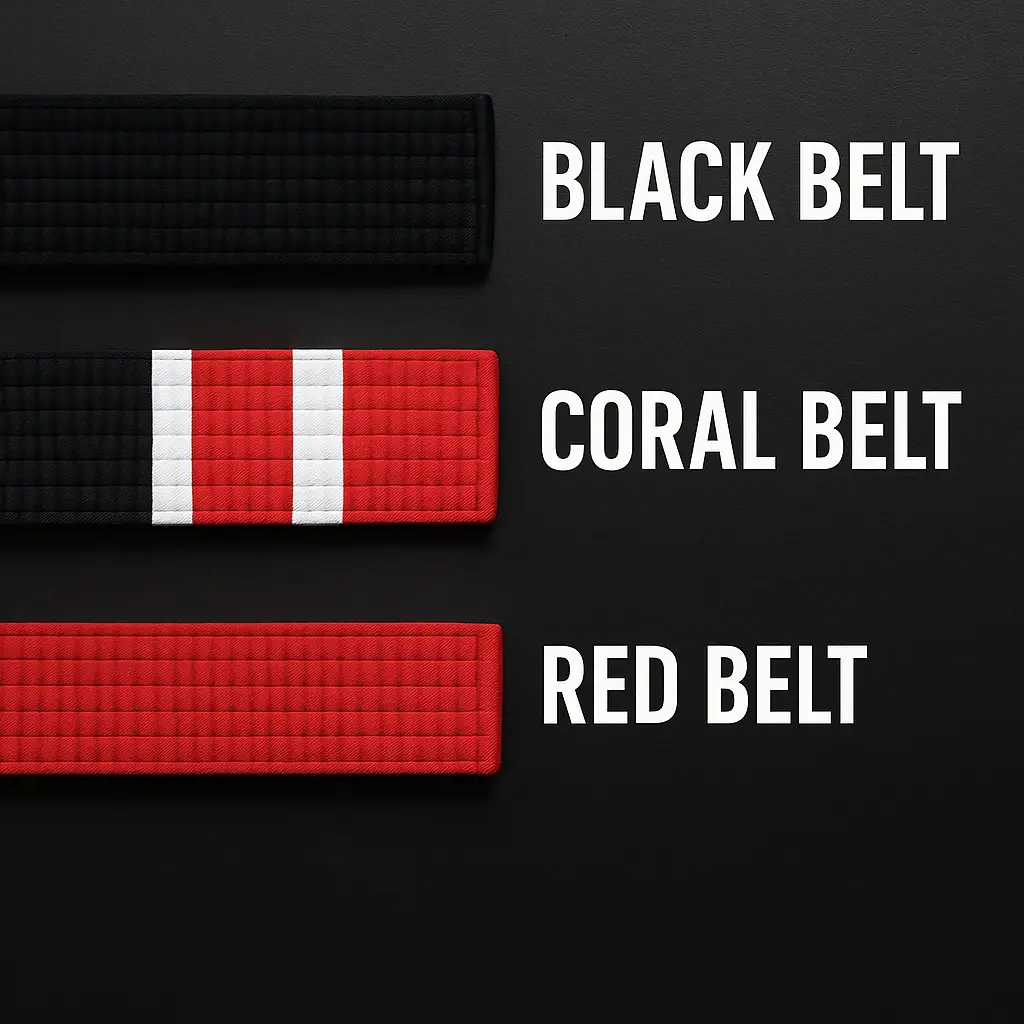
What is a Red Belt in BJJ?
A red belt in Brazilian Jiu-Jitsu is the highest possible rank. It comes in two degrees:
- 9th Degree Red Belt
- 10th Degree Red Belt
It represents a level of mastery and expertise that is attained after years of dedicated training and experience.
The 9th-degree red belt is earned by those who have spent their lives training and having an influence on this sport, there are around 20-30 9th-degree red belts alive. On the other hand, the 10th-degree red belts were only attained by the biggest names in the Gracie Family, also known as the founding fathers of BJJ.
The rank is often seen as a symbol of wisdom and knowledge and is awarded to individuals who have made significant contributions to the art and have reached a level of understanding that goes beyond technique. It is a rare and prestigious rank, and those who hold it are regarded as the final bosses in the world of Brazilian Jiu-Jitsu.
How Does Someone Get a Red Belt?
To earn a red belt in Brazilian Jiu-Jitsu, one must demonstrate exceptional skill, knowledge, and dedication to the art. It is an incredibly rare achievement that is reserved for those who have given their lives to the sport, literally, as it can take several decades to get one.
Getting a red belt in BJJ is based on:
1) Time in rank of Black Belt
You must be a black belt for a minimum of 48 years before you are even eligible for a red belt. This timeline alone eliminates almost everyone.
2) Influence and contribution
Red belts are individuals who:
- Inspired entire generations
- Founded or shaped academies
- Spread jiu-jitsu across countries
- Contributed to the evolution of technique
- Led entire lineages of practitioners
3) Moral character and leadership
You cannot earn a red belt without embodying the values of jiu-jitsu at the highest level.
4) Teaching the art for decades
Every red belt is a lifelong instructor who helped build the modern foundation of BJJ.
This is why red belts are often called:
- Grandmasters
- Founders
- Architects of the art
How Many Have Held The Rank of BJJ Red Belt?
The number of red belt holders is much smaller as compared to other belt ranks, as it represents the pinnacle of mastery in Brazilian Jiu-Jitsu. Each red belt holder carries with them a wealth of knowledge and experience, and they are regarded as true legends in the sport.
Right now, about 40 people have ever earned a 9th degree red belt.
On the other hand, there are close to just 5 who became 10th-degree BJJ red belts. Some of the most famous red belts include Helio Gracie, Carlos Gracie Sr., and Rickson Gracie. These individuals have made significant contributions to the development and popularization of Brazilian Jiu-Jitsu. Their expertise, skill, and dedication to the art have earned them a legendary status in the top BJJ practitioners and community.
How Long Does it Take to Earn a BJJ Red Belt?
Realistically? 48 to 60 years as a black belt.
Most people who have become red belts began training in the 1930s, 40s, or 50s long before BJJ went global.
List of All Known BJJ Red Belt Holders
Below is the most useful and sought-after part of the article and the part searchers expect to see immediately after the definition.
10th Degree BJJ Red Belts (Founders of the Art)
These are the original pioneers — the only people in history to earn the 10th degree.
- Carlos Gracie Sr.
- Gastão Gracie
- George (Jorge) Gracie
- Hélio Gracie
- Oswaldo Gracie
These men built the foundation of jiu-jitsu as we know it. They created the academies, the techniques, the philosophy, and the early development of the art.
9th Degree BJJ Red Belts [Full List]
| Name | Lineage | Notes / Contributions |
|---|---|---|
| Álvaro Barreto | Helio Gracie | One of the earliest certified instructors; key figure in Rio de Janeiro BJJ. |
| Armando Wriedt | Carlos Gracie Sr. | Early pioneer under Carlos; helped expand jiu-jitsu in Brazil. |
| Carley Gracie | Carlos Gracie Sr. | “Lion of the Gracie Family”; brought GJJ to the U.S. |
| Carlson Gracie | Carlos Gracie Sr. | Revolutionary competitor; creator of Carlson Gracie Team. |
| Eduardo Gomes Pereira | Carlos Gracie Sr. | Important influence in traditional jiu-jitsu circles in Brazil. |
| Francisco Mansur | Helio Gracie | One of Helio’s only 7 red belts; founder of Kioto Academy. |
| Geny Rebelo | Carlos Gracie Sr. | Renowned teacher with decades of lineage behind him. |
| João Alberto Barreto | Helio Gracie | Key figure in early Vale Tudo; highly respected instructor. |
| Jose Higino | Oswaldo Fadda | One of the most recognized non-Gracie red belts. |
| Laercio Fernandes | Carlos Gracie Sr. | Lifelong instructor and early Brazilian jiu-jitsu ambassador. |
| Milton Gaia | Oswaldo Fadda | Major figure in expanding the Fadda lineage. |
| Oswaldo Fadda | Luiz França (non-Gracie) | Creator of the Fadda lineage; famous for defeating Gracie academies. |
| Oswaldo “Paquetá” Rosa | Carlson Gracie | Master referee and influential figure in competitive BJJ. |
| Pedro Hemetério | Helio Gracie | First non-Brazilian to be promoted to black belt by the Gracies. |
| Redley Vieira | Carlos Gracie Sr. | Old-school professor with deep lineage roots. |
| Reylson Gracie | Carlos Gracie Sr. | Innovative instructor and global ambassador. |
| Relson Gracie | Helio Gracie | Built Hawaii’s strongest BJJ community. |
| Ricardo Murgel | Carlson Gracie | International teacher; big influence in Europe and the U.S. |
| Rorion Gracie | Helio Gracie | Co-founder of the UFC; responsible for BJJ’s global explosion. |
| Wilson Mattos | Oswaldo Fadda | Key instructor in the non-Gracie lineage; respected competitor. |
How Many Female Red Belts Are There?
Currently, there are no female red belts in Brazilian Jiu-Jitsu. However, women entered the art much later and are rapidly progressing.
The most notable woman closest to red belt eligibility:
-
Yvone Duarte – First female black belt (1991), first female coral belt (2021)
Duarte still has a long way to go to and someday attain a 9th-degree red belt as you must be a black belt for a minimum of 48 years to qualify for one. Regardless of this, she is truly a legendary personality in BJJ history.
Top female legends like:
- Leticia Ribeiro
- Beatriz Mesquita
- Michelle Nicolini
- Mackenzie Dern
May eventually earn coral or red belts decades from now.
These women have not only achieved the rank of red belt but have also excelled in competitions, demonstrating their exceptional skills and contributions to the sport. They serve as inspirations for aspiring female jiu-jitsu practitioners everywhere in the BJJ community.
BJJ Red Belt vs Black Belt
The BJJ red belt and the BJJ black belt are both highly prestigious ranks in Brazilian Jiu-Jitsu, representing a high level of skill and expertise.
The red belt is the highest achievable rank in BJJ, symbolizing a lifetime of dedication, knowledge, and contributions to the art. Red belts are often considered the pioneers and legends of the sport, having made significant impacts on its development. Having a red belt means that you’ve completed BJJ.
On the other hand, the black belt is a major milestone in a practitioner’s journey. It signifies a deep understanding of the techniques, strategies, and principles of BJJ. Black belts have proven their proficiency through years of training, competing, and teaching.
Red Belt vs Black Belt (Key Differences)
Black Belt
- Represents mastery
- Requires 7–15 years
- Focuses on technique, teaching, strategy
- Most prestigious rank most practitioners ever reach
Red Belt
- Represents a lifetime of contribution
- Requires 50+ years at black belt
- Symbolizes founding-level wisdom and influence
- Reserved for pioneers and grandmasters
Put simply:
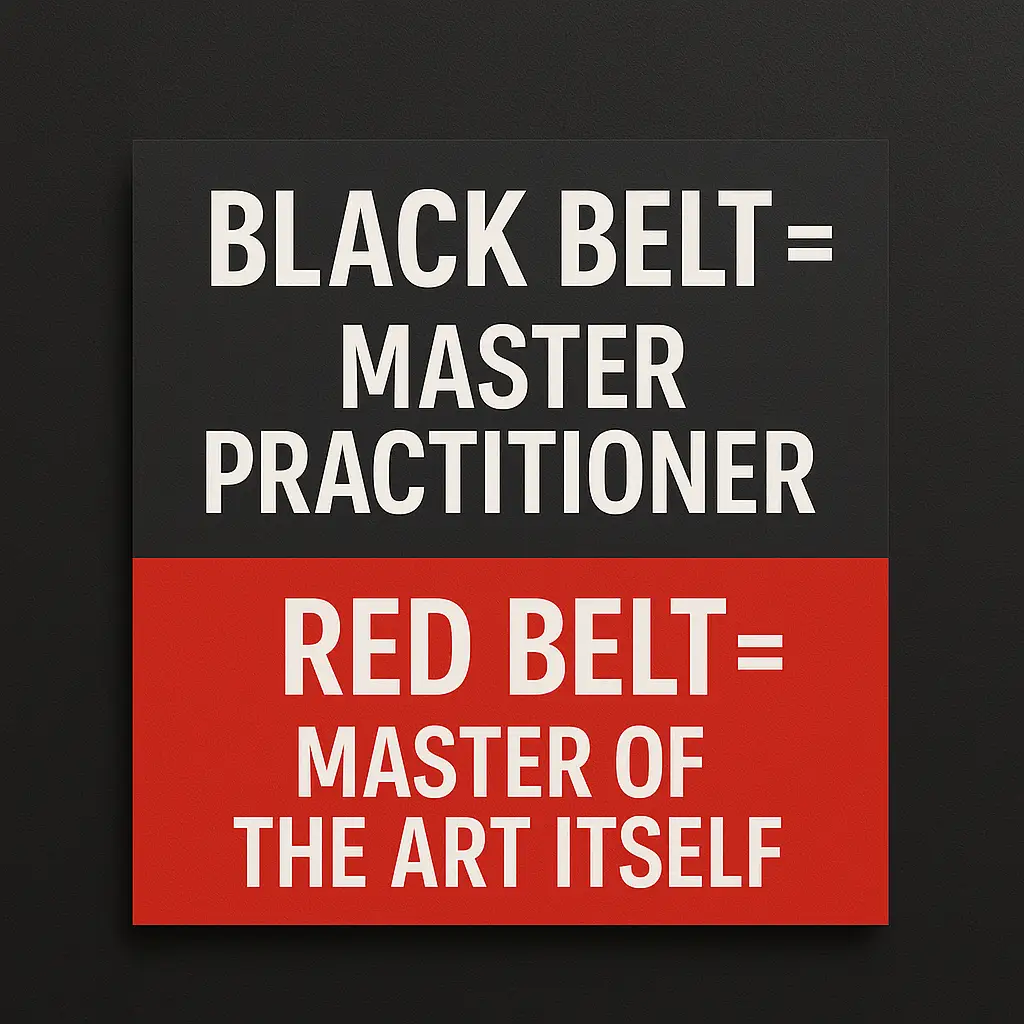
What Is a Coral Belt in BJJ (and How It Differs From a Red Belt)?
A coral belt in Brazilian Jiu-Jitsu is the rank that comes after 6th-degree black belt and before the red belt. It represents a lifetime of training and teaching, but it is not yet the final mastery rank. Coral belts come in two variations depending on the era and organization:
- 7th Degree: Red-and-black belt
- 8th Degree: Red-and-white belt
Both are commonly referred to as coral belts.
What a Coral Belt Represents
A coral belt symbolizes:
- 30–40+ years as a black belt
- A major contribution to the art
- Decades of teaching and leadership
- Senior master-level knowledge
Most coral belts are in their late 50s, 60s, or older.
Simple Breakdown
- Black Belt (0–6 Degrees): Expert / Professor
- Coral Belt (7th–8th Degree): Senior Master
- Red Belt (9th–10th Degree): Grandmaster / Founder-level
Could a Black Belt Beat a Red Belt?
Technically, yes — depending on:
- Age
- Athleticism
- Health
- Recent activity
Red belts are usually 60–90 years old. Black belts are often in their physical prime.
A match between them wouldn’t be a fair indicator of rank red belts hold their rank because of lifetime contribution, not competitive dominance.
Why the Red Belt Matters
The red belt isn’t just a belt color. It’s a symbol of:
- The deepest commitment to the art
- Decades of teaching
- Decades of refining technique
- A legacy that shaped future generations
Most practitioners don’t train for the red belt they train because the art changed their life. And if they stay connected long enough, the belt becomes secondary to the mission.

Find the top-rated BJJ Gi's here. Helpful information on what to look for, how to find the best gi, and which brands suit you best based on your budget!