
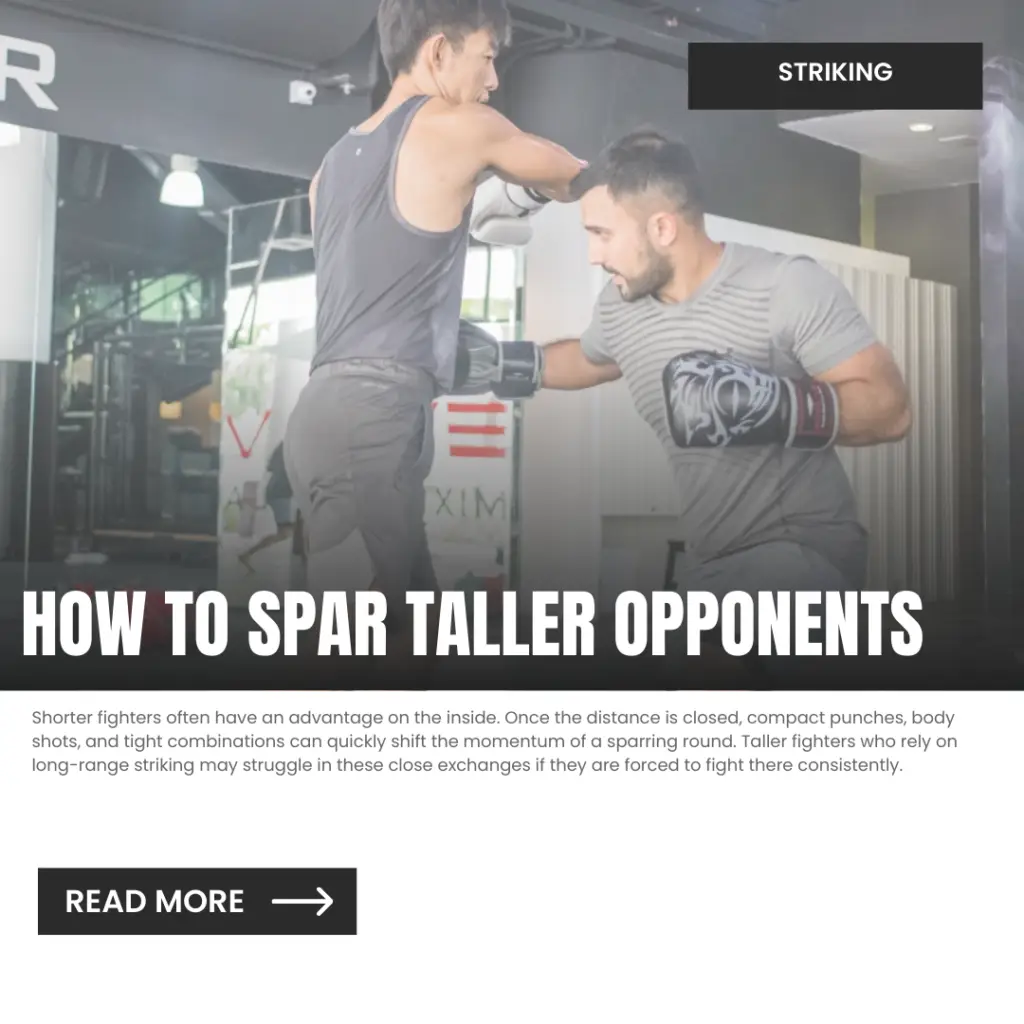
Facing a taller opponent is one of the most common challenges in combat sports. Whether you train in boxing, kickboxing, or mixed martial arts, height and reach advantages can make sparring frustrating if you do not know how to adjust your approach. Taller fighters can control distance, land jabs from the outside, and keep shorter opponents at the end of their reach.
However, height alone does not win fights. With the right strategy, footwork, and mindset, shorter fighters can close the gap and neutralize the advantages of a taller opponent. Here are some key techniques and tactical principles that can help when sparring taller fighters.
Control the distance
Distance management is one of the most important factors when sparring a taller opponent. Taller fighters usually want to keep the fight at long range, where their jab and straight punches can land easily while you struggle to reach them.
Your goal should be to close the distance safely and bring the fight to mid-range or inside range.
Instead of slowly walking forward, use quick bursts of movement. Explosive entries make it harder for the taller fighter to time you with their jab. Try stepping in behind punches or feints rather than moving in without any setup.
A simple rule that helps is to never enter without throwing something. Even a jab, a feint, or a level change can disguise your forward movement and make it harder for your opponent to react.
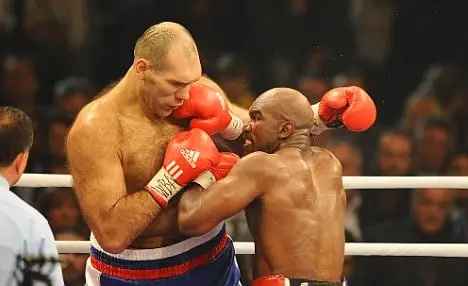
Use head movement
A tall opponent’s biggest weapon is usually the jab. If you keep walking straight forward with your head on the center line, you will keep getting hit.
Head movement becomes essential when closing distance. Slipping, bobbing, and weaving allow you to move forward without taking clean shots.
For example, you can slip the jab and step inside, bob under straight punches, or keep subtle head movement while advancing. The goal is not exaggerated movement but small adjustments that make you a harder target to hit.
Attack the body
Taller fighters often rely heavily on head strikes from long range. Because of their upright posture and longer stance, their body can sometimes be more exposed.
Body shots are useful for several reasons. They slow your opponent down, drain their cardio, and force them to lower their guard.
When you manage to close the distance, targeting the body first can be very effective. Hooks to the ribs, straight punches to the solar plexus, and body kicks in kickboxing or MMA can all do damage.
Consistent body work also makes tall fighters more hesitant to extend their punches.
Cut off the ring
One mistake shorter fighters often make is chasing taller opponents around the ring. Taller fighters usually rely on footwork to maintain distance, so if you simply follow them, you will keep running into their strikes.
Instead of chasing, focus on cutting off the ring.
This means stepping diagonally and blocking their escape routes rather than moving straight toward them. By controlling the angles, you can force them closer to the ropes or the cage where their movement becomes limited.
Once their mobility is reduced, it becomes much easier to close the distance.
Work the inside
Inside fighting is often where shorter fighters feel most comfortable. Taller fighters sometimes struggle in tight exchanges because they rely more on long-range striking.
When you get inside, throw compact hooks and uppercuts while keeping your guard tight. Short combinations can be very effective in close range.
Avoid immediately backing away after entering range because that simply resets the distance to where the taller fighter is strongest. Try to make them work on the inside before exiting.
In MMA or clinch situations, inside control can also lead to knees, dirty boxing, or takedown opportunities.
Use angles
Moving straight forward makes you predictable. Angles help you avoid your opponent’s reach while creating better positions to attack.
After slipping a jab or finishing a combination, step slightly to the side instead of moving directly backward. This forces the taller opponent to reset their stance before attacking again.
Angles also allow you to land shots while staying outside your opponent’s strongest punching line.
Use feints to create openings
Feints are extremely useful against taller fighters because they rely on timing and distance. By faking punches, level changes, or forward steps, you can provoke reactions.
When the taller fighter reacts to a feint by throwing a jab or adjusting their guard, small openings appear that allow you to close the distance.
Good fighters rarely enter range without first drawing some kind of reaction from their opponent.
Stay patient
Sparring taller opponents can sometimes feel frustrating. They may land more jabs early in the round or keep you at range for long periods. This often causes shorter fighters to rush forward recklessly.
Patience is important.
You may have to absorb a few light jabs while working your way inside. The key is not getting discouraged and abandoning your strategy. Over time, consistent pressure, body shots, and smart entries can disrupt the taller fighter’s rhythm.

Join the discussion over on r/grapplersgraveyard!
