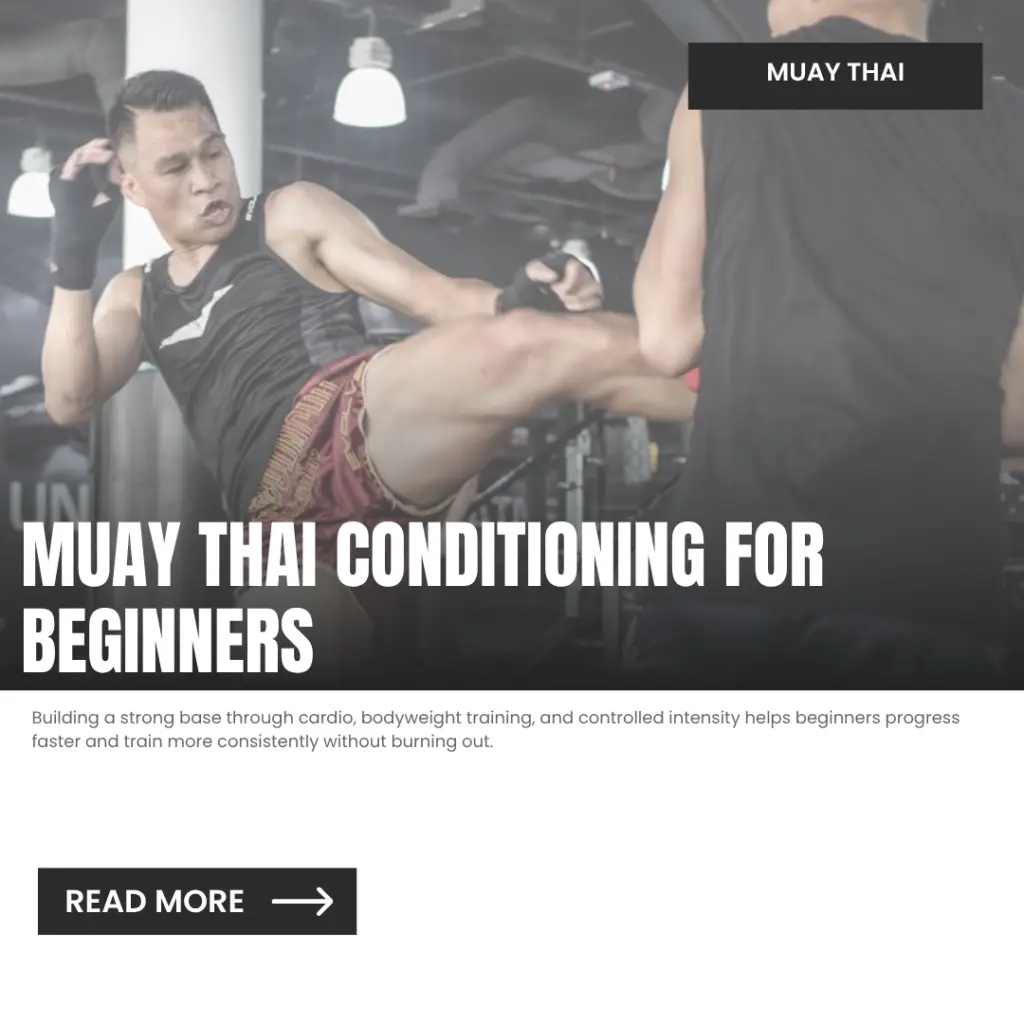
Muay Thai Conditioning for Beginners
Muay Thai conditioning is what allows beginners to actually use their techniques under pressure. Without it, even basic combinations start to fall apart once fatigue kicks in.

All things Striking Related
Muay Thai conditioning is what allows beginners to actually use their techniques under pressure. Without it, even basic combinations start to fall apart once fatigue kicks in.
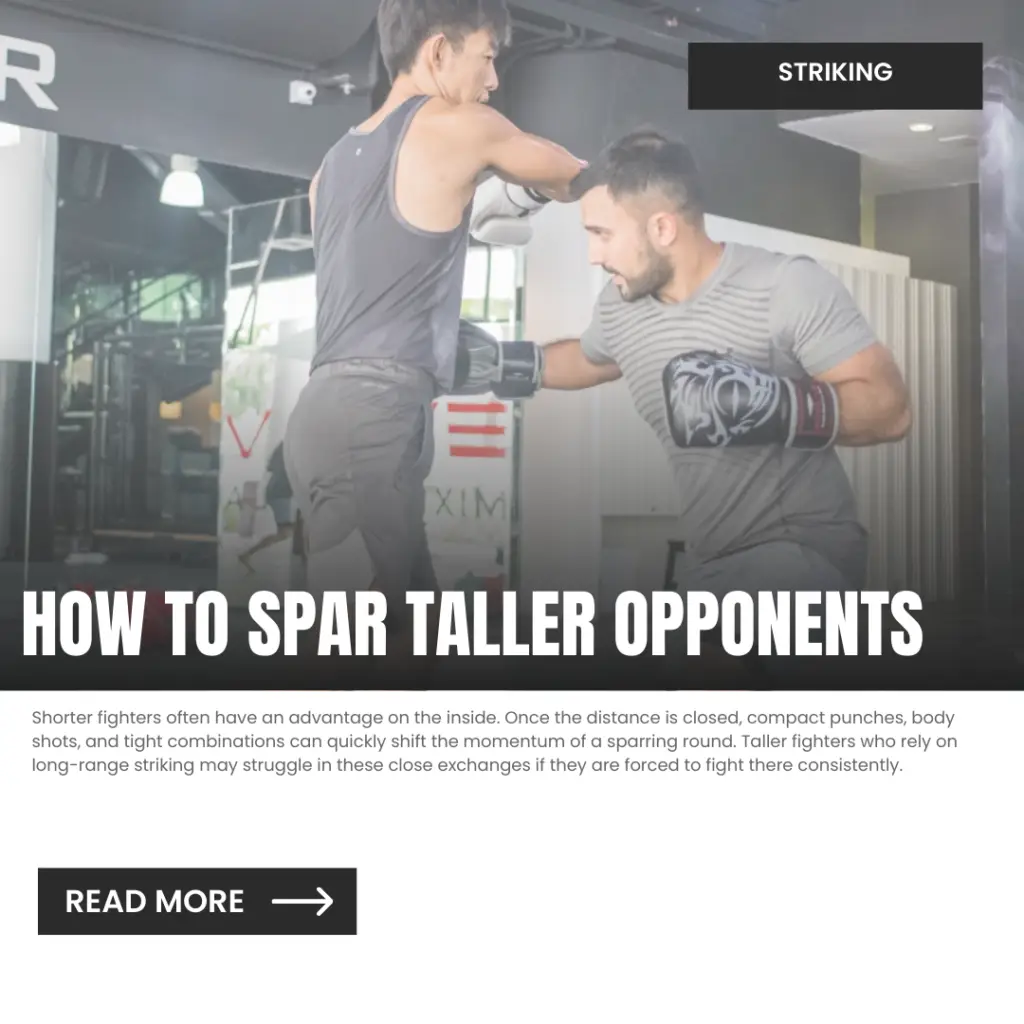
Facing a taller opponent can be frustrating, especially when their jab keeps you at the end of their reach. Many fighters make the mistake of trying to compete at long range, which only plays into the taller fighter’s strengths. Instead, the key is learning how to safely close the distance and bring the fight to a range where your opponent is less comfortable.
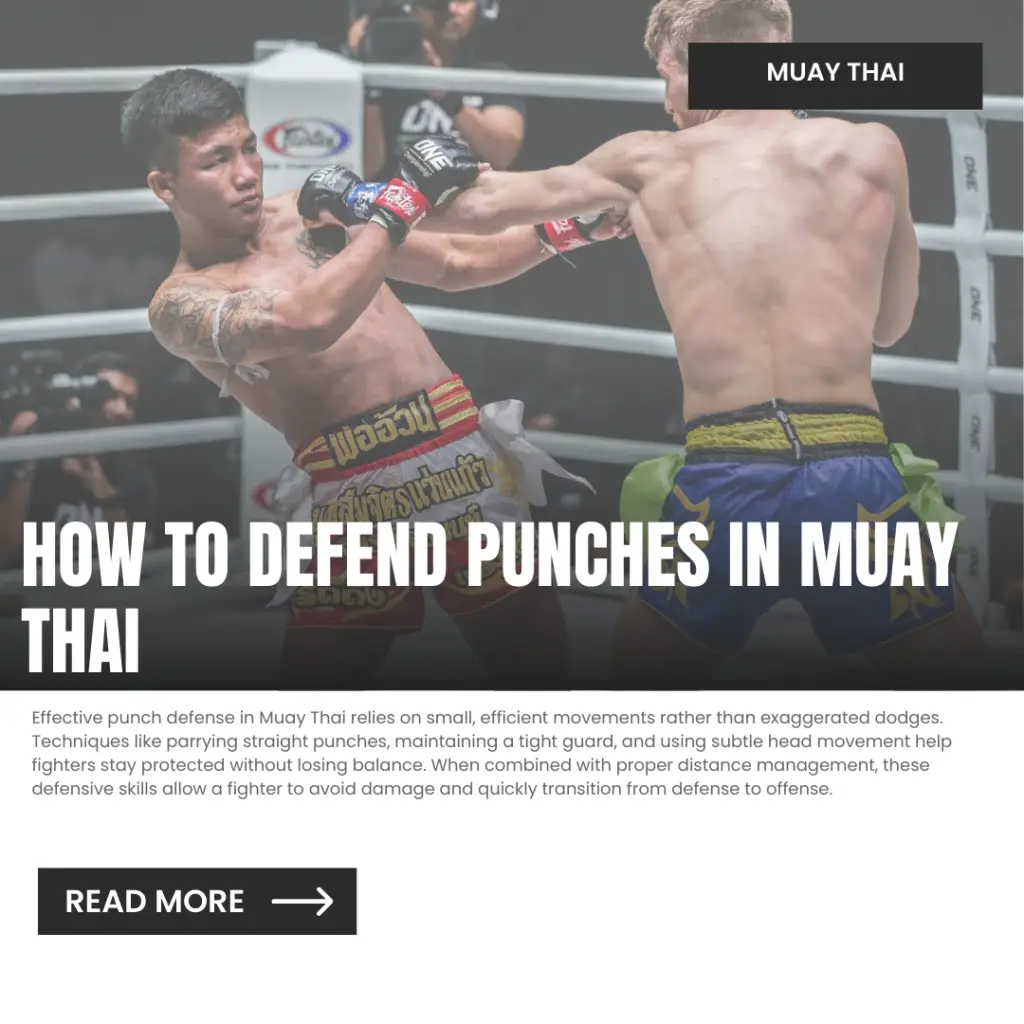
Learning how to defend punches in Muay Thai is just as important as learning how to throw them. A fighter who only focuses on offense will eventually take unnecessary damage and lose control of the fight. Good defense allows you to stay calm, maintain balance, and create opportunities to respond effectively. By keeping a strong guard, using simple blocks, and controlling distance, fighters can reduce the impact of punches while preparing to counterattack.
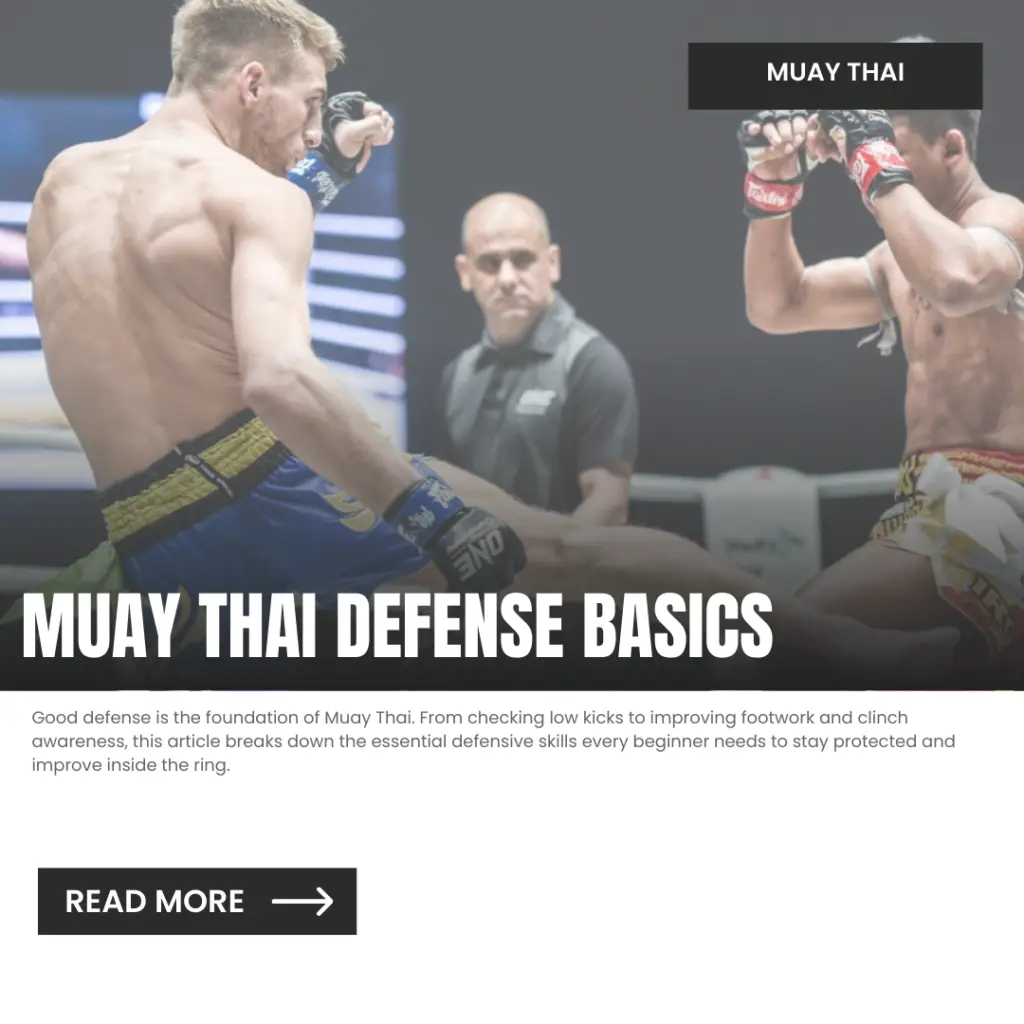
Muay Thai defense basics start with a strong stance, high guard, and proper kick checks. In this guide, you’ll learn how to block punches, defend body kicks, control distance, and build solid defensive habits that keep you balanced and ready to counter.
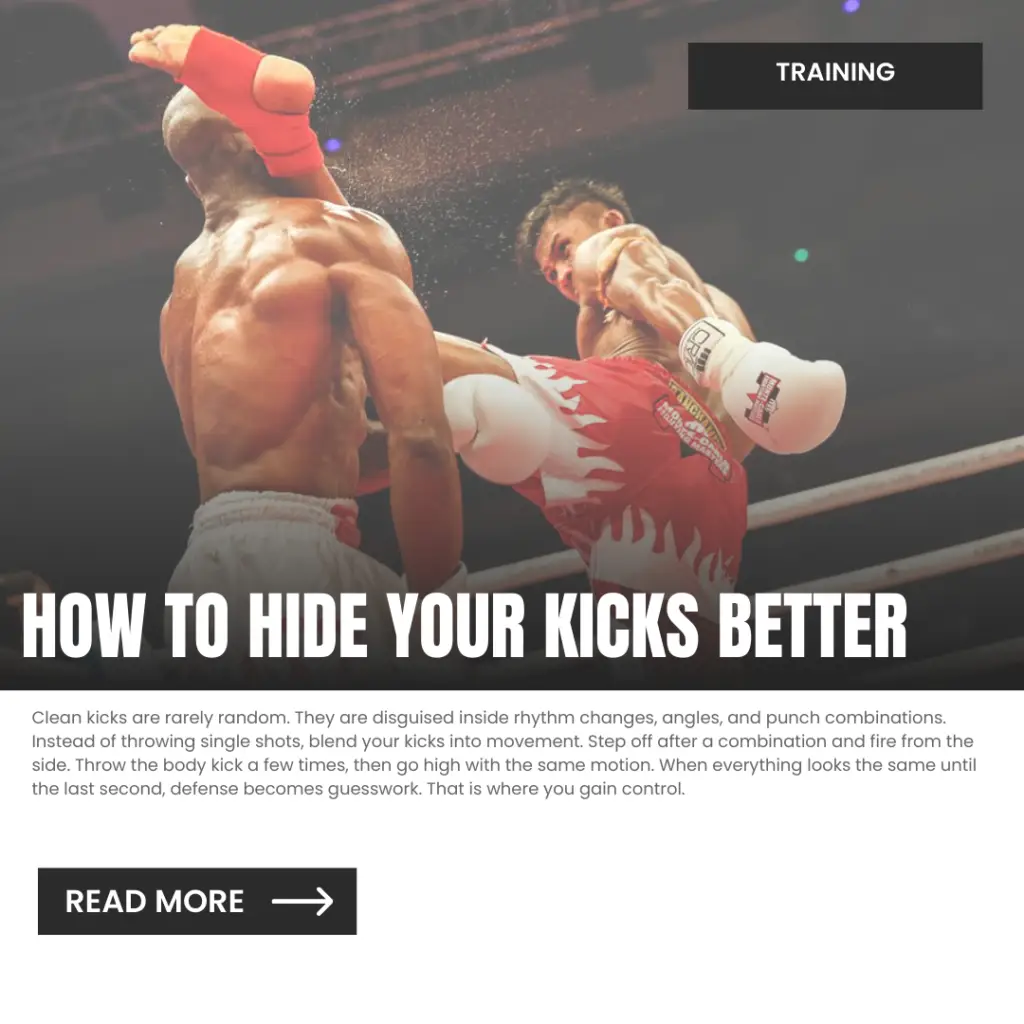
If you want to hide your kicks better, stop thinking about the kick first. Think about the reaction you want. When your opponent is worried about your jab and cross, their guard rises and their focus shifts high. That is when the low kick lands clean. The best strikers do not rush their attacks. They build them. They repeat the same entry, then change the finish. Once your setups all look alike, your opponent cannot tell what is coming next.
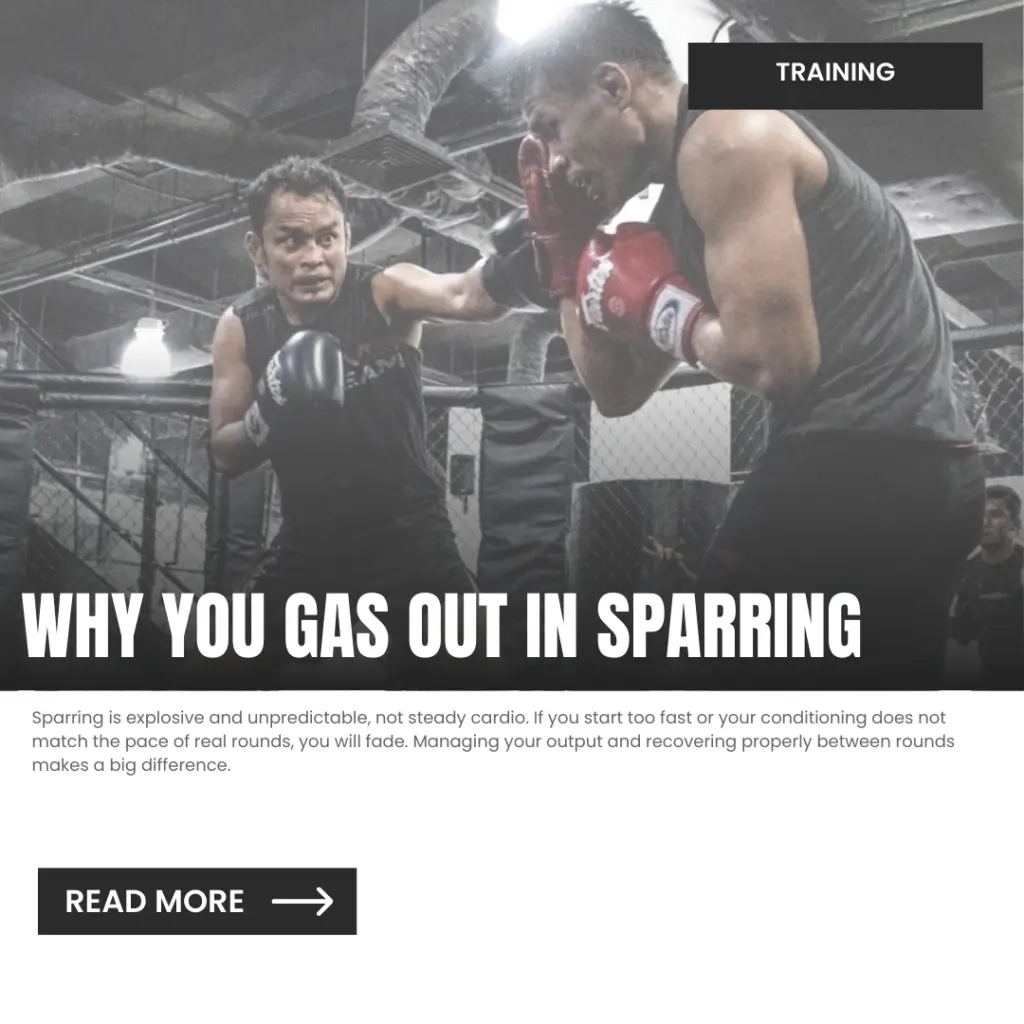
Gassing out in sparring is rarely just about poor fitness. Most of the time, it is tension. When you are anxious or trying too hard to win exchanges, your shoulders tighten, your fists clench, and your legs stiffen. That constant muscle contraction quietly drains your energy. Add poor breathing on top of that, especially holding your breath during combinations, and your heart rate spikes faster than it should. The result is that heavy, drowning feeling halfway through the round. Learning to relax under pressure and control your breathing can change your endurance more than adding extra miles to your roadwork.
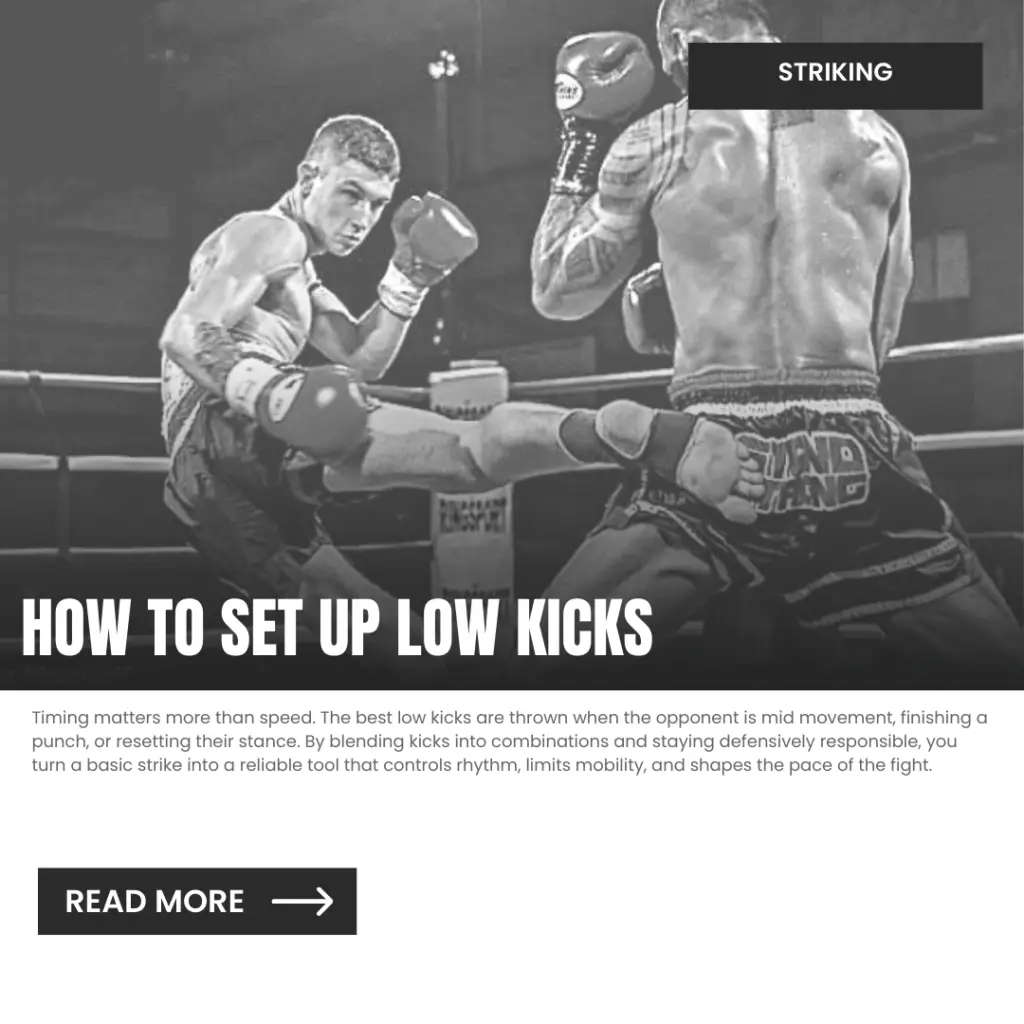
Low kicks are most effective when they are set up with purpose. Instead of throwing them on their own, use your hands to draw the guard high and shift your opponent’s weight. A simple jab can create the opening you need. When the leg is planted and attention is focused upstairs, the low kick lands with far more impact and far less risk.
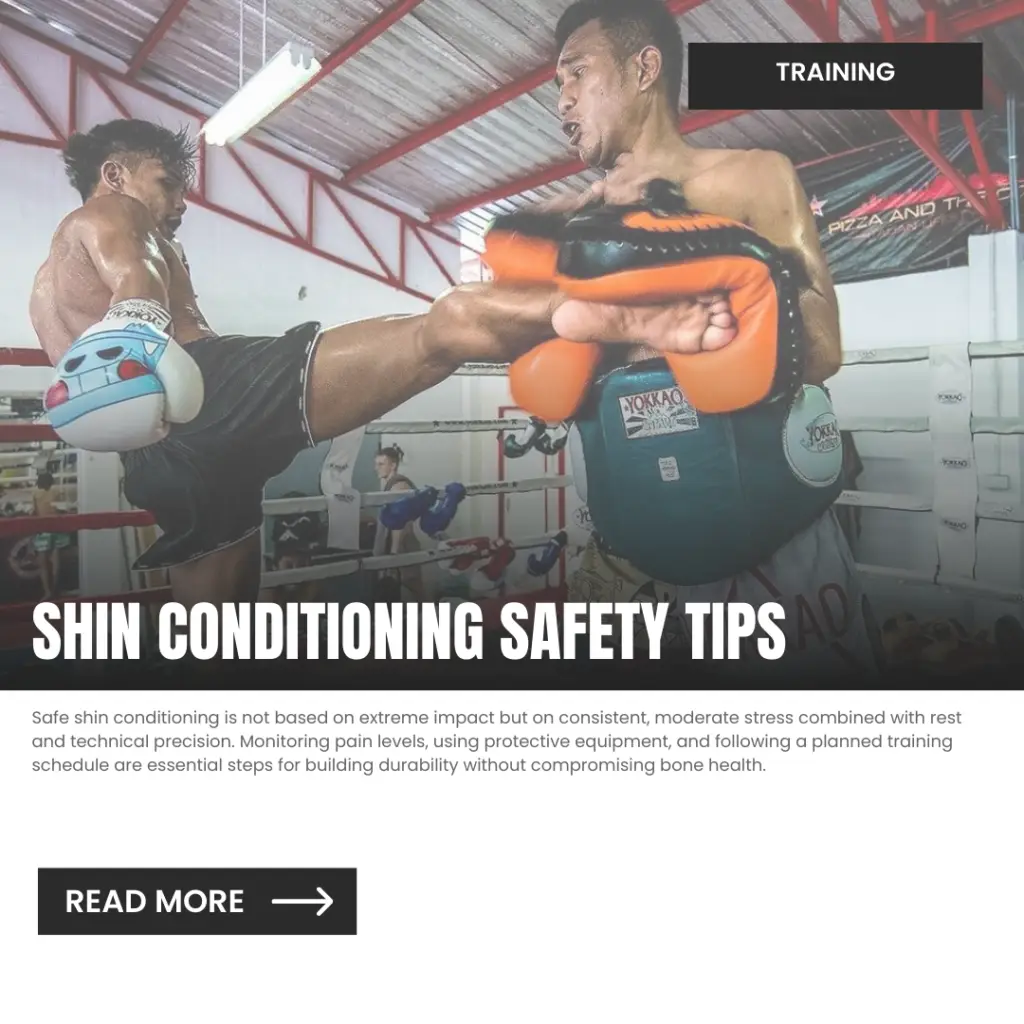
Shin conditioning requires structured progression, proper technique, and controlled impact exposure. Gradual loading allows the tibia to adapt while reducing the risk of stress fractures and chronic pain. Athletes who prioritize recovery and avoid unsafe training methods maintain long-term performance and minimize injury downtime.
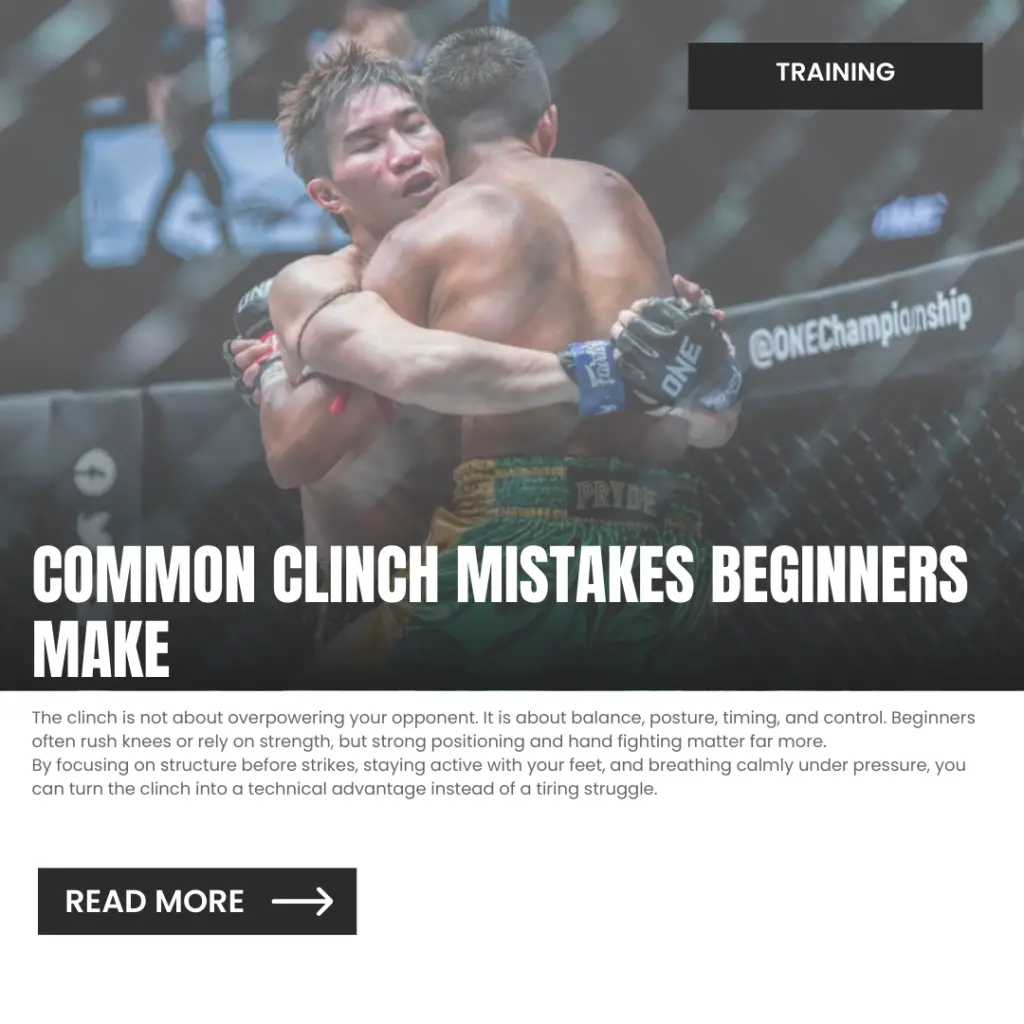
The clinch is not a test of strength but a test of position. Beginners often try to force control by squeezing harder or pulling aggressively, only to burn out within minutes. True control comes from posture, balance, and steady pressure. When structure replaces brute force, movements become more efficient and far more effective.
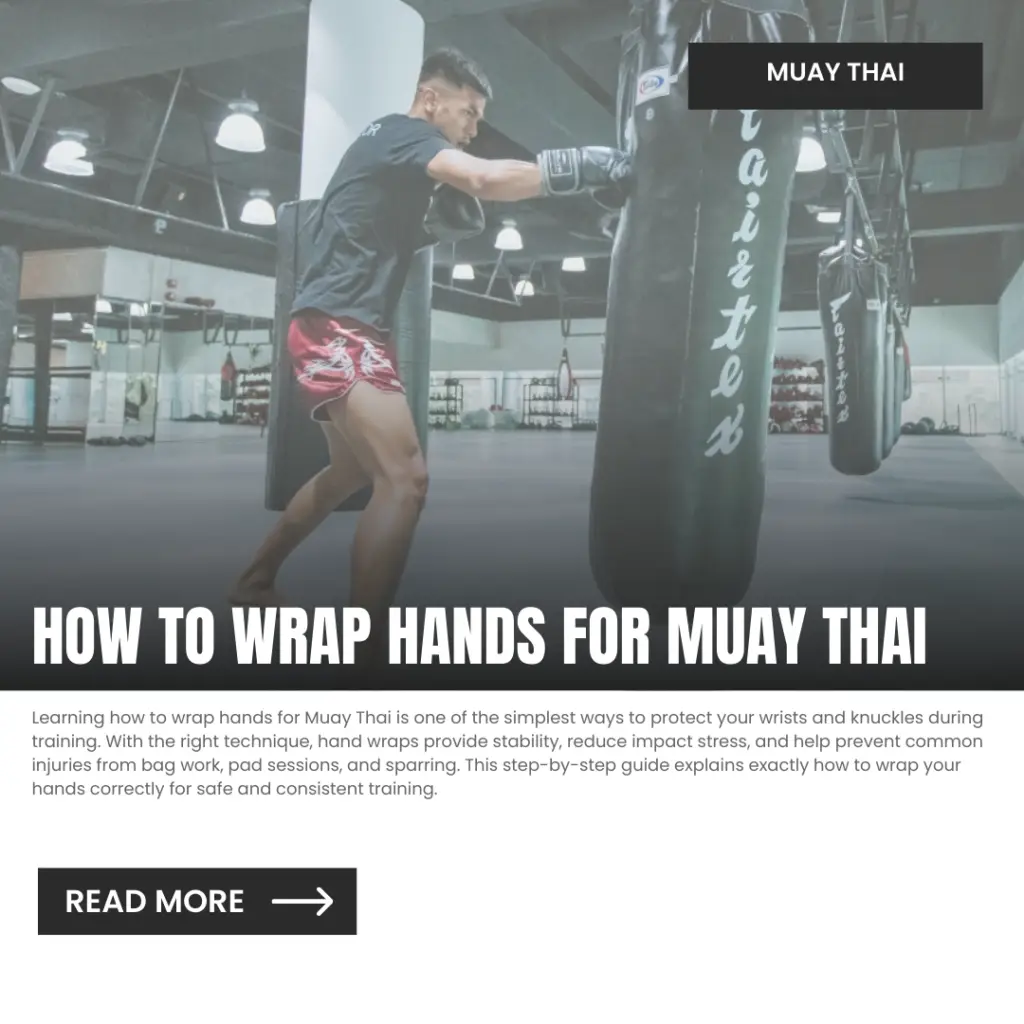
Proper hand wrapping in Muay Thai isn’t complicated, but it does matter. A well-wrapped hand feels secure, compact, and supported without cutting off circulation. In this guide, you’ll learn how to wrap your hands for Muay Thai the right way, how tight they should feel, and how to avoid common mistakes that lead to wrist pain.
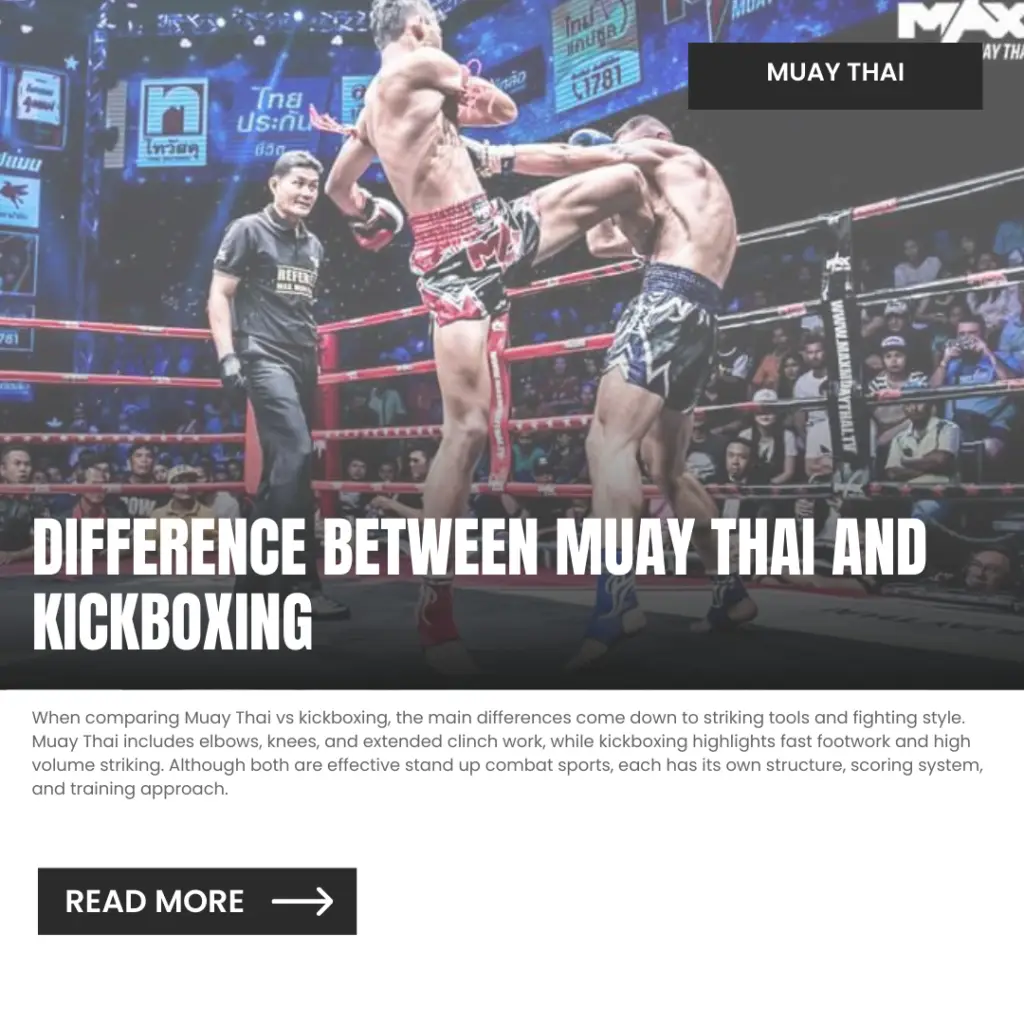
Muay Thai and kickboxing may look similar at first, but they differ in key areas such as techniques, rules, and fight strategy. Muay Thai, known as the Art of Eight Limbs, allows punches, kicks, elbows, and knees, with a strong emphasis on clinch fighting and powerful strikes. Kickboxing focuses mainly on punches and kicks, limits clinching, and often rewards speed and combination attacks.
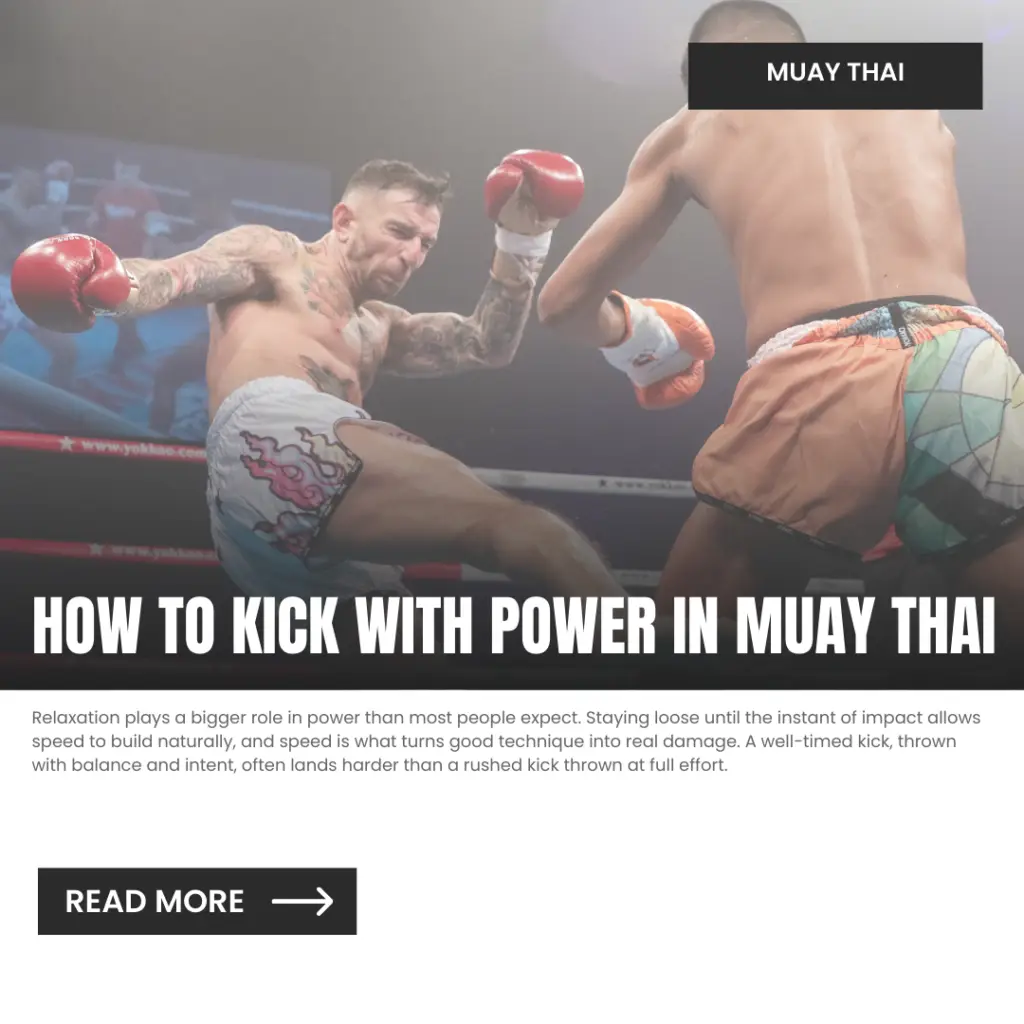
A powerful Muay Thai kick doesn’t come from forcing your leg into the target. It comes from how well your body moves as one unit. When your base is stable and your hips rotate freely, the kick feels heavy without feeling strained. The moment you stop trying to muscle the strike and start trusting the mechanics, the difference is immediate.
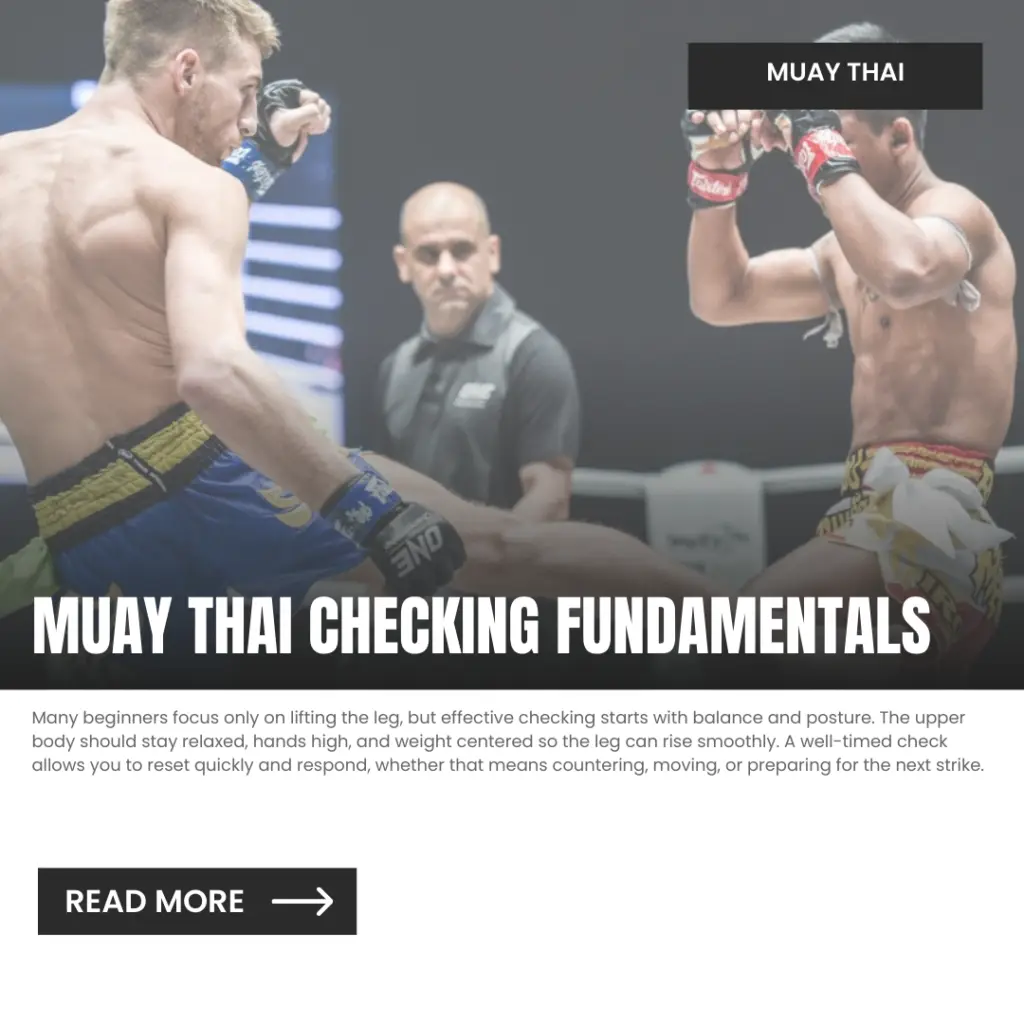
Checking in Muay Thai is not about avoiding contact. It is about meeting a kick in a controlled way while staying balanced and ready to continue the exchange. A proper check uses stance, timing, and shin placement to reduce damage rather than relying on toughness alone. When done correctly, checking becomes a reliable defensive habit instead of a desperate reaction.
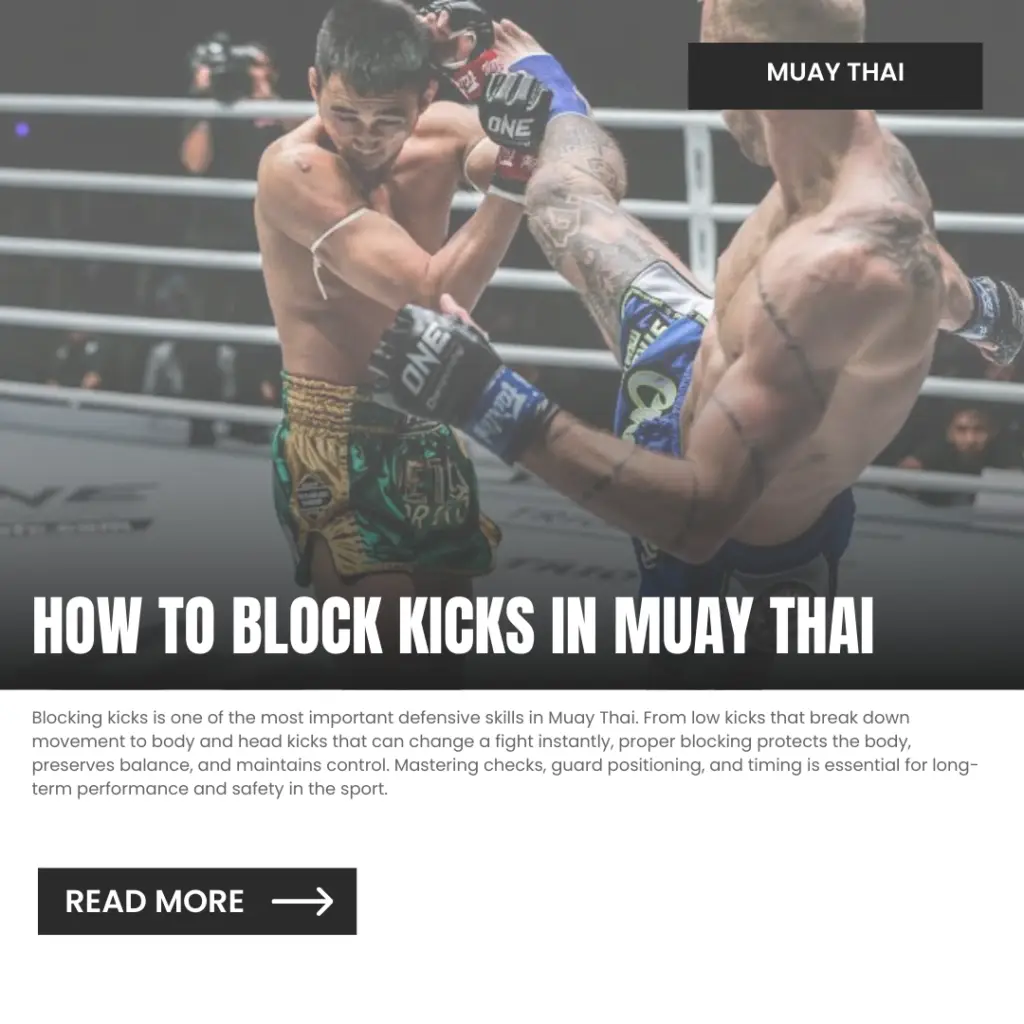
Kicks are one of the most powerful and frequently used weapons in Muay Thai, making proper kick blocking an essential defensive skill. From low kicks that wear down movement to body and head kicks that can decide a fight, knowing how to block effectively protects the body, preserves balance, and creates counter-attacking opportunities. This article breaks down the fundamentals of blocking kicks in Muay Thai, common mistakes to avoid, and practical ways to train kick defense so it becomes second nature in sparring and competition.
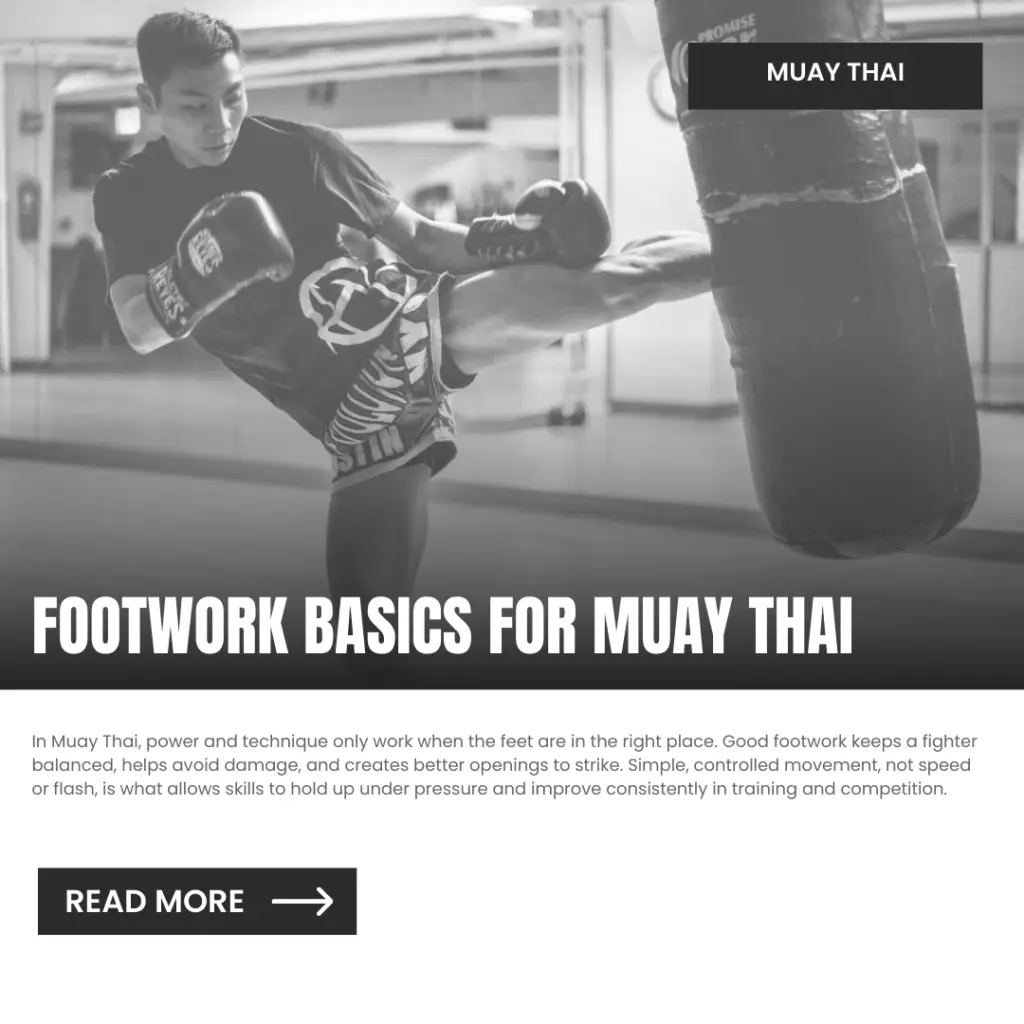
Footwork is the backbone of Muay Thai. Without proper movement and balance, even strong strikes lose their effectiveness. Clean footwork allows a fighter to control distance, stay stable during exchanges, and defend without wasting energy. By focusing on stance, simple steps, and controlled movement, Muay Thai becomes more efficient, safer, and easier to develop over time.
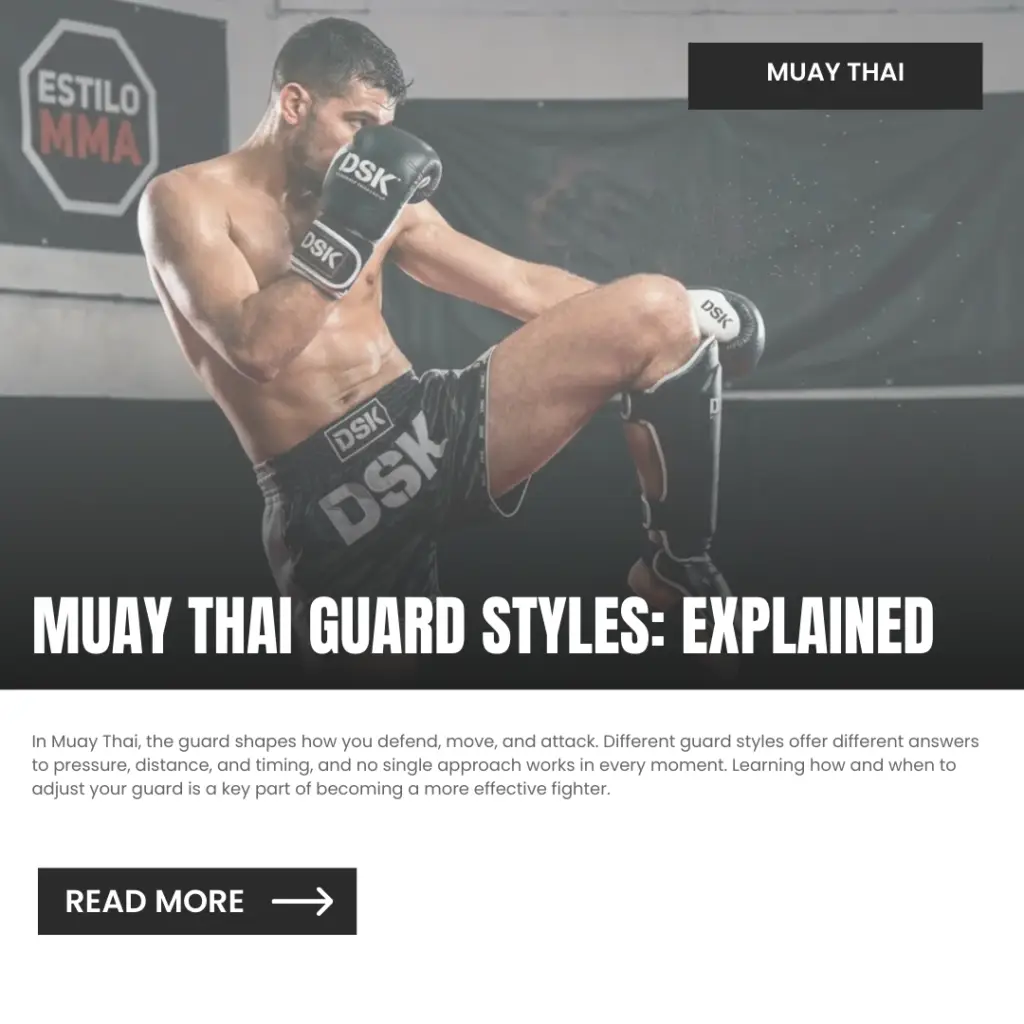
In Muay Thai, the guard is not just a defensive habit, it is a constant conversation between you and your opponent. Where you place your hands affects how you see strikes coming, how you control distance, and how confidently you can step into offense. Some guards emphasize safety and structure, while others prioritize vision and control, but all of them exist to solve the same problem: staying balanced and aware in a fight that never truly pauses. Understanding these guard styles gives you options, and in Muay Thai, options are what keep you standing.
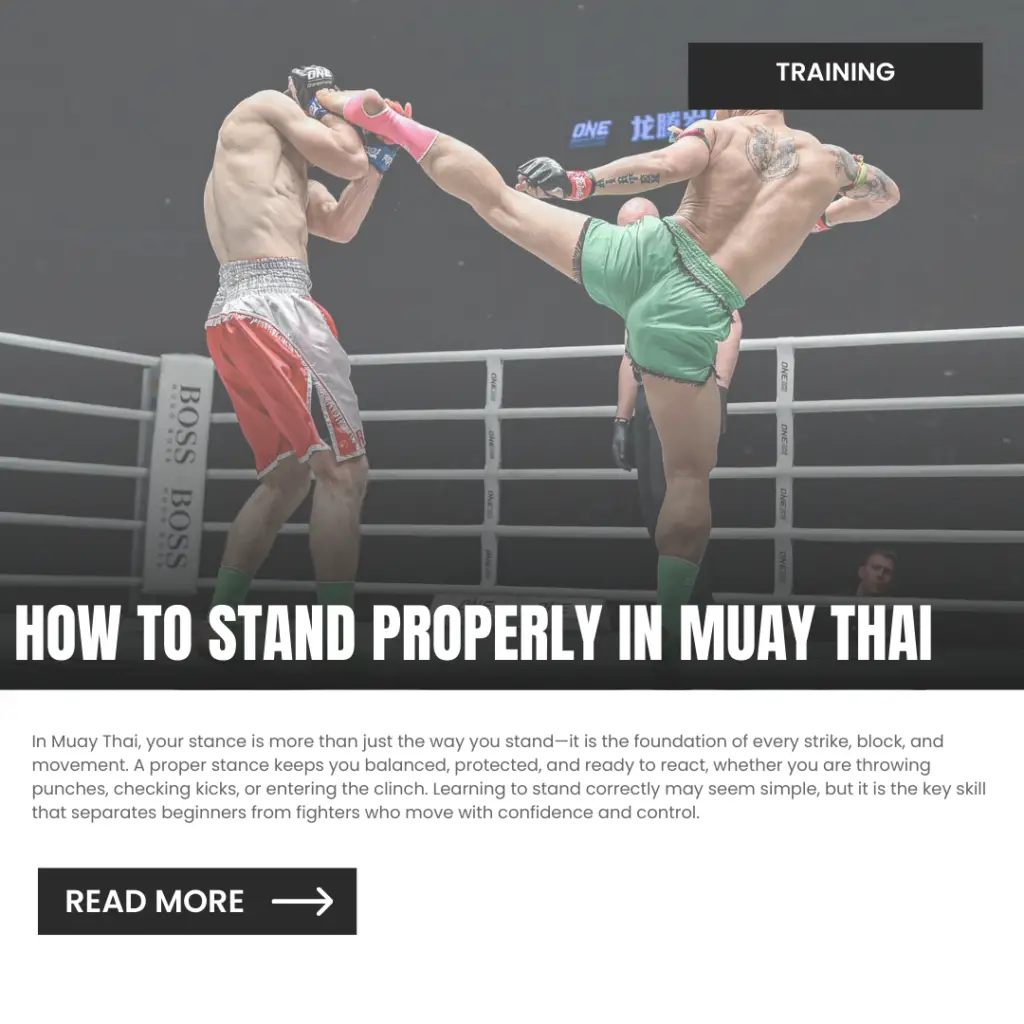
Mastering the Muay Thai stance is the first step to becoming an effective fighter. Your feet, knees, hands, and posture all work together to maintain balance, protect your body, and generate power. Without a solid stance, even the strongest strikes and fastest kicks lose their effectiveness.
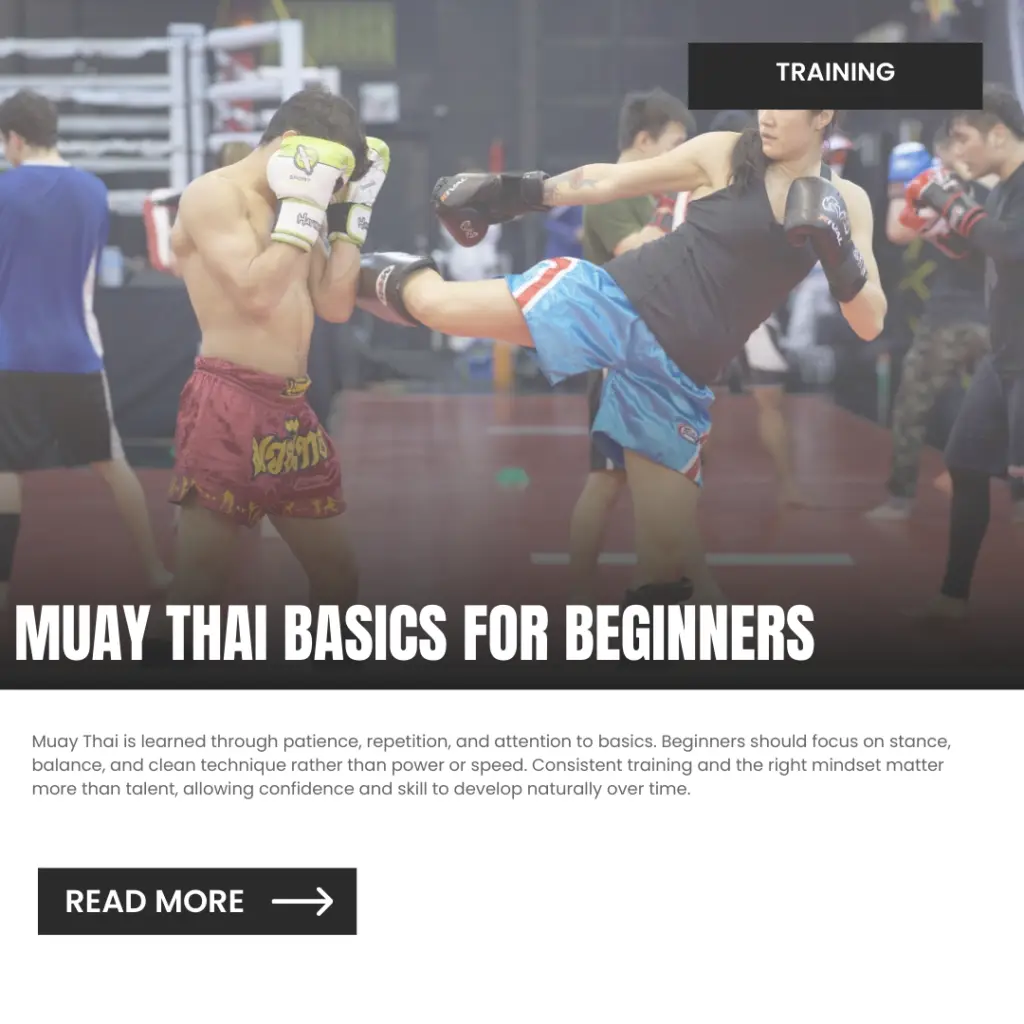
Starting Muay Thai can feel overwhelming, but progress begins with mastering the fundamentals. Proper stance, footwork, and controlled strikes form the foundation, while consistency and a focused mindset help beginners build skill, confidence, and discipline step by step.
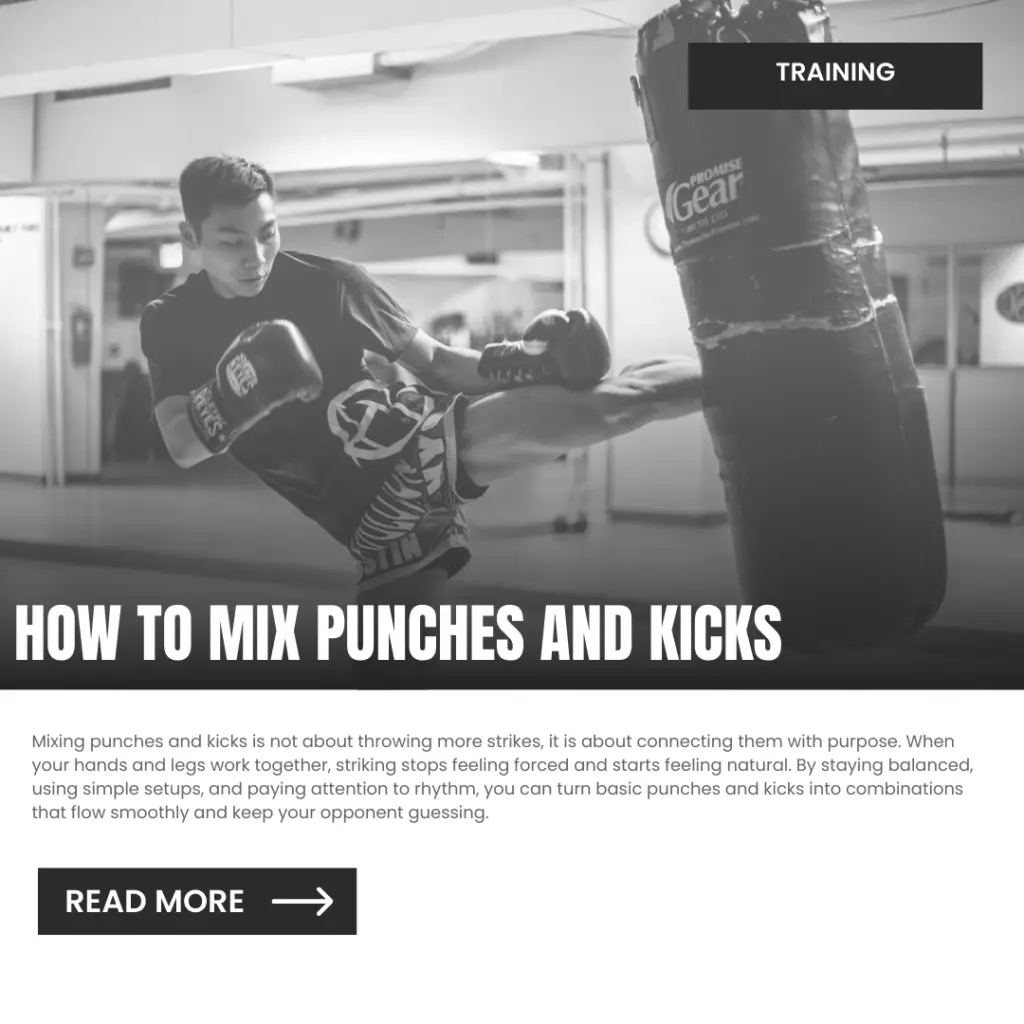
Learning to mix punches and kicks is a process, not a trick. It starts with balance, builds through smart setups, and comes together when you stop rushing your strikes. When you focus on clean transitions and simple combinations, your hands and legs begin to work as one, making your striking more effective and easier to control.
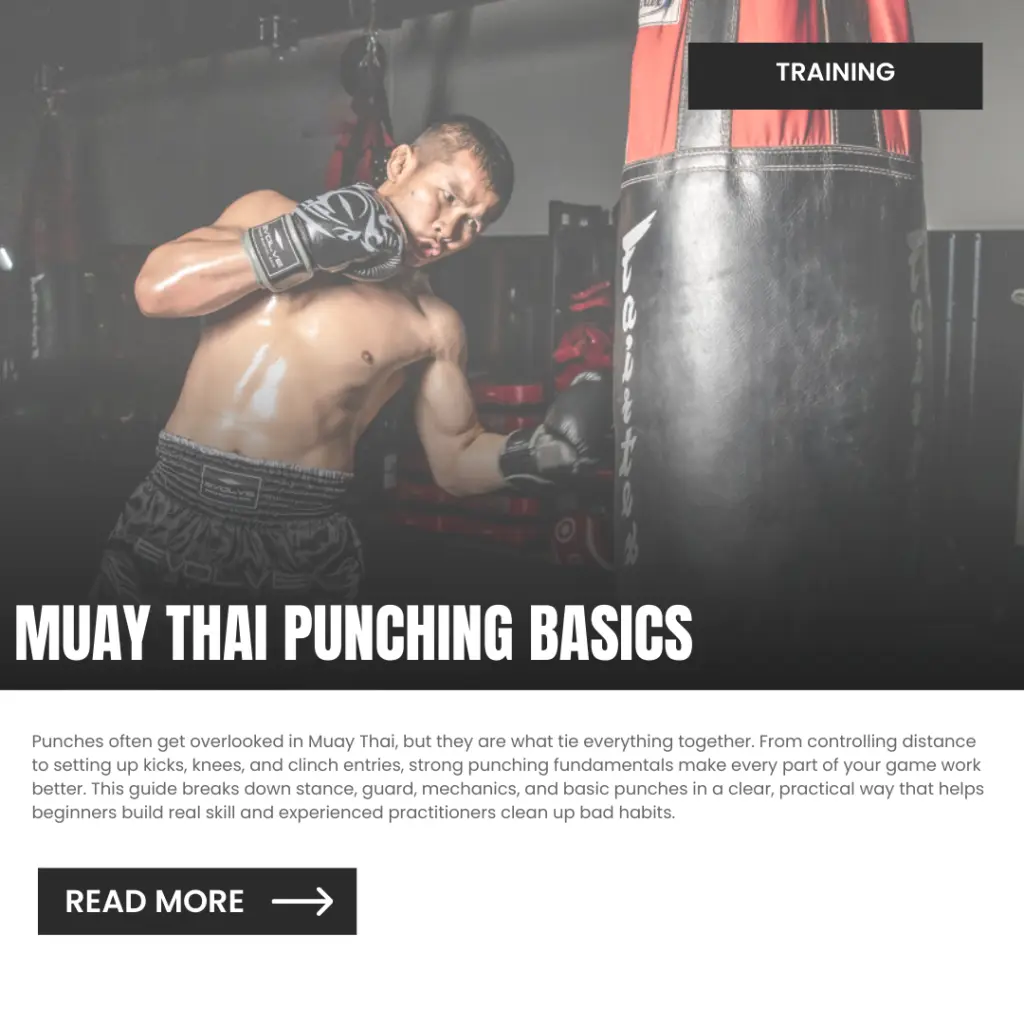
Punches are a core part of Muay Thai and affect everything from balance to defense. This article covers the basics of stance, guard, and punching technique to help you build a solid foundation and improve how all your strikes connect.
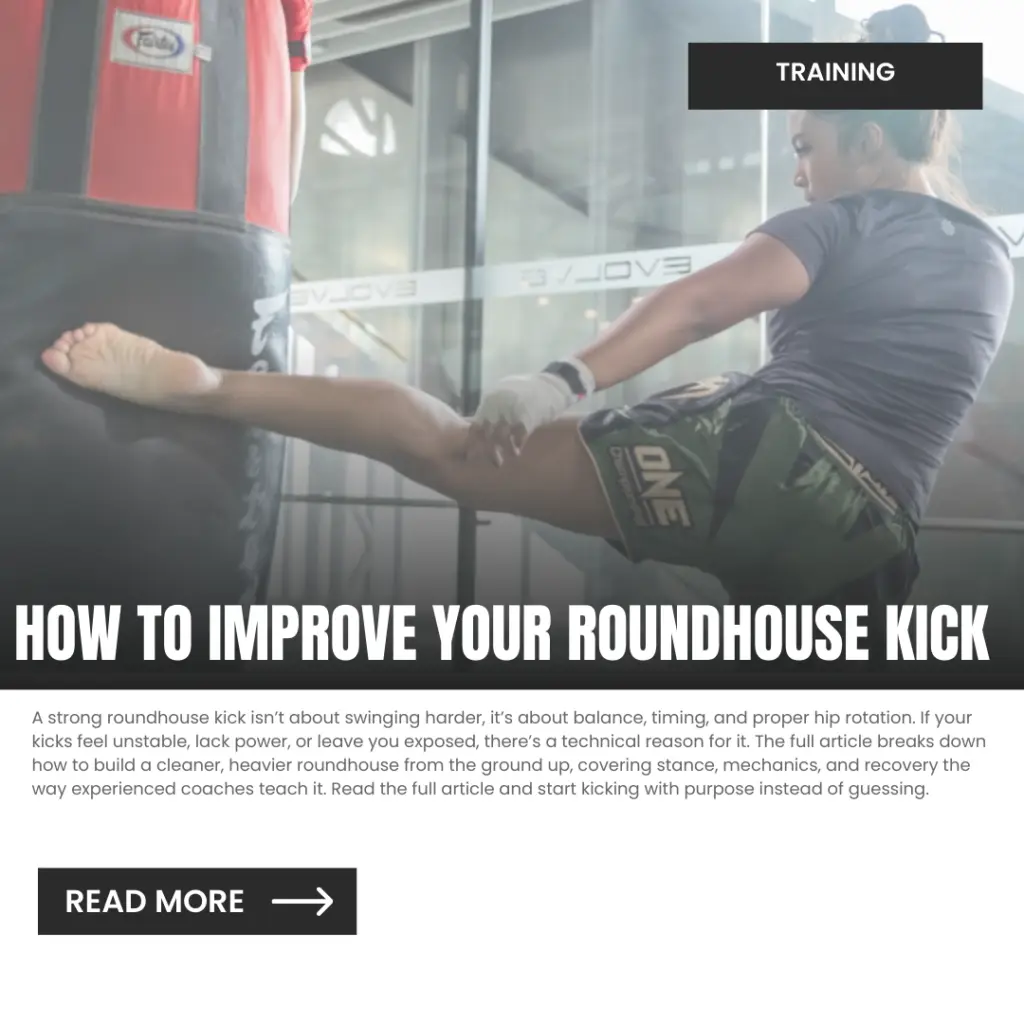
The roundhouse kick is one of the most effective strikes in any striking art, but only when it’s built on sound mechanics. Power doesn’t come from forcing the leg through the target—it comes from the ground, the hips, and the way the body moves as one unit. Without balance, rotation, and control, even a hard kick becomes unreliable. This article breaks down the roundhouse kick step by step, focusing on stance, hip engagement, clean contact, and recovery, so the technique holds up under pressure, not just on pads.
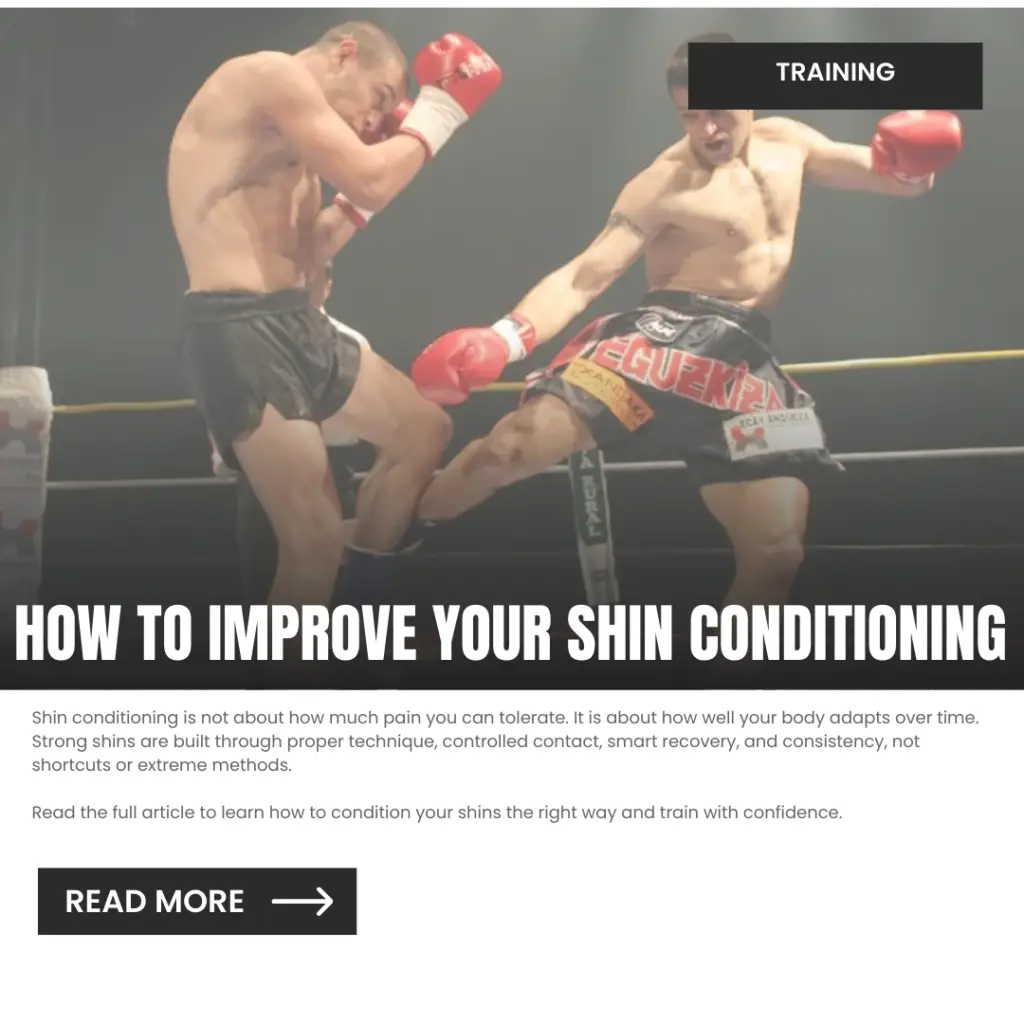
Shin conditioning is often misunderstood. It is not about smashing your legs until they go numb or pushing through pain for the sake of toughness. In reality, it is a slow process of adaptation. When the shin is exposed to controlled, repeated impact, the body responds by strengthening bone, toughening surrounding tissue, and reducing sensitivity over time.
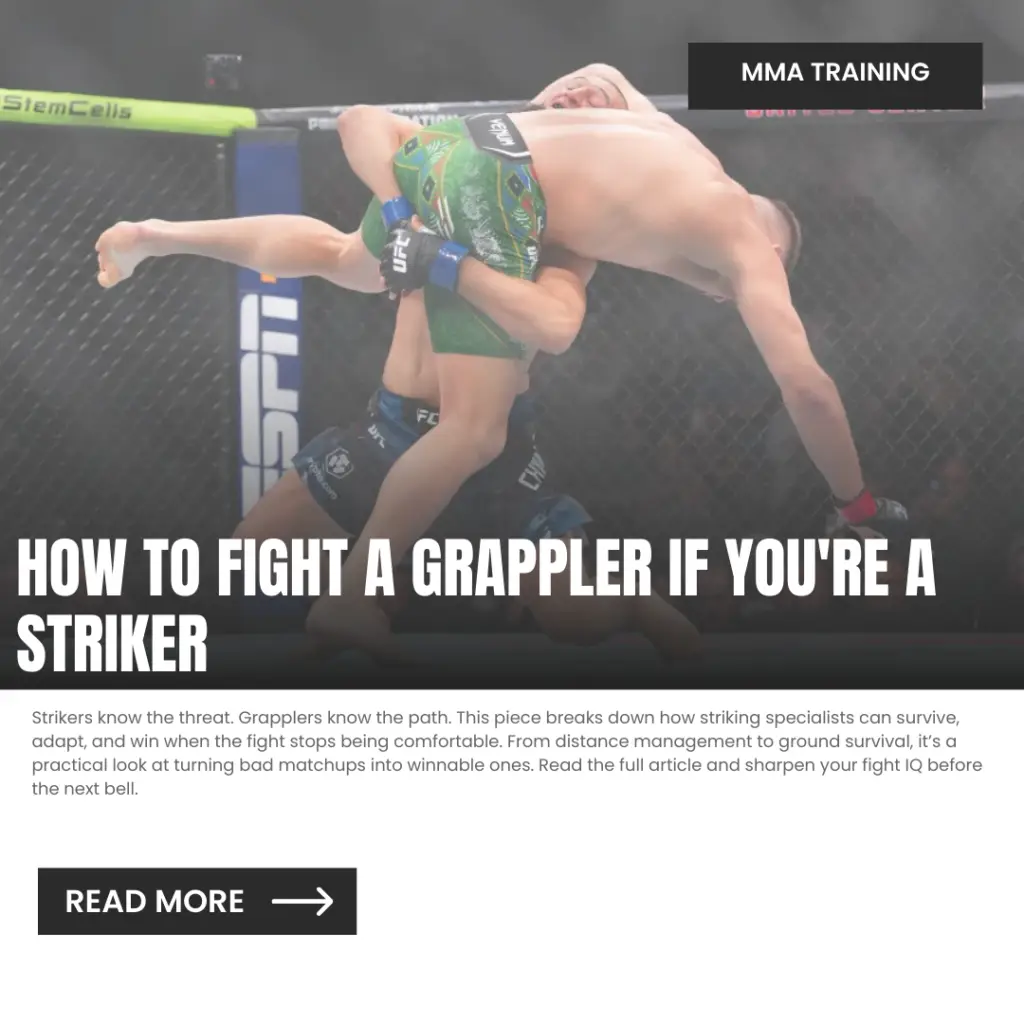
Striker versus grappler is one of the toughest matchups in MMA. This article breaks down how strikers can manage distance, defend takedowns, and stay composed when the fight hits the ground. It focuses on smart movement, calm decision-making, and practical adjustments that help turn difficult style clashes into winnable fights.

Tony Ferguson continued his late-career resurgence on Saturday night in Dubai, defeating Warren Spencer by unanimous decision at Misfits Boxing 23. The former UFC interim lightweight champion controlled the fight from start to finish, scoring a key knockdown in the second round and outworking Spencer over five rounds to capture the vacant Misfits Middleweight Championship. The win marks Ferguson’s second straight victory in the promotion and another positive moment after a difficult final stretch in the UFC.
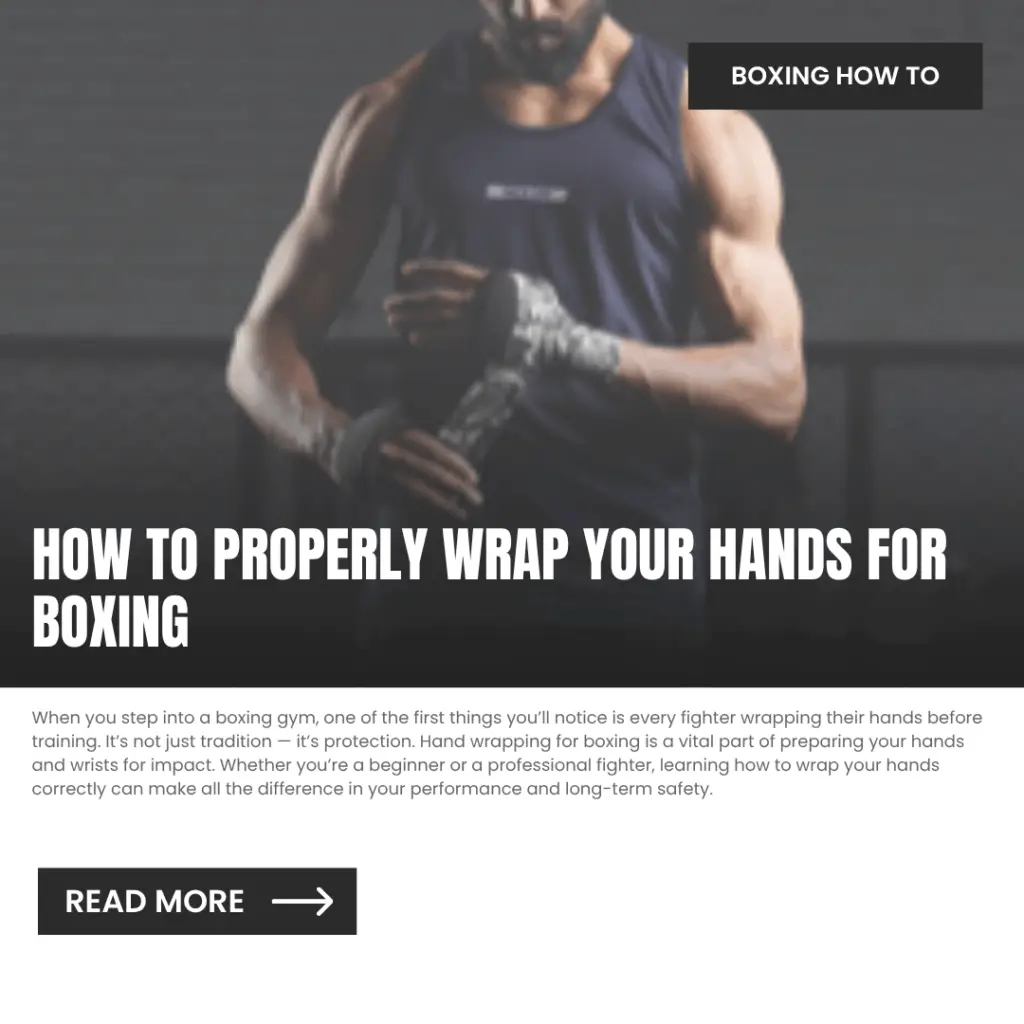
When you step into a boxing gym, one of the first things you’ll notice is every fighter wrapping their hands