Starting Out in Muay Thai
If you’re new to Muay Thai, the first thing I want you to understand is that nobody expects you to know anything. Every fighter you see moving confidently around the gym once stood where you are now, unsure of their stance and trying to remember which foot goes forward. Muay Thai is learned step by step. There’s no rush.
Muay Thai is often called the “Art of Eight Limbs” because it uses punches, kicks, elbows, and knees. That description sounds impressive, but in the beginning, it is not something you need to worry about. As a beginner, your focus should be on learning the basics properly. Solid fundamentals make everything else easier later on.
TL;DR
-
Muay Thai beginners should focus on learning the basics properly, starting with stance, balance, and footwork before worrying about power or advanced techniques.
-
Clean technique, control, and consistency in training matter more than strength or speed, especially in punches, kicks, and clinch work.
-
Progress in Muay Thai comes from patience and regular practice, not rushing or comparing yourself to others.
Stance: The First Thing You Learn
Your stance is the foundation of Muay Thai. Before you throw a single strike, you need to be able to stand correctly and keep your balance.
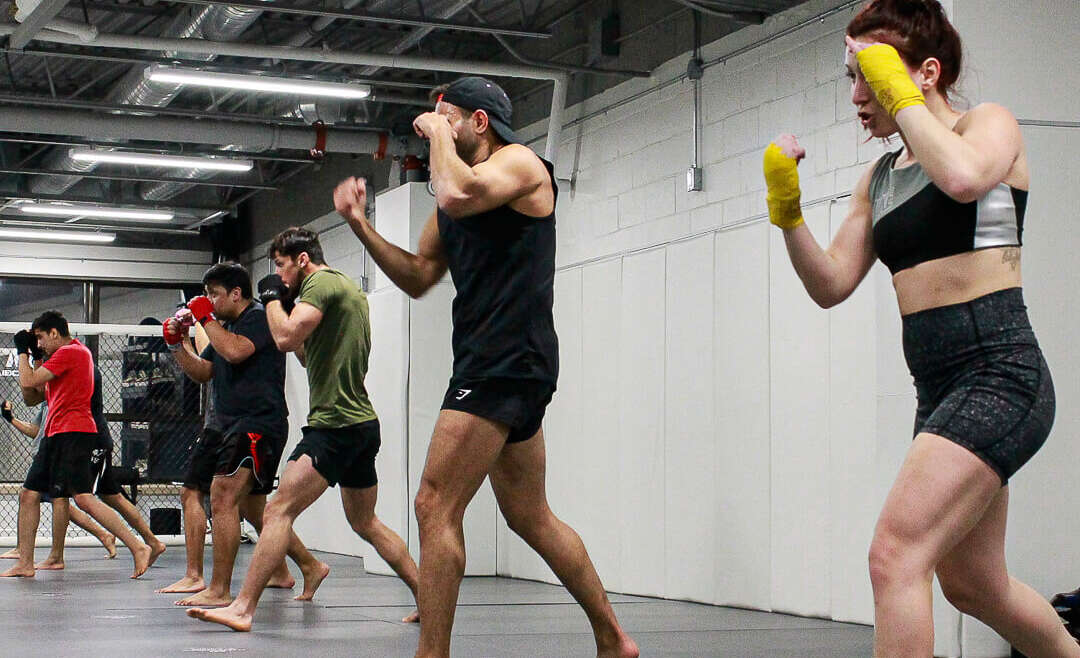
Most beginners use an orthodox stance, with the left foot forward if you are right-handed. Your feet should be about shoulder-width apart, knees slightly bent, and weight evenly distributed. You should feel stable but light enough to move.
Keep your hands up near your cheeks, elbows close to your ribs. Chin slightly down, eyes forward. This position protects you and keeps you ready to move or defend. At first, it might feel uncomfortable or tiring, but with repetition it becomes second nature.
Footwork: Learning How to Move Properly
Once you understand your stance, the next step is footwork. Muay Thai is not about standing still and trading strikes. Movement is a big part of staying safe and effective.
When you move forward, your front foot steps first, followed by the rear foot. When you move backward, the rear foot goes first. Side steps work the same way. The key is to move without crossing your feet or losing balance.
Good footwork helps you control distance and timing. Many beginners focus too much on striking early on, but learning how to move properly will improve your defense and make your attacks cleaner.
Punching Basics: Simple and Controlled
Punches in Muay Thai are similar to boxing, but they are usually used to set up kicks, knees, or clinch work.
The first punches you will learn are the jab and the cross. The jab is thrown with the lead hand and should be quick and direct. The cross comes from the rear hand, using hip rotation to generate power. After every punch, your hand should come straight back to guard.
At the beginner level, control matters more than power. Overcommitting on punches throws you off balance and leaves you open. Clean technique and good posture will help you progress faster and avoid bad habits.
Kicks: Learning the Muay Thai Style
Kicks are one of the defining features of Muay Thai, and they are taught differently than in many other martial arts.
The roundhouse kick is the most common. Instead of snapping the kick with the foot, Muay Thai uses the shin and full hip rotation. You pivot on your supporting foot, turn your hips over, and swing through the target.
Beginners usually work kicks slowly on pads or heavy bags. The focus is on balance, proper rotation, and returning to stance after the kick. Speed and power come later, once the technique is solid.
Knees and Elbows: Close-Range Techniques
Knees and elbows are important tools in Muay Thai, but beginners learn them with control and precision.
Basic knee strikes involve driving the hips forward while staying balanced. Elbows are short-range strikes that rely more on timing and positioning than raw strength. In training, these techniques are practiced carefully to protect training partners.
Learning control early helps build good habits and keeps injuries to a minimum. There is no need to rush these techniques.
The Clinch: Balance Over Strength
The clinch is one of the most challenging parts of Muay Thai for beginners. It is less about strength and more about posture, balance, and hand positioning.
In the clinch, you work to control your opponent’s head and arms while keeping your own balance. Knees come from proper positioning, not force. Early clinch training usually focuses on movement and balance rather than landing hard strikes.
It takes time to feel comfortable in the clinch, and that is normal for everyone.
Conditioning and Consistent Training
Muay Thai training includes jump rope, shadowboxing, pad work, bag work, and conditioning drills. It is physically demanding, especially at first, but the goal is steady improvement, not burnout.
You will have days where training feels tough and days where things start to click. What matters most is consistency. Showing up regularly and training with focus will take you much further than pushing too hard too fast.
Mindset
Your mindset matters just as much as your technique when you are starting Muay Thai. Progress is not linear, and some sessions will feel frustrating no matter how hard you try. You will make mistakes, forget combinations, and feel out of place at times, and none of that means you are doing badly. The goal early on is to stay open to learning, accept correction without taking it personally, and focus on small improvements from session to session. Treat training as practice, not a test. When you stop worrying about how you look and start paying attention to how you learn, everything becomes easier to absorb.
If you are just starting Muay Thai, keep your attention on the basics and stay patient with the process. Listen to your coach, ask questions, and do not worry about comparing yourself to others in the gym.
Progress comes from time and repetition. Learn the fundamentals well, train consistently, and confidence will build naturally as your skills improve.