Anyone who has spent some time on the mats knows that rolling can either be the highlight of training or the thing that makes you question why you came. Most people you train with are respectful and genuinely trying to improve. Every so often, though, you run into someone who turns what should be a learning round into something that feels a little too close to a real competition. It is not always easy to see when a partner is pushing past what is reasonable, especially if you are newer, but once you slow down and notice the details, the signs are usually clear.
TL;DR
Where Rolling Starts to Feel Wrong
Rolling is supposed to be a shared exchange. Both people experiment, both make mistakes, and both learn without worrying about someone getting hurt. The moment someone forgets that the gym is not a tournament stage, the entire tone of the roll shifts. You can feel when it happens. Instead of moving with a sense of exploration, the other person suddenly rolls as if they need to prove something.
When a partner cares more about dominance than mutual learning, the tension rises. You start bracing for a sudden crank or collision, and that feeling alone is a warning that something is off.
When Strength Takes Over, and Technique Disappears
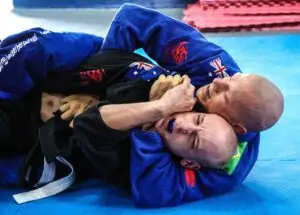
A very common sign of an overly aggressive partner is the constant use of strength instead of technique. Of course everyone uses some strength, but there is a big difference between steady, thoughtful pressure and someone ripping your limbs around because they do not know the correct movement.
You can feel it in how uneven the roll becomes. Rather than smooth transitions, everything becomes abruptly forceful. Grips tighten too fast, submissions snap on without any buildup, and scrambles feel like someone trying to bulldoze their way to a win. When this starts happening, the roll stops being about growth and becomes a safety risk.
When Intensity Rises Without Your Agreement
Good rounds have a natural pace. Sometimes you start slow and ease into a higher tempo. Other times you stay steady from beginning to end. The key is that both partners move together. Trouble begins when your partner suddenly increases the intensity on their own. Maybe you came in expecting a light roll, and two movements later they are exploding into every position. Or maybe you catch a sweep and their entire energy shifts into something harsher.
If you are doing your best to guide the roll back to a controlled rhythm and they simply ignore it, then the round is no longer cooperative. You are not training together at that point. You are reacting to someone who is only paying attention to their own agenda.
The Serious Line: Submission Safety
The clearest boundary in grappling is the tap. When someone ignores it or takes too long to release, even by a moment, they cross a line that should never be crossed in training. A partner who applies submissions so quickly that you barely have time to react is also creating unnecessary danger.
A thoughtful grappler puts submissions on with care. An aggressive one tries to snatch them instantly as if they are racing against an invisible clock. If you find yourself tapping out of fear rather than technique, then you are dealing with someone who does not understand or respect the responsibility that comes with training.
When Size and Skill Are Used Carelessly
There is nothing wrong with rolling with someone bigger or more advanced. Many people learn the most from those rounds. Problems show up when the person with the size or experience advantage refuses to adjust. If someone much larger pins you so heavily that you cannot breathe or if a higher belt crushes every movement you make without giving you space to learn, they are not doing it for your benefit.
A good partner uses their advantages to guide and teach. A careless one uses them to overwhelm. If you leave the roll feeling like you never even got a chance to participate, that partner is being too aggressive, regardless of their intentions.
The Feeling You Should Not Ignore
Almost everyone has experienced that moment during class pairings when you silently hope you do not get matched with a certain person. That feeling is worth paying attention to. Whether it shows up as tension, worry, or just an uncomfortable flutter in your stomach, it usually comes from repeated small moments where the person has shown a lack of control.
If simply seeing someone walk toward you for a round makes your body tense, that is a sign that you do not feel safe with them. You do not need to overthink it. Your instincts are usually right.
When Emotions Start Driving the Roll
Aggression is not only physical. Sometimes it shows up in the partner’s reactions. They might get irritated when you escape. They sigh loudly, tense up, or start moving sharply the moment something does not go their way. Grappling can stir up a lot of emotion, but when that emotion twists into frustration, the roll can turn dangerous fast.
Someone who cannot manage their reactions during a roll is someone who may lose control in a way that puts you at risk.
Keeping Yourself and Your Training Safe
Sometimes a quick conversation can fix things. Many people do not realize how hard they roll until someone points it out. Asking for a lighter pace is completely normal. If you do not feel comfortable bringing it up or if you have already tried and nothing has changed, talking to your coach is the right step. Coaches care about the safety of the room more than almost anything, and they cannot address a problem they do not know exists.
Ultimately, your training should help you grow, not make you nervous. Learning to recognize when a partner is being too aggressive gives you the power to choose who you roll with and how you set boundaries. The mats are safest when everyone treats each other with respect, and understanding how not to roll is one of the most important lessons you will ever learn.