Muay Thai is usually known for hard kicks, elbows, and pressure fighting. What often gets ignored is footwork. From experience, footwork is what keeps everything together. Without it, strikes feel unstable, defense breaks down, and fatigue shows up much faster than it should.
Footwork is not about fancy movement or looking fast. It is about staying balanced, moving with purpose, and being ready to strike or defend at any moment. Understanding the basics of Muay Thai footwork makes training smoother and helps skills develop more naturally over time.
TL;DR
-
Strong footwork keeps balance, controls distance, and makes both offense and defense work better in Muay Thai.
-
A solid stance, clean steps, and small angle changes matter more than speed or flashy movement.
-
Training footwork regularly reduces damage, saves energy, and improves overall performance in the ring.
Footwork as a Core Skill in Muay Thai
I see footwork as one of the most important parts of Muay Thai because every action starts from the feet. Punches, kicks, checks, and clinch entries all depend on solid positioning and balance.
Good footwork makes it easier to move without falling off balance, especially during exchanges. It also helps control distance, which is critical against different opponents. Fighters with strong footwork usually take less damage and stay more relaxed under pressure.
Muay Thai footwork is not about speed for the sake of speed. It is about staying stable, moving when needed, and not wasting energy.
The Muay Thai Stance: The Base of All Movement
Everything starts with stance. Feet are usually about shoulder-width apart, with the lead foot slightly forward and the rear foot turned out a bit. Knees stay bent just enough to allow quick movement and easy kick checks.
Weight should feel even, not pushed too far forward or leaned back. A balanced stance makes it easier to strike, defend, or move without having to reset every time.
A solid stance also helps prevent being swept and makes clinch exchanges more controlled.
Moving Forward and Backward
Basic forward and backward movement in Muay Thai follows a simple idea: move one foot, then bring the other with it. When moving forward, the lead foot steps first and the rear foot follows. When moving backward, the rear foot moves first and the lead foot follows.
This keeps the stance the same at all times. Crossing the feet or letting them get too close together makes balance easy to break and leaves openings for kicks.
Movement should stay smooth and controlled. Being light on the feet helps, but too much bouncing wastes energy and makes defense harder.
Side Movement and Angles
Side movement is important in Muay Thai, especially for defense. Small steps to the left or right can move the body just far enough to avoid strikes while staying close enough to counter.
When stepping sideways, the foot closest to the direction of movement goes first. The other foot then slides back into position. This keeps balance and avoids awkward positioning.
Angles in Muay Thai are usually small. A short step to the outside of a punch or kick is often enough to create an opening without overmoving.
Pivoting for Power and Position
Pivoting is a key part of throwing strong strikes. When kicking, punching hooks, or throwing elbows, the supporting foot turns so the hips can rotate fully. This adds power and helps protect the knees and lower back.
Pivoting also helps with defense. Turning the foot and body slightly can move the head off line or change position against kicks. In close range, small pivots help create space or set up elbows.
Good pivots keep movement smooth and prevent getting stuck in place.
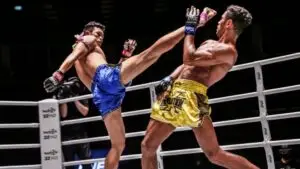
Defensive Footwork and Checking Kicks
Footwork plays a big role in defense. Sometimes the best defense is simply stepping out of range. A small step back or slight angle change can cause strikes to miss completely.
When checking kicks, the supporting foot needs to stay stable. The toes should be turned slightly outward to keep balance while lifting the leg. After the check, returning to stance quickly is important to avoid follow-up attacks.
Strong defensive footwork helps reduce damage and keeps fighters calm during exchanges.
Common Footwork Mistakes
One common mistake is bouncing too much. While staying light helps movement, constant bouncing makes it harder to check kicks and drains energy over time. Muay Thai favors controlled movement.
Another mistake is crossing the feet while moving. This throws off balance and makes sweeps and knockdowns more likely. Short, clean steps fix this problem.
Ignoring footwork altogether is another issue. Toughness alone can only carry a fighter so far. Clean movement helps skills last longer and improves overall performance.
Training Footwork in Muay Thai
Footwork should be trained regularly. Shadowboxing with a focus on stance and movement builds good habits. Light sparring helps with timing and distance, while pad work highlights foot placement during strikes.
Even a few minutes of focused footwork each session can make a noticeable difference over time.
Footwork is not the flashiest part of Muay Thai, but it affects everything. Good footwork supports balance, power, defense, and control. When the feet move well, the rest of the technique follows.
For anyone serious about improving in Muay Thai, footwork is something that should never be overlooked.