
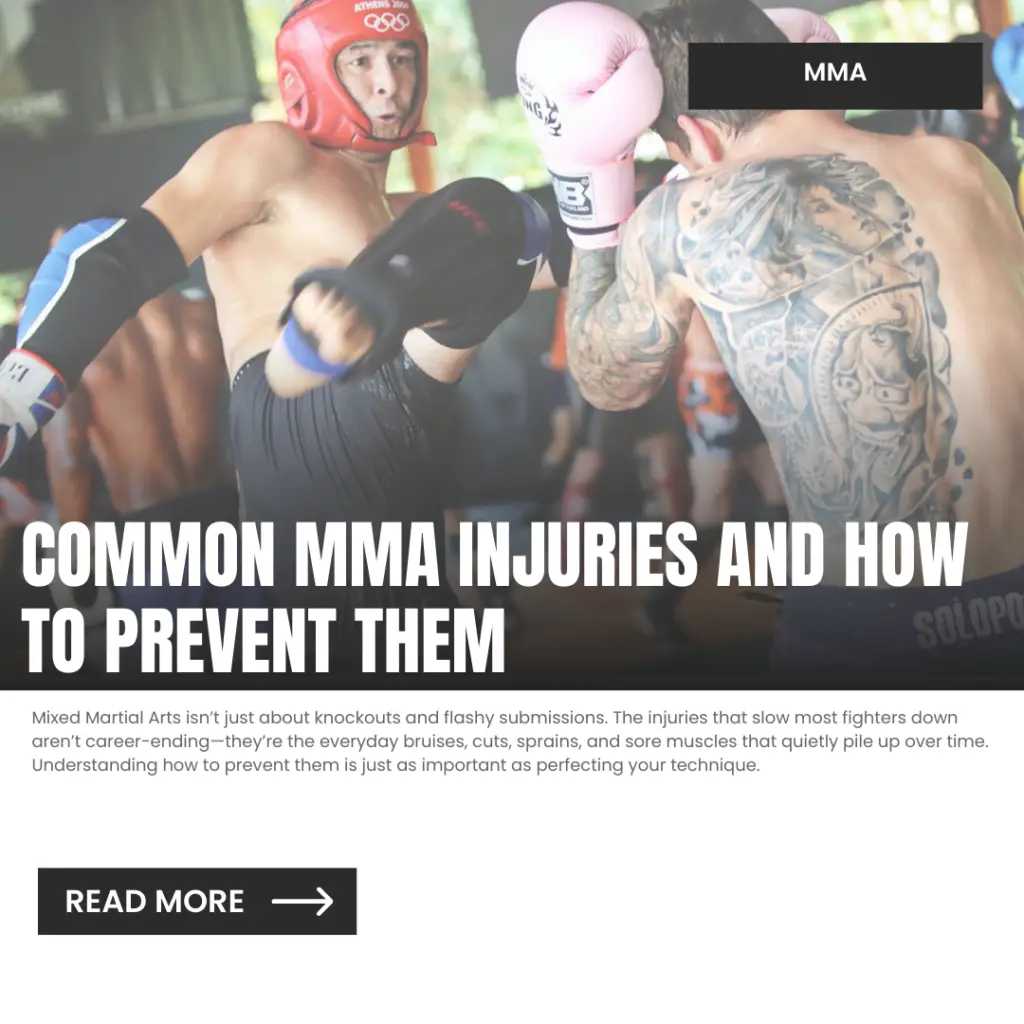
MMA is often seen as a sport of knockouts and submissions, but the reality is much less dramatic and far more repetitive. The injuries that show up most often aren’t career-ending they’re the everyday ones that quietly mess with your training. Bruises, sore joints, minor sprains, and small cuts are what fighters deal with week in, week out. I’ve seen guys stay consistent for years not because they avoided damage completely, but because they learned how to manage it properly.
TL; DR
- The most common MMA injuries are bruises, cuts, sprains, and muscle strains
- Hands, knees, shoulders, and the face take the most damage
- Smart training, proper warm-ups, and controlled sparring prevent most injuries
Why MMA Injuries Are So Common
MMA combines striking, wrestling, and grappling, which means your body is constantly switching between explosive movements and physical resistance. You’re punching, kicking, clinching, shooting for takedowns, and scrambling all in the same session.
That variety is what makes the sport exciting, but it’s also why injuries pile up. Most of them don’t come from one big moment they come from repetition, fatigue, and small technical mistakes.
Bruises (The Most Common)
If you train consistently, bruises are just part of the game. Leg kicks, body shots, and even heavy top pressure in grappling can leave you marked up.
They’re not serious, but they can affect movement and performance if you don’t recover properly.
How to prevent it:
Work on defense more than offense. Checking kicks, maintaining distance, and not standing still in exchanges reduces unnecessary damage. Also, don’t underestimate recovery simple things like rest, hydration, and light movement speed up healing.
Cuts and Facial Damage
Cuts, especially around the eyebrows and nose, are extremely common. One accidental elbow or even a sharp jab can split the skin open.
This is one of those injuries that shows up more when ego gets involved in sparring.
How to prevent it:
Keep your guard disciplined and avoid turning technical sparring into a fight. Good partners matter here if your gym culture is controlled, your injury rate drops instantly.
Muscle Strains
Muscle strains are one of the biggest reasons fighters have to take time off. They usually hit the hamstrings, groin, or shoulders.
Most of the time, it’s not bad luck it’s poor preparation.
How to prevent it:
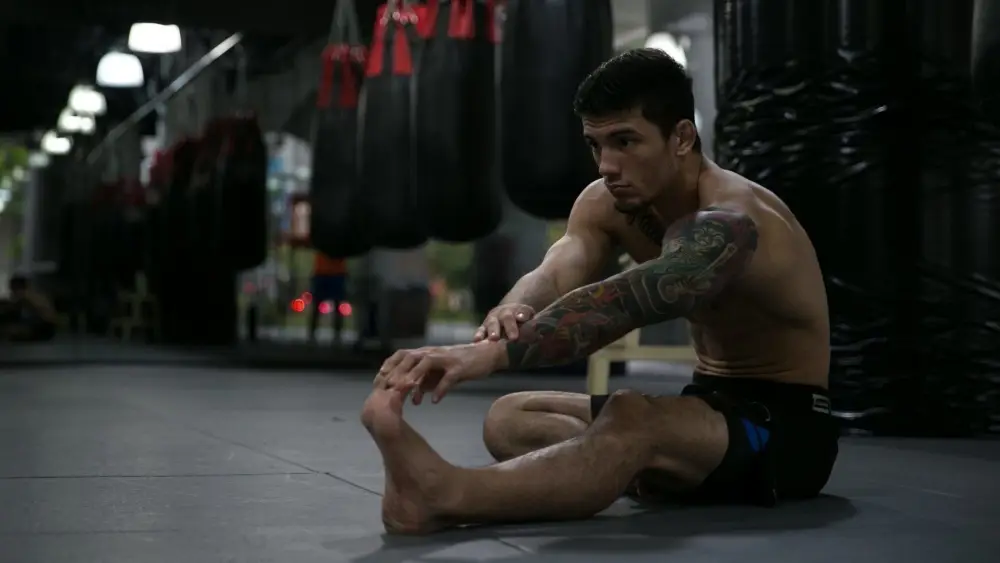
Take your warm-up seriously. A few minutes of dynamic stretching and activation drills can save you weeks of recovery. Build intensity gradually instead of jumping straight into hard rounds.
Sprains (Ankles and Knees)
Ankle rolls and knee sprains happen more often than people think, especially during scrambles or awkward landings.
They’re frustrating because they don’t always feel serious at first, but they linger.
How to prevent it:
Focus on balance and stability. Single-leg exercises, controlled footwork, and awareness during scrambles make a big difference. A lot of these injuries come from chaotic movement rather than clean technique.
Hand and Wrist Injuries
Your hands are your main weapons, but they’re also one of the most fragile parts of your body. Bad punches, poor wraps, or hitting elbows can easily lead to pain or injury.
How to prevent it:
Wrap your hands properly every time, no shortcuts. Learn clean punching technique and don’t try to knock people out in sparring. Save that for fight night.
Shoulder Pain and Overuse
Shoulder issues don’t always show up suddenly they build over time. Grappling, clinching, and constant punching all put stress on the joint.
At some point, almost every fighter deals with shoulder discomfort.
How to prevent it:
Add simple strength work using resistance bands and light weights. Focus on control and stability, not just power. And when you’re caught in submissions, just tap it’s not worth weeks off the mat.
Knee Pain (The Silent Problem)
Not every knee issue is a major injury. Most fighters deal with general knee pain from the constant load of training.
Takedowns, kicks, and even footwork add up over time.
How to prevent it:
Strengthen your legs properly. Squats, lunges, and hamstring work help stabilize the knee. Clean technique in wrestling also reduces unnecessary strain.
The Injury Most People Ignore: Accumulation
This is where most fighters get it wrong.
It’s not the big injury that usually stops you it’s the small ones stacking up:
- a sore wrist that never fully heals
- a tight hamstring you keep training on
- constant bruising that affects movement
Over time, your performance drops, and eventually, something bigger happens.
I realized this midway through my own training when small, “harmless” issues started affecting how I moved, how I sparred, and even how confident I felt going into sessions.
How to Actually Stay Injury-Free in MMA
There’s no secret formula, but a few habits make a massive difference:
Control your sparring
You don’t need a war every session. Technical rounds keep you sharp without breaking your body.
Warm up properly
This alone prevents a huge percentage of strains and sprains.
Train strength and mobility
Strength protects your joints, mobility keeps you moving efficiently. You need both.
Listen to pain early
Ignoring small issues is how they turn into big ones. Adjust your training when needed.
The most common MMA injuries aren’t dramatic, but they’re consistent. Bruises, cuts, strains, and sprains are part of the sport, but they don’t have to control your progress.
If you want to last in MMA, think long-term. Train hard, but more importantly, train smart. Because at the end of the day, the fighters who improve the most are the ones who stay healthy enough to keep showing up.

Join the discussion over on r/grapplersgraveyard!
