
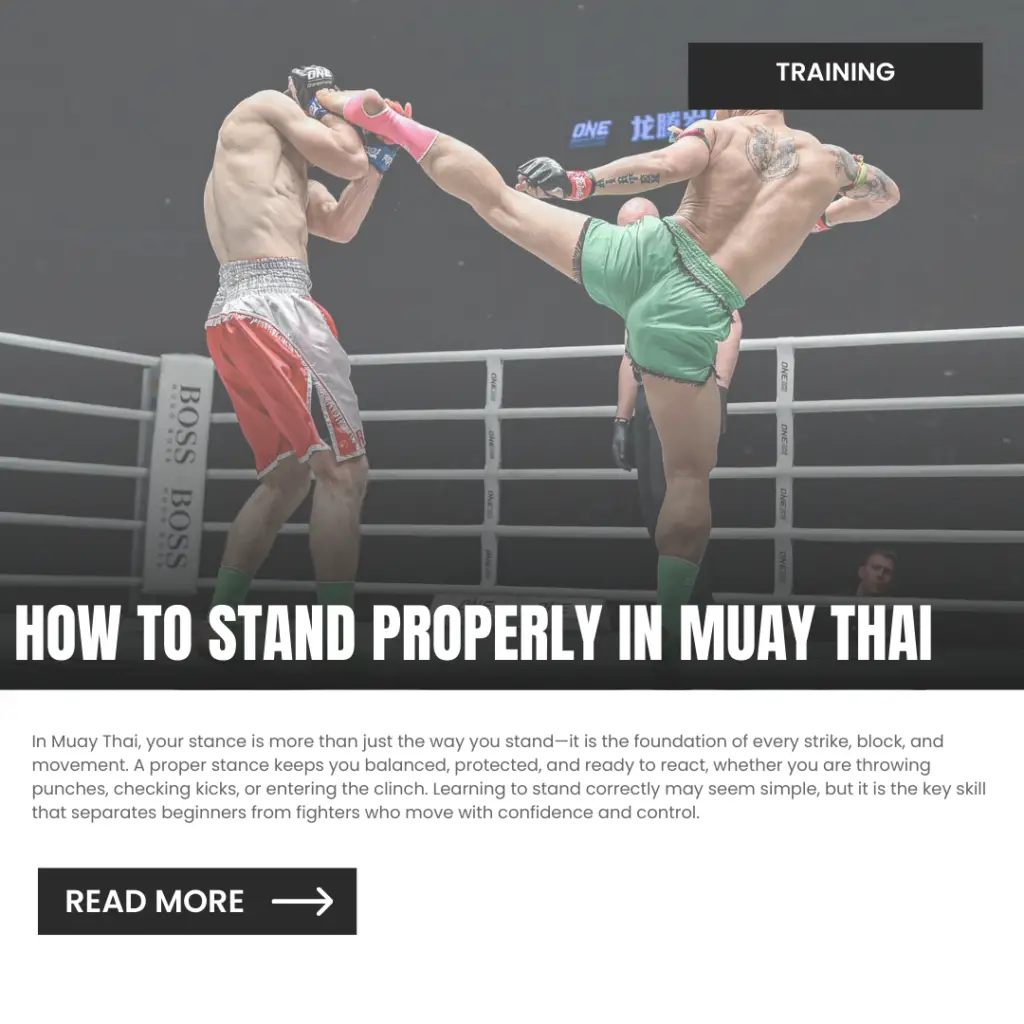
In Muay Thai, your stance is not just how you stand. It is how you fight, defend, move, and survive. I have seen talented fighters struggle simply because their stance was wrong. Before you worry about power, speed, or combinations, you need to learn how to stand properly. Everything else grows from there.
This article will walk you through the correct Muay Thai stance, step by step, the same way a good coach would explain to their students.
TL;DR
Why the Muay Thai Stance Matters
Muay Thai is a balance-heavy art. You are striking with all eight limbs, checking kicks, clinching, and defending at close range. A poor stance leaves you off-balance, slow to react, and open to damage.
A proper stance allows you to attack without overcommitting, defend without panicking, and move without wasting energy. It keeps you stable when you kick and grounded when you get hit. If your stance is right, half the fight is already under control.
Feet Position and Base
Start from the ground up. Your feet create your foundation.
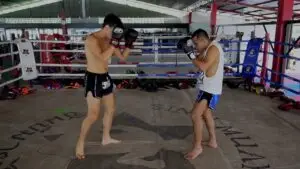
Stand with your feet shoulder-width apart, not wider. If your stance is too wide, you will be slow. If it is too narrow, you will be easy to knock off balance. Your lead foot should point slightly forward, while your rear foot turns outward at about a forty-five degree angle.
Distribute your weight evenly between both legs. Do not lean heavily on the front or back foot. In Muay Thai, you need to be ready to check kicks, step, or strike at any moment. Balanced weight keeps you prepared.
Stay light on the balls of your feet, but do not bounce. You should feel grounded, calm, and ready.
Knee Bend and Lower Body Alignment
A common beginner mistake is standing too tall. Locked knees make you stiff and slow.
Keep a slight bend in your knees at all times. This lowers your center of gravity and improves balance. Think athletic, not crouched. Your hips should sit naturally over your legs, not pushed back and not tucked too far forward.
This knee bend helps you absorb impact, explode into strikes, and remain stable during checks and clinch entries.
Upper Body Posture
Your upper body should stay relaxed but upright.
Keep your chest open and your back straight. Do not hunch forward or lean backward. Your chin should be slightly tucked, not forced down, just enough to protect it.
A straight posture helps with breathing, balance, and vision. It also keeps your strikes sharp and your defense tight.
Hand and Guard Position
Your hands are your shield.
Keep both hands up at cheek level, elbows close to your ribs. Your lead hand stays slightly in front, ready to jab, frame, or block. Your rear hand protects your chin and temple. Do not flare your elbows. Open elbows invite body shots and kicks. Keep them tight and disciplined.
Your shoulders should stay relaxed. Tension slows you down. A calm guard allows quick reactions and smoother movement.
Head Position and Vision
Always keep your eyes forward.
Do not look down at the floor or fixate on one limb. You need full vision of your opponent’s shoulders, hips, and stance. This is where strikes are born.
Your head should sit centered over your base. Avoid leaning forward during exchanges. Leaning breaks balance and makes you vulnerable to knees and counters.
Weight Distribution and Mobility
In Muay Thai, mobility matters as much as power.
Keep your weight evenly balanced so you can lift either leg instantly. This is essential for checking kicks. If your weight is stuck on one leg, your defense will always be late.
Practice shifting weight subtly, not dramatically. Small adjustments keep you mobile without exposing openings.
Remember, good fighters look calm because their stance does the work for them.
Stance Mistakes to Avoid
Many beginners turn their stance into a boxing stance. This limits kick defense and clinch readiness. Others stand too square, which makes them easy to push and sweep.
Avoid standing flat-footed. Avoid excessive bouncing and do not drop your hands when you start feeling comfortable.
Comfort often hides bad habits. Discipline keeps you safe.
Training Your Stance the Right Way
Your stance should be practiced every day.
Shadowbox slowly and check your posture. Work in front of a mirror. Ask your coach to correct you. Drill checks, steps, and basic strikes while maintaining stance. Do not rush this process. A strong stance is built through repetition and awareness.
If I could give every Muay Thai student one piece of advice, it would be this. Fix your stance before you chase power.
A proper Muay Thai stance gives you balance, confidence, and control. It protects you when you are tired and supports you when the fight gets hard. Stand correctly, and everything else in your game becomes sharper.