
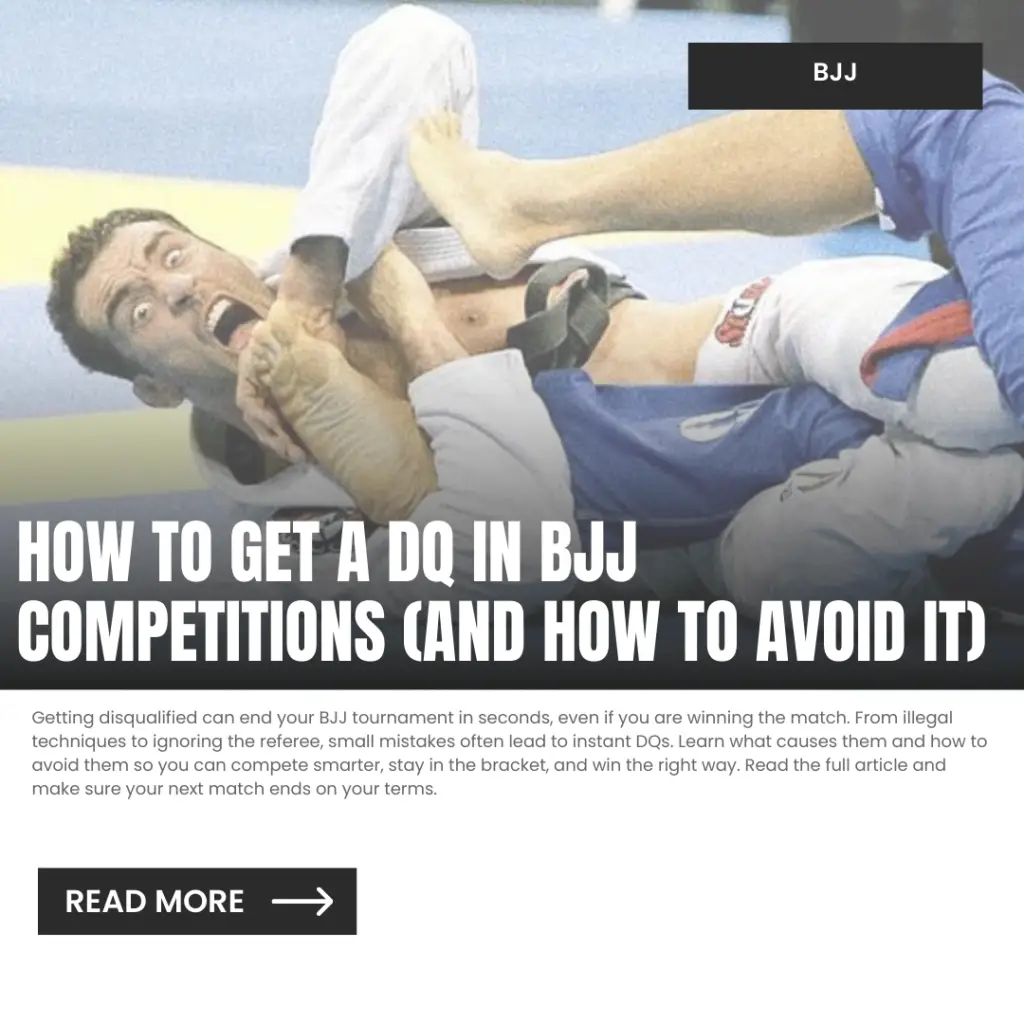
Getting disqualified in a Brazilian Jiu-Jitsu competition is one of the most frustrating ways to lose a match. You can be winning on points, close to a submission, or fully in control, and one rule violation can end everything instantly. While most athletes do not intend to break the rules, disqualifications happen often because competitors misunderstand regulations or let emotions take over.
This article explains the most common ways athletes get a DQ in BJJ competitions, based on official rules from major federations. Understanding these mistakes will help you compete safely, legally, and intelligently.
What a Disqualification Means in BJJ
A disqualification occurs when a referee determines that a competitor has violated the rules in a way that threatens safety or fairness. When this happens, the match is stopped immediately and the opponent is declared the winner.
Depending on the tournament, a disqualification may remove the athlete from the entire division, not just the match. In most events, the referee’s decision is final, which makes rule awareness critical.
Using Illegal Techniques for Your Division
One of the most common reasons competitors get disqualified is using techniques that are illegal for their belt level, age group, or rule set.
Examples of illegal techniques in many BJJ competitions include:
-
Heel hooks in gi divisions and lower belt no-gi divisions
-
Knee reaping in restricted belt levels
-
Spinal locks that are not part of a choke
-
Neck cranks applied without a choking mechanism
-
Small joint manipulation such as bending individual fingers
-
Certain takedowns like scissor takedowns or suplexes
Rules differ between organizations such as IBJJF, ADCC, and BJJ Tour. A technique that is legal in one tournament may result in a disqualification in another. Competitors are responsible for knowing the rules of the event they enter.
Slamming an Opponent
Slamming is one of the fastest ways to get disqualified in BJJ.
In most rule sets, lifting an opponent and forcefully driving them into the mat to escape a submission or guard is illegal. This includes situations where the opponent has a closed guard, triangle choke, or armbar.
What is commonly ruled illegal:
-
Lifting from guard and dropping to break grips
-
Spiking an opponent during a submission attempt
-
Pausing mid-lift and intentionally dumping the opponent
While some standing throws are legal, the key factor referees look at is control and intent. Slams are banned because they pose a high risk of head, neck, and spinal injuries.
Ignoring the Referee
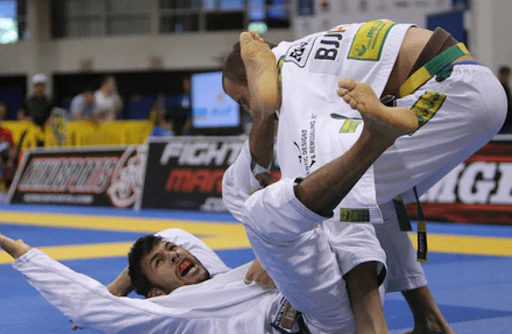
Referees have complete authority during a BJJ match. Ignoring instructions or reacting slowly can lead to penalties and eventually disqualification.
Situations that often cause problems include:
-
Continuing a submission after the referee calls stop
-
Not releasing a hold after a tap
-
Restarting before being instructed
-
Arguing with the referee during the match
Even a short delay in obeying a command can be interpreted as dangerous behavior. Referees prioritize safety above all else.
Excessive Force and Dangerous Conduct
Brazilian Jiu-Jitsu is a combat sport, but it is built around control. Using excessive force instead of proper technique can result in a disqualification.
Examples include:
-
Cranking submissions violently instead of applying pressure gradually
-
Uncontrolled throws in crowded competition areas
-
Driving elbows, knees, or head into illegal targets
-
Reckless movements that endanger the opponent
Referees evaluate intent, control, and safety. Losing emotional control often leads to losing the match by disqualification.
Unsportsmanlike Behavior
Poor sportsmanship is taken seriously in BJJ competitions. Disrespectful behavior can lead to immediate disqualification, even if no illegal technique is used.
This includes:
-
Verbal abuse toward opponents or officials
-
Threatening gestures or physical confrontations
-
Refusing to follow post-match procedures
-
Continuing to fight after the match has ended
BJJ emphasizes respect for opponents, referees, and the sport itself. Violations of this principle can end your tournament instantly.
Illegal or Unsafe Equipment
Uniform and equipment violations may seem minor, but they can still result in penalties or disqualification if not corrected.
Common issues include:
-
Fingernails or toenails not properly trimmed
-
Wearing jewelry or piercings
-
Rash guards with hard plastic or shorts with zippers
-
Poor hygiene or visible skin infections
Most competitions conduct equipment checks, and failure to comply can prevent you from competing.
Fleeing the Mat or Avoiding Engagement
Some rule sets penalize athletes for intentionally avoiding engagement or leaving the competition area to escape a bad position.
Examples include:
-
Running out of bounds to avoid a submission
-
Repeatedly disengaging without attempting offense
-
Purposefully stalling to preserve a lead
If this behavior continues after warnings, it can escalate to disqualification.
How to Avoid Getting Disqualified in BJJ
Avoiding a DQ comes down to preparation and discipline.
Key steps include:
-
Reading the official rulebook for your tournament
-
Asking your coach which techniques are legal
-
Training competition scenarios with rule awareness
-
Staying calm under pressure
-
Responding instantly to referee commands
Disqualifications are rarely about lack of skill. They are usually the result of poor decisions or lack of preparation.
A disqualification in a BJJ competition is almost always preventable. Knowing the rules, respecting the referee, and maintaining control are just as important as technique. Competing intelligently not only protects your opponent, but also protects your chance to win.
If you want longevity and success in competition, rule awareness should be part of your training, not an afterthought.
Join the discussion over on r/grapplersgraveyard!