Learning It the Hard Way
I did not pay much attention to shin conditioning early on. Like a lot of people, it only became a priority after checking a kick and realizing how unprepared my legs were for that kind of impact. That experience made it clear that shin conditioning is not optional if contact is part of training. It is something that needs to be approached deliberately and over time.
Shin conditioning is not about ignoring pain or trying to prove toughness. It is about making the body more resilient so it can handle repeated contact without breaking down.
TL;DR
What Shin Conditioning Actually Involves
Shin conditioning works through gradual adaptation. When bone is exposed to repeated, controlled stress, it responds by becoming denser. At the same time, muscles and connective tissue strengthen, and the nerves become less reactive to impact. Together, these changes reduce injury risk and improve performance.
This process is slow. It happens over months and years, not weeks. Attempts to speed it up usually lead to overuse injuries, stress fractures, or chronic soreness. Effective conditioning comes from consistent exposure paired with proper recovery.
Technique Comes Before Conditioning
Before focusing on conditioning, proper kicking technique needs to be in place. Poor mechanics increase stress on the shin and raise the likelihood of injury. Effective kicks land with the lower portion of the shin, supported by correct hip rotation, balance, and posture.
Time spent on shadowboxing, pad work, and light bag drills helps reinforce these mechanics. Clean technique allows impact to be distributed more evenly and reduces unnecessary strain on the bone. Conditioning becomes safer and more productive once technique is solid.
Using the Heavy Bag Effectively
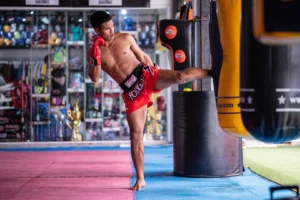
The heavy bag is one of the most practical tools for shin conditioning. It provides consistent resistance and allows for repeated contact without the unpredictability of a training partner. Early on, intensity should be moderate. The focus should be on accuracy, control, and volume rather than power.
As the shins adapt, intensity can increase gradually. Some sessions will feel easier than others, depending on fatigue and recovery. That variation is normal. Progress comes from steady exposure over time, not from pushing through discomfort in every session.
Controlled Contact Over Excessive Force
Shin conditioning does not require extreme methods. Light sparring, kick-checking drills, and pad work expose the shins to realistic impact in a controlled environment. This type of contact helps the body adapt without unnecessary damage.
Some people use tools like rolling bottles or sticks along the shin. Light pressure can increase blood flow and reduce sensitivity, but aggressive rolling does not strengthen bone. In many cases, it causes irritation that slows recovery. Conditioning should be uncomfortable at times, but it should not leave lasting pain.
Recovery Is Essential
Recovery is a necessary part of shin conditioning. Bone strengthens during rest, not during impact. Persistent soreness, swelling, or bruising are signs that the body is not recovering properly.
Ice can help manage inflammation after harder sessions. Massage supports circulation and tissue health. Elevating the legs can reduce swelling. Planned rest days are not setbacks. They allow the body to adapt and reduce the risk of long-term injury.
Nutrition and Bone Health
Shin conditioning is influenced by nutrition. Bone density and repair depend on adequate intake of calcium, vitamin D, magnesium, and overall calories. Without proper nutrition, the body cannot adapt effectively to impact.
Hydration also matters. Well-hydrated muscles absorb force more efficiently, reducing stress on the bone. Poor hydration and under-fueling increase injury risk and slow progress.
The Mental Side of Conditioning
As conditioning improves, confidence increases. Athletes become more comfortable with contact and more willing to commit to kicks without hesitation. While discomfort does not disappear, it becomes predictable and manageable.
This mental adjustment plays a role in performance. Confidence leads to better movement and cleaner technique, which further reduces unnecessary stress on the body.
Long-Term Consistency Matters Most
The most common mistake in shin conditioning is trying to do too much too soon. Bone adapts slowly, and pushing past recovery limits often results in setbacks. Durable shins are built through consistent training, controlled contact, and proper recovery.
There are no shortcuts. Conditioning is a long-term process that rewards patience and discipline. When approached realistically, it allows athletes to train longer, perform better, and stay healthier.
Key Takeaways
-
Shin conditioning works through gradual adaptation, not pain tolerance.
-
Proper technique reduces injury risk and improves conditioning results.
-
Heavy bag training provides consistent, effective shin exposure.
-
Controlled contact is more effective than excessive force.
-
Recovery allows bone and tissue to strengthen.
-
Nutrition and hydration directly support bone health.
-
Mental confidence develops alongside physical conditioning.
-
Long-term consistency produces the best results.