
Why BJJ Destroys Your Fingers Faster Than Almost Any Sport
and what to do about
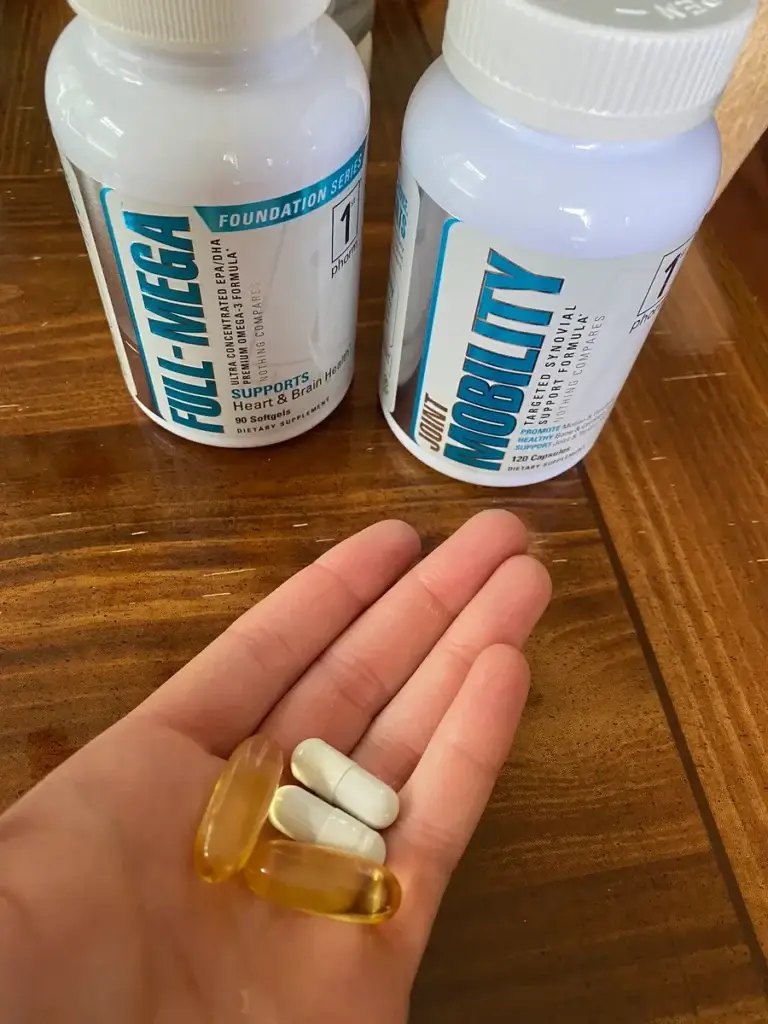
Do not let joint pain keep you off the mats or out of the gym. Give your body the support it needs to keep training with the Joint Stack. Combining Full-Mega with Joint Mobility helps support joint health, improve mobility, and promote stronger tendons so you can keep rolling, striking, and drilling without constant aches slowing you down.
This stack is designed to help your body recover and stay resilient. Take it on its own or add it to your current supplement routine to support healthier joints and keep progressing in your training.
- Helps you stay on the mats consistently
- Supports mobility for better performance
- Helps with recovery between hard sessions
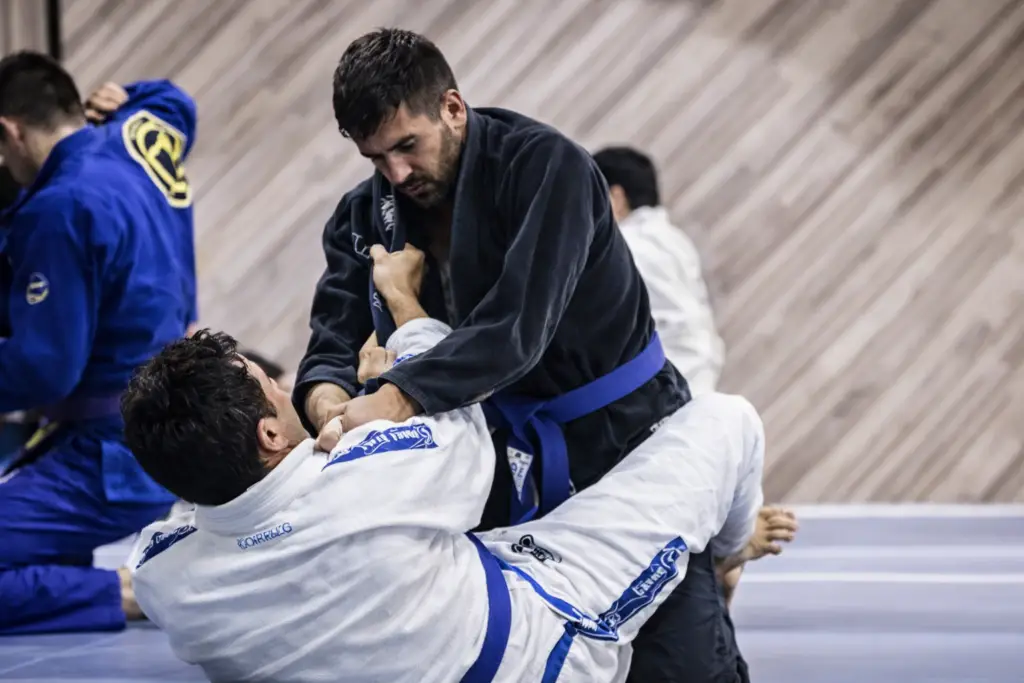
Why BJJ Wrecks Your Fingers
Every grip in Brazilian Jiu-Jitsu puts enormous stress on the small joints in your hands. Over time, constant pulling, twisting, and fighting can leave your fingers swollen, stiff, and sore after training.
The Damage Adds Up
The longer you train, the more repetitive stress your finger joints absorb. Without proper care, grapplers often develop chronic inflammation, reduced mobility, and permanently swollen knuckles.
Support Your Joint Health
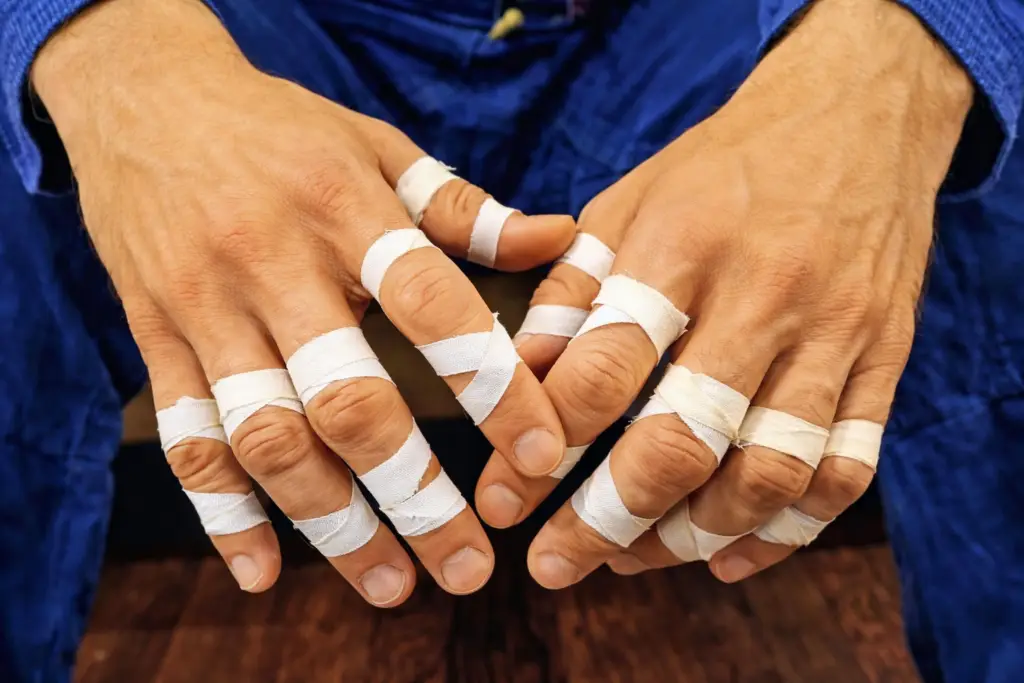
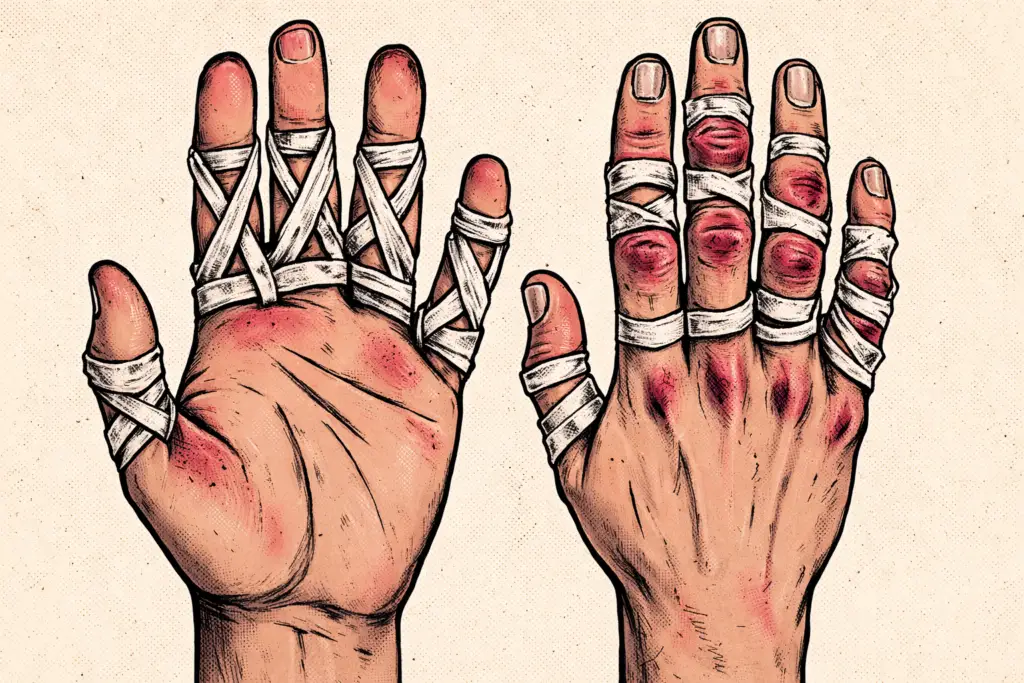
Experienced grapplers know that protecting their hands is essential for training long term. Recovery habits, proper taping, and supporting tendon and joint health can help reduce inflammation and keep your fingers functional on the mats.
If You Train BJJ, Your Fingers Already Know This Pain
If you’ve been training long enough, you already know what we’re talking about.
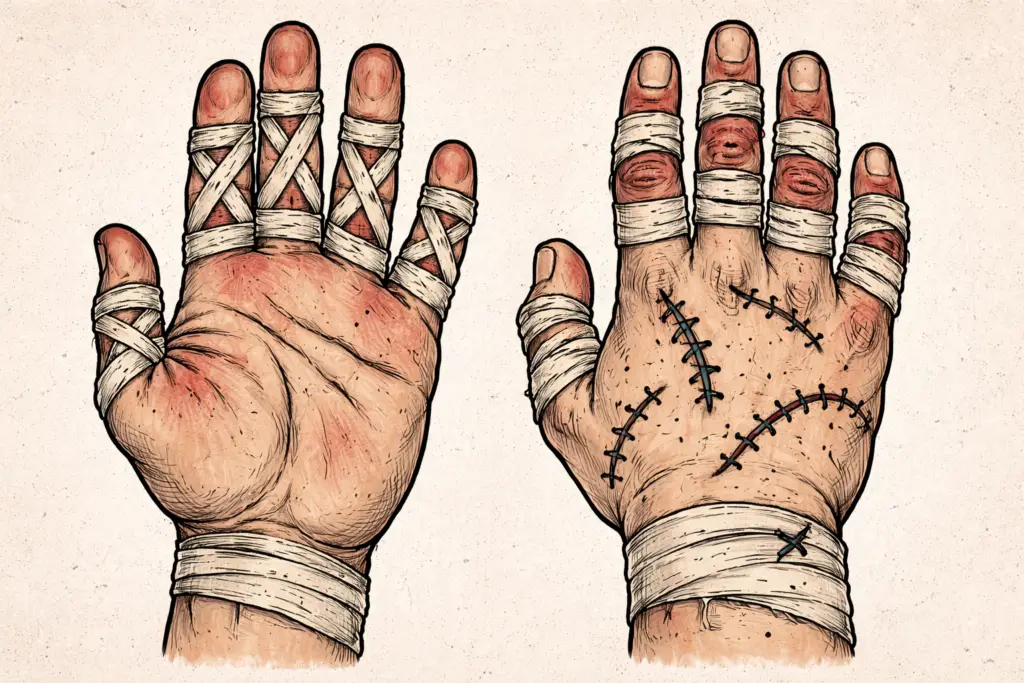
Your knuckles that won’t fully straighten after a hard session. That lingering stiffness you feel after those morning drilling session? Not normal. Overtime it is a slow, quiet loss of flexion you didn’t notice until one day you tried to make a fist and something just wasn’t right.
After four or five years on the mat, this isn’t soreness anymore. It’s your joints trying to tell you something.
Most grapplers tape up and keep going. A few take a week off. Almost nobody asks why it keeps happening or what’s actually building up inside those joints every time you grip a collar, fight for an underhook, or post your hand on the mat.
Why BJJ Is So Hard On Your Hands
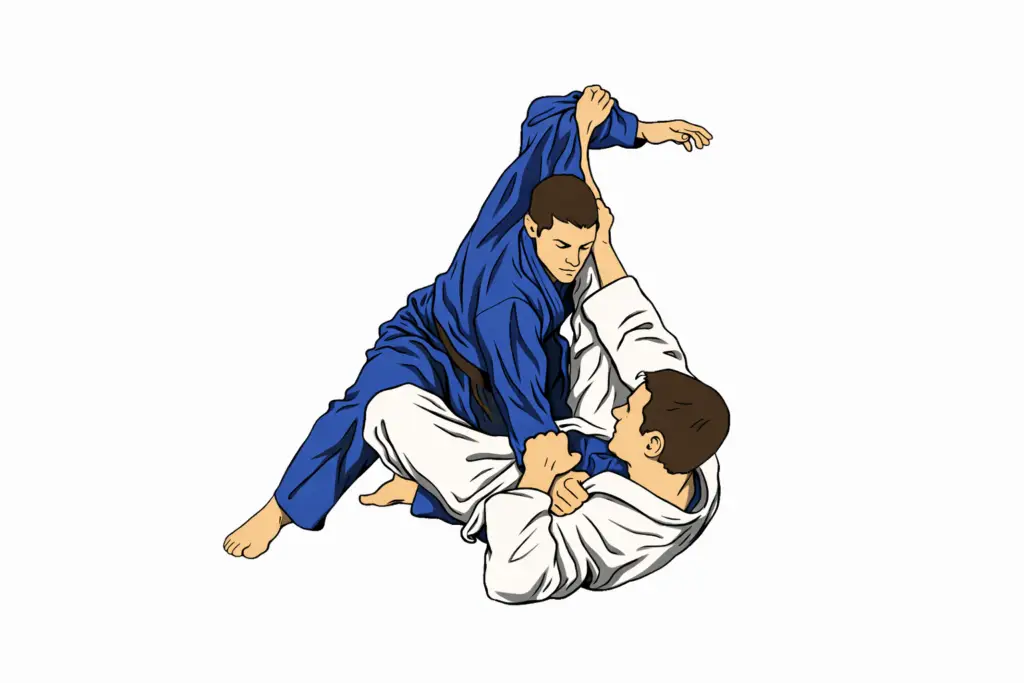
Every time you grip a sleeve, collar, or pant leg, your fingers are absorbing force that the rest of your body generates.
Think about what that actually means. A single collar grip during a match can generate over 100 pounds of pulling force transferred almost entirely through your fingers and into the small joints of your hand. Do that hundreds of times per class, multiple times per week, for years, and the math starts to make sense.
Unlike most sports, BJJ never gives your hands a break. A basketball player jumps and lands. A runner’s hands are mostly passengers. But a grappler’s fingers are load-bearing every single second they’re on the mat. The tendons, ligaments, and cartilage inside your finger joints were not designed for that volume of repetitive stress.
The Long-Term Reality of Your Hands If You Don't Do Something About it
Here’s what’s actually happening inside the joint. Each time you grip and resist, the synovial fluid that cushions your joints gets compressed. The cartilage that lines your joint surfaces absorbs micro-trauma. The ligaments stretch slightly beyond their intended range, especially during those intense defensive scrambles, when someone is trying to break your grip by force. Over time, this triggers a low-grade inflammatory response that the body never fully resolves because you keep training before it finishes healing.
The result is what researchers call cumulative joint loading… basically it is a gradual breakdown that doesn’t announce itself with a single injury. It just quietly accumulates until one morning your hands feel ten years older than the rest of you.
Tape helps manage it. Rest slows it down. But neither one addresses what’s happening at the tissue level.
Many long-time grapplers develop permanently swollen knuckles and limited finger mobility if they don’t take care of their joints early.
Chances are VERY high, you already know someone who has this problem… do you really want that for yourself to?
How Experienced Grapplers Protect Their Hands
Most grapplers focus on taping and technique adjustments and those things matter… But the grapplers who stay on the mat longest understand that what’s happening inside the joint is just as important as what you wrap around the outside of it.
Tendons and connective tissue need specific building blocks to support themselves between sessions. What you put into your body daily plays a bigger role in how you feel on the mat than most grapplers ever give it credit for.
The grapplers who figure this out early are the ones still training hard in their 40s without the issues that many of their peers will have.
A Simple Way To Support Your Joint Health
1st Phorm’s Joint Stack is designed to support connective tissue health from the inside. It contains collagen peptides, glucosamine, chondroitin, and key supporting nutrients that are commonly used by athletes looking to support their joints and connective tissue as part of an active lifestyle.
For any grappler serious about longevity on the mat, the time to think about this is before it becomes a problem.
Do not let joint pain keep you off the mats or out of the gym. Give your body the support it needs to keep training with the Joint Stack. Combining Full-Mega with Joint Mobility helps support joint health, improve mobility, and promote stronger tendons so you can keep rolling, striking, and drilling without constant aches slowing you down.
This stack is designed to help your body recover and stay resilient. Take it on its own or add it to your current supplement routine to support healthier joints and keep progressing in your training.
- Helps you stay on the mats consistently
- Supports mobility for better performance
- Helps with recovery between hard sessions
What Others Are Saying
Frequently Asked Questions
Why do BJJ fingers swell?
BJJ is physically taxing especially on intense days. Your fingers are absorbing and transferring load constantly throughout every session, and over time that repetitive stress adds up.
Fingers simply weren’t designed to handle that kind of volume indefinitely. The swelling is your body’s response to that accumulated stress.
Is finger damage inevitable in grappling?
Honestly? For most grapplers, especially those training in the Gi, some degree of finger wear over time is just part of the sport.
The goal isn’t to avoid it entirely it’s to manage it smartly so it doesn’t sideline you or follow you into everyday life.
Can you prevent BJJ finger injuries?
You can’t eliminate the risk entirely, but you can limit the damage over time. Taping consistently and being proactive about supporting your connective tissue from the inside are the two levers most experienced grapplers use. The ones who stay healthy longest tend to take both seriously rather than waiting until something goes wrong.
Should you tape your fingers every session?
It’s worth doing if you can. That said, it’s time-consuming and not always practical.
At minimum, tape when you know you’re going into a tough session. Think of it as one layer of a broader approach to keeping your hands healthy long term.