
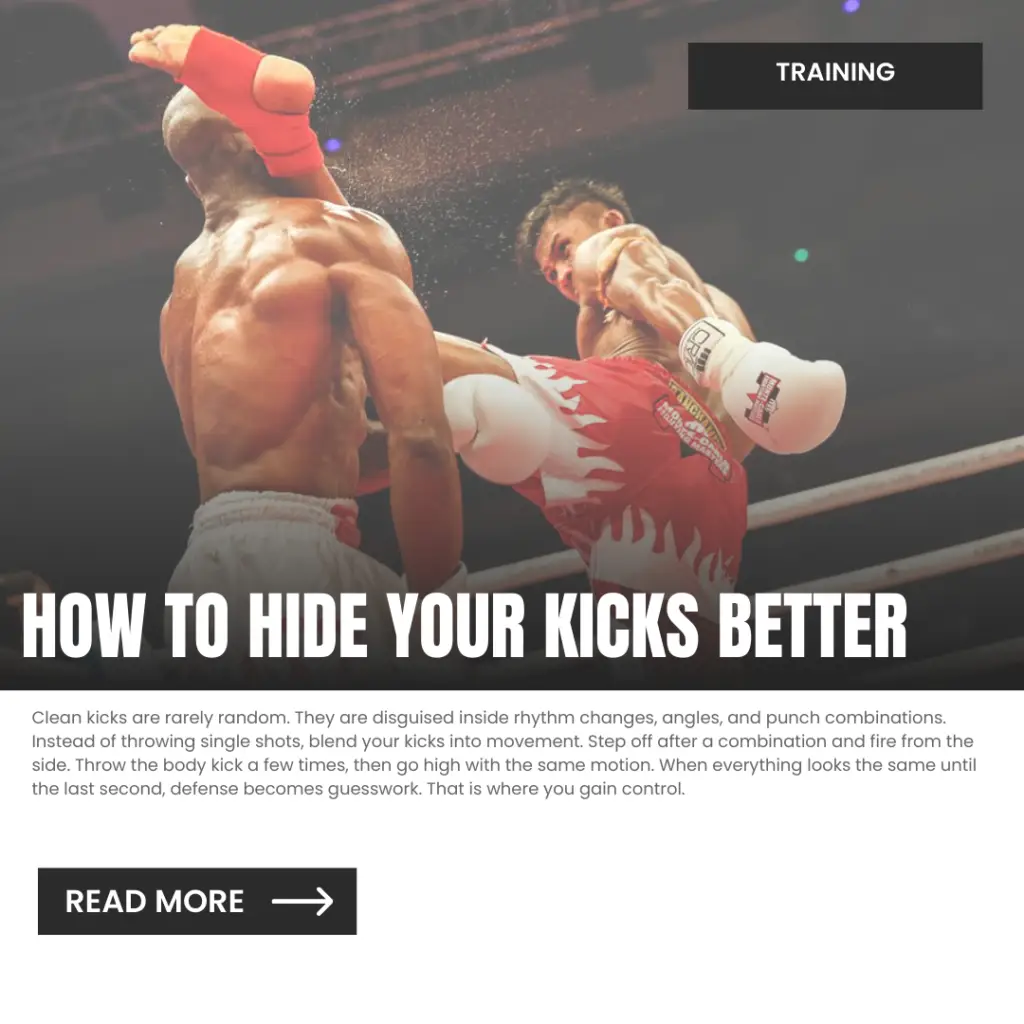
If you’re a striker, your kicks shouldn’t be obvious. The best kickers don’t just hit hard, they disguise their shots inside punches, footwork, and small movements that look harmless until impact. Whether you train in boxing, Muay Thai, kickboxing, or MMA, learning how to hide your kicks will raise your striking level fast.
TL;DR
- Set up your kicks with real punches, not fake ones.
- Make your setups look the same every time and change the finish.
- Control rhythm so your opponent cannot time you.
Why Hiding Your Kicks Changes Everything
A clean kick lands because it was not expected. The moment your opponent sees your hip load or weight shift, they will check, step out, or fire back.
When you disguise your kicks properly, you land more often and take fewer counters. Striking is not just speed and power. It is about making your opponent react to the wrong thing.
If they are thinking about your hands, they will not see your legs.
Start With Your Hands
Your punches are your cover. Throwing naked kicks is a beginner mistake. Even average fighters will see it coming.
The fix is simple. Make your opponent respect your hands first. A sharp jab, a committed cross, a real hook. Once their guard rises or their vision locks high, your kicks open up.
Instead of pausing before a kick, blend it into combinations. Jab cross hook into a low kick feels natural. Double jab cross into a body kick keeps them defensive. The key is commitment. Lazy punches will not draw reactions.
I have noticed in my own training that when my hands look dangerous, my kicks land without much effort.
Make Every Setup Look the Same
One of the cleanest ways to hide your kicks is repetition. Use the same entry but change the ending.
Throw a jab cross combination several times. The first time, finish with a hook. The second time, finish with a low kick. The third time, go high.
Now your opponent has to guess.
This is something fighters like Giorgio Petrosyan mastered. His entries look safe and consistent, but the finish changes. That uncertainty freezes opponents for just a split second. That is all you need.
The goal is to remove obvious tells. No big wind ups. No dropped hands. No staring at the target before you kick.
Use the Low Kick to Build Openings
Low kicks are easier to hide than head kicks, so use them early. When you attack the legs often, your opponent starts thinking about checking. That shift in focus opens the body and head.
Blend your low kicks behind punch volume. Instead of separating the kick from the combo, let it flow out naturally. When punches occupy their vision, the leg shot lands before they process it.
Over time, the damage adds up. Even blocked low kicks drain energy. They also force adjustments, and adjustments create mistakes.
Break Your Rhythm on Purpose
Predictable rhythm makes you easy to read. If every combination comes at the same speed, your opponent will time you.
Change the pace. Throw fast punches, pause slightly, then kick. Or slow the start and explode at the end. That small disruption can trick someone into relaxing just before impact.
Watch how Israel Adesanya controls tempo. He uses feints and rhythm shifts to draw reactions before he throws the real strike. Opponents often react to something that is not even coming.
When the brain is busy reacting, it cannot defend properly.
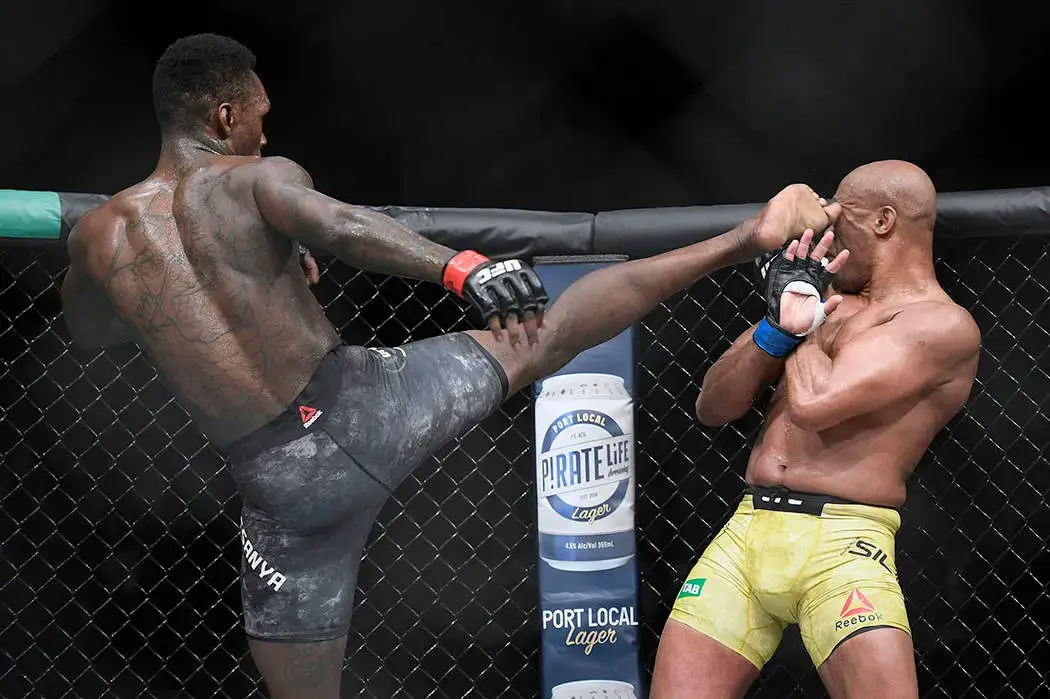
Hide the Head Kick the Smart Way
Head kicks often get blocked because the chamber is visible. A smarter approach is conditioning.
Throw the body kick several times with the same setup. Make it believable. Once your opponent starts dropping their elbow to defend the body, lift the next one upstairs using the same motion.
The switch kick works well here. The switch step hides intent and keeps the motion consistent. If everything looks identical until the last moment, the defense comes too late.
Clean Up Your Tells
Most strikers give away their kicks without realizing it. Maybe you drop your rear hand before throwing. Maybe your weight shifts early. Maybe you always kick after the same combination.
Film your sparring and look for patterns. Small habits become big signals to experienced opponents.
Fighters with strong Muay Thai fundamentals, like Buakaw Banchamek, keep their posture tight and their movements compact. There is very little wasted motion before impact. That is why their kicks are hard to read.
Use Angles to Disguise Entry
Kicks do not always need to come from a flat stance. Step off to the side after a punch and kick from the angle. Pivot into your low kick instead of throwing it from square. Small shifts in position hide your intention.
Movement blends attacks together. When the kick feels like part of a larger flow, it becomes harder to spot.
Hiding your kicks is not about being fancy. It is about being subtle and consistent. Let your hands set the story. Keep your setups similar. Change rhythm. Remove obvious tells.
The less your opponent understands what is coming next, the more control you have in the exchange.
Work on deception as much as power, and your kicks will not just land, they will land clean.