
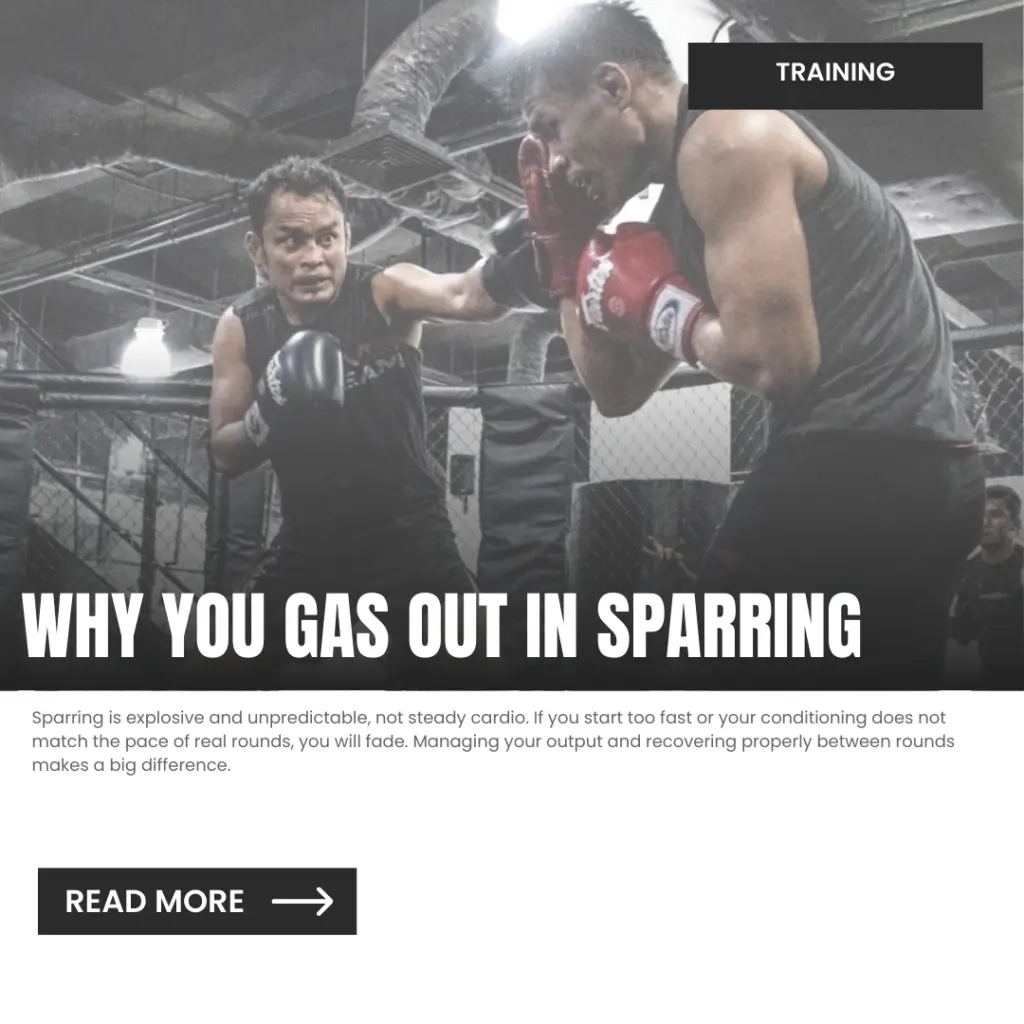
If you train in boxing, MMA, Muay Thai, or any striking sport, you have probably felt that sudden drop in energy during a round. I remember thinking I was in good shape until halfway through sparring when my arms felt heavy, my legs slowed down, and my breathing became chaotic. Gassing out in sparring is frustrating, but it usually has clear physical and technical causes. When you understand them, you can fix them.
Below are the real reasons you gas out in sparring, explained in a way that applies whether you are a beginner or experienced fighter.
TL;DR
-
You gas out mainly due to tension and poor breathing, not just bad cardio.
-
Starting too fast and fighting at an unsustainable pace drains your energy quickly.
-
Sparring endurance improves when your conditioning matches real rounds and you stay relaxed and efficient.
You Are Too Tense
Tension is one of the fastest ways to burn through energy. When you are nervous or trying too hard to win exchanges, your body tightens up. Your shoulders rise toward your ears, your fists clench hard, and your legs become stiff.
Muscles use more oxygen when they stay contracted. If you are constantly flexing, even slightly, your energy drains much faster than it should. Over the course of a three or five minute round, that tension adds up.
Good fighters look relaxed for a reason. Relaxed muscles move more efficiently and recover faster between bursts.
To fix this, focus on lowering your shoulders between exchanges. Shake your arms out when there is space. Keep your jaw unclenched. Most importantly, do not try to throw every punch at maximum power. Controlled output saves energy and often improves accuracy.
Your Breathing Is Off
Many fighters do not realize they are holding their breath. It often happens when defending, absorbing a shot, or throwing combinations.
When you hold your breath, carbon dioxide builds up and your heart rate climbs faster. You may feel a wave of fatigue or even mild panic. Once your breathing rhythm breaks, it is hard to regain control mid round.
You should be exhaling with every punch. Short, sharp exhales help regulate pressure in your core and prevent breath holding. Between exchanges, use small nasal breaths to steady yourself instead of gasping through your mouth.
I have noticed that when I consciously control my breathing, especially after getting hit or during heavy exchanges, my recovery improves almost immediately.
Breathing is not just about oxygen. It directly affects heart rate and tension levels. Mastering it changes your endurance.
You Start Too Fast
Adrenaline makes you move faster than you realize. The bell rings and you start throwing combinations, bouncing around, reacting to everything.
The first minute feels easy. The second minute feels harder. By the third minute, your output drops sharply.
This happens because you spike your heart rate early. Once it climbs too high, your body struggles to clear fatigue byproducts efficiently. Your movements become slower and less sharp.
A better approach is to build into the round. Use the first minute to establish distance and timing. Stay efficient. Pick your shots. You do not need to dominate immediately.
Sparring is practice. You are not trying to end the round in thirty seconds. Managing pace is a skill that separates experienced fighters from beginners.
Your Conditioning Is Not Specific to Sparring
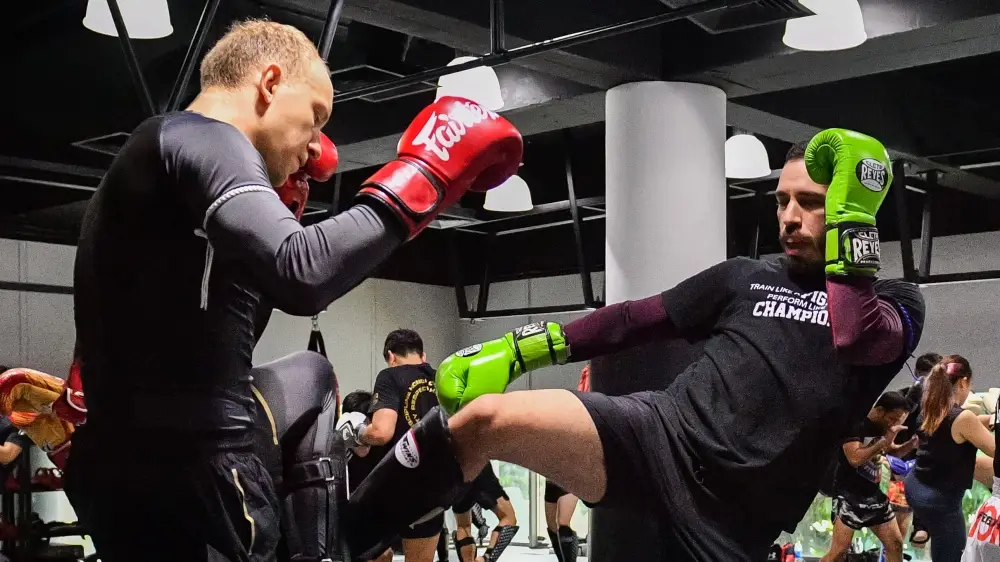
Many people assume that roadwork alone will solve sparring fatigue. Running builds a base, but sparring is not steady paced. It is intermittent. You explode for a few seconds, reset, defend, move, then explode again.
That pattern requires both aerobic and anaerobic conditioning. If you only train one system, you will struggle when the pace shifts.
To improve sparring endurance, structure some of your training like actual rounds. Do bag work where you mix combinations with footwork and short defensive movements. Use interval training that matches round length. Include short bursts of high output followed by controlled recovery.
Conditioning should reflect the demands of the sport. When it does, sparring feels more manageable.
You Are Wasting Energy Defensively
Poor defense drains energy quickly. If you are constantly reacting late, covering up inefficiently, or backing straight up, you burn energy without gaining control.
Clean defense is efficient defense. Small head movements, good positioning, and controlled footwork require less effort than frantic reactions.
If you are taking too many clean shots, your stress response increases. Your body tightens, your breathing changes, and fatigue accelerates.
Drill defensive basics until they become automatic. When reactions become instinctive, they cost less energy. The more comfortable you are under pressure, the less you gas out.
You Do Not Recover Properly Between Rounds
Rest periods matter. If you bend over, breathe erratically, and replay mistakes in your head, your heart rate stays elevated.
Recovery should be deliberate. Stand upright. Take slow nasal breaths. Extend your exhales to slow your heart rate. Focus on one simple adjustment for the next round instead of ten different mistakes.
Your ability to recover between rounds is part of conditionng. Two fighters with similar fitness levels can feel very different in round three depending on how well they manage rest.
Mental Fatigue Adds to Physical Fatigue
Sparring requires constant decision making. You are reading patterns, anticipating attacks, adjusting timing, and managing distance.
When you are inexperienced or facing someone tricky, your brain works harder. That mental load increases physical fatigue.
As your experience grows, movements and reactions become automatic. This reduces mental strain and conserves energy. You are no longer thinking through every action. You are reacting naturally.
Efficiency is not only physical. It is neurological.
If you gas out in sparring, it is rarely just about being out of shape. More often it is a mix of tension, breathing errors, poor pacing, inefficient defense, and conditioning that does not match the demands of real rounds.
Pay attention to when you fade. Is it after a fast start? After absorbing pressure? After holding your breath during exchanges?
Small technical adjustments often make a bigger difference than simply training harder. Relax your body. Control your breathing. Manage your pace. Build conditioning that reflects how sparring actually feels.
When you address the real causes, you will notice something important. You are no longer just surviving the final minute. You are still thinking clearly, moving well, and finishing rounds with control.