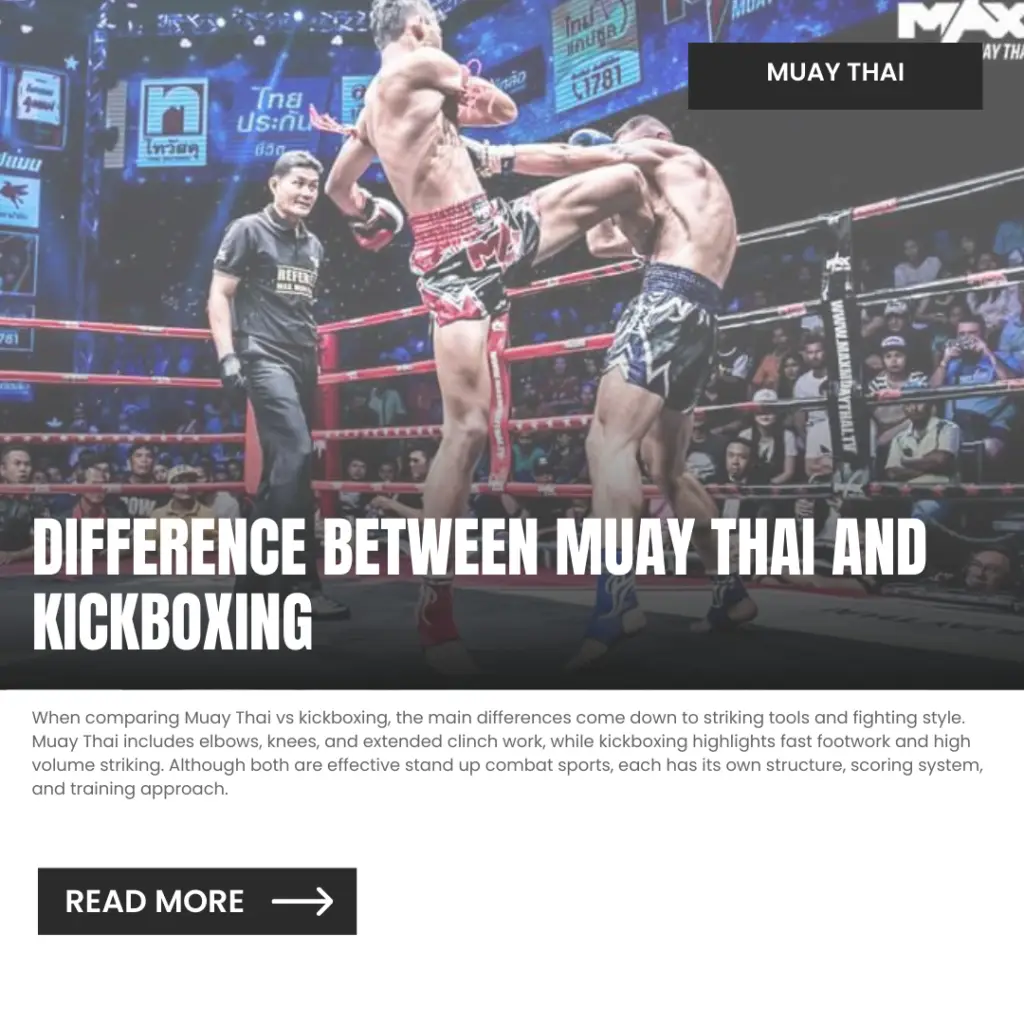
The difference between Muay Thai and kickboxing is a common topic among martial arts beginners and fight fans. At first glance, both sports look very similar. They involve punches, kicks, and full contact competition inside a ring. However, when comparing Muay Thai vs kickboxing more closely, clear differences appear in their techniques, rules, scoring systems, and cultural backgrounds. Understanding these differences helps explain why each sport has its own unique identity.
Origins and Style: Muay Thai comes from Thailand with strong cultural traditions, while kickboxing is a modern sport influenced by karate and other striking arts.
Origins of Muay Thai and Kickboxing
One major difference between Muay Thai and kickboxing is their history.
Muay Thai, also known as Thai boxing, originated in Thailand hundreds of years ago. It began as a battlefield fighting system used by Thai soldiers. Over time, it developed into Thailand’s national sport. Traditional elements such as the Wai Kru ritual dance and live music before fights are still practiced today.
Kickboxing, on the other hand, is a modern combat sport. It developed in the mid twentieth century in Japan and later in the United States. Japanese kickboxing was influenced by karate and Muay Thai, while American kickboxing grew from full contact karate tournaments. Unlike Muay Thai, kickboxing does not have one single cultural origin.
Techniques: Muay Thai vs Kickboxing
When comparing Muay Thai techniques vs kickboxing techniques, the biggest difference is the number of striking weapons allowed.
Muay Thai – The Art of Eight Limbs
Muay Thai is often called the “Art of Eight Limbs.” Fighters can use:
Punches
Kicks
Elbows
Knees
This gives fighters eight points of contact. Elbows and knees are especially important in Muay Thai. Elbows can cause cuts, and knees are commonly used during close range fighting.
Kickboxing – Focus on Punches and Kicks
Kickboxing typically allows:
Punches
Kicks
In most kickboxing rule sets, elbows are not allowed. Knees may be limited depending on the organization. Because of this, kickboxers focus heavily on fast punch combinations and high, snapping kicks.
Another difference is how kicks are delivered. In Muay Thai, kicks are usually thrown with the shin for maximum impact. In kickboxing, kicks are often delivered with the foot, which can allow for faster movement.
The Clinch: A Key Difference
The clinch is one of the biggest differences between Muay Thai and kickboxing.
In Muay Thai, the clinch is a major part of the sport. Fighters grab and control their opponent’s head and arms to deliver knee strikes and off balance them. Clinch fighting can determine the outcome of a match.
In kickboxing, clinching is limited. Referees typically separate fighters quickly if they tie up. This keeps the action focused on striking from a distance rather than close range control.
Rules and Scoring Differences
Another important comparison in Muay Thai vs kickboxing is how fights are scored.
Muay Thai Scoring
In traditional Muay Thai scoring:
Clean, powerful kicks and knees score highly
Balance and control are important
Visible impact matters more than the number of strikes thrown
A single strong body kick may score more than several light punches.
Kickboxing Scoring
In kickboxing:
Punch combinations often score well
Activity and aggression are rewarded
Volume of strikes can influence judges
Because elbows are usually not allowed and clinching is restricted, kickboxing matches often feature longer striking exchanges.
Fighting Stance and Movement
The fighting stance also shows the difference between Muay Thai and kickboxing.
Fighters focus on toughness, balance, and close range effectiveness.
Kickboxing Training
Kickboxing training emphasizes:
Punch kick combinations
Footwork drills
Speed and agility
Defensive movement
While both sports require conditioning, kickboxing often focuses more on rhythm and distance management.
Cultural Influence
Muay Thai remains deeply connected to Thai culture. Stadium fights in Thailand include traditional music and pre fight rituals. Many fighters begin training at a young age, and the sport holds national importance.
Kickboxing is more global in nature. It is practiced worldwide and commonly found in gyms as both a competitive sport and a fitness activity.
Image via X3 Sports
Which Is Better: Muay Thai or Kickboxing?
The question of which is better, Muay Thai or kickboxing, depends on personal goals.
Those interested in elbows, knees, and clinch fighting may prefer Muay Thai
Those who enjoy fast combinations and dynamic footwork may prefer kickboxing
Both sports build strength, endurance, discipline, and striking skill.
The difference between Muay Thai and kickboxing comes down to techniques, rules, scoring, and cultural background. Muay Thai uses eight limbs and emphasizes clinch fighting, powerful kicks, and tradition. Kickboxing focuses more on punches, fast kicks, and movement, with limited clinching.
Although they share similarities, Muay Thai and kickboxing are distinct combat sports with unique styles. Understanding these differences makes it easier to choose the right training path and appreciate what each discipline offers.