
What Is Superpower Health?
Superpower is a health membership built around comprehensive blood testing, biomarker tracking, and personalized recommendations.
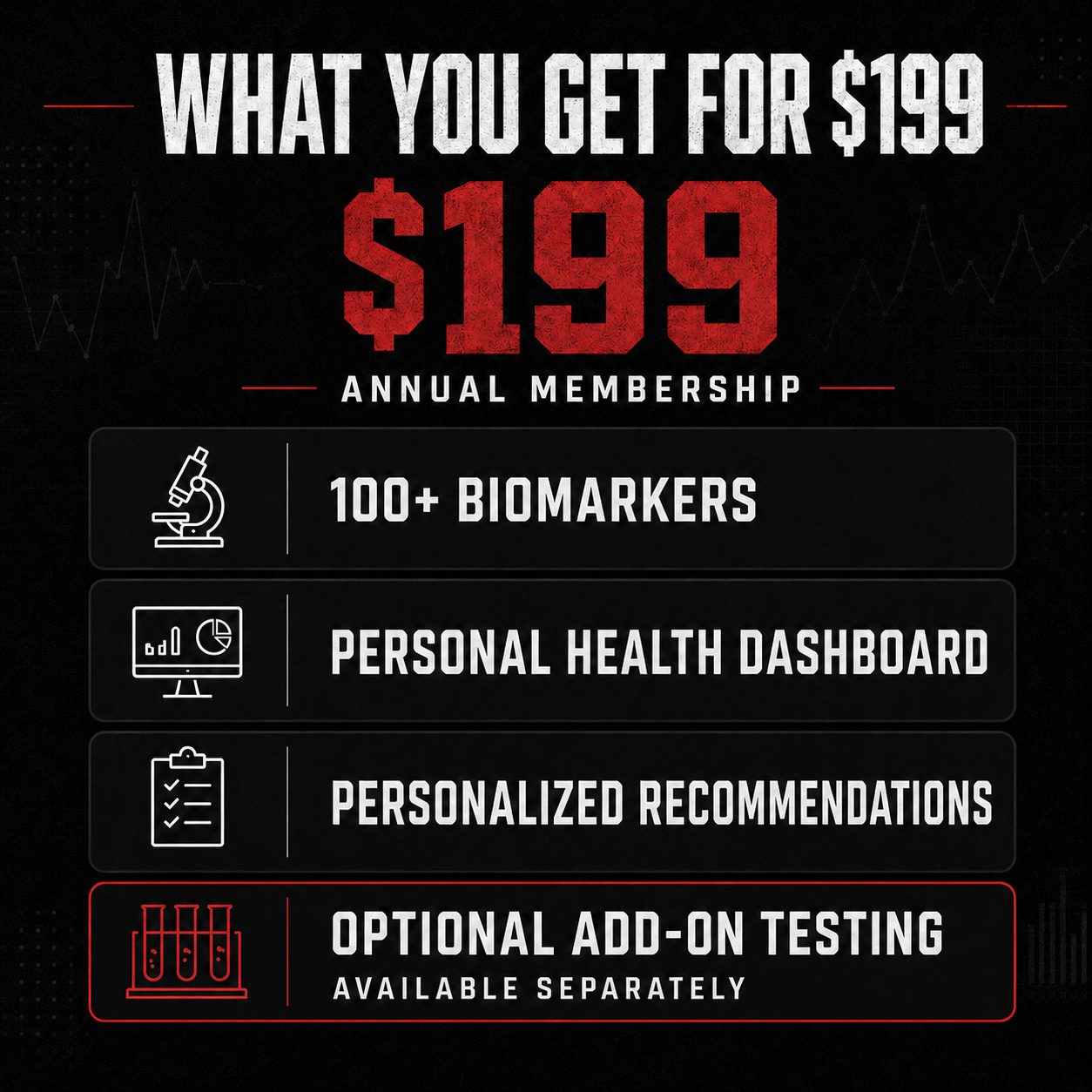
As of August 2026, the standard membership is listed at $199 per year and includes an annual blood draw covering more than 100 biomarkers, a health dashboard, personalized health protocol, AI tools for exploring your results, and access to its care team. Superpower also currently lists the membership as HSA/FSA eligible.
One thing I want to correct from my original notes is what comes with that $199. When I first went through the signup process, I came away thinking the $199 membership only gave me a pretty minimal blood panel and that I basically needed the Advanced Blood Panel to get anything worthwhile.
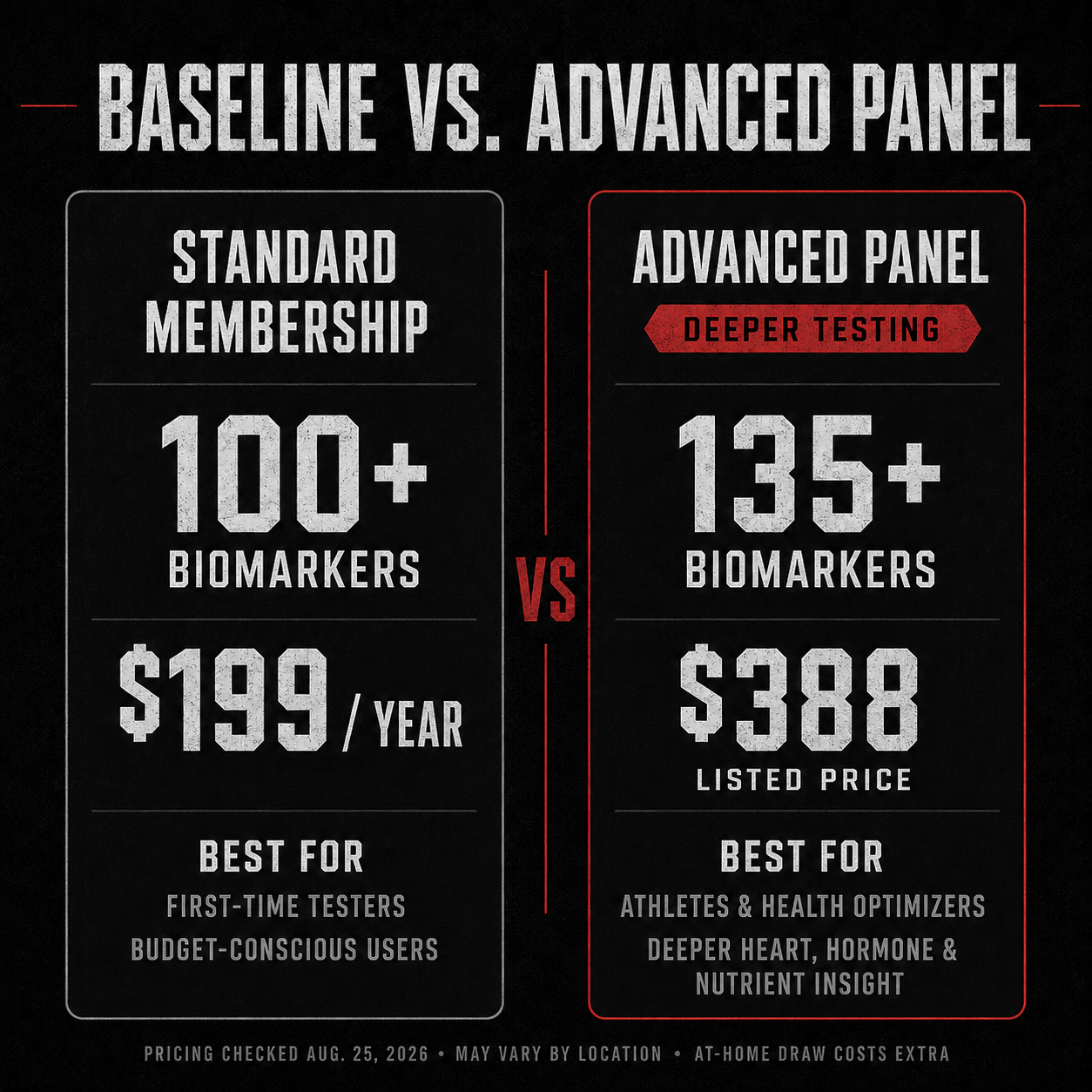
That’s not quite right. The baseline membership already includes testing for 100+ biomarkers. Superpower’s Advanced Blood Panel currently expands that to 135+ biomarkers and is listed at $388. I don’t think everybody needs to immediately start adding every test Superpower puts in front of them. And that leads into my biggest complaint with the service.
The Signup Process Was Almost Too Easy
Superpower has done a very good job designing its app. It’s clean, modern, aesthetically pleasing, and the initial onboarding is incredibly easy.
You answer some basic questions about your health, how you’re feeling, and what you’re trying to understand. From there, the process moves pretty quickly into testing and scheduling. In some ways, it moves too quickly.
When I first signed up, adding additional tests was so easy that I ended up with somewhere around $700 to $800 worth of testing before realizing I had gone much farther than I originally intended. I wasn’t trying to test everything imaginable. I wanted a strong baseline.
Once I understood what I had actually selected, I decided the Advanced Blood Panel was enough for what I wanted to accomplish and requested refunds for some of the additional tests. I don’t regret paying for the Advanced Panel. I wanted a deeper look at my health, so that part made sense for me.
What I didn’t like was how easy it was for somebody relatively new to comprehensive blood testing to keep adding more. If you’re already deeply familiar with biomarkers and know exactly what tests you need, this probably isn’t much of an issue. But if you’re getting comprehensive blood work for the first time, it’s very easy to look at another test and think, “Well, maybe I need that too.”
That can get expensive quickly. I’d rather see Superpower make the baseline versus advanced options extremely obvious, then explain the additional panels after you’ve established what you’re trying to accomplish.
Getting My Blood Draw
Once I got through the purchasing side, actually finding somewhere to get my blood drawn was pretty straightforward. Superpower helped me find a local Sonora Quest location, and I scheduled my appointment online.
I would definitely recommend scheduling ahead instead of assuming you can comfortably walk in. The location I went to was packed in the morning. If I had tried to squeeze a walk-in appointment in before work, I could easily have ended up late.
I also noticed that the hours displayed through Superpower weren’t accurate for my location. The app showed what looked like 7 p.m. to 5 p.m., when the location was actually open from 7 a.m. to 5 p.m. That wasn’t a huge deal because I double-checked Google Maps before going, but it’s something Superpower should tighten up.
The actual Sonora Quest experience was good. Once I was there, the process was straightforward and getting the blood drawn wasn’t a problem. Unfortunately, that wasn’t the end of it.
I Had to Go Back for a Redraw
One of the more annoying parts of my testing experience was finding out that one of the original samples couldn’t be completed. I had to schedule another draw specifically for a test listed as Sed Rate by Modified Westergren.
At the time, I honestly didn’t even know what that meant or why I was being sent back for it. For context, a sed rate is an erythrocyte sedimentation rate, or ESR. It’s a blood test that can provide information related to inflammation, although an ESR by itself doesn’t diagnose a specific condition.
I still don’t know whether the issue with that particular sample came from Superpower, the lab, the collection process, or something else, so I’m not going to assign blame where I can’t prove it. I just know that as the customer, I had to go back and have blood drawn again.
It’s not something that would stop me from using Superpower, but it’s part of the experience I had.
How Long Did My Superpower Results Take?
Superpower currently says its annual panel generally takes around a week to process, with some of its pages advertising results in roughly five to ten days.
My full process took longer because of the redraw. My complete results weren’t available until around August 22, 2026, so this wasn’t a situation where I had my blood drawn and woke up a couple of days later with everything neatly finished.
There was some waiting and some friction. Once everything finally populated, though, my opinion of Superpower changed pretty dramatically.
The Superpower Dashboard Is Excellent
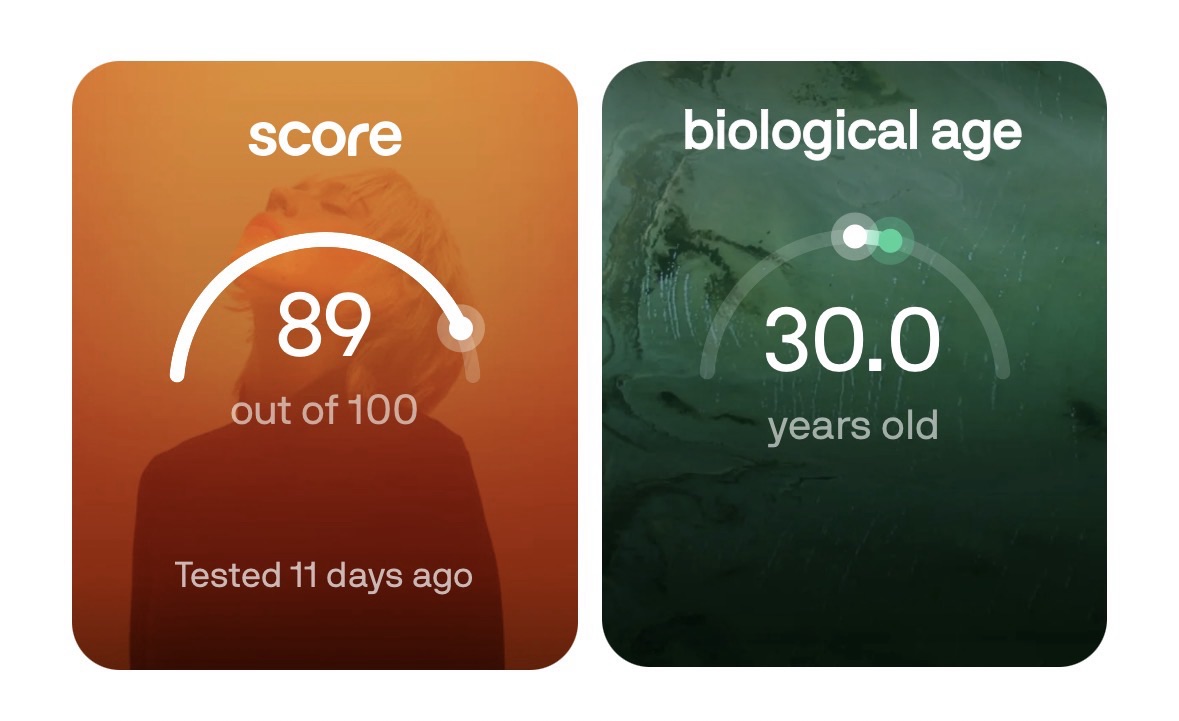
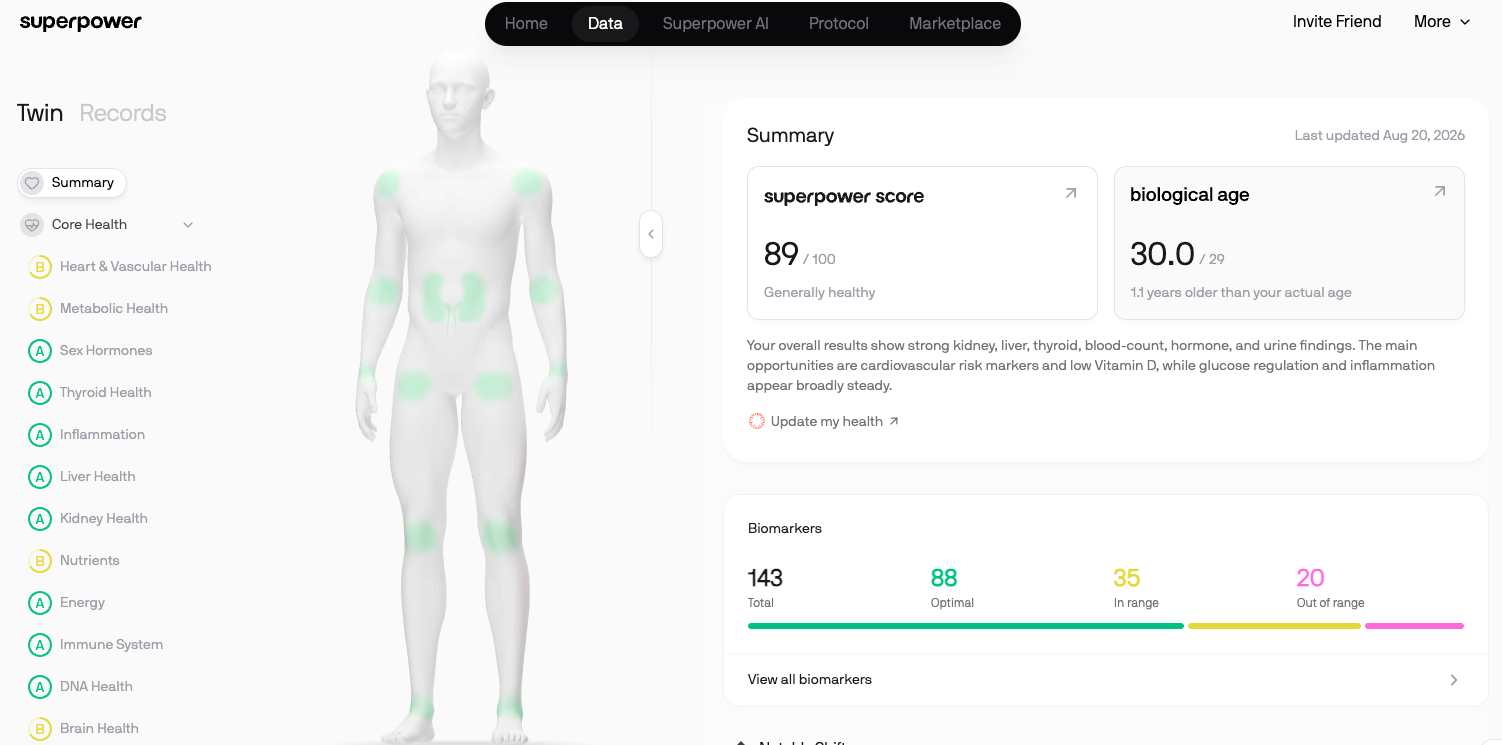
This was easily my favorite part of the entire experience. Once my results came back, I finally understood what makes a service like Superpower different from simply getting a basic blood panel and receiving a PDF full of numbers.
The app doesn’t just show you a pile of lab values. It walks you through them.
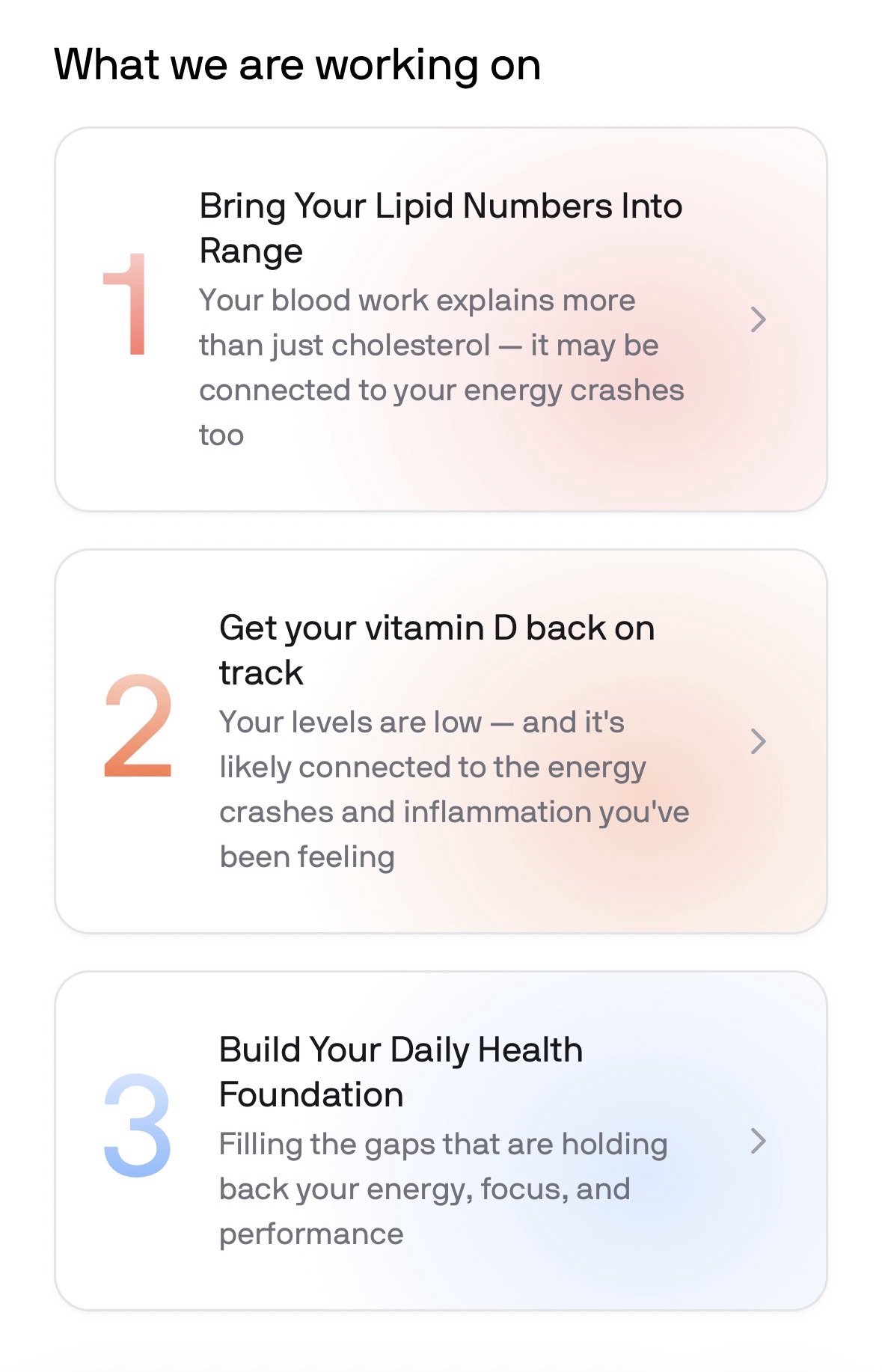
Superpower currently describes its membership as including a dashboard, personalized health protocol, AI companion, health data tools, and access to its care team. From a user-experience standpoint, I think they nailed this. I’d give the actual results experience a 10 out of 10.
I’ve had blood work done before, and what always bothered me was that I could receive results without getting much useful guidance about what to actually do next. Knowing that one number is high, low, normal, or optimal isn’t enough for me.
I want to know why it matters, what could potentially be contributing to it, what I should ask more questions about, and what lifestyle, nutrition, training, sleep, or supplementation changes might be worth exploring. That’s where Superpower became valuable for me.
The Actionable Recommendations Are What Made Superpower Worth It
The biggest thing I took away from this experience wasn’t any single biomarker. It was clarity.
Superpower gave me information that I could actually start doing something with. The recommendations felt personalized to the results I was looking at rather than like a generic article about “five ways to be healthier.” I’ve already started looking at how some of the recommended supplements fit into my routine and how I can build the habit of consistently taking the things I decide are appropriate for me. It also changed how I think about certain markers.
Part of why I wanted comprehensive testing in the first place was my interest in hormones and long-term performance. If I ever consider something like TRT or peptides in the future, I’d rather have years of baseline information than make decisions without knowing what my body looked like beforehand.
Superpower gives me a much better starting point for those conversations. That doesn’t mean I’m going to blindly follow an AI recommendation or use Superpower as a replacement for a physician.
Superpower itself says its annual membership is intended to complement a primary-care doctor rather than replace one. I think that’s an important distinction. What Superpower has given me is more information and better questions to ask, and that’s valuable.
My Biggest Complaint: The Concierge and Refund Experience
If the dashboard is the strongest part of Superpower, customer support was easily the weakest part of my experience.
After realizing I’d purchased more testing than I wanted, I started trying to get some of those tests refunded. It wasn’t immediately obvious where I was supposed to go, so I emailed and texted. Getting a human response took longer than I expected.
That was particularly frustrating because Superpower puts a lot of emphasis on access to its concierge and care team. Its current FAQ says concierge responses are within one business day or less, while other Superpower pages advertise 24/7 care-team access or messaging. My experience didn’t feel nearly that responsive.
Eventually, they did refund me, so I want to make that clear. I wasn’t stuck paying for tests I didn’t want. But at one point the refund had been handled without being properly reflected inside the app, and the entire experience created unnecessary anxiety.
Early in the process, I was wondering whether I’d made a mistake signing up. That’s a weird contrast with how positive I eventually became about the actual health-data side of the service.
Superpower feels like a company with an excellent core product that still has some startup friction around the edges. I’m willing to give them some leeway there, especially if they’re growing quickly, but consumers are still spending real money.
If you’re selling additional tests that can push somebody’s checkout hundreds of dollars higher, refund communication needs to be extremely clear and responsive.
What I Think About the $199 Price
For me, the value is difficult to measure purely by saying, “I spent $199 and received X number of biomarkers.” The thing I’m paying for is knowledge. It’s understanding what’s actually happening inside my body and having a baseline I can reference later.
I have gotten blood work done in the past without receiving anything close to the amount of actionable information I got from Superpower. That’s the part I find valuable.
At the same time, $199 is still $199, and the price can climb substantially if you start adding specialized panels. Superpower maintains a marketplace of additional testing options beyond the annual membership panel, so I wouldn’t go into the app and start buying everything.
Start with the question you’re actually trying to answer. For many people, I think the included 100+ biomarker panel could be plenty for establishing an initial baseline. If you know you want additional hormone, cardiovascular, metabolic, nutrient, or other information, then you can decide whether going deeper makes sense.
At the end of the day, I went with the Advanced Panel to get me a deeper initial baseline test. If you have the ability to afford something like that, I think it’s well worth the $400 that I spent at the end of the day, I went with the Advanced Panel to get me a deeper initial baseline test. If you have the ability to afford something like that, I think it’s well worth the $400 that I spent

Superpower is a preventative health platform that uses comprehensive blood testing to give you a deeper look at what’s happening inside your body. With 100+ biomarkers tested in a single blood draw, it helps you better understand areas like hormones, metabolic health, cardiovascular risk, nutrients, and overall wellness.
- Conveniently Set up Routine Blood Work
- Easy process, with comprehensive analysis of your personal results
- Suggestions on how to supplement and improve