In Muay Thai, the guard is more than just where you put your hands. It’s how you see strikes coming, how you absorb damage, how you counter, and how you move safely into your own offense. Unlike some other striking sports, Muay Thai allows elbows, knees, clinching, and long exchanges, so guard styles have evolved to deal with all of that at once.
There isn’t one “correct” Muay Thai guard. Fighters choose styles based on body type, strategy, and personal comfort. Below, we’ll break down the main Muay Thai guard styles, how they work, and when each one makes sense.
TL;DR
-
There is no single correct Muay Thai guard. Different styles exist to manage distance, vision, damage, and clinch entry depending on the situation.
-
Each guard has trade-offs. Tighter guards offer more protection but limit vision, while open or long guards improve control and counters but require timing and awareness.
-
Good fighters adapt. Strong Muay Thai defense comes from switching guard styles based on range, pressure, and opponent rather than relying on just one.
The Traditional High Guard
The high guard is what most people picture when they think of Muay Thai. Both gloves are held high near the temples, elbows tucked in tight to protect the ribs and body. The chin stays down, and the forearms form a solid shield against punches and kicks.
This guard is popular because it’s reliable. It protects against straight punches, hooks, and head kicks while keeping the body relatively safe. It also transitions well into clinching, which is a major part of Muay Thai.
The downside is visibility. A tight high guard can block your own view, especially against fast punchers or fighters who use angles. Elbows can also sneak around the guard if you’re too static. Still, for beginners and defensive-minded fighters, the high guard is a strong foundation and a core part of Muay Thai defense.
The Long Guard
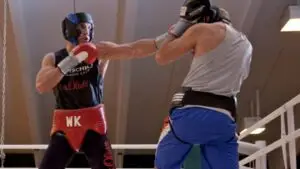
The long guard is one of the most distinctly “Thai” guard styles. Instead of keeping both hands tight to the head, one arm extends forward with the palm or forearm used to frame against the opponent’s face, shoulder, or chest. The rear hand stays higher to protect the head.
This guard is about control and distance. The lead arm disrupts punches, blocks vision, and creates space for teeps, knees, and elbows. Fighters often use the long guard to smother aggression rather than absorb it.
The risk is that it requires timing and awareness. If the extended arm gets pulled or slapped aside, openings appear quickly. But when used well, the long guard is excellent for slowing down aggressive opponents and setting up counters.
The Cross-Arm or “Dracula” Guard
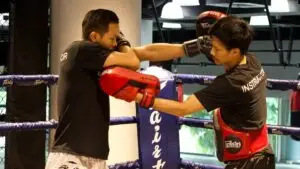
The cross-arm guard places both forearms crossed in front of the face, elbows pointed downward. This creates a strong shield against heavy punches and elbows, especially in close range.
This guard shows up a lot during exchanges along the ropes or when absorbing pressure. It’s especially useful for blocking hooks and short elbows without taking direct impact to the head.
However, it’s not a guard you live in. The cross-arm position limits counterattacks and makes it easier for opponents to land kicks to the arms or transition into clinch control. Think of it as a temporary shell rather than a full-time stance.
The Open or Relaxed Guard
Some experienced Muay Thai fighters use a more relaxed, open guard with their hands slightly lower and farther apart. This style relies on vision, footwork, and timing rather than constant blocking.
The benefit is clear sightlines and faster counters. Fighters using this guard can catch kicks, slip punches, and fire back immediately. It’s often seen in fighters who favor timing and rhythm over brute defense.
The obvious risk is exposure. With the hands lower, mistakes get punished quickly, especially by head kicks and elbows. This guard demands sharp awareness and is usually better suited for advanced fighters.
The Clinch-Oriented Guard
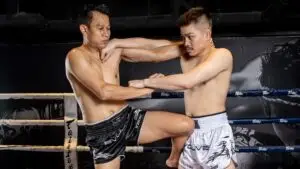
In Muay Thai, the clinch is unavoidable, and some guards are designed with clinch entry in mind. This style keeps the hands slightly higher and closer together, elbows ready to swim inside and secure neck or arm control.
Fighters using a clinch-focused guard are less concerned with long-range punches and more focused on closing distance safely. The guard often transitions smoothly into collar ties, frames, and knee setups.
This approach works well for strong clinch fighters but can be vulnerable at long range if footwork isn’t sharp. It’s most effective when paired with forward pressure and good balance.
Adaptive and Hybrid Guards
Many modern Muay Thai fighters don’t stick to one guard style. Instead, they blend several depending on range and situation. A fighter might use a high guard while defending kicks, switch to a long guard while pressuring, and briefly shell up with a cross-arm guard under heavy fire.
This adaptability reflects the reality of Muay Thai. The sport is fluid, and rigid guard styles tend to break under pressure. Fighters who learn multiple guard options can respond more naturally to what’s happening in front of them.
Choosing the Right Muay Thai Guard Style
Your ideal guard depends on your body type, experience, and goals. Taller fighters often favor the long guard. Shorter fighters may rely more on a tight high guard and clinch entries. Beginners usually benefit from starting with a solid high guard before experimenting.
No guard is perfect. Each one trades protection in one area for freedom in another. The key is understanding why you’re using a particular guard and when to change it.
Muay Thai guard styles are tools, not rules. They exist to help you see strikes, manage distance, and stay balanced while attacking and defending. Whether you prefer a tight high guard or a flowing long guard, what matters most is awareness and timing. Learn the basics, experiment responsibly, and let your guard evolve as your Muay Thai does.